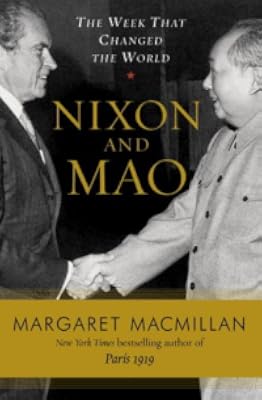
Nixon and Mao: The Week That Changed the World
by Margaret MacMillan
On This Page
Description
"This book looks at one of the transformative moments of the twentieth century: In February 1972, Richard Nixon, the first American president ever to visit China, and Mao Tse-tung, the enigmatic Communist dictator, met for an hour in Beijing. Their meeting changed the course of history and ultimately laid the groundwork for today's complex relationship between the countries. That monumental meeting--during what Nixon called "the week that changed the world"--could have been brought about show more only by powerful leaders: Nixon, a great strategist and a flawed human being, and Mao, willful and ruthless; assisted by two brilliant and complex statesmen, Henry Kissinger and Chou En-lai. And behind them lay the complex history of two great and equally confident civilizations: China, ancient and contemptuous yet fearful of barbarians beyond the Middle Kingdom, and the United States, forward-looking and confident, seeing itself as the beacon for the world.--From publisher description."--From source other than the Library of Congress show lessTags
Recommendations
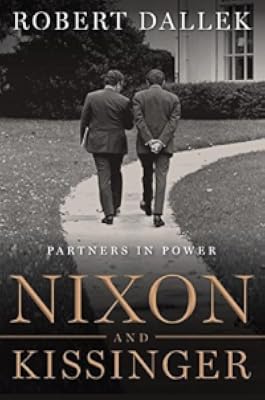
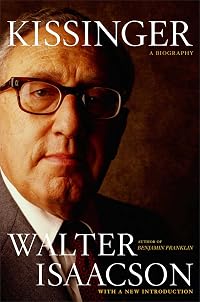








Member Recommendations
Member Reviews
Nixon in China is good and a worthy successor to MacMillan's very successful Paris 1919. The two books are similar in approach: very broad research, balance between understanding the larger picture while describing the details, fluid writing style, and history informed with illuminations of the personalities involved. MacMillan reminds us that great moments and events in history do not occur through spontaneous combustion; they might be driven by powerful societal forces and personalities, but they are conceived, engaged and experienced by individuals, and understanding those individuals in all their strengths and weaknesses brings the history alive. At a book launch that I saw, MacMillan joked that her publisher wants her to continue show more to shorten her time span: Paris 1919 is subtitled Six Months that Changed the World; Nixon in China is subtitled The Week that Changed the World (which were Nixon's words at the end of his visit to China). Just as a suggestion, if MacMillan wants to get down to six minutes, she might next write a book about the bombing of Hiroshima.
The impact of Nixon in China was nothing like that of the Versailles Treaty which really did change the world and we are still feeling the repercussions. In the end, neither China nor the USA got what they primarily sought out of the first meeting: complete US withdrawal from Taiwan, and Chinese assistance in bringing the war in Vietnam to a close. The rapprochment represented by Nixon's visit to China, after twenty years of distrust and distance, owed itself partly to larger geopolitical considerations involving relations with the Soviet Union and the desire of each country to rethink global policy and strategies. There were also individual or domestic considerations: Nixon prided himself as a global statesman and was attracted by the bold and unexpected move (Kissinger was originally dubious) while he also saw that the profile it would be useful for his re-election; Mao was at the tail end of the Great Cultural Revolution that had turned China upside down and was re-thinking China's role in the world. But MacMillan also gives credit to the principals involved:
"It is true that Nixon and Kissinger were able to take advantage of a powerful current hat was already flowing in favour of a Sino-American relationship, but without their skilful and, yes, secretive handling of the opening, it might well not have happened."
Secrecy was an obsession of both Nixon and Kissinger with their secret channels of communication with the Chinese, secret meetings and visits, all over weeks and months and all kept secret from the State Department and other branches of the US government. In fact, Rogers, the Secretary of State comes off as a bumbler, certainly not respected, indeed barely tolerated by either Nixon or Kissinger, and continually slighted by being excluded from the key meetings or from any participation in drafting the communique.
MacMillan describes the negotiation of the communique as proceeding by "a combination of clear statements, hints, and suggestions". Both Kissinger and Chou En-Lai were adept at this and they spent countless hours together drafting the document. At one point, discussing Taiwan, Kissinger said, "The Prime Minister seeks clarity and I am trying to achieve ambiguity", but this could equally have been flipped around on other issues.
The misreadings by Nixon and Kissinger are interesting. For instance, their assumption "in spite of much evidence to the contrary, that the Communist world was organized like an army or a successful corporation, with all low-ranking officer following orders from above." In fact, whenever the two were in conflict, positions and actions reflected the triumph of national interests rather than Communist internationalism in all cases. They could also not foresee, but to be fair who did in 1972, the immense potential of China. Kissinger maintained that "the maximum amount of bilateral trade between us, even if we make great efforts, is infinitesimal in terms of our total economy. And the exchanges, while they are important, will not change objective realities". MacMillian notes that Wal-Mart now imports about $18 billion per year from China, and is a larger trading partner than Canada, Australia or Russia, that almost 900,000 Americans now visit China every year, and many of China's new leaders hold degrees from US universities.
Throughout MacMillan gives a detailed account of the intricate planning for the trip to China (Haldeman's greatest triumph) and the sometimes bemusement of the Chinese, particularly with the emphasis on TV coverage, and the constant concern with the press although Nixon was often vicious in his characterizations of the media. Woven throughout descriptions of the planning and the visit itself, are capsule histories of the Chinese Communist Party, Mao's life, and relations between China and the USSR and China and the USA
Despite the vision he had in moving towards China, and the risks he took in doing so, Nixon himself does not otherwise come across very sympathetically. Kissinger describes him as, "lonely, tortured and insecure". Nixon's pettiness and vindictiveness show through in flashes even concerning Kissinger when the latter became a popular media-darling. Nixon was secretive and distrusting in the extreme. His own wife, Pat, once said to Kissinger who was extolling Nixon's virtues early in their relationship, "You haven't seen through him yet?". Given his foibles and his paranoia, one can't help but think if it hadn't been Watergate something else might well have brought Nixon down.
What is also surprising, and a little disturbing, is the positively fawning attitude that Nixon and Kissinger had towards Mao. In his memoirs, Nixon talks about Mao's "remarkable sense of humour" and how his mind was moving "like lightening". Mao was a man who "sees strategic concepts with great vision". Kissinger echoed this, describing Mao as a "colossus among men". (Mao did not return the compliment. He liked talking to Nixon because he preferred rightists (at least you know where they stand) to leftists, but he described Kissinger as "Just a funny little man. He is shuddering all over with nerves every time he comes to see me.") The fact remains, however, that this colossus, through his whims and grand visions such as The Third Front, the Great Leap Forward, the Cultural Revolution, was responsible for the deaths of millions of people and the dislocation and destruction of the lives of even more. How is that this is forgotten? Dealing with realities is one thing, but were interlocutors so overwhelmed with the history and mystery of China and the absolute power of Mao that they abandoned all critical faculties? I understand the US journalist who was offended by the effusiveness of Nixon's toasts at the first grand banquet hosted by Chou En-lai, and who said it would have been the same thing if the Allied chief prosecutor had clinked glasses with Nazi war criminals at the end of the Nuremburg trials.
Nixon in China is definitely a recommended read. show less
The impact of Nixon in China was nothing like that of the Versailles Treaty which really did change the world and we are still feeling the repercussions. In the end, neither China nor the USA got what they primarily sought out of the first meeting: complete US withdrawal from Taiwan, and Chinese assistance in bringing the war in Vietnam to a close. The rapprochment represented by Nixon's visit to China, after twenty years of distrust and distance, owed itself partly to larger geopolitical considerations involving relations with the Soviet Union and the desire of each country to rethink global policy and strategies. There were also individual or domestic considerations: Nixon prided himself as a global statesman and was attracted by the bold and unexpected move (Kissinger was originally dubious) while he also saw that the profile it would be useful for his re-election; Mao was at the tail end of the Great Cultural Revolution that had turned China upside down and was re-thinking China's role in the world. But MacMillan also gives credit to the principals involved:
"It is true that Nixon and Kissinger were able to take advantage of a powerful current hat was already flowing in favour of a Sino-American relationship, but without their skilful and, yes, secretive handling of the opening, it might well not have happened."
Secrecy was an obsession of both Nixon and Kissinger with their secret channels of communication with the Chinese, secret meetings and visits, all over weeks and months and all kept secret from the State Department and other branches of the US government. In fact, Rogers, the Secretary of State comes off as a bumbler, certainly not respected, indeed barely tolerated by either Nixon or Kissinger, and continually slighted by being excluded from the key meetings or from any participation in drafting the communique.
MacMillan describes the negotiation of the communique as proceeding by "a combination of clear statements, hints, and suggestions". Both Kissinger and Chou En-Lai were adept at this and they spent countless hours together drafting the document. At one point, discussing Taiwan, Kissinger said, "The Prime Minister seeks clarity and I am trying to achieve ambiguity", but this could equally have been flipped around on other issues.
The misreadings by Nixon and Kissinger are interesting. For instance, their assumption "in spite of much evidence to the contrary, that the Communist world was organized like an army or a successful corporation, with all low-ranking officer following orders from above." In fact, whenever the two were in conflict, positions and actions reflected the triumph of national interests rather than Communist internationalism in all cases. They could also not foresee, but to be fair who did in 1972, the immense potential of China. Kissinger maintained that "the maximum amount of bilateral trade between us, even if we make great efforts, is infinitesimal in terms of our total economy. And the exchanges, while they are important, will not change objective realities". MacMillian notes that Wal-Mart now imports about $18 billion per year from China, and is a larger trading partner than Canada, Australia or Russia, that almost 900,000 Americans now visit China every year, and many of China's new leaders hold degrees from US universities.
Throughout MacMillan gives a detailed account of the intricate planning for the trip to China (Haldeman's greatest triumph) and the sometimes bemusement of the Chinese, particularly with the emphasis on TV coverage, and the constant concern with the press although Nixon was often vicious in his characterizations of the media. Woven throughout descriptions of the planning and the visit itself, are capsule histories of the Chinese Communist Party, Mao's life, and relations between China and the USSR and China and the USA
Despite the vision he had in moving towards China, and the risks he took in doing so, Nixon himself does not otherwise come across very sympathetically. Kissinger describes him as, "lonely, tortured and insecure". Nixon's pettiness and vindictiveness show through in flashes even concerning Kissinger when the latter became a popular media-darling. Nixon was secretive and distrusting in the extreme. His own wife, Pat, once said to Kissinger who was extolling Nixon's virtues early in their relationship, "You haven't seen through him yet?". Given his foibles and his paranoia, one can't help but think if it hadn't been Watergate something else might well have brought Nixon down.
What is also surprising, and a little disturbing, is the positively fawning attitude that Nixon and Kissinger had towards Mao. In his memoirs, Nixon talks about Mao's "remarkable sense of humour" and how his mind was moving "like lightening". Mao was a man who "sees strategic concepts with great vision". Kissinger echoed this, describing Mao as a "colossus among men". (Mao did not return the compliment. He liked talking to Nixon because he preferred rightists (at least you know where they stand) to leftists, but he described Kissinger as "Just a funny little man. He is shuddering all over with nerves every time he comes to see me.") The fact remains, however, that this colossus, through his whims and grand visions such as The Third Front, the Great Leap Forward, the Cultural Revolution, was responsible for the deaths of millions of people and the dislocation and destruction of the lives of even more. How is that this is forgotten? Dealing with realities is one thing, but were interlocutors so overwhelmed with the history and mystery of China and the absolute power of Mao that they abandoned all critical faculties? I understand the US journalist who was offended by the effusiveness of Nixon's toasts at the first grand banquet hosted by Chou En-lai, and who said it would have been the same thing if the Allied chief prosecutor had clinked glasses with Nazi war criminals at the end of the Nuremburg trials.
Nixon in China is definitely a recommended read. show less
Macmillan tells the story of the week in February 1972 that President Nixon went to China and met with Mao Zedong, and all the relevant history preceeding it. Nixon and Mao are the "tillers of their ships" but it is Henry Kissinger and Zhou Enlai who do most of the diplomatic work. Neither Nixon nor Kissinger have any qualms about betraying Taiwan, nor even about kowtowing to a Communist leader, who was, morever, responsible for killing millions of his own people. Both of them, but Kissinger moreso, did what they could to sabotage the influence of their own state department, especially Secretary William Rogers. They both were obsessed with secrecy, and didn't even trust each other much. Macmillan characterizes Nixon's overture as show more daring, although she shows that it was only when Mao thought it was a good idea that anything actually occurred. Also, she admits that not much actually changed as a result of the historic meeting: negotiations with the Soviet Union on nuclear arms were largely settled before the summit; the war in Vietnam continued to slog on; and the ownership of Taiwan remained unresolved. Indeed, the "opening up" of China was more a result of Mao's death than of any outside event. The author claims her book reaches no conclusions about Nixon and Kissinger, but it's fairly difficult to show those two in a positive light. It's an interesting story though, and in spite of more than a little repetitiveness, a worthwhile read. (JAF) show less
Lots of fascinating behind-the-scenes details here about the planning and events that led up to Richard Nixon's historic trip to China in 1972. However, the book is marred by its extremely non-chronological story telling. MacMillan wants to pass it off as the story of Nixon and Mao, when really it is more or less a history of China and its leaders from 1949 to the 1970s. So she keeps returning to Nixon's week-long trip to Beijing, Hangzhou, and Shanghai in between chapters that cover everything from mini-bios of the key players (Nixon, Kissinger, Mao, Zhou) to digressions into the minute details of other nations' paths to establishing relations with China. The book pretty much ends in 1972, with brief descriptions of the fate of all the show more key players since then and a superficial review of American-Chinese relations ever since. If it was truly the week that changed the world, and I don't disagree with that, then she needs to spend a lot more time on how the world has changed and less time on the Americans taking all the candy from their hotel rooms! Despite the seemingly exhaustive research on display, there are enough key gaps in the story to make me doubt whether MacMillan really understands what she is talking about. Still, it is fascinating, particularly its central character, Richard Nixon. For all his grievous faults, it seems he truly did want to establish some sort of relationship that could contribute to world peace. I personally, am grateful for his vision, every time I look at my Chinese wife, whom I met while working in Shanghai, and our wonderful daughter. show less
The behind-the-scenes Cold War statecraft makes for compelling reading, here. It is plain to me we need to remember the full arc of Nixon's accomplishment and impact is not merely as a criminal conspirator.
really fantastic. It doesn't limit itself to the events of that week, but gives an excellent summary of Sino-American relations up to that point and brief but informative biographies of all the major participants
Like the author's superlative Paris 1919 which I read Apr 3, 2003, this book tells in clear and engaging prose the story of the visit of Nixon to China in February 1972. There are good chapters on the events leading up to the visit and explanatory sketches of Mao, Chou, and Kissinger as well as Nixon, together with succinct words on events since that historic visit. I found reading this book was a joy, and my confidnce that Margaret MacMillan is a great history writer was fully justified.
the author provides all the necessary background information--mini biographies of all the key players involved, the historical context, a brief history of U.S. involvements in East Asia (namely Korea, Vietnam, and the support of Taiwan), a brief history of Communist China under Mao, stories of Kissinger's secret trips and the diplomatic backchannels over the years that made the trip possible, the details of every part of the week-long trip, the world's reaction, etc.
If you're looking for a book that will give you all of the above, you've found it. It's quite readable. The only dry parts are the biographical information about the various government ministry folks from both countries, but even those are sometimes intriguing.
I read this show more book because I wanted to know more about China, and particularly Mao. This book gives excellent insights into what can be known of The Chairman. I enjoyed the author's attention to detail, often quoting from memoirs, collected letters, Nixon's secret tapes, etc. A fascinating look at diplomacy. show less
If you're looking for a book that will give you all of the above, you've found it. It's quite readable. The only dry parts are the biographical information about the various government ministry folks from both countries, but even those are sometimes intriguing.
I read this show more book because I wanted to know more about China, and particularly Mao. This book gives excellent insights into what can be known of The Chairman. I enjoyed the author's attention to detail, often quoting from memoirs, collected letters, Nixon's secret tapes, etc. A fascinating look at diplomacy. show less
Members
- Recently Added By
Lists

The China Project Book List
100 works; 2 members
Author Information

18+ Works 7,526 Members
Margaret MacMillan is the award-winning author of Paris 1919, Nixon and Mao, and Women of the Raj. A past provost of Trinity College at the University of Toronto, MacMillan is the warden of St. Antony's College at Oxford University.
Awards and Honors
Awards
Distinctions
Notable Lists
Common Knowledge
- Original title
- Nixon in China
- Alternate titles
- Nixon and Mao: The Week that Changed the World; Seize the Hour: When Nixon Met Mao
- Original publication date
- 2006 (1st edition ∙ Viking Canada) (1st edition ∙ Viking Canada)
- People/Characters
- Richard M. Nixon; Mao Zedong; Henry Kissinger; Zhou Enlai; Harry Robbins Haldeman; Thelma Catherine "Pat" Ryan Nixon (show all 10); Jiang Qing; William P. Rogers; Chiang Kai-shek; Winston Lord
- Important places
- USA; China; Beijing, China; Hangzhou, China; Shanghai, China
- Disambiguation notice
- Same book, three titles:
(Can) Nixon in China : the week that changed the world
(US) Nixon and Mao : the week that changed the world
(UK) Seize the Hour: When Nixon Met Mao
Classifications
- Genres
- History, Nonfiction, General Nonfiction, Politics and Government
- DDC/MDS
- 327.7305109 — Society, government, & culture Political science International Relations: Spies North America United States U.S.-Asian Relations U.S.-China Relations
- LCC
- E183.8 .C5 .M313 — History of the United States United States History Diplomatic history. Foreign and general relations. Relations with individual countries
- BISAC
Statistics
- Members
- 500
- Popularity
- 60,428
- Reviews
- 12
- Rating
- (3.74)
- Languages
- English
- Media
- Paper, Audiobook, Ebook
- ISBNs
- 16
- ASINs
- 9