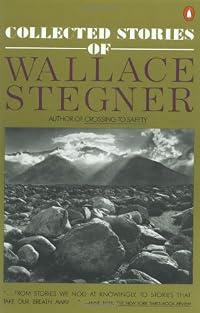
Collected Stories of Wallace Stegner
by Wallace Stegner
On This Page
Description
Here at last are the collected stories of one of America's most distinguished and admired writers. In addition to his honored works (Pulitzer Prize and National Book Award winners), Stegner is widely known as one of America's finest teachers of writing. He has taught at Harvard, Wisconsin, and Iowa and has lectured widely.Tags
Recommendations


















Member Recommendations

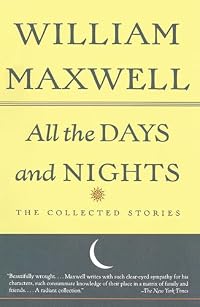
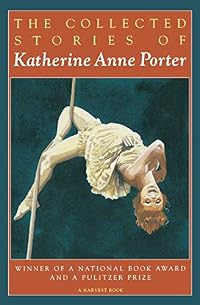
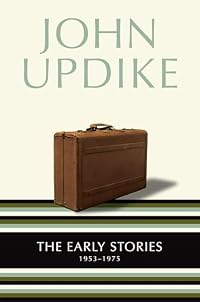
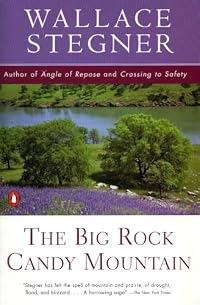
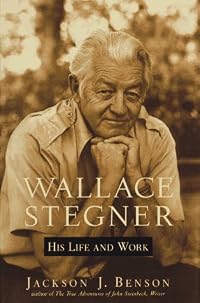
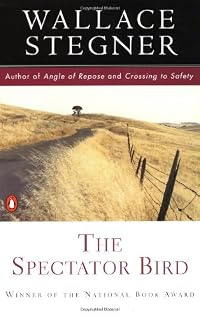
charlie68 Both authors delve in the same themes.
Member Reviews
In this collection of thirty-one stories Wallace Stegner writes about men and boys approaching manhood, often pitting themselves against nature. Stegner said that he lived the stories, “either as participant or spectator or auditor, before I made fictions of them.” They take place in Saskatchewan, Vermont, Utah, California, Egypt, The Philippines, “places that I know well.”
Stegner’s stories roam about in age as well as place. He writes about the trauma of growing up (sometimes with an abusive father), becoming a man, and being a man once you’re grown. A boy suffers a cruel father in “Butcher Bird.” “The Colt” is a heartbreaking story of a boy and his doomed horse. A family deals with the consequences of insanity in show more the potentially dark “The Double Corner.” In “A Chip Off the Old Block” a boy must fend for himself when his family is quarantined with the flu as WWI ends.
“Saw Gang” portrays the companionship among men and the satisfaction of a hard day’s work. A young Englishman seeks adventure herding cattle in Saskatchewan in “Genesis.” He finds it and more, nearly dying during a harsh winter. Stegner describes the brutality of nature as well as the beauty. But here’s some beauty: “He saw all ahead of him the disk of the white and yellow world, the bowl of the colorless sky unbearable with light.”
Stegner addresses old-age as well as youth and middle age. In “Balance His, Swing Yours,” an older man despises what he has become, inconsequential in the eyes of youth. A man regrets lost opportunities in “Maiden in a Tower.”
Stegner writes beautifully of nature: “The air was so fresh that he sniffed at it as he would have sniffed at the smell of cinnamon.”
“They saw the wild wooded side of South Maid Hill, the maples stained with autumn, and far up, one scarlet tree like an incredible flower.”
“There had been a wind during the night, and all the loneliness of the world had swept up out of the southwest.”
The writing is clear and refreshing. Although from an earlier time it has aged well. Every story here is a joy to savor. show less
Stegner’s stories roam about in age as well as place. He writes about the trauma of growing up (sometimes with an abusive father), becoming a man, and being a man once you’re grown. A boy suffers a cruel father in “Butcher Bird.” “The Colt” is a heartbreaking story of a boy and his doomed horse. A family deals with the consequences of insanity in show more the potentially dark “The Double Corner.” In “A Chip Off the Old Block” a boy must fend for himself when his family is quarantined with the flu as WWI ends.
“Saw Gang” portrays the companionship among men and the satisfaction of a hard day’s work. A young Englishman seeks adventure herding cattle in Saskatchewan in “Genesis.” He finds it and more, nearly dying during a harsh winter. Stegner describes the brutality of nature as well as the beauty. But here’s some beauty: “He saw all ahead of him the disk of the white and yellow world, the bowl of the colorless sky unbearable with light.”
Stegner addresses old-age as well as youth and middle age. In “Balance His, Swing Yours,” an older man despises what he has become, inconsequential in the eyes of youth. A man regrets lost opportunities in “Maiden in a Tower.”
Stegner writes beautifully of nature: “The air was so fresh that he sniffed at it as he would have sniffed at the smell of cinnamon.”
“They saw the wild wooded side of South Maid Hill, the maples stained with autumn, and far up, one scarlet tree like an incredible flower.”
“There had been a wind during the night, and all the loneliness of the world had swept up out of the southwest.”
The writing is clear and refreshing. Although from an earlier time it has aged well. Every story here is a joy to savor. show less
This was my first full fledged immersion into this author's work (after a failed attempt at reading one of his novels), and I was immediately impressed with the skill set he brings to the page. Wendell Berry's and Alice Munro's level of word craft came to mind at first, but it soon became clear this author was not offering any of Berry's sense of humor, and, by the end, it became obvious it would never be offered. The story settings were often reminiscent of Ivan Doig's work, but ultimately I found what I have read from Kent Haruf came closest to what I read here. There was also a rather jarring splash of John Updike in the mix. Amidst the entire collection, at least three different sets of stories are connected. In one case, the second show more story in its set comes spaced well after the first, and I was a bit startled to realize it took up immediately after the earlier one. This separation in the full collection is particularly odd when, later in the collection, three stories in a row are from a new set, but not obviously following immediately in narrative time. All this is probably a bit inconsequential when laid against the author's overall tone in his stories. I was constantly reminded of a story I had been told (perhaps erroneously, because I can't find confirmation of it now), in which Andrew Carnegie supposedly told his daughter, "Life would be so much easier for you once you realize life is hard." This story collection repeatedly points out various folks in various situations and settings, struggling hard and often not even achieving "two steps forward and one step back" status. Unfortunately, it was never clear to me whether the author just thought life was hard or if he was ultimately pointing out that he wondered if it was all worth it. The good news is he writes so well, you feel obligated to hear him out, regardless. show less
A tremendous range of stories with different themes and settings that immerse the reader. Mr. Stegner is a writer with depth.
Stegner's stories have won many O. Henry prizes, but he is a novelist, not a short story writer. "City of the Dead" is exceptionally fine.
Often called the 'Dean of Western American Writers', Wallace Stegner http://www.cateweb.org/CA_Authors/Stegner.html (1909-1993) writings often parallels his own life experiences and family history. This expansive collection of stories was written over a span of fifty years. They encompass a variety of settings ranging from harsh ranch life in Saskatchewan to Salt Lake City, Vermont, Egypt and the Philippines. These Stegner stories focus on people's strength and frailties as they deal with life's trials. I strongly recommend reading any of Stegner's work. (lj)
Gave up after 315 pages; deleted Stegner from further reading, and donated three unread books.
pretty good start, declined toward the end
Members
- Recently Added By
Author Information

92+ Works 20,811 Members
In 1972, Wallace Earle Stegner won a Pulitzer Prize for Angle of Repose (1971), a novel about a wheelchair-bound man's recreation of his New England grandmother's experience in a late nineteenth-century frontier town. Stegner was born on February 18, 1909 in Lake Mills, Iowa. He was an American novelist, short story writer, environmentalist, and show more historian; he has been called "The Dean of Western Writers". He also won the US National Book Award in 1977 for The Spectator Bird. Stegner grew up in Great Falls, Montana; Salt Lake City, Utah; and in the village of Eastend, Saskatchewan, which he wrote about in his autobiography Wolf Willow. Stegner taught at the University of Wisconsin and Harvard University. Eventually he settled at Stanford University, where he initiated the creative writing program. His students included Wendell Berry, and Sandra Day O'Connor. The Stegner Fellowship program at Stanford University is a two-year creative writing fellowship. The house Stegner lived in from age 7 to 12 in Eastend, Saskatchewan, Canada, was restored by the Eastend Arts Council in 1990 and established as a Residence for Artists; the Wallace Stegner Grant For The Arts offers a grant of $500 and free residency at the house for the month of October for published Canadian writers. Stegner died in Santa Fe, New Mexico, on April 13, 1993, from a car accident on March 28, 1993. (Bowker Author Biography) show less
Awards and Honors
Awards
Distinctions
Common Knowledge
- Canonical title
- Collected Stories of Wallace Stegner
- Original title
- Collected Stories of Wallace Stegner
- Original publication date
- 1990
- Dedication
- For Mary, in gratitude for
fifty-three years of close
collaboration, and for
patience beyond the call of duty - Blurbers
- Dickey, James; Doig, Ivan; Tyler, Anne
Classifications
Statistics
- Members
- 715
- Popularity
- 39,536
- Reviews
- 7
- Rating
- (4.11)
- Languages
- English
- Media
- Paper, Ebook
- ISBNs
- 6
- ASINs
- 11