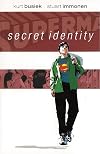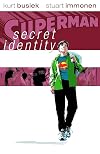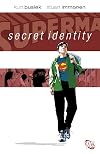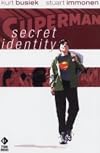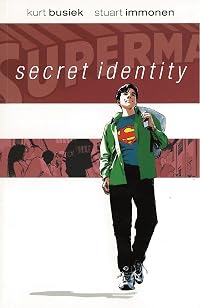
Superman: Secret Identity
by Kurt Busiek, Stuart Immonen (Illustrator)
Superman: Secret Identity (omnibus), Superman
On This Page
Description
In this critically acclaimed work from writer Kurt Busiek (ASTRO CITY) and artist Stuart Immonen (Ultimate X-Men), an alternate "Clark Kent" encounters complications the real Superman never had to handle: a career, a wife, children-a real life. Despite his iconic name, Clark Kent from Picketsville, Kansas, is just a normal kid whose parents thought they were being clever. He can't fly, or see through walls, or shrug off speeding bullets-that is, until the day he can. And it's all much harder show more than it looks in the comics. Follow Clark across the decades as this man with powers tries to prove he can make the world a safer place without sacrificing everything. show lessTags
Recommendations


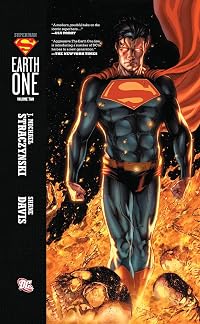
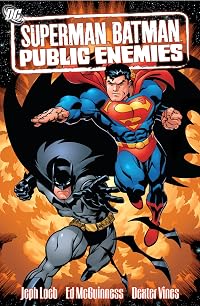
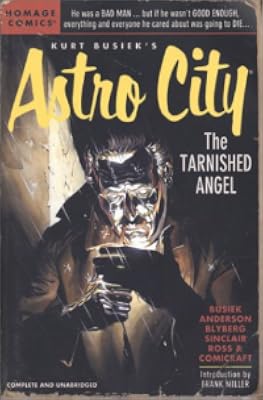
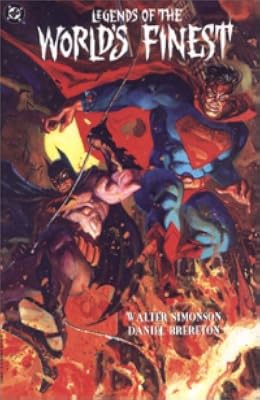


Member Recommendations

Member Reviews
This is one of the best Superman stories ever and it's not even about 'normal' Superman.
Secret Identity is a great story to use as an introduction to Superman - it doesn't have a weight of history attached, all it asks is that you know Superman exists. It strips away so much of the comic book trappings and focuses on what Superman means to a world very much like ours.
Busiek's writing is as excellent always and Immonen's art is the best I've ever seen from him. There are spreads in this story that I would frame and hang.
Secret Identity is a great story to use as an introduction to Superman - it doesn't have a weight of history attached, all it asks is that you know Superman exists. It strips away so much of the comic book trappings and focuses on what Superman means to a world very much like ours.
Busiek's writing is as excellent always and Immonen's art is the best I've ever seen from him. There are spreads in this story that I would frame and hang.
I've hit the motherlode in terms of Superman stories, it seems. Possibly the best one.
I was a little hesitant at first, but the story gets better and better as it goes along. I was worried it was another origin story, but thankfully it's far more than that. This is the least comic booky of the Superman stories, in a good way; everything feels very grounded, there's very little unearned drama, it's all very sensible in terms of Clark's worries about family, the US government and others like him.
I really enjoyed how there isn't a big bad, or even a big action section. Now that I think about it, there's barely any action at all and it felt so refreshing. I wasn't sure about the art style but I think it compliments the story nicely. show more There's a panel about halfway through that references old timey Superman comics that stopped me in my tracks. Incredible graphic novel. show less
I was a little hesitant at first, but the story gets better and better as it goes along. I was worried it was another origin story, but thankfully it's far more than that. This is the least comic booky of the Superman stories, in a good way; everything feels very grounded, there's very little unearned drama, it's all very sensible in terms of Clark's worries about family, the US government and others like him.
I really enjoyed how there isn't a big bad, or even a big action section. Now that I think about it, there's barely any action at all and it felt so refreshing. I wasn't sure about the art style but I think it compliments the story nicely. show more There's a panel about halfway through that references old timey Superman comics that stopped me in my tracks. Incredible graphic novel. show less
One of my new favorite Superman stories. Goes deep into Clark's mindset as a guy with a secret identity and how that shapes his view of the world, as well as how the world salivates after his secret. For once, Clark doesn't serve as a villain tenderizer - we just get to witness his life unfold.
Side note: this story deals with an alternate Earth in which there are no superheroes and "Superman" is nothing more than a comic book character within that world. To that end, this story is a little more like Joe Hill's "The Cape" in terms of exploring a standalone hero than it is some sort of continuity-drenched slugfest.
Side note: this story deals with an alternate Earth in which there are no superheroes and "Superman" is nothing more than a comic book character within that world. To that end, this story is a little more like Joe Hill's "The Cape" in terms of exploring a standalone hero than it is some sort of continuity-drenched slugfest.
Imagine your parents' surname was "Kent", you were born in Kansas, and they gave you the first name "Clark". Wouldn't that be terrible? But then imagine that one day you discovered that you really were Superman. That is the premise of Secret Identity, which follows this boy named Clark up into adulthood. I'd known the fundamentals of the premise, but not much more, before reading it-- enough to know it took him up until he was old enough to hold a newspaper job, at least, but I didn't know quite how far along the story went. 206 pages to cover a man's entire life. The book is narrated by Clark, in the form of extracts from a typed diary he keeps and doesn't share with anyone.
Given Superman action figures he doesn't particularly enjoy by show more his family and the constant butt of jokes from his cruel classmates, Clark is pretty much a typical teenager until he discovers he can fly. It's a magnificent moment, as you might imagine, and he soon discovers he has all Superman's powers: super-strength, x-ray vision, super-hearing, laser eyes, super-breath, and so on. He spends the rest of the book figuring out what he ought to do with these powers: should he used them for good? Should he go public? Should he hide them from everyone he knows? In the end, events convince him that he can't afford to go public-- the risk is too great.
In the first chapter, when Clark is still in high school, his powers are pretty obviously a metaphor for the need all teenagers feel to hide themselves and fit in with others, yet at the same time be recognized for who one really is. There's a girl Clark wants to impress, of course. But dare he go out on that limb? Of course he doesn't, but he gains some small recognition from her all the same. The end of the chapter, though, introduces this notion that there are darker forces at work: there are people out there who want what Clark is. Only he himself doesn't know who he is-- where did he come from? He's not adopted, so how did he gain these powers?
At first, I was tepid about these plots. Surely the point of the story was how did a boy deal with these things? Explaining where they came from, or introducing a group of evil folks trying to take advantage of him seemed like it would just derail that. That wasn't going to be the interesting part. It's like in Ken Grimwood's Replay-- the powers the main characters have can never be explained because any answer would be boring. But as the story unfolded, I realized that I was wrong: just as Clark's powers stand for the true identities we all carry within us and reveal only to a few others, the government officials trying to uncover him stand for the forces of the world constantly trying to push us out into the world where everyone sees us. It's interesting to have a story that argues we ought to keep parts of ourselves hidden from the world, whereas most fiction tells us "to be who we really are" but it works here-- and truth be told, it's how things actually work in the real world.
Unfortunately, Busiek seems really worried that the reader can't figure out this subtext on their own, and there's a few panels where this is ham-handedly narrated by Clark. "THIS IS WHAT THE STORY MEANS." Ugh. Thank you, I am capable of interpreting literature myself.
Clark's friends delight in setting him up on dates with women named "Lois" and "Lana" (and even "Cat Grant"), but one of these dates introduces him to the woman he eventually marries, one Lois Chaudhari. (Though I was amused by this element, I found it hard to buy the story's claim that Lois was constantly set up on dates with men named Clark-- is "Lois" really so uncommon?) It's a very real romance, and the moment where Clark reveals his secret identity to her is fantastic.
Stuart Immomen's art is a little odd. It's often glorious, especially in his big wide vistas and such, but often times his faces look a little stiff-- and stuck on an emotion that doesn't actually fit with the dialogue depicted. But his action shots are great, as is his use of color. It would be a very different and somewhat inferior book with a different artist on the case. Possibly the best sequence is when Clark is captured by the government and makes his escape: there's no dialogue, no narration, yet it's utterly harrowing.
As I said, Secret Identity covers quite a span of time, the last chapter taking place when Clark and Lois's own daughters are grown. Some aspects of this I found improbable, but the last few pages of the story, as he goes on one last mission, declares his retirement, and celebrates Christmas... well, I think I must have had something in my eye while reading it, because the alternative is untenable for me. The emotion that Busiek and Immonen drew together at the end was potent and powerful.
This is a fantastic story, told fantastically well. I think the appeal of Superman is that he's an ordinary person, just with superpowers-- he'd be trying to do good even if he wasn't from Krypton, and this story drives that idea home. People often complain (wrongly, I think, but also understandably) that Superman is hard to relate to, but this Superman certainly isn't. He really is just like you or me or anyone else you know. He could be you or me or anyone else you know. After all, don't we we all have secret identities? show less
Given Superman action figures he doesn't particularly enjoy by show more his family and the constant butt of jokes from his cruel classmates, Clark is pretty much a typical teenager until he discovers he can fly. It's a magnificent moment, as you might imagine, and he soon discovers he has all Superman's powers: super-strength, x-ray vision, super-hearing, laser eyes, super-breath, and so on. He spends the rest of the book figuring out what he ought to do with these powers: should he used them for good? Should he go public? Should he hide them from everyone he knows? In the end, events convince him that he can't afford to go public-- the risk is too great.
In the first chapter, when Clark is still in high school, his powers are pretty obviously a metaphor for the need all teenagers feel to hide themselves and fit in with others, yet at the same time be recognized for who one really is. There's a girl Clark wants to impress, of course. But dare he go out on that limb? Of course he doesn't, but he gains some small recognition from her all the same. The end of the chapter, though, introduces this notion that there are darker forces at work: there are people out there who want what Clark is. Only he himself doesn't know who he is-- where did he come from? He's not adopted, so how did he gain these powers?
At first, I was tepid about these plots. Surely the point of the story was how did a boy deal with these things? Explaining where they came from, or introducing a group of evil folks trying to take advantage of him seemed like it would just derail that. That wasn't going to be the interesting part. It's like in Ken Grimwood's Replay-- the powers the main characters have can never be explained because any answer would be boring. But as the story unfolded, I realized that I was wrong: just as Clark's powers stand for the true identities we all carry within us and reveal only to a few others, the government officials trying to uncover him stand for the forces of the world constantly trying to push us out into the world where everyone sees us. It's interesting to have a story that argues we ought to keep parts of ourselves hidden from the world, whereas most fiction tells us "to be who we really are" but it works here-- and truth be told, it's how things actually work in the real world.
Unfortunately, Busiek seems really worried that the reader can't figure out this subtext on their own, and there's a few panels where this is ham-handedly narrated by Clark. "THIS IS WHAT THE STORY MEANS." Ugh. Thank you, I am capable of interpreting literature myself.
Clark's friends delight in setting him up on dates with women named "Lois" and "Lana" (and even "Cat Grant"), but one of these dates introduces him to the woman he eventually marries, one Lois Chaudhari. (Though I was amused by this element, I found it hard to buy the story's claim that Lois was constantly set up on dates with men named Clark-- is "Lois" really so uncommon?) It's a very real romance, and the moment where Clark reveals his secret identity to her is fantastic.
Stuart Immomen's art is a little odd. It's often glorious, especially in his big wide vistas and such, but often times his faces look a little stiff-- and stuck on an emotion that doesn't actually fit with the dialogue depicted. But his action shots are great, as is his use of color. It would be a very different and somewhat inferior book with a different artist on the case. Possibly the best sequence is when Clark is captured by the government and makes his escape: there's no dialogue, no narration, yet it's utterly harrowing.
As I said, Secret Identity covers quite a span of time, the last chapter taking place when Clark and Lois's own daughters are grown. Some aspects of this I found improbable, but the last few pages of the story, as he goes on one last mission, declares his retirement, and celebrates Christmas... well, I think I must have had something in my eye while reading it, because the alternative is untenable for me. The emotion that Busiek and Immonen drew together at the end was potent and powerful.
This is a fantastic story, told fantastically well. I think the appeal of Superman is that he's an ordinary person, just with superpowers-- he'd be trying to do good even if he wasn't from Krypton, and this story drives that idea home. People often complain (wrongly, I think, but also understandably) that Superman is hard to relate to, but this Superman certainly isn't. He really is just like you or me or anyone else you know. He could be you or me or anyone else you know. After all, don't we we all have secret identities? show less
I've had Secret Identity sitting here for years in one of the stacks on unread graphic novels and collections. I didn't know what it was when I bought it, and I didn't know much about author Kurt Busiek. All I knew was that Stuart Immonen's art was amazing. The cover had caught my eye, so I bought the book. And now, over a decade later, I finally read it.
It is nothing short of brilliant. If you haven't read it, you should. It's about what it might be like to develop superpowers in the real world. Our world. It's about a teen named Clark Kent -- for the comic book character, because his parents had a weird sense of humor -- and how he got teased over his name. About how he always felt he was an outsider, not sure who he was or what his show more place in the world would be. In other words, an average teenager. And then one day, he discovered he could fly.
Everything he knew about himself changed, and part of that was not knowing who or what he was and that having more implications than ever. Finding his way in life got infinitely more complicated as he contemplated becoming a hero. The book -- originally a mini-series -- examines what it means to be a hero, what the ramifications might be if that became public. It looks at privacy and government overreaction, while at its heart, it remains a coming-of-age story, taking Clark from his teen years to a man of sixty, thereabouts. It's about making decisions and trying to live your life and it's about being human and what that means, too. And it's about hope and love and doing what is right. It's a graphic novel for the ages. And I'm very glad I got around to finally reading it. show less
It is nothing short of brilliant. If you haven't read it, you should. It's about what it might be like to develop superpowers in the real world. Our world. It's about a teen named Clark Kent -- for the comic book character, because his parents had a weird sense of humor -- and how he got teased over his name. About how he always felt he was an outsider, not sure who he was or what his show more place in the world would be. In other words, an average teenager. And then one day, he discovered he could fly.
Everything he knew about himself changed, and part of that was not knowing who or what he was and that having more implications than ever. Finding his way in life got infinitely more complicated as he contemplated becoming a hero. The book -- originally a mini-series -- examines what it means to be a hero, what the ramifications might be if that became public. It looks at privacy and government overreaction, while at its heart, it remains a coming-of-age story, taking Clark from his teen years to a man of sixty, thereabouts. It's about making decisions and trying to live your life and it's about being human and what that means, too. And it's about hope and love and doing what is right. It's a graphic novel for the ages. And I'm very glad I got around to finally reading it. show less
Even though this isn't a true Superman book, it has everything that I love (character development, desire to help, balancing privacy, wrestling with major life issues, good writing) and none of that boring action stuff. When I finished, I had to go back and re-read some of my favourite sections. And the artwork is gorgeous!
Imagine your parents named you Clark Kent. Your reality has no superheroes and DC Comic's character Superman is world famous. You go through school enduring endless teasing and jabs. One day you wake up with superpowers similar to the Clark Kent of comic book fame. You'd be the lead character in the entertaining graphic novel Superman: Secret Identity. Masterfully scripted by Busiek with some of the best art of Immomen's career, this potentially hokey story is a thought provoking exploration of identity and humanity.
Members
- Recently Added By
Lists

Recommended Comics / Graphic Novels
595 works; 122 members

Top Five Books of 2014
1,064 works; 398 members

Books Read in 2016
4,666 works; 197 members
Author Information

845+ Works 12,793 Members

Series


Work Relationships
Common Knowledge
- Canonical title
- Superman: Secret Identity
- Original publication date
- 2004-01-14 (issue #1) (issue #1); 2004-02-18 (issue #2) (issue #2); 2004-03-17 (issue #3) (issue #3); 2004-04-21 (issue #4) (issue #4)
- People/Characters
- Superman
- Epigraph
- "The thing is,
I like things quiet." - Dedication
- For Elliot S. Maggin, Curt Swan and Julius Schwartz
- Original language
- English
Classifications
- Genre
- Graphic Novels & Comics
- DDC/MDS
- 741.5973 — Arts & recreation Drawing & decorative arts Drawing Comic books, graphic novels, fotonovelas, cartoons, caricatures, comic strips History, geographic treatment, biography North American United States (General)
- LCC
- PN6728 .S9 .B87 — Language and Literature Literature (General) Literature (General) Collections of general literature Comic books, strips, etc.
- BISAC
Statistics
- Members
- 427
- Popularity
- 72,253
- Reviews
- 18
- Rating
- (4.22)
- Languages
- 5 — English, French, Italian, Portuguese (Portugal), Spanish
- Media
- Paper, Ebook
- ISBNs
- 19
- UPCs
- 1
- ASINs
- 2