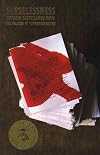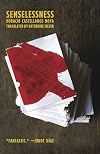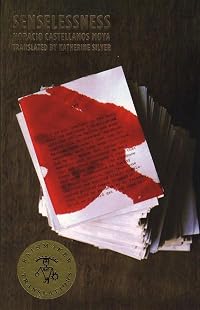
Senselessness
by Horacio Castellanos Moya
On This Page
Description
"An alcoholic, atheist, sex-obsessed writer finds himself employed by the Catholic Church (an institution he loathes) to edit the testimonies of the survivors of slaughtered Indian villages. The writer's job is to tidy up the 1,100 page report: "that was what my work was all about, cleaning up and giving a manicure to the Catholic hands that were piously getting ready to squeeze the balls of the military tiger." Mesmerized by the eerie poetry of the Indians' phrases, the increasingly show more agitated and frightened writer is endangered twice over: by the spell exerted over his somewhat tenuous sanity by the strangely beautiful heart-rending voices, and by real danger. The Church is hunting the military, but the military is still in charge of the country, and our booze-soaked writer is soon among the hunted - or is he paranoid? Or is he paranoid and one of the hunted?"--Jacket. show lessTags
Recommendations








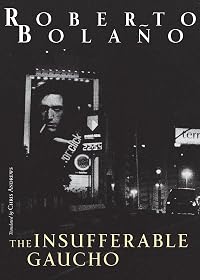
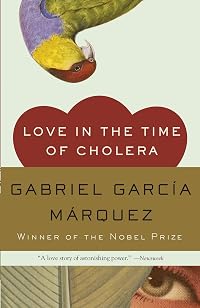
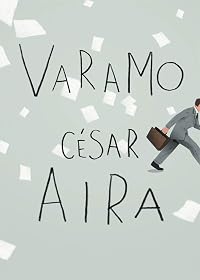
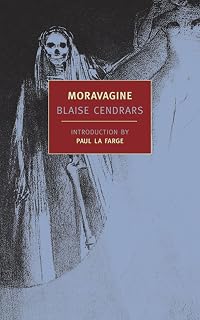
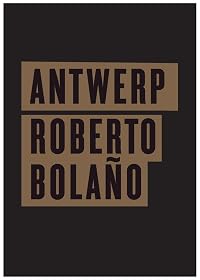
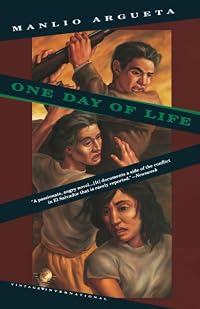
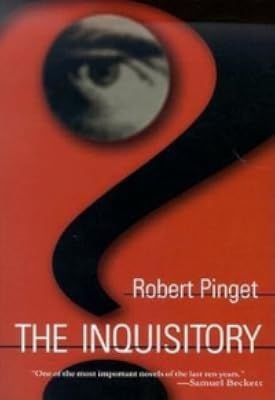
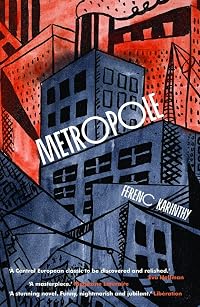

Member Recommendations
Member Reviews
It's a horrible, horrible story; it destroyed its narrator and bid fair to make me a whispering zombie; man's inexpressible vileness and irreducible cruelty are a weight too heavy for me to bear. His task is to copyedit a human-rights report commissioned by the Archbishop to ascertain the guilt and/or innocence of the parties to a genocide. Every step of the narrator's descent into mental illness's loudest darkest corners is punctuated by italicized phrases he's culled from this report...all one thousand one hundred pages...for their unusual, beautiful euphonious horror: I am not complete in the mind greets the reader on page one. A man who lived beyond the violence that stole his family from him utters those words to a psychologist as show more the report takes shape, as the professional records the words and assesses the soul that left the body of the speaker so as to bear witness.
I didn't read the original Spanish, but I'll wager there's nothing lost in the translation. It's too precisely evocative. It's also extremely prolix in its one hundred forty-two pages. Words pile up, words wind around your eyestalks, words make dizzyingly alien geometries as they flow from the desperately purging narrator. Words distance him, though not the reader, from the blood and hate and evil he must view as structures and concepts in order to earn his five thousand United States dollars for copyediting one thousand one hundred pages of agony. The slaughter of untold bodies is actually the less revolting part of the tale...Wounded, yes, is hard to be left, but dead is ever peaceful is not something a grandmother should say of her murdered descendants...and the litany of one thousand one hundred pages reminds us that the narrator is doing a job, is taking the written results of an investigation, is applying grammar and punctuation to the massive, traumatized shouting of the victims of genocide.
We all know who are the assassins. show less
I didn't read the original Spanish, but I'll wager there's nothing lost in the translation. It's too precisely evocative. It's also extremely prolix in its one hundred forty-two pages. Words pile up, words wind around your eyestalks, words make dizzyingly alien geometries as they flow from the desperately purging narrator. Words distance him, though not the reader, from the blood and hate and evil he must view as structures and concepts in order to earn his five thousand United States dollars for copyediting one thousand one hundred pages of agony. The slaughter of untold bodies is actually the less revolting part of the tale...Wounded, yes, is hard to be left, but dead is ever peaceful is not something a grandmother should say of her murdered descendants...and the litany of one thousand one hundred pages reminds us that the narrator is doing a job, is taking the written results of an investigation, is applying grammar and punctuation to the massive, traumatized shouting of the victims of genocide.
We all know who are the assassins. show less
According to the publisher, “A boozing, sex-obsessed writer finds himself employed by the Catholic Church (an institution he loathes) to proofread a 1,100 page report on the army’s massacre and torture of thousands of indigenous villagers [in El Salvador] a decade earlier, including testimonies of the survivors.” The description is not wrong, of course. In fact, it is completely accurate. The real value of this rather reductive description is that it helps prepare the reader (to the extent that anything could) for the tone of the book. Castellanos Moya seems to struggle mightily with how to address the holocaust that he is writing about. What better way to depict that struggle than with a narrator who is also forced to confront show more it? It all reminds me of Bolaño’s observation that Castellanos Moya is “the only writer of my generation who knows how to narrate the horror, the secret Vietnam that Latin America was for a long time.” The book careens between the narrator who, like Castellanos Moya, is trying to come to grips with the subject and the impossibly banal and therefore deeply moving words of the witnesses. Add to this, the fact that the narrator is constantly jotting down some of these expressions as if they were brilliant statements of a timeless wisdom (which, in a sense, they are). All the while, he is terrified that he is a marked man whose constant antics reflect his growing paranoia. Or is he not paranoid but actually correct? They really are after him. And so Senselessness veers between humor and pathos, always—but never quite—going over the edge. It is not without its flaws, foremost among which is that because Castellanos Moya’s interest is elsewhere (namely, the subject matter), his characters are pretty uniformly one-dimensional. Still, it’s a deeply unsettling book told in the most outlandish way imaginable and a bravura performance. show less
A novel of madness. And total hilarity. And total horror. An "inferno of the mind" to borrow a phrase from the book.
If I were ever to teach a class on Kafka (ha), I would teach this book first. I haven't read any other book that is as Kafka as Kafka; Senselessness would be a perfect introduction to the spirit of the Czech writer, a primer on his obsessions with the labyrinth of absurdities we construct (or live in, without control).
If I were ever to teach a class on Kafka (ha), I would teach this book first. I haven't read any other book that is as Kafka as Kafka; Senselessness would be a perfect introduction to the spirit of the Czech writer, a primer on his obsessions with the labyrinth of absurdities we construct (or live in, without control).
It's an important job they've given our nameless narrator, simple but important. In a fragile Mesoamerican democracy (also never named) where people still carry memories and scars of torture chambers and massacres and the people who committed the atrocities have all been pardoned and kept their old positions, the catholic church has hired him to copy edit 1100 pages of testimonies from hundreds of massacres during the recent civil war. Page upon page upon page of the most horrific descriptions, deeply traumatised people talking about how they saw their families chopped to pieces, their neighbours executed, their daughters raped and their sons raping.
I am not complete in the mind, said the sentence I highlighted with the yellow marker show more and even copied into my personal notebook, because this wasn't just any old sentence, much less some wisecrack...
This is, of course, a comedy.
A very dark and uneasy comedy, to be sure. It's not the horrors themselves that Moya makes fun of (the book is loosely based on real events). But he lets the quotes get filtered through a narrator who is not only a self-centered chauvinist who's more than a little paranoid, but above all exactly that: a narrator who completely misses the point of his own story. Just like Moya himself (exiled from both Honduras and El Salvador) he's not from this country but from one of the ones next to it, so he's always a little outside both the society and the stories he's supposed to edit. And so he starts treating them as stories. He romanticises, he admires them as works of literature, he makes them a picturesque background for his own heroic tale of himself as he struts around town, tries to pick up young girls, fights with priests and believes himself a subversive and dangerous journalist when he's really more of an Ignatius J Reilly. And the more he submerges himself in the horrible story he's editing and exaggerates his own role in it, the more he becomes convinced that everyone is after him. Which, of course, is ludicrous: he's a nobody, not even his own bosses take him seriously. Except maybe not. Because all of it did happen, and everything isn't safe...
Senselessness is short but sharp, with no easy moral. It seems to deliberately want to force the reader to subvert their own role in it: to rob us of that safe (geographical and psychological) distance between the events of the novel and our own armchair by having a ridiculous narrator who's trying - and failing - to keep a distance to the events of his own novel. He uses every word to constantly question and undermine our attempt to read it as just a black comedy or make easy sense of the relation between fiction and fact. It's not quite a great novel, especially in the way it ends just as it starts to get really good, but it's a bewildering read that will stay with you for some time. show less
I am not complete in the mind, said the sentence I highlighted with the yellow marker show more and even copied into my personal notebook, because this wasn't just any old sentence, much less some wisecrack...
This is, of course, a comedy.
A very dark and uneasy comedy, to be sure. It's not the horrors themselves that Moya makes fun of (the book is loosely based on real events). But he lets the quotes get filtered through a narrator who is not only a self-centered chauvinist who's more than a little paranoid, but above all exactly that: a narrator who completely misses the point of his own story. Just like Moya himself (exiled from both Honduras and El Salvador) he's not from this country but from one of the ones next to it, so he's always a little outside both the society and the stories he's supposed to edit. And so he starts treating them as stories. He romanticises, he admires them as works of literature, he makes them a picturesque background for his own heroic tale of himself as he struts around town, tries to pick up young girls, fights with priests and believes himself a subversive and dangerous journalist when he's really more of an Ignatius J Reilly. And the more he submerges himself in the horrible story he's editing and exaggerates his own role in it, the more he becomes convinced that everyone is after him. Which, of course, is ludicrous: he's a nobody, not even his own bosses take him seriously. Except maybe not. Because all of it did happen, and everything isn't safe...
Senselessness is short but sharp, with no easy moral. It seems to deliberately want to force the reader to subvert their own role in it: to rob us of that safe (geographical and psychological) distance between the events of the novel and our own armchair by having a ridiculous narrator who's trying - and failing - to keep a distance to the events of his own novel. He uses every word to constantly question and undermine our attempt to read it as just a black comedy or make easy sense of the relation between fiction and fact. It's not quite a great novel, especially in the way it ends just as it starts to get really good, but it's a bewildering read that will stay with you for some time. show less
A spiraling into the madness of the mind, but is it madness when the world's just as mad. The book deals with the genocide of indigenous persons in El Salvadore with enough black humor and distance to make it possible to read while still being very affecting.
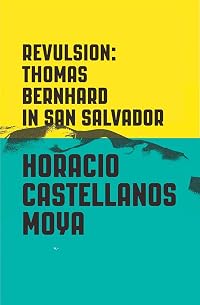
I first read Moya because 'Thomas Bernhard in San Salvador' was too wonderful a title to ignore, and that sucked me in to looking at his other books. Very glad I did; if Marias is Henry James meets James Bond, Moya is Bernhard meets Joseph Conrad or some other angry anti-imperialist. You get great style and the utter horror of murderous governments, without the soothing that often comes with that stuff. The narrator is an asshole, all too prone to making other people's suffering into his own. You and I, too, are assholes.
Also, can't miss drive-by attack on magical realism [kisses fingers and mouths, belissimo!]
Also, can't miss drive-by attack on magical realism [kisses fingers and mouths, belissimo!]
A writer in an unnamed Central or South American country, not his own, is hired by the Catholic Church to edit a 1,100 page document containing interviews of Indians tortured by the government. He despises the church and attempts to bed most of his female co-workers, often succeeding.
As he becomes obsessed by and invested in the stories of extreme cruelty and torture he begins to appreciate the poetry in the everyday language of the interviews. A news article in which he is mentioned feeds his paranoia. He soon loses perspective and he begins to absorb and relive the horror in the document
As he becomes obsessed by and invested in the stories of extreme cruelty and torture he begins to appreciate the poetry in the everyday language of the interviews. A news article in which he is mentioned feeds his paranoia. He soon loses perspective and he begins to absorb and relive the horror in the document
Members
- Recently Added By
Lists

Best 21st Century Books (So Far)
670 works; 86 members

Spanish Language in English Translation
19 works; 2 members

Reading Globally
136 works; 16 members

Diverse Horror
262 works; 6 members

contemporary literary fiction list to check out
47 works; 1 member
Author Information

36+ Works 1,174 Members
Some Editions
Awards and Honors
Awards
Distinctions
Series
Belongs to Publisher Series
Common Knowledge
- Original title
- Insensatez; Desmoronamiento
- Original publication date
- 2004 (original Spanish) (original Spanish); 2006; 2008 (English: Silver) (English: Silver)
- People/Characters
- Narrator; Erick; Toto; Pilar; Fatima
- Epigraph*
- Isemene: Ja, konung, ej ens den sans vi föds med,
blir kvar i den som ondska drabbar,
den flyr sin kos.
Sófokles
Antigone - Dedication*
- Till S.D. som fick mig att lova att inte tillägna henne den här boken.
- First words*
- Jag är inte riktigt normal i huvudet, löd meningen som jag markerade med gul överstrykningspenna och som jag till och med skrev av i mitt privata anteckningsblock, för det här var inte vilken banal mening som helst, inge... (show all)t som någon hade hävt ur sig bara för skojs skull, långt därifrån, dessutom var det den mening som hade gjort starkast intryck på mig av det jag läst under min första arbetsdag, den mening som hade gjort mig alldeles snurrig efter min första djupdykning i de ettusen etthundra tätskrivna sidorna som min vän Erick hade lämnat på mitt skrivbord så att jag skulle kunna bilda mig en uppfattning om vad det var för slags jobb jag hade framför mig.
- Last words*
- (Click to show. Warning: May contain spoilers.)Du kan vara glad att du drog."
- Original language
- Spanish
*Some information comes from Common Knowledge in other languages. Click "Edit" for more information.
Classifications
- Genres
- Fiction and Literature, General Fiction
- DDC/MDS
- 863.64 — Literature & rhetoric Spanish Literature Spanish fiction 20th Century 1945-2000
- LCC
- PQ7539.2 .C34 .I6713 — Language and Literature French, Italian, Spanish and Portuguese literatures Spanish literature Provincial, local, colonial, etc. Spanish America
- BISAC
Statistics
- Members
- 400
- Popularity
- 77,839
- Reviews
- 24
- Rating
- (3.74)
- Languages
- 9 — Chinese, English, French, Icelandic, Italian, Norwegian (Bokmål), Portuguese, Spanish, Swedish
- Media
- Paper, Ebook
- ISBNs
- 19
- ASINs
- 5