Unit Origami: Multidimensional Transformations
by Tomoko Fuse
On This Page
Description
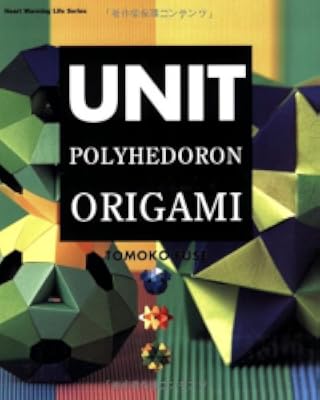
Shows how to combine folded-paper units with an insertion technique to create complex multi-dimensional forms.Tags
Recommendations












Member Reviews
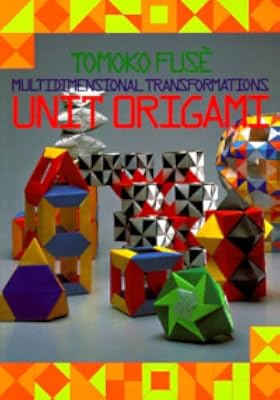
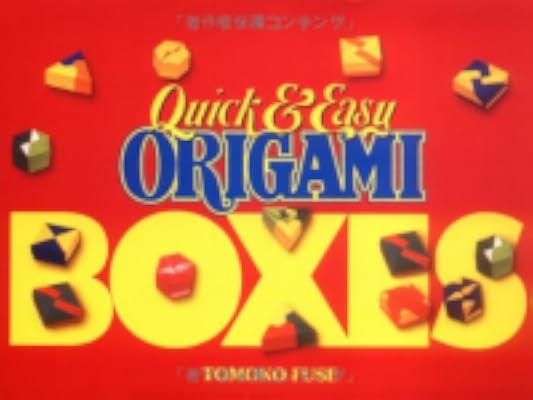
This is perhaps my favorite origami book. I've made pretty much every model in this book at one point or another. I've got some other unit origami books, but they can't compare to this one. There's nothing more disappointing to the origami enthusiast than completing a big, multi-unit structure with thirty or so individual pieces of paper, only to find out that the big old geometric ball that you just made is structurally unsound, or doesn't even stay together at all. That doesn't happen here. If a design in this book doesn't stay together that well when you assemble all the units, the author tells you so beforehand (there are a couple like this, which the author includes due to their beauty or the ingenuity of their design). I'm an show more especially big fan of the pinwheel unit that you can see in black and white on the cover of this book. You can make all sorts of geometrical figures with it, like the cubes shown on the cover, but what's especially compelling is that you can connect different units using a variety of different paper joints (you can see the red paper that's connecting the cubes there on the cover). Making unit origami then connecting the units together in interesting ways is a lot of fun. I used to teach my neighbors' children in Mongolia how to make some of these, and they always got a kick out of it. Then they would have something to do when they came over to my ger and wouldn't bother me about letting them play solitaire on my computer. It was a win-win situation for me. I've given a lot of these unit origami creations as gifts, and they're always well-received. Another interesting thing about these designs is that you can often use the units to make a wide variety of three-dimensional geometric shapes. There's a glossary of geometric solids in the back of the book to help you with that. I recommend this book highly to all people interested in origami. show less
Fuse has written a book all about one of her favorite areas of origmami: modular creations. Modular origami is created when you fold multiple copies of the same unit and then work them together to create a larger model. It looks gorgeous, but can be very time consuming and frustrating if your model is made of 60 units. I like this book alot, but it is clear that Fuse's ability to fold is light years beyond mine. Still, she always gives clear directions and diagramms so that if you are patient you can make gorgeous models.
Ratings
Members
- Recently Added By
Author Information

144 Works 1,677 Members
Classifications
Statistics
- Members
- 238
- Popularity
- 137,271
- Reviews
- 2
- Rating
- (4.28)
- Languages
- English
- Media
- Paper
- ISBNs
- 1