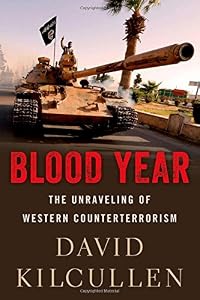
Blood Year: The Unraveling of Western Counterterrorism
by David Kilcullen
On This Page
Description
"2014 has the potential to go down as a crucial year in modern world history. A resurgent and bellicose Russia took over Crimea and fueled a civil war in Eastern Ukraine. Post-Saddam Iraq, in many respects a creature of the United States because of the war that began in 2003, lost a third of its territory to an army of hyper-violent millennialists. The peace process in Israel seemed to completely collapse. Finally, after coalescing in Syria as a territorial entity, the Islamic State swept show more into northern Iraq and through northeastern Syria, attracting legions of recruits from Europe and the Middle East. In short, the post-Cold War security order that the US had constructed after 1991 seemed to be coming apart at the seams. David Kilcullen was one of the architects of America's strategy in the late phases of the second Gulf War, and also spent time in Afghanistan and other hotspots. In Blood Year, he provides a wide-angle view of the current situation in the Middle East and analyzes how America and the West ended up in such dire circumstances. Whereas in 2008 it appeared that the U.S. might pull a modest stalemate from the jaws of defeat in Iraq, six years later the situation had reversed. After America pulled out of Iraq completely in 2011, the Shi'ite president cut Sunnis out of the power structure and allowed Iranian influence to grow. And from the debris of Assad's Syria arose an extremist Sunni organization even more radical than Al Qaeda. Unlike Al Qaeda, ISIS was intent on establishing its own state, and within a remarkably short time they did. Interestingly, Kilcullen highlights how embittered former Iraqi Ba'athist military officers were key contributors to ISIS's military successes. Kilcullen lays much of the blame on Bush's initial decision to invade Iraq (which had negative secondary effects in Afghanistan), but also takes Obama to task for simply withdrawing and adopting a "leading from behind" strategy. As events have proven, Kilcullen contends, withdrawal was a fundamentally misguided plan. The U.S. had uncorked the genie, and it had a responsibility to at least attempt to keep it under control. Instead, the U.S. is at a point where administration officials state that the losses of Ramadi and Palmyra are manageable setbacks. Kilcullen argues that the U.S. needs to re-engage in the region, whether it wants to or not, because it is largely responsible for the situation that is now unfolding. Blood Year is an essential read for anyone interested in understanding not only why the region that the U.S. invaded a dozen years ago has collapsed into utter chaos, but also what it can do to alleviate the grim situation."--Provided by Amazon.com. show lessTags
Recommendations










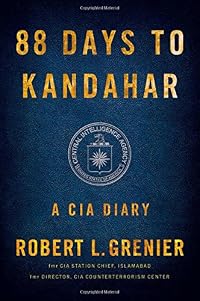
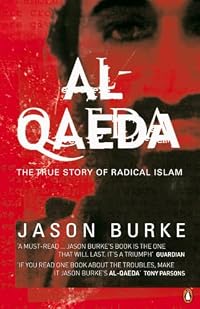
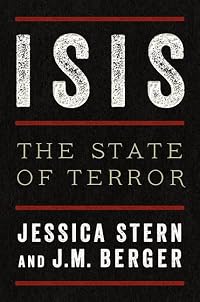

Member Reviews
This essay is a very thought-provoking look at ISIS from a true expert in the field of military counter-terrorism strategy. Kilcullen has worked as a strategic advisor on the ground in Iraq, Afghanistan and numerous other trouble spots. In this essay, he charts the birth of ISIS from the al Qaeda in Iraq insurgent group and their rise in Syria and in Iraq to the point where they are now a de facto state.
This is possibly the most contentious claim in his essay, and it forms the centrepiece of his recommendations on how to defeat them: stop treating them like insurrectionists or a terror network, and start making war on them as if they were a state with fixed boundaries to defend, supply lines to protect, etc.
It’s a hard argument to show more discuss, because people get emotive about it. Whenever I have tried to discuss this idea, I have encountered people who get outraged and accuse me of being an ISIS apologist, because they can’t bear the thought of ISIS being considered a country. Strange to think that there are people who would label someone like Kilcullen an “ISIS apologist”, but there you are. I’m pretty sure this level of unhelpful emotion is a direct result of the scare-mongering politics that ISIS inspires here in Australia.
Kilcullen’s final thought is that defeating ISIS as a state is going to take considerable political will “without surrendering our civil liberties or betraying our ethics”. It’s a shame that, in an essay published in an Australian journal, he failed to discuss the fact that this is exactly what Australian politicians are doing as part of their fear-mongering response to the ISIS threat. show less
This is possibly the most contentious claim in his essay, and it forms the centrepiece of his recommendations on how to defeat them: stop treating them like insurrectionists or a terror network, and start making war on them as if they were a state with fixed boundaries to defend, supply lines to protect, etc.
It’s a hard argument to show more discuss, because people get emotive about it. Whenever I have tried to discuss this idea, I have encountered people who get outraged and accuse me of being an ISIS apologist, because they can’t bear the thought of ISIS being considered a country. Strange to think that there are people who would label someone like Kilcullen an “ISIS apologist”, but there you are. I’m pretty sure this level of unhelpful emotion is a direct result of the scare-mongering politics that ISIS inspires here in Australia.
Kilcullen’s final thought is that defeating ISIS as a state is going to take considerable political will “without surrendering our civil liberties or betraying our ethics”. It’s a shame that, in an essay published in an Australian journal, he failed to discuss the fact that this is exactly what Australian politicians are doing as part of their fear-mongering response to the ISIS threat. show less
An incredible, timely book. Kilcullen was a major participant in the formation of strategies used in our wars in the Middle East/Africa. He readily acknowledges the mistakes that "we" made; by concentrating on the theory of "disaggregation" (mainly going after the leaders of Al Qaeda, it was assumed that it would break up the group into smaller entities, which local the local government could deal with, but in reality it just dispersed the group to other areas and allowed them to start up new groups, including ISIS).
That our practices, such as "extraordinary rendition", undermined our standing as the "good guys", drove a wedge between us and the locals, and made it very hard to pressure other regimes into encouraging human rights (do show more as we say, not as we do). By shifting our focus from terrorism to Iraq, we alienated allies; and after our reasons for the invasion were proven falsehoods, it made it hard for others to trust our "intelligence". How (Rumsfeld) insistence on using the minimum force in Iraq was a disaster, our disarming of the Iraqi army and the Ba'athists created a large, potentially useful group into enemies (who ended up forming future terrorist organizations). Kilcullen goes so far as to likening "Bush's decision to invade Iraq to Hitler's invasion of Russia". By taking our eye off the Taliban and placing it on Iraq, it allowed them to form anew. How our actions worried Iran that "they were next", and pushed Iran into defending themselves through striving for nuclear weapons, and keeping Iraq and Afghanistan unstable (to keep us busy and not give us time/material to extend into Iran). How our actions and threats, unfollowed and disregarded when pushed (the use of chemical weapons in Syria would be a "game changer", and then we did nothing) encouraged regimes like Syria to conclude they had nothing to fear from us. How ISIS had evolved their strategies again an again, while we are stuck fighting them with old strategies and failed to adapt. How our timidity in the fight has opened the door to Russia to step-in and take over. How Obama's strategy of "retrenchment" (choosing to "leave" the war instead of ending it) has failed. How we cannot just choose to disengage and avoid the fight because we are tired (isolationist theory), because society today is so interconnected with travel, trade and interaction with the world.
Kilcullen's answer is that the solution is not simple, we have to admit that we messed up (the invasion of Iraq, our addiction to killing terrorist leaders to solve the problem, our withdrawal from Iraq and Afghanistan, opportunism in Libya, and passivity in dealing with Syria), and that until our strategy changes, these disasters will continue.
There is just so, so much information in this book, it will make your head spin. And wonder what in the world we should do, is there even a solution to the problem. Even so, the book is fascinating, extremely well written and documented, and flows very well. I highly encourage you to give it a try. show less
That our practices, such as "extraordinary rendition", undermined our standing as the "good guys", drove a wedge between us and the locals, and made it very hard to pressure other regimes into encouraging human rights (do show more as we say, not as we do). By shifting our focus from terrorism to Iraq, we alienated allies; and after our reasons for the invasion were proven falsehoods, it made it hard for others to trust our "intelligence". How (Rumsfeld) insistence on using the minimum force in Iraq was a disaster, our disarming of the Iraqi army and the Ba'athists created a large, potentially useful group into enemies (who ended up forming future terrorist organizations). Kilcullen goes so far as to likening "Bush's decision to invade Iraq to Hitler's invasion of Russia". By taking our eye off the Taliban and placing it on Iraq, it allowed them to form anew. How our actions worried Iran that "they were next", and pushed Iran into defending themselves through striving for nuclear weapons, and keeping Iraq and Afghanistan unstable (to keep us busy and not give us time/material to extend into Iran). How our actions and threats, unfollowed and disregarded when pushed (the use of chemical weapons in Syria would be a "game changer", and then we did nothing) encouraged regimes like Syria to conclude they had nothing to fear from us. How ISIS had evolved their strategies again an again, while we are stuck fighting them with old strategies and failed to adapt. How our timidity in the fight has opened the door to Russia to step-in and take over. How Obama's strategy of "retrenchment" (choosing to "leave" the war instead of ending it) has failed. How we cannot just choose to disengage and avoid the fight because we are tired (isolationist theory), because society today is so interconnected with travel, trade and interaction with the world.
Kilcullen's answer is that the solution is not simple, we have to admit that we messed up (the invasion of Iraq, our addiction to killing terrorist leaders to solve the problem, our withdrawal from Iraq and Afghanistan, opportunism in Libya, and passivity in dealing with Syria), and that until our strategy changes, these disasters will continue.
There is just so, so much information in this book, it will make your head spin. And wonder what in the world we should do, is there even a solution to the problem. Even so, the book is fascinating, extremely well written and documented, and flows very well. I highly encourage you to give it a try. show less
A detailed, informed and at times brutally honest review of the last few years of war with Islamic State but also of the last decade of counter terrorism since 9/11. The author writes with authority on the subject and demonstrates his ability not to over burden the reader with needless detail. Instead, he gets right to the point and reveals the exact state of play and the evolution of current circumstances. A very intelligent assessment and a must read for those who want to know the truth of current affairs, instead of the media or political spin that so often clouds the facts.
I think this is Kilcullen at his worst. To give you a reference I think "Out of the mountains" is his best by far. And to clarify Kilcullen at his worst is still a good read, but the well developed main idea constructed step by step by a multitude of interesting, and entertaining, examples is missing here. In all the books feels like a collection of independent articles that for the most part include already well known information.
Ratings
Members
- Recently Added By
Author Information

13 Works 1,176 Members
David Kilcullen was born in 1967 in Australia. His education includes St Pius X College and the Australian Defence Force Academy, University of New South Wales. He received a Bachelor of Arts with Honours in Military Art and Science and later a PhD in politics. He had his army officers training at the Royal Military College, Duntroon . His show more military career includes attaining the rank of Lieutenant Colonel in the Australian Army, served as a Staff Officer in the Australian Defence Force Headquarters, Senior Analyst in the Australian Office of National Assessments. He currently serves as a Lieutenant Colonel in the Australian Army Reserves. He was a senior advisor to General David Petraeus in 2007 and 2008. He was then appointed special advisor for counterinsurgency to US Secretary of State Condoleezza Rice. Before this, he was chief strategist in the Counterterrorism Bureau of the US State Department, and he has also advised the UK and Australian governments, NATO and the International Security Assistance Force. He has been a Senior Fellow of the Center for a New American Security and an adjunct Professor at the Paul H. Nitze School of Advanced International Studies at John Hopkins University.His work has been published in numerous publications. His books include The Accidental Guerrilla, Counterinsurgency, Out of the Mountains, and Blood Year: Terror and the Islamic State, which won the Walkley Award 2015 for Feature Writing Long. (Bowker Author Biography) show less
Awards and Honors
Classifications
- Genres
- Nonfiction, Politics and Government, History, Religion & Spirituality, General Nonfiction
- DDC/MDS
- 363.325 — Social sciences Social problems and social services Other social problems and services Other aspects of public safety Social conflict Terrorism
- LCC
- DS39.3 .K55 — History of Europe, Asia, Africa and Oceania Asia History of Asia
- BISAC
Statistics
- Members
- 115
- Popularity
- 281,644
- Reviews
- 4
- Rating
- (3.85)
- Languages
- English
- Media
- Paper, Audiobook, Ebook
- ISBNs
- 14
- ASINs
- 2