
Gordon Corera
Author of Russians Among Us: Sleeper Cells, Ghost Stories, and the Hunt for Putin's Spies
About the Author
Gordon Corera is a Security Correspondent for BBC News. He has presented major documentaries for the BBC on cybersecurity. He also the author of The Art of Betrayal. Gordon lives in London.
Works by Gordon Corera
Russians Among Us: Sleeper Cells, Ghost Stories, and the Hunt for Putin's Spies (2020) 195 copies, 4 reviews
The Art of Betrayal: The Secret History of MI6: Life and Death in the British Secret Service (2013) 184 copies, 3 reviews
Operation Columba--The Secret Pigeon Service: The Untold Story of World War II Resistance in Europe (2018) 183 copies, 27 reviews
Cyberspies: The Secret History of Surveillance, Hacking, and Digital Espionage (2016) 116 copies, 3 reviews
Shopping for Bombs: Nuclear Proliferation, Global Insecurity, and the Rise and Fall of the A.Q. Khan Network (2006) 82 copies, 1 review
Tagged
Common Knowledge
- Birthdate
- 1974
- Gender
- male
- Education
- St Peter’s College, Oxford University
University College School - Occupations
- journalist
author - Organizations
- BBC
- Short biography
- Gordon Corera has been a Security Correspondent for BBC News since June 2004.
In that role he covers counter-terrorism, counter-proliferation and international security issues for BBC TV, Radio and Online.
He was previously a foreign affairs reporter on the Today programme, BBC Radio 4’s flagship news programme.
Gordon has also been a State Department Correspondent based in Washington DC and the US Affairs Analyst for BBC News.
He has reported from across the US, Asia, Africa and the Middle East for the BBC, including covering Iraq before and after the 2003 war, Guantanamo Bay, the September 11 attacks and the Madrid and London bombings.
Gordon was born in London and educated at St Peter’s College, Oxford University, where he studied Modern History, and at Harvard University’s Graduate School where he was a Frank Knox Fellow.
THE ART OF BETRAYAL: Life & Death in the British Secret Service is a wide-ranging, thought-provoking history of Britain’s postwar Secret Intelligence Service, was published by Weidenfeld & Nicolson in 2011 to critical acclaim. His latest book, INTERCEPT: The Secret History of Computers and Spies has just been released.
http://www.georginacapel.com/our-auth... - Nationality
- UK
- Birthplace
- London, England, UK
- Places of residence
- London, England, UK
Cavelossim, India - Associated Place (for map)
- UK
Members
Reviews
The Art of Betrayal: The Secret History of MI6: Life and Death in the British Secret Service by Gordon Corera
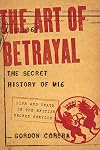
"We'd have been better off doing nothing"
Alan Bates starred in two mildly comic tv films. An Englishman Abroad, by Alan Bennett, told the story of a tawdry, disheveled spy who defected to the USSR. He was irrelevant, ignored and reduced to scrounging bars of soap at receptions. In Tom Stoppard's The Dog It Was That Died, a double-double-double agent tries to commit suicide because he couldn’t figure out who he was really working for – or why. Both amusing, but I had no idea how close show more they were to the truth. Far from the glam world of 007, intelligence is a morass of malign incompetence and paranoia.
The Art of Betrayal is an astonishing depiction of the day to day failings of the intelligence community. They stumble, they fumble, they make it up as they go along, but mostly, they accomplish essentially nothing. Along the way, they betray colleagues, friends, family, and of course, their countries. And still they make no difference to history.
For decades it seemed their primary objective was to get civil servants and spies from the other side to betray their country. Yet they were beside themselves at the thought of it happening among their own. But of course it did, and The Art of Betrayal depicts decades of such betrayal, and all the resources and manpower it took to pull it off or detect it, neutralize it or exploit it. The details are exquisite.
MI6 began in 1909, aimlessly counting things: trains, people, cargo. “Much of the routine work of MI6 was a form of glorified trainspotting.” Before World War I, people were paid, for example, to help determine German naval strength by strolling around harbors and noting the vessels there.
Yet 45 years later, when it came to intelligence from inside the USSR, the USA and the UK both had “absolutely nothing”. Instead, they all played out a cheap drama in Vienna and Berlin, chasing each other for scraps of meaningless data, and of course, encouraging betrayal. The novels of Graham Greene, Ian Fleming and John Le Carré, all fulltime spies, glorified the mostly boring, mostly mundane, and almost always futile existence of their real lives.
Then suddenly, the game changed. Kim Philby’s treachery led to suspicions of traitors everywhere. MI5 investigated MI6, which investigated MI5 and the CIA. It got to the absurd point where they were investigating the prime minister, Harold Wilson, as a Communist spy. Meanwhile the CIA suspected everybody, including itself, because it could not believe it had never had a traitor to call its own. It had one soon enough however, in the person of Aldrich Ames.
Soon, spies who worked the Soviet Block were at a disadvantage and looked down on. A rising star was told “You’ve got to know too many Russians”. “But that’s the job!” was the ignored reply. Instead of a head office promotion, he was transferred out of Geneva to the Far East.
Every decade seemed to have its all star Soviet informer, who sent MI6 scrambling in all directions following up his leads. And it still all amounted, as ever, to nothing. No wars were averted, no attacks prevented, no lives saved.
Possibly the worst example is Osama Bin Laden, an actual villain the CIA tracked through the 90s, with a view to eliminating him. The bureaucracy, rules, regulations and orders, not to mention bridges burned with the Afghans and Pakistanis, meant it never followed through or accomplished anything. Then 9-11 came - as a shock - and CIA staff vacated their building expecting it to be a target.
This was quickly followed by incredible dollops of selective nonsense accepted by Western leaders to justify war in Iraq. The total fraud of evidence stopped no one. And the intelligence community, in a Keystone Kops slapstick comedy, kept piling it up. To the public it was obvious. To Blair, Bush, Cheney and Powell, it was concrete proof. The result, as we know, is an increase in terrorist threats, as Islam feels under attack. MI6 was justifiably humiliated.
Corera writes in a clear, spare, direct style. No words are wasted. No pointless adjectives discolor the discourse. It’s active voice, with nary an extra comma. It is a style that is rare and precious, and delivers far more impact than the more florid prose we see daily. The Art of Betrayal is information far more valuable than the data collected by its characters. As more than one has of his sources described it, intelligence spying “does more harm than good”.
David Wineberg show less
Alan Bates starred in two mildly comic tv films. An Englishman Abroad, by Alan Bennett, told the story of a tawdry, disheveled spy who defected to the USSR. He was irrelevant, ignored and reduced to scrounging bars of soap at receptions. In Tom Stoppard's The Dog It Was That Died, a double-double-double agent tries to commit suicide because he couldn’t figure out who he was really working for – or why. Both amusing, but I had no idea how close show more they were to the truth. Far from the glam world of 007, intelligence is a morass of malign incompetence and paranoia.
The Art of Betrayal is an astonishing depiction of the day to day failings of the intelligence community. They stumble, they fumble, they make it up as they go along, but mostly, they accomplish essentially nothing. Along the way, they betray colleagues, friends, family, and of course, their countries. And still they make no difference to history.
For decades it seemed their primary objective was to get civil servants and spies from the other side to betray their country. Yet they were beside themselves at the thought of it happening among their own. But of course it did, and The Art of Betrayal depicts decades of such betrayal, and all the resources and manpower it took to pull it off or detect it, neutralize it or exploit it. The details are exquisite.
MI6 began in 1909, aimlessly counting things: trains, people, cargo. “Much of the routine work of MI6 was a form of glorified trainspotting.” Before World War I, people were paid, for example, to help determine German naval strength by strolling around harbors and noting the vessels there.
Yet 45 years later, when it came to intelligence from inside the USSR, the USA and the UK both had “absolutely nothing”. Instead, they all played out a cheap drama in Vienna and Berlin, chasing each other for scraps of meaningless data, and of course, encouraging betrayal. The novels of Graham Greene, Ian Fleming and John Le Carré, all fulltime spies, glorified the mostly boring, mostly mundane, and almost always futile existence of their real lives.
Then suddenly, the game changed. Kim Philby’s treachery led to suspicions of traitors everywhere. MI5 investigated MI6, which investigated MI5 and the CIA. It got to the absurd point where they were investigating the prime minister, Harold Wilson, as a Communist spy. Meanwhile the CIA suspected everybody, including itself, because it could not believe it had never had a traitor to call its own. It had one soon enough however, in the person of Aldrich Ames.
Soon, spies who worked the Soviet Block were at a disadvantage and looked down on. A rising star was told “You’ve got to know too many Russians”. “But that’s the job!” was the ignored reply. Instead of a head office promotion, he was transferred out of Geneva to the Far East.
Every decade seemed to have its all star Soviet informer, who sent MI6 scrambling in all directions following up his leads. And it still all amounted, as ever, to nothing. No wars were averted, no attacks prevented, no lives saved.
Possibly the worst example is Osama Bin Laden, an actual villain the CIA tracked through the 90s, with a view to eliminating him. The bureaucracy, rules, regulations and orders, not to mention bridges burned with the Afghans and Pakistanis, meant it never followed through or accomplished anything. Then 9-11 came - as a shock - and CIA staff vacated their building expecting it to be a target.
This was quickly followed by incredible dollops of selective nonsense accepted by Western leaders to justify war in Iraq. The total fraud of evidence stopped no one. And the intelligence community, in a Keystone Kops slapstick comedy, kept piling it up. To the public it was obvious. To Blair, Bush, Cheney and Powell, it was concrete proof. The result, as we know, is an increase in terrorist threats, as Islam feels under attack. MI6 was justifiably humiliated.
Corera writes in a clear, spare, direct style. No words are wasted. No pointless adjectives discolor the discourse. It’s active voice, with nary an extra comma. It is a style that is rare and precious, and delivers far more impact than the more florid prose we see daily. The Art of Betrayal is information far more valuable than the data collected by its characters. As more than one has of his sources described it, intelligence spying “does more harm than good”.
David Wineberg show less
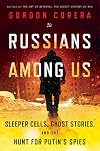
Six-word review: Spy vs. spy: we're not winning.
Russian "illegal" Andrey Bezrukov lived for twelve years as a Canadian citizen named Donald Heathfield and then eleven as an American while spying for Russia. His career was the model for the deep-cover Russian agents in the TV series The Americans. Asked by a class of Russian students in 2018 what it was like to be a spy, he said, "Just watch the series," adding that it was "quite close to reality, though without the killings and the wigs" show more (page 310). (If he also said "without the sex," it wasn't quoted.) His career in espionage ended in June of 2010 along with those of several others in an FBI roundup that was grossly humiliating to Putin's Russia, where the sleeper agents were considered heroes, the jewels of Russian spycraft. Capping the unbearable humiliation of the collapse of the USSR in 1991, the incident left Putin with an insatiable thirst for revenge.
And so we come to the election of 2016.
Today, three days before the U.S. election of 2020, I have just finished reading the book and am pondering the things that have clicked into place. Not least among them is that it affords a particular view of Russia's interest in American elections that I have not seen discussed in countless written articles by columnists and commentators in dominant U.S. media.
I have read four or five books on Russia and Putin in the past few years, but this one delved into territory I had not explored before.
Among the main ideas that I took away are
• that even though the Cold War was considered "over" by the CIA and the UK's counterpart, MI6, which moved on to terrorism as their primary concern in international conflict, Russian spying never abated but just changed as technology changed;
• that most American authorities stopped taking it seriously after the Cold War ended, but Russia remained "patient and persistent" (page 396);
• that influence--among power wielders and ordinary citizens alike--became a major aim of the Russian agencies, rather than espionage per se, meaning stealing secrets; and
• that while we in the West were still thinking about war and peace in conventional terms, the Russians were thinking about bringing chaos and destabilization to the West, unbalancing and dividing allies and populations, along with destruction of faith in their institutions and systems--a different sort of victory altogether, and one that we have sorely underestimated.
One of many points that surprised me was that fictional drama and especially spy stories actually shape how both Russia and the West think about "how the world really works and what their adversaries are up to" (page 341).
Author Gordon Corera, security correspondent for the BBC since 2004, has high credibility as a journalist with a long track record covering spy cases and investigators with the CIA, MI6, and Russia. His capably crafted and very readable narrative of the personal histories and missions of Russian spies from the Cold War to the present is backed by interviews and documented reports from numerous informed sources, some openly identified and some in sensitive positions protected.
Many names we know from news stories over the past decades appear, including FBI and CIA directors Mueller and Panetta, respectively, and those of Russian poisoning victims Litvinenko, Skripal, and Navalny. This book was published before Navalny in September 2020 became the latest high-profile victim of the Russian-made nerve agent Novichok.
Right now, in the breathless suspense of the countdown to victory and defeat in the 2020 presidential election, wild theories abound on all sides. I don't think this account is a wild theory. Skeptic though I am, I found it credible and compelling.
The book has 28 pages of notes and an adequate index. The editing seems a little lax in places, as if performed in haste. show less
Russian "illegal" Andrey Bezrukov lived for twelve years as a Canadian citizen named Donald Heathfield and then eleven as an American while spying for Russia. His career was the model for the deep-cover Russian agents in the TV series The Americans. Asked by a class of Russian students in 2018 what it was like to be a spy, he said, "Just watch the series," adding that it was "quite close to reality, though without the killings and the wigs" show more (page 310). (If he also said "without the sex," it wasn't quoted.) His career in espionage ended in June of 2010 along with those of several others in an FBI roundup that was grossly humiliating to Putin's Russia, where the sleeper agents were considered heroes, the jewels of Russian spycraft. Capping the unbearable humiliation of the collapse of the USSR in 1991, the incident left Putin with an insatiable thirst for revenge.
And so we come to the election of 2016.
Today, three days before the U.S. election of 2020, I have just finished reading the book and am pondering the things that have clicked into place. Not least among them is that it affords a particular view of Russia's interest in American elections that I have not seen discussed in countless written articles by columnists and commentators in dominant U.S. media.
I have read four or five books on Russia and Putin in the past few years, but this one delved into territory I had not explored before.
Among the main ideas that I took away are
• that even though the Cold War was considered "over" by the CIA and the UK's counterpart, MI6, which moved on to terrorism as their primary concern in international conflict, Russian spying never abated but just changed as technology changed;
• that most American authorities stopped taking it seriously after the Cold War ended, but Russia remained "patient and persistent" (page 396);
• that influence--among power wielders and ordinary citizens alike--became a major aim of the Russian agencies, rather than espionage per se, meaning stealing secrets; and
• that while we in the West were still thinking about war and peace in conventional terms, the Russians were thinking about bringing chaos and destabilization to the West, unbalancing and dividing allies and populations, along with destruction of faith in their institutions and systems--a different sort of victory altogether, and one that we have sorely underestimated.
One of many points that surprised me was that fictional drama and especially spy stories actually shape how both Russia and the West think about "how the world really works and what their adversaries are up to" (page 341).
Author Gordon Corera, security correspondent for the BBC since 2004, has high credibility as a journalist with a long track record covering spy cases and investigators with the CIA, MI6, and Russia. His capably crafted and very readable narrative of the personal histories and missions of Russian spies from the Cold War to the present is backed by interviews and documented reports from numerous informed sources, some openly identified and some in sensitive positions protected.
Many names we know from news stories over the past decades appear, including FBI and CIA directors Mueller and Panetta, respectively, and those of Russian poisoning victims Litvinenko, Skripal, and Navalny. This book was published before Navalny in September 2020 became the latest high-profile victim of the Russian-made nerve agent Novichok.
Right now, in the breathless suspense of the countdown to victory and defeat in the 2020 presidential election, wild theories abound on all sides. I don't think this account is a wild theory. Skeptic though I am, I found it credible and compelling.
The book has 28 pages of notes and an adequate index. The editing seems a little lax in places, as if performed in haste. show less
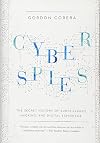
I view this book as equipping you to answer the question “Where is the line between the privacy of citizens and the ability to protect them from threats (terrorism, cybercrime, the potential of a hostile state to crash the grid in the event of full out war)?”. It does this by examining the modern (WW1-around Snowden) history of signals intelligence, cryptography, and hacking, and providing examples of mass surveillance winning wars, being used by totalitarian governments to suppress show more human rights, and successfully and unsuccessfully using surveillance/espionage to protect citizens from extremists and cyber criminals.
It also presents the arguments (with quotes) from a variety of people connected to the cyberintelligence world, and well enough that he had me wanting to agree with several different (and conflicting) stances throughout the book. If the title sounds compelling to you or you’re interested in the modern questions on data collection and use, this won’t give you much technical information, but it will provide you a lot of background on how we got to today and what some of the big issues are. show less
It also presents the arguments (with quotes) from a variety of people connected to the cyberintelligence world, and well enough that he had me wanting to agree with several different (and conflicting) stances throughout the book. If the title sounds compelling to you or you’re interested in the modern questions on data collection and use, this won’t give you much technical information, but it will provide you a lot of background on how we got to today and what some of the big issues are. show less
Secret Pigeon Service : Operation Columba, resistance and the struggle to liberate Europe by Gordon Corera
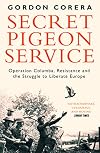
I am slightly wary of posting this review on 1 April as I recognise that some people might wonder whether the book is genuine. It is indeed an authentic history of the use of pigeons by the intelligence services during the war. At the behest of MI6, thousands of carrier pigeons were dropped in small crates over territory occupied by the Germans during the Second World War.
These crates came complete with tiny parachutes, and each contained a carrier pigeon, a small supply of food and a show more message in the local language requesting that whoever might find the bird should feed it, and then affix messages and descriptions of any local German army or air force installations. Of course, many crates landed without being found, leaving the poor occupant to die of thirst and hunger. Many more were intercepted by German soldiers, while still more were discovered but, in a time of severe food shortages, ended up in a grateful recipient’s oven. Still, a considerable number were discovered by locals who, at great risk to themselves, took the pigeons home, and prepared notes to be sent back to Britain, where a network had been established to collate and process the information provided. This was, of course, far from fool proof, and there was no reliable way of sifting genuine intelligence material provided by members of the Resistance from deliberate misinformation sent by Germans.
This all now seems somehow very twee, and almost desperate, but at the time of the Second World War, pigeon owning was far more common in Britain and Western Europe, especially so in Belgium, whence much of the most useful intelligence originated. Pigeon fanciers across the United Kingdom agreed to surrender some of their finest birds to help the war effort.
Gordon Corera is perhaps best known as the Security and intelligence correspondent for the BBC, and it is clear that he has had access to some very detailed, and presumably generally inaccessible, records. His book is well written, and sheds a fascinating insight into this little-known aspect of the intelligence gathering mechanisms from the war.
My one slight cavil about the book is that he seems to be stretching to make a free-standing work out of it. I wonder whether it might have worked better in a slightly condensed form as a couple of chapters in a longer history of intelligence work. show less
These crates came complete with tiny parachutes, and each contained a carrier pigeon, a small supply of food and a show more message in the local language requesting that whoever might find the bird should feed it, and then affix messages and descriptions of any local German army or air force installations. Of course, many crates landed without being found, leaving the poor occupant to die of thirst and hunger. Many more were intercepted by German soldiers, while still more were discovered but, in a time of severe food shortages, ended up in a grateful recipient’s oven. Still, a considerable number were discovered by locals who, at great risk to themselves, took the pigeons home, and prepared notes to be sent back to Britain, where a network had been established to collate and process the information provided. This was, of course, far from fool proof, and there was no reliable way of sifting genuine intelligence material provided by members of the Resistance from deliberate misinformation sent by Germans.
This all now seems somehow very twee, and almost desperate, but at the time of the Second World War, pigeon owning was far more common in Britain and Western Europe, especially so in Belgium, whence much of the most useful intelligence originated. Pigeon fanciers across the United Kingdom agreed to surrender some of their finest birds to help the war effort.
Gordon Corera is perhaps best known as the Security and intelligence correspondent for the BBC, and it is clear that he has had access to some very detailed, and presumably generally inaccessible, records. His book is well written, and sheds a fascinating insight into this little-known aspect of the intelligence gathering mechanisms from the war.
My one slight cavil about the book is that he seems to be stretching to make a free-standing work out of it. I wonder whether it might have worked better in a slightly condensed form as a couple of chapters in a longer history of intelligence work. show less
Awards


You May Also Like


Statistics
- Works
- 8
- Members
- 905
- Popularity
- #28,348
- Rating
- 4.0
- Reviews
- 39
- ISBNs
- 64
- Languages
- 2

