

Christopher M. Andrew
Author of The Sword and the Shield: The Mitrokhin Archive and the Secret History of the KGB
About the Author
Image credit: By Mohamed Nanabhay from Qatar - Sir Richard Dearlove & Christopher Andrew, CC BY 2.0, https://commons.wikimedia.org/w/index.php?curid=92155734
Works by Christopher M. Andrew
The Sword and the Shield: The Mitrokhin Archive and the Secret History of the KGB (1999) 912 copies, 12 reviews
KGB: The Inside Story of Its Foreign Operations from Lenin to Gorbachev (1990) 480 copies, 2 reviews
The World Was Going Our Way: The KGB and the Battle for The Third World (2005) 456 copies, 6 reviews
For the President's Eyes Only: Secret Intelligence and the American Presidency from Washington to Bush (1995) 313 copies
The Missing Dimension: Governments and Intelligence Communities in the Twentieth Century (1984) 20 copies
Comrade Kryuchkov's Instructions: Top Secret Files on KGB Foreign Operations, 1975-1985 (1994) 15 copies
Associated Works
Tagged
Common Knowledge
- Legal name
- Andrew, Christopher Maurice
- Birthdate
- 1941-07-23
- Gender
- male
- Nationality
- UK
- Places of residence
- Cambridge, Cambridgeshire, England, UK
- Associated Place (for map)
- England, UK
Members
Reviews

600 pages of very dense content on the history of the KGB and its precursors, written by Gordievsky, a defecting insider. Not merely an insider, but one officially tasked as a KGB historian.
This was a fascinating read, albeit not light reading and some of it may stretch your knowledge of 20th century history. My only regrets were that I didn't read this years ago, when it was first published, and that it doesn't have anything similar for the more recent decades.
The KGB presents itself as a show more very split organisation. Capable and well organised in the middle, it was also made largely ineffectual by the constant paranoia and murderous infighting at the top levels. They really did have one basic answer to everything: to shoot the messenger, to shoot the guilty and to gulag the disgraced or merely nearby. Nor did they stop doing this after the '30s, or even after Stalin.
Putin doesn't appear, which is a great shame if, like me, you are reading this for background on modern Russia. Yet it's also a great background to modern Russia and the modern KGB. After the '50s and the success of The Magnificent Five (Cairncross, not Hollis, BTW) the KGB's well of spies runs dry. So they make a deliberate shift from trying to gain information by espionage into trying to shift Western debate by misinformation. Also the earlier paranoia of Trotsky is replaced by a fear of European integration, both civil and military. Which explains so much of Brexit and the Russian dirty money washing around London to this day. show less
This was a fascinating read, albeit not light reading and some of it may stretch your knowledge of 20th century history. My only regrets were that I didn't read this years ago, when it was first published, and that it doesn't have anything similar for the more recent decades.
The KGB presents itself as a show more very split organisation. Capable and well organised in the middle, it was also made largely ineffectual by the constant paranoia and murderous infighting at the top levels. They really did have one basic answer to everything: to shoot the messenger, to shoot the guilty and to gulag the disgraced or merely nearby. Nor did they stop doing this after the '30s, or even after Stalin.
Putin doesn't appear, which is a great shame if, like me, you are reading this for background on modern Russia. Yet it's also a great background to modern Russia and the modern KGB. After the '50s and the success of The Magnificent Five (Cairncross, not Hollis, BTW) the KGB's well of spies runs dry. So they make a deliberate shift from trying to gain information by espionage into trying to shift Western debate by misinformation. Also the earlier paranoia of Trotsky is replaced by a fear of European integration, both civil and military. Which explains so much of Brexit and the Russian dirty money washing around London to this day. show less
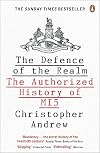
This is a scrupulously well researched account of the history of the Security Service MI5 and the operations in which it has been involved. The author has been given access to the great majority of historical files, while forming his own conclusions about the significance of their contents. Inevitably coverage of some recent events is less thorough due to current national security requirements and the need to protect active sources, but is still insightful and sober in its conclusions. The show more book will not of course satisfy conspiracy theorists of one stripe or another, but the author's judgements seem shrewd and pretty balanced to me, pointing out intelligence successes (e.g. the Double Cross turning of German agents in WWII, or the tracking down and surveillance of Islamic ricin and homemade bomb-making plotters) and failures such as the slowness in identifying the Cambridge spy ring, the over-estimation of the strength of the KGB's analysis of the intelligence they acquired from the West and more recently the relative slowness in the 1990s of perceiving the worldwide reach of Islamic terror plots. The book clearly shows the insubstantial nature of most intelligence and the difficulty of assessing its reliability, points often lost on politicians and the general public who desire certainty and clearcut information.
Finally, one aspect of the book's structure was a little less than helpful, that is the fact that each major section, e.g. WWII, early Cold War, etc. began with a chapter covering how MI5 evolved during that era, before the other chapters giving the detail. This led to a slight confusion on timing in some places and some duplication of material. Usefully, there is a concluding chapter detailing the main points covered in the text. The index could have been more thorough. show less
Finally, one aspect of the book's structure was a little less than helpful, that is the fact that each major section, e.g. WWII, early Cold War, etc. began with a chapter covering how MI5 evolved during that era, before the other chapters giving the detail. This led to a slight confusion on timing in some places and some duplication of material. Usefully, there is a concluding chapter detailing the main points covered in the text. The index could have been more thorough. show less
The Sword and the Shield: The Mitrokhin Archive and the Secret History of the KGB by Christopher Andrew
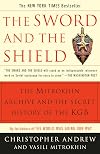
Vasili Mitrokhin took a lot of work home with him--and not just his--took notes, sometimes verbatim, and then smuggled the notes out with him when he defected.
Ranging from bone-chilling and frightening to ridiculous and laughable, this book may not have all the KGB's secrets, but it has a lot of them. The KGB could be brutally efficient, but at times its efforts were wildly out of proportion with any sort of rational estimation of the level of threat something presented. Paranoia and show more conspiracy theories will do that to you, and the KGB was nothing if not prone to both.
The only caution I would give is not to dive into this without some background in the Cold War (which I had from various other readings) and some knowledge of the KGB's history (which I did not have). This is a down in the bushes and weeds book, not a holistic history. If you're like me you'd appreciate a bit of framework to hang all the events and names and places on to.
The writing is good. The tone of Andrew's writing tracks well the seriousness and absurdity of the events. If you've had a taste of the Cold War and/or Russian/Soviet history and want something juicier (in more ways than one), definitely pick this up. show less
Ranging from bone-chilling and frightening to ridiculous and laughable, this book may not have all the KGB's secrets, but it has a lot of them. The KGB could be brutally efficient, but at times its efforts were wildly out of proportion with any sort of rational estimation of the level of threat something presented. Paranoia and show more conspiracy theories will do that to you, and the KGB was nothing if not prone to both.
The only caution I would give is not to dive into this without some background in the Cold War (which I had from various other readings) and some knowledge of the KGB's history (which I did not have). This is a down in the bushes and weeds book, not a holistic history. If you're like me you'd appreciate a bit of framework to hang all the events and names and places on to.
The writing is good. The tone of Andrew's writing tracks well the seriousness and absurdity of the events. If you've had a taste of the Cold War and/or Russian/Soviet history and want something juicier (in more ways than one), definitely pick this up. show less
The World Was Going Our Way: The KGB and the Battle for The Third World, Vol. 2 by Christopher Andrew
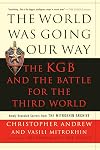
Vasili Mitrokhin was a KGB officer who had access to some of the organization’s archives on its foreign intelligence work. From 1972 to 1984, he’d take some documents home every weekend, make notes on them or, sometimes, copy certain documents in full. He’d hide the notes under the floorboards of his dacha.
In 1992, he defected to the British government with several boxes of those notes.
Whereas the first volume of the Mitrokhin archives, The Sword and the Shield: The Mitrokhin Archive show more and the Secret History of the KGB, documented KGB operations in Europe and North America and Australia, this one covers operations in the rest of the world though Japan, definitely not a Third World country, is included.
493 pages of this book are text filled with hundreds of names of agents, their codenames as well as the codenames of operations and places. The rest of the 677 pages are indexes, appendices, footnotes, and a bibliography. This book is not light read and near the hardcore end of the spectrum for those interested in espionage as well as foreign policy and modern history.
Some high-level things jump out though.
First is how much influence the KGB had on Soviet foreign policy. There are numerous instances in this book about how Marxist revolutionaries wanted to deal with their KGB contacts rather than the Soviet Foreign ministry.
Second is the baleful influence of one KGB leader, Yuri Andropov, who succeeded Leonid Brezhnev as head of the Soviet Communist party, on world history. Most spectacular was his paranoid belief that, under the Reagan Administration, that the United States was planning a nuclear first strike on the USSR. Under Operation RYAN, KGB officers throughout the world were instructed to gather evidence of this. It was only after KGB officer Oleg Gordievsky defected (an incident not covered in this book) that the United Kingdom and the United States realized this and moderated their rhetoric to de-escalate tensions. But Andropov was also instrumental in campaigning for the USSR to crush the Hungarian (though as an ambassador and not KGB member) and Czechoslovakian Revolutions. He was obsessed with “ideological subversion” in Russia and the Third World Marxist countries he enthusiastically supported. In particular, he was concerned about Jewish dissidents in the USSR. (Brezhnev thought his obsession with Zionism was “making us stupid”, but Andropov was allowed to persist.) Finally, it was Andropov whose optimistic assessments of the situation in Afghanistan that led the USSR to become involved in an nine year war there.
Third is how dysfunctional the KGB was in some ways. Until 1973, Service 1, the KGB’s analytical section for foreign intelligence, was something of a “punishment posting” and tended to tell the Party leadership what they wanted to hear. The problem of politicized intelligence persisted, to a lesser degree, until Gorbachev’s reforms. It wasn’t just in Operation RYAN that KGB officers dutifully collected what they were told to regardless of their personal misgivings as to its value. The KGB, particularly under Andropov, sycophantly produced what the Party wanted to hear about: that their efforts in the Third World were spreading the proletariat revolution in various countries. Andropov also used KGB funds to flatter Brezhnev, things like paying foreign agents to right a flattering biography of Brezhnev and then passing it off as proof of his international popularity or suggesting a revolutionary leader give a gift of an expensive foreign car to Brezhnev, a car paid for with KGB funds. The KGB also gave the population of the USSR a too rosy picture of the USSR’s popularity in the world.
Fourth is how much all this attempt to spread a revolution worldwide cost the Soviet Union. The Soviet Empire was a peculiar empire in the outflow of money from the center to the provinces of its Third World allies. More than once, in the case of Cuba and Ethiopia, the KGB allies in East Germany, the Stasi, commented on how hopelessly, even by USSR standards, these economies were managed.
Still, in 1980, “the world was going our way” according to the KGB, and America, its “main adversary”, agreed. By 1991, things were not only not going the USSR’s way. It didn’t even exist.
The book is organized by geographic areas: Latin America, the Middle East, Asia, and Africa. Each section constructs a general history from public documents – histories, biographies, government reports – and inserts the unique information of the Mitrokhin archive at the relevant points. We hear of KGB boobytrapped arms caches, forgeries, agent recruitment, the information supplied, embassy break-ins, and assassinations (many more planned than carried out). The legacies of some these “active measures” are still with us in the persistent rumor than Americans kidnap Latin America children for organ parts or that HIV was created in an American bacteriological warfare lab. A lot of KGB work, though, was just planting newspaper stories and paying various political parties.
Mitrokhin didn’t have access to all the KGB’s archives and sometimes his notes left out some information, and these instances are noted.
In Latin America, what most surprises is that how much Fidel Castro annoyed the Soviets at times, particularly in his interference in African politics and egomaniacal desire to be seen as a leader of communist world revolution. Signifying how much the Castro regime was propped up by the Soviets is Castro’s lament at how disastrous the end of the USSR was for Cuba.
In the Middle East, Yasser Arafat was also not regarded as an asset, but we do hear about the KGB’s involvement in Middle Eastern terrorism. The Asad regime in Syria and Sadaam Hussein were not the most reliable of allies. Saddam Hussein, despite his admiration for Joseph Stalin, which the KGB cultivated, made it hard for the KGB to operate in Iraq and suppressed Iraqi communists. Syria and Iraq wanted Soviet money and arms but didn’t always take direction from Moscow. The Iranian revolution caught the KGB by surprise.
In Asia, things seemed to be going well until Mao split with the Soviet Union. Then China and thwarting Maoist thought worldwide became a major KGB goal with China being deemed the next adversary after America. China, after the split, became a “denied area” to the KGB, very hard to operate in – especially since, under the earlier alliance, the KGB had turned over a list of its agents in China to Mao’s government. Incidentally, Mao’s head of intelligence, Kang Sheng, was a student in Russia during the Red Terror. He took notes and launched his own version in China. His enthusiasm for terror would be replicated under the Marxist governments of Ethiopia and Afghanistan. (A common phrase throughout the book is revolutionary leaders, after coming to power, launching terrors to root out plots, “real or imagined” against them.)
KGB operations in Afghanistan get two chapters, one before the invasion and one during the Afghan war. Mitrokhin, in fact, wrote a whole paper about the subject for the Cold War International History Project.
The corrupt political systems of India, Pakistan, and Japan resulted in several KGB assets in those countries. Some were agents, taking direct orders from the KGB. Others were “confidential contacts” who covertly supplied information to the KGB but didn’t directly take orders from them. Japan proved a very lucrative source of technological and scientific information, particularly on American weapons since some of their parts were manufactured in Japan. However, the great deficiencies of the Soviet economy prevented the data from being used in much of meaningful way. If there was area of KGB operations in the Third World that could have justified the expense, it was Japan.
KGB efforts against Muslims in the Soviet Union gets its own chapter. What strikes one is the massive corruption of KGB and Muslim party officials in the future “stans” of Asia. This corruption was known and largely tolerated. Again Andropov played a key role in this.
As to Africa … well, Africa with Soviet aid was as pathetic as Africa with Western aid. The numerous revolutions the KGB was involved with end in bloodshed, corruption, and tribal and ideological disputes among party members. (There is an interesting, revealing snippet, of a KGB officer meeting with Somalians and wondering why one persists in wearing a military jacket with one sleeve ten inches longer than the other.) One interesting revelation is the collusion of the USSR with apartheid South Africa in maintaining their virtual duopoly on diamonds, gold, and platinum all the while the KGB waged a propaganda campaign against the regime and aided the African National Congress.
Since this book is from 2005, Andrews (Mitrokhin died in 2004) had the typical sanguinity about South Africa’s future. However, it seems on its way to sanguinity of a different sort as the disaster unfashionably predicted by some seems occurring if at a slower rate.
Revealing anecdotes of exasperated KGB officers show up every now and then, usually with KGB officers charged with carrying out some order they knew to be pointless or stupid from the KGB Center. One has a KGB officer tasked with asking a British ambassador how a KGB defector exfiltrated from Iran with a British passport. As if the ambassador would tell him.
Highly recommended for those interested in espionage and also as a look at Third World history in the 1960s, 70s, and 80s. show less
In 1992, he defected to the British government with several boxes of those notes.
Whereas the first volume of the Mitrokhin archives, The Sword and the Shield: The Mitrokhin Archive show more and the Secret History of the KGB, documented KGB operations in Europe and North America and Australia, this one covers operations in the rest of the world though Japan, definitely not a Third World country, is included.
493 pages of this book are text filled with hundreds of names of agents, their codenames as well as the codenames of operations and places. The rest of the 677 pages are indexes, appendices, footnotes, and a bibliography. This book is not light read and near the hardcore end of the spectrum for those interested in espionage as well as foreign policy and modern history.
Some high-level things jump out though.
First is how much influence the KGB had on Soviet foreign policy. There are numerous instances in this book about how Marxist revolutionaries wanted to deal with their KGB contacts rather than the Soviet Foreign ministry.
Second is the baleful influence of one KGB leader, Yuri Andropov, who succeeded Leonid Brezhnev as head of the Soviet Communist party, on world history. Most spectacular was his paranoid belief that, under the Reagan Administration, that the United States was planning a nuclear first strike on the USSR. Under Operation RYAN, KGB officers throughout the world were instructed to gather evidence of this. It was only after KGB officer Oleg Gordievsky defected (an incident not covered in this book) that the United Kingdom and the United States realized this and moderated their rhetoric to de-escalate tensions. But Andropov was also instrumental in campaigning for the USSR to crush the Hungarian (though as an ambassador and not KGB member) and Czechoslovakian Revolutions. He was obsessed with “ideological subversion” in Russia and the Third World Marxist countries he enthusiastically supported. In particular, he was concerned about Jewish dissidents in the USSR. (Brezhnev thought his obsession with Zionism was “making us stupid”, but Andropov was allowed to persist.) Finally, it was Andropov whose optimistic assessments of the situation in Afghanistan that led the USSR to become involved in an nine year war there.
Third is how dysfunctional the KGB was in some ways. Until 1973, Service 1, the KGB’s analytical section for foreign intelligence, was something of a “punishment posting” and tended to tell the Party leadership what they wanted to hear. The problem of politicized intelligence persisted, to a lesser degree, until Gorbachev’s reforms. It wasn’t just in Operation RYAN that KGB officers dutifully collected what they were told to regardless of their personal misgivings as to its value. The KGB, particularly under Andropov, sycophantly produced what the Party wanted to hear about: that their efforts in the Third World were spreading the proletariat revolution in various countries. Andropov also used KGB funds to flatter Brezhnev, things like paying foreign agents to right a flattering biography of Brezhnev and then passing it off as proof of his international popularity or suggesting a revolutionary leader give a gift of an expensive foreign car to Brezhnev, a car paid for with KGB funds. The KGB also gave the population of the USSR a too rosy picture of the USSR’s popularity in the world.
Fourth is how much all this attempt to spread a revolution worldwide cost the Soviet Union. The Soviet Empire was a peculiar empire in the outflow of money from the center to the provinces of its Third World allies. More than once, in the case of Cuba and Ethiopia, the KGB allies in East Germany, the Stasi, commented on how hopelessly, even by USSR standards, these economies were managed.
Still, in 1980, “the world was going our way” according to the KGB, and America, its “main adversary”, agreed. By 1991, things were not only not going the USSR’s way. It didn’t even exist.
The book is organized by geographic areas: Latin America, the Middle East, Asia, and Africa. Each section constructs a general history from public documents – histories, biographies, government reports – and inserts the unique information of the Mitrokhin archive at the relevant points. We hear of KGB boobytrapped arms caches, forgeries, agent recruitment, the information supplied, embassy break-ins, and assassinations (many more planned than carried out). The legacies of some these “active measures” are still with us in the persistent rumor than Americans kidnap Latin America children for organ parts or that HIV was created in an American bacteriological warfare lab. A lot of KGB work, though, was just planting newspaper stories and paying various political parties.
Mitrokhin didn’t have access to all the KGB’s archives and sometimes his notes left out some information, and these instances are noted.
In Latin America, what most surprises is that how much Fidel Castro annoyed the Soviets at times, particularly in his interference in African politics and egomaniacal desire to be seen as a leader of communist world revolution. Signifying how much the Castro regime was propped up by the Soviets is Castro’s lament at how disastrous the end of the USSR was for Cuba.
In the Middle East, Yasser Arafat was also not regarded as an asset, but we do hear about the KGB’s involvement in Middle Eastern terrorism. The Asad regime in Syria and Sadaam Hussein were not the most reliable of allies. Saddam Hussein, despite his admiration for Joseph Stalin, which the KGB cultivated, made it hard for the KGB to operate in Iraq and suppressed Iraqi communists. Syria and Iraq wanted Soviet money and arms but didn’t always take direction from Moscow. The Iranian revolution caught the KGB by surprise.
In Asia, things seemed to be going well until Mao split with the Soviet Union. Then China and thwarting Maoist thought worldwide became a major KGB goal with China being deemed the next adversary after America. China, after the split, became a “denied area” to the KGB, very hard to operate in – especially since, under the earlier alliance, the KGB had turned over a list of its agents in China to Mao’s government. Incidentally, Mao’s head of intelligence, Kang Sheng, was a student in Russia during the Red Terror. He took notes and launched his own version in China. His enthusiasm for terror would be replicated under the Marxist governments of Ethiopia and Afghanistan. (A common phrase throughout the book is revolutionary leaders, after coming to power, launching terrors to root out plots, “real or imagined” against them.)
KGB operations in Afghanistan get two chapters, one before the invasion and one during the Afghan war. Mitrokhin, in fact, wrote a whole paper about the subject for the Cold War International History Project.
The corrupt political systems of India, Pakistan, and Japan resulted in several KGB assets in those countries. Some were agents, taking direct orders from the KGB. Others were “confidential contacts” who covertly supplied information to the KGB but didn’t directly take orders from them. Japan proved a very lucrative source of technological and scientific information, particularly on American weapons since some of their parts were manufactured in Japan. However, the great deficiencies of the Soviet economy prevented the data from being used in much of meaningful way. If there was area of KGB operations in the Third World that could have justified the expense, it was Japan.
KGB efforts against Muslims in the Soviet Union gets its own chapter. What strikes one is the massive corruption of KGB and Muslim party officials in the future “stans” of Asia. This corruption was known and largely tolerated. Again Andropov played a key role in this.
As to Africa … well, Africa with Soviet aid was as pathetic as Africa with Western aid. The numerous revolutions the KGB was involved with end in bloodshed, corruption, and tribal and ideological disputes among party members. (There is an interesting, revealing snippet, of a KGB officer meeting with Somalians and wondering why one persists in wearing a military jacket with one sleeve ten inches longer than the other.) One interesting revelation is the collusion of the USSR with apartheid South Africa in maintaining their virtual duopoly on diamonds, gold, and platinum all the while the KGB waged a propaganda campaign against the regime and aided the African National Congress.
Since this book is from 2005, Andrews (Mitrokhin died in 2004) had the typical sanguinity about South Africa’s future. However, it seems on its way to sanguinity of a different sort as the disaster unfashionably predicted by some seems occurring if at a slower rate.
Revealing anecdotes of exasperated KGB officers show up every now and then, usually with KGB officers charged with carrying out some order they knew to be pointless or stupid from the KGB Center. One has a KGB officer tasked with asking a British ambassador how a KGB defector exfiltrated from Iran with a British passport. As if the ambassador would tell him.
Highly recommended for those interested in espionage and also as a look at Third World history in the 1960s, 70s, and 80s. show less
Lists
Awards


You May Also Like


Associated Authors
Statistics
- Works
- 26
- Also by
- 1
- Members
- 3,964
- Popularity
- #6,368
- Rating
- 3.8
- Reviews
- 36
- ISBNs
- 126
- Languages
- 12