
Tim Weiner
Author of Legacy of Ashes: The History of the CIA
About the Author
Tim Weiner was born on June 20, 1956. He was educated at Columbia University. As a correspondent for The New York Times, he covered war and terrorism in Afghanistan, Pakistan, the Sudan, and other nations. His articles on secret government programs received the Pulitzer Prize for National show more Reporting. He has written several books including Blank Check: The Pentagon's Black Budget, Enemies: A History of the FBI, and One Man Against the World: The Tragedy of Richard Nixon. Legacy of Ashes: The History of the CIA won the National Book Award. (Bowker Author Biography) show less
Works by Tim Weiner
Tagged
Common Knowledge
- Canonical name
- Weiner, Tim
- Other names
- WEINER, Tim
- Birthdate
- 1956-06-20
- Gender
- male
- Education
- Graduate School of Journalism at Columbia University
- Occupations
- journalist
writer - Organizations
- The New York Times
- Awards and honors
- Pulitzer Prize (National Reporting, 1988)
- Relationships
- Johnston, David (co-author)
Lewis, Neil A. (co-author) - Short biography
- Tim Weiner has won the Pulitzer Prize and the National Book Award for his writing on vital issues of American national security. As a correspondent for The New York Times, he covered the Central Intelligence Agency and the Pentagon in Washington, and reported on war and terrorism from Afghanistan, Pakistan, the Sudan, and many other nations over the course of 15 years.
- Places of residence
- Washington, D.C., USA
- Associated Place (for map)
- D.C., USA
Members
Reviews
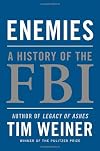
The FBI has a carefully curated image as heroic G-men, busting major criminals like mafia dons, bank robbers, kidnappers, and art thieves (hello Robert K. Wittman). But behind the image is a paradox, the workings of a secret police agency in a democracy, a shadowy organization that operates beyond the normal boundaries of the law. In Enemies, Tim Weiner ably traces the paradoxes of the FBI in its long history.
The Bureau of Investigation (not yet Federal) existed before J. Edgar Hoover, but show more the first director left such a mark on the FBI that's his story is its story. Hoover joined a minor agency, and in the turbulent era of anarchist bombers and Communist revolutionaries around the First World War, turned it into a crack machine for targeting subversives of all stripes. Hoover pioneered wiretaps and blackbag jobs, and a voluminous system of secret files directly under his control. FDR called on Hoover to track down Nazi agents, and the two formed a partnership based on political gossip secret intelligence. The period immediately after the Second World War was perhaps the most influential for Hoover, as he used artful leaks to frame the emerging Cold War, and made his anti-Communist views the dominant framework of the American government.
Hoover ardently believed that Communists aimed to overthrow the American government, and that there was a direct line between Moscow and the American Left (including labor and civil rights activists). Furthermore, a rash of breeches at the CIA convinced Hoover that Communism and homosexuality were linked as well. Hoover's war on "deviance" prompted spying into the private lives of American citizens, especially Martin Luther King Jr., as well as the massive COINTELPRO campaign to subvert and disorganize the American left. Though the 50s, 60s, and 70s, Hoover formed partnerships with Vice President and then President Nixon based on anti-communism, and LBJ based on political intrigue. Hoover was the man who knew all the secrets.
The twin blows of his death in 1972, and the Watergate burglary, where ex-FBI Nixon staffers ran into a newly independent FBI investigation, prompted the first crisis of faith, one from which the FBI has never really recovered. It turned out that the FBI's crown jewels of wiretapping and blackbag jobs had no Constitutional legitimacy or legislative basis. COINTELPRO was massively illegal. Despite all the effort involved in fighting Communism, FBI counter-intelligence was a shambles, and people with access to secrets across the government sold out to the Soviets again and again.
Since 1980, and especially since 9/11, the FBI has repeatedly tried to reorganize itself as a counter-terrorism intelligence agency, mostly to resounding failure. Weiner documents bureaucratic fiefdoms that refuse to communicate, agents without the touch to work confidential sources well, analysts who can't access materials due to outdated computer systems, and a lack of clarity and purpose that stretches for decades. Most cuttingly, prior to 9/11 the FBI and CIA anti-Al Qaeda units hated each other. When the FBI agent in charge died in the WTC attacks, his CIA counterpart said that his death was "the only good thing that happened that day." Despite a worldwide presence, thousands of agents, and billion dollar budgets, the FBI's vaunted successes in the War on Terror seem mostly to be about entrapping mentally ill Muslims into terror plots where the FBI supplies the plan, the weapons, and even the Jihadi rhetoric.
Weiner's book forces us to confront an expensive and painful legacy of failure, an undemocratic erosion of freedoms that has not even brought much security. Yet there's a vagueness about what he thinks intelligence should do, vis a vis subversives and terrorists, that weakens his argument. This is only a partial history, because the FBI does investigate and arrest common criminals. And finally, while it's easy to direct the apparatus of a secret police against unpopular subversives, we need more and better investigations of white collar crime and financial fraud, particularly in the wake of 2008 financial collapse. Enemies is an important part of the picture, and likely the sexiest and most interesting part of the picture, but it is only one part. show less
The Bureau of Investigation (not yet Federal) existed before J. Edgar Hoover, but show more the first director left such a mark on the FBI that's his story is its story. Hoover joined a minor agency, and in the turbulent era of anarchist bombers and Communist revolutionaries around the First World War, turned it into a crack machine for targeting subversives of all stripes. Hoover pioneered wiretaps and blackbag jobs, and a voluminous system of secret files directly under his control. FDR called on Hoover to track down Nazi agents, and the two formed a partnership based on political gossip secret intelligence. The period immediately after the Second World War was perhaps the most influential for Hoover, as he used artful leaks to frame the emerging Cold War, and made his anti-Communist views the dominant framework of the American government.
Hoover ardently believed that Communists aimed to overthrow the American government, and that there was a direct line between Moscow and the American Left (including labor and civil rights activists). Furthermore, a rash of breeches at the CIA convinced Hoover that Communism and homosexuality were linked as well. Hoover's war on "deviance" prompted spying into the private lives of American citizens, especially Martin Luther King Jr., as well as the massive COINTELPRO campaign to subvert and disorganize the American left. Though the 50s, 60s, and 70s, Hoover formed partnerships with Vice President and then President Nixon based on anti-communism, and LBJ based on political intrigue. Hoover was the man who knew all the secrets.
The twin blows of his death in 1972, and the Watergate burglary, where ex-FBI Nixon staffers ran into a newly independent FBI investigation, prompted the first crisis of faith, one from which the FBI has never really recovered. It turned out that the FBI's crown jewels of wiretapping and blackbag jobs had no Constitutional legitimacy or legislative basis. COINTELPRO was massively illegal. Despite all the effort involved in fighting Communism, FBI counter-intelligence was a shambles, and people with access to secrets across the government sold out to the Soviets again and again.
Since 1980, and especially since 9/11, the FBI has repeatedly tried to reorganize itself as a counter-terrorism intelligence agency, mostly to resounding failure. Weiner documents bureaucratic fiefdoms that refuse to communicate, agents without the touch to work confidential sources well, analysts who can't access materials due to outdated computer systems, and a lack of clarity and purpose that stretches for decades. Most cuttingly, prior to 9/11 the FBI and CIA anti-Al Qaeda units hated each other. When the FBI agent in charge died in the WTC attacks, his CIA counterpart said that his death was "the only good thing that happened that day." Despite a worldwide presence, thousands of agents, and billion dollar budgets, the FBI's vaunted successes in the War on Terror seem mostly to be about entrapping mentally ill Muslims into terror plots where the FBI supplies the plan, the weapons, and even the Jihadi rhetoric.
Weiner's book forces us to confront an expensive and painful legacy of failure, an undemocratic erosion of freedoms that has not even brought much security. Yet there's a vagueness about what he thinks intelligence should do, vis a vis subversives and terrorists, that weakens his argument. This is only a partial history, because the FBI does investigate and arrest common criminals. And finally, while it's easy to direct the apparatus of a secret police against unpopular subversives, we need more and better investigations of white collar crime and financial fraud, particularly in the wake of 2008 financial collapse. Enemies is an important part of the picture, and likely the sexiest and most interesting part of the picture, but it is only one part. show less
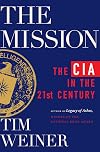
In this revealing history of the Central Intelligence Agency, Tim Weiner takes a deep dive into the missteps, challenges, transformations and successes the CIA has made in this century. The 9/11 terrorist attacks, catching the Agency by surprise, transformed the ill prepared organization to be a main player in President George W. Bush’s Global War on Terror. The numerous missteps they made during this period include assuring the President that Iraq possessed weapons of mass destruction, show more forming a brutal paramilitary force in the Iraq War, and engaging in torture under the guise of enhanced interrogation techniques, then later lying to Congress about doing so. Most of the actions came as the result of pressure from the White House and the Director whom Bush appointed to run the CIA.
Its involvement in the Global War on Terror came at the price of diverting the Agency’s attention from the threats posed by Russia and China. This began to change in the 2010s with fresh leadership working to return the CIA to its original mission to collect, analyze, evaluate, and share foreign intelligence with U.S. policymakers. The Agency recognized Russia’s interference in the 2016 Presidential election, but their warnings were not taken seriously by Congress. Then in 2022, they alerted the Ukraine government to Russia’s impending invasion, sharing critical information that prevented the country from being overrun. Throughout this period, they also successfully prevented other terrorist attacks in the U.S. and elsewhere.
While the reforms undertaken in the last decade have greatly improved staff morale and public perception of the CIA, the Agency remains vulnerable to the demands made upon it by whoever happens to be in the White House. The leadership in the CIA was able to fend off Trump’s actions to use the Agency for his own purposes, but in his concluding chapter, Weiner warns this most likely will not be the case during his second administration. Published in 2025, The Mission presents the good, the bad and the ugly about this key government agency, showing the threat it might pose in the wrong hands but also its importance in a world where global tensions continue to mount. show less
Its involvement in the Global War on Terror came at the price of diverting the Agency’s attention from the threats posed by Russia and China. This began to change in the 2010s with fresh leadership working to return the CIA to its original mission to collect, analyze, evaluate, and share foreign intelligence with U.S. policymakers. The Agency recognized Russia’s interference in the 2016 Presidential election, but their warnings were not taken seriously by Congress. Then in 2022, they alerted the Ukraine government to Russia’s impending invasion, sharing critical information that prevented the country from being overrun. Throughout this period, they also successfully prevented other terrorist attacks in the U.S. and elsewhere.
While the reforms undertaken in the last decade have greatly improved staff morale and public perception of the CIA, the Agency remains vulnerable to the demands made upon it by whoever happens to be in the White House. The leadership in the CIA was able to fend off Trump’s actions to use the Agency for his own purposes, but in his concluding chapter, Weiner warns this most likely will not be the case during his second administration. Published in 2025, The Mission presents the good, the bad and the ugly about this key government agency, showing the threat it might pose in the wrong hands but also its importance in a world where global tensions continue to mount. show less
This book tells a story, superbly well, that all Americans should consider: When our leaders for decades chose security over liberty, the resulting bureaucratic monstrosity did incalculable damage to our country's fundamental values.
At the heart of this story is one man, J. Edgar Hoover. In 1917, at age 22, he began working in Federal law enforcement and very quickly took the reins of the "Radical Division" of the Justice Department. As the tide of American fear of anarchists and communists show more rose, Hoover rose with it (and fanned it) to become the head of the FBI, staying in that office until his death in 1972.
Myriad incidents of lawless bugging, wiretapping, black bag breaking and entering, suriptitious opening of first class mail, blackmail and reputation smearing are recounted here. Hoover kept most of this from view, but Weiner dishearteningly relates how every President during Hoover's tenure learned of these operations and came to use and value them as political tools, or food for their paranoia that foreign agents were behind civil discontent.
Historians of modern America have told us of Hoover's power and invulnerability, largely as a result of his unlawful intelligence gathering, from which no politician or public figure was immune. Weiner explores in detail how Hoover's power came about and how he used it, largely for self perpetuation, but also to protect the "American way of life" from the foreign born, intellectuals, liberals, organized labor, pacifists, Negroes who did not kinow their place and homosexuals (I'm sure I've left some groups out). FBI employees mirrored Hoover's image of what America should be. "The FBI . . . [was] a man's world - usually men of Irish or Italian heritage schooled by Jesuits and raised in a closed culture of police and priests."
In recent popular culture Hoover has been portrayed as a cross-dressing fairy. Weiner says there is no evidence for cross-dressing, and "[n]ot a shred of evidence supports the notion that Hoover ever had sex with [his lifelong male companion Clyde] Tolson or with any other human being. They were personally and professionally inseperable, Hoover left Tolson his worldly possessions in his will, and there are photographs of the two men together that can be read as revealing human feelings deeper than fondness. One of Hoover's biographers called their relationship a sexless marriage . . ." It is unlikely that Hoover self identified as a homosexual. In fact, he and President Eisenhower, whose 1953 Executive Order banned homosexuals from government service, " . . . connected communism and homosexuality . . . they both believed without question that homosexuals were especially susceptible to foreign intelligence services."
The FBI after Hoover's death is described by Weiner as hapless, feuding with the CIA to the detriment of both, and a very late and woefully unprepared entrant into the digital age. Director Gray cooperated with Nixon's cover up of Watergate; Director Sessions was aloof and ineffectual; Director Freeh feuded with President Clinton, and the two didn't speak during four years of their official tenure. Investigations after 9/11 showed the Bureau's incompetence in dealing with the al-Qaeda threat. In 1991, for example, the Bureau had exactly one Arabic translator and could not process or understand the intelligence it was gathering from Islamic militants.
One finishes this book with a feeling of great unease. The vaunted FBI turns out to have been an idiosyncratic fiefdom, directing its energies at gays and commies, while leaving the country largely unprotected from international threats. What it did accomplish was largely with tainted methods.
One can only hope for better days ahead. show less
At the heart of this story is one man, J. Edgar Hoover. In 1917, at age 22, he began working in Federal law enforcement and very quickly took the reins of the "Radical Division" of the Justice Department. As the tide of American fear of anarchists and communists show more rose, Hoover rose with it (and fanned it) to become the head of the FBI, staying in that office until his death in 1972.
Myriad incidents of lawless bugging, wiretapping, black bag breaking and entering, suriptitious opening of first class mail, blackmail and reputation smearing are recounted here. Hoover kept most of this from view, but Weiner dishearteningly relates how every President during Hoover's tenure learned of these operations and came to use and value them as political tools, or food for their paranoia that foreign agents were behind civil discontent.
Historians of modern America have told us of Hoover's power and invulnerability, largely as a result of his unlawful intelligence gathering, from which no politician or public figure was immune. Weiner explores in detail how Hoover's power came about and how he used it, largely for self perpetuation, but also to protect the "American way of life" from the foreign born, intellectuals, liberals, organized labor, pacifists, Negroes who did not kinow their place and homosexuals (I'm sure I've left some groups out). FBI employees mirrored Hoover's image of what America should be. "The FBI . . . [was] a man's world - usually men of Irish or Italian heritage schooled by Jesuits and raised in a closed culture of police and priests."
In recent popular culture Hoover has been portrayed as a cross-dressing fairy. Weiner says there is no evidence for cross-dressing, and "[n]ot a shred of evidence supports the notion that Hoover ever had sex with [his lifelong male companion Clyde] Tolson or with any other human being. They were personally and professionally inseperable, Hoover left Tolson his worldly possessions in his will, and there are photographs of the two men together that can be read as revealing human feelings deeper than fondness. One of Hoover's biographers called their relationship a sexless marriage . . ." It is unlikely that Hoover self identified as a homosexual. In fact, he and President Eisenhower, whose 1953 Executive Order banned homosexuals from government service, " . . . connected communism and homosexuality . . . they both believed without question that homosexuals were especially susceptible to foreign intelligence services."
The FBI after Hoover's death is described by Weiner as hapless, feuding with the CIA to the detriment of both, and a very late and woefully unprepared entrant into the digital age. Director Gray cooperated with Nixon's cover up of Watergate; Director Sessions was aloof and ineffectual; Director Freeh feuded with President Clinton, and the two didn't speak during four years of their official tenure. Investigations after 9/11 showed the Bureau's incompetence in dealing with the al-Qaeda threat. In 1991, for example, the Bureau had exactly one Arabic translator and could not process or understand the intelligence it was gathering from Islamic militants.
One finishes this book with a feeling of great unease. The vaunted FBI turns out to have been an idiosyncratic fiefdom, directing its energies at gays and commies, while leaving the country largely unprotected from international threats. What it did accomplish was largely with tainted methods.
One can only hope for better days ahead. show less
 This review was written for LibraryThing Early Reviewers.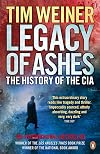
Long, exhausting, and, frankly disheartening book charting the myriad catastrophes and occasional triumphs of the CIA. From its origins in the OSS, whose romantic gung-ho legacy it completely failed to shake off, to its colossal betrayal of everything it should have stood for in the creation of the case for the Iraq war, the CIA seems to have mostly succeeded in spending lots of money, killing lots of its own agents, overstating the threat of Soviet communism and reacting with horrible show more blunders or equally horrible successes that either became self-fulfilling prophecies or worse for the people involved than any communist regime. It also failed as at espionage but everybody, including a succession of presidents, loved the covert action stuff, even though it generally made everything worse. Oversight was a joke, and so was their intelligence. Scandals and leaks and murders and corruption and cover-up and betrayals and finally a terrible eagerness to please and tell the president only what he wants to hear.
Highly readable, packed with various colossal giants of history, this sticks closely to the CIA view of things, so as a history of the various events it gets caught up in - Bay Of Pigs, Vietnam, Iran-Contra, it's necessarily incomplete, leading to a certain amount of whiplash and a longing for closure. Anyway, the CIA: it sucks, and this book shows how much damage a powerful secret institution in thrall to romantic methods and ideas that were born, had their heyday and died in WWII, can really do as it careens out of control down through the century. show less
Highly readable, packed with various colossal giants of history, this sticks closely to the CIA view of things, so as a history of the various events it gets caught up in - Bay Of Pigs, Vietnam, Iran-Contra, it's necessarily incomplete, leading to a certain amount of whiplash and a longing for closure. Anyway, the CIA: it sucks, and this book shows how much damage a powerful secret institution in thrall to romantic methods and ideas that were born, had their heyday and died in WWII, can really do as it careens out of control down through the century. show less
Lists
Awards


You May Also Like


Associated Authors
Statistics
- Works
- 13
- Members
- 4,435
- Popularity
- #5,647
- Rating
- 3.9
- Reviews
- 135
- ISBNs
- 103
- Languages
- 11
- Favorited
- 4

