On This Page
Description
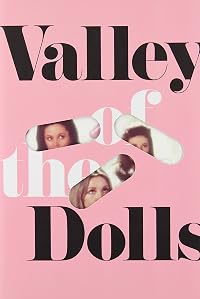
Dolls: red or black; capsules or tablets; washed down with vodka or swallowed straight -- for Anne, Neely, and Jennifer, it doesn't matter, as long as the pill bottle is within easy reach. These three women become best friends when they are young and struggling in New York City and then climb to the top of the entertainment industry -- only to find that there is no place left to go but down -- into the Valley of the Dolls.Tags
Recommendations








Member Recommendations


Member Reviews
Or How To Write An American Classic
This is going to sound crazy, but hear me out: The Valley of the Dolls is totally like The Great Gatsby.
One is a culturally-important, best-selling, drug-fueled, homoerotic classic with several unfortunate movie adaptations; the other is well, a culturally-important, best-selling, drug-fueled, homoerotic classic with this gem in it:
"Give me back my hair, you little bitch," Helen yelled. "It cost me three hundred bucks!"... "Hey--what the hell are you doing?" Helen screamed. She turned to Anne. "Jesus, she's throwing in the can, I bet. I'll kill her, that little bitch!"
Actually there a lot of other parallels: the themes of reinvention through false identities, focuses on the American dream of success show more (note that it's becoming a stinking rich capitalist for men and a famous and revered for women), and plots that hinge on characters doing stupid shit because of LOVE.
But the similarity that really jumped out at me was how both novels exploit our obsession with wealth (and fame) by luxuriating in its excesses, and then reassure us about our lack of these things by depicting its wealthy (and famous) main characters as incredibly miserable and/or terrible people.
Hey don't be fooled by the persona. I may spend some of my free time reading and deeply thinking about important literature, but people who know me also know I am a habitual online reader of celebrity gossip. It probably speaks to some weird primal impulse to raise individuals to mythic proportions and then tear them down, but also, more relevantly to this discussion, a manifestation of the rather schizophrenic cultural attitudes that define "success". If we really think "success" should be moral and material, why do we think they are contradictory?
Hell if I know. And if any book offered the answers, perhaps novels that followed this narrative arc and purpose would be less compelling. Until that day though, it's a winning premise, and I will probably never stop reading celebrity gossip pages, no matter how much I know on an intellectual level that the "information" they dispense is totally a)false, b)trivial, and c)ethically deplorable.
Does this make The Valley of the Dolls a good book? Heck no. Each of the three main characters we follow hardly has two characteristics to rub together: Anne is a frigid New Englander, Neely is talented and needy, Jennifer is beautiful and… untalented. For all it’s supposedly about their personal success, really it’s all about them defining themselves solely through their men—a mistake made by Susann as much as the characters, as she quickly scuttles the interesting backstage-show-business angle to squeeze in more torrid sex/love affairs. This obsession with the men in their lives is all the more baffling for how none of the male characters barely even has one characteristic, let alone any attractive ones. Susann's pacing is all over the place, she appears to lose interest in Jennifer at some point, and her idea of what is shocking is actually mostly campy, sometimes to the point of hilarity like the mentally-disabled crooner. On the plus side, this makes The Valley of the Dolls a mostly painless read, one that I finished fairly quickly and which left me enough brain cells free to come up with the idea that it's totally like The Great Gatsby. Rating: 2 stars
To summarize:
1. Money. Think Cribs.
2. Sex. Preferably the good kind. Only literary critics like sad, bad sex.
3. Drugs. Obviously catered to the time period/setting.
4. Punish characters for getting the money, sex, and drugs. Because we are hypocrites.
5. Sprinkle in some homoerotism. Only for the flavor or the titillation, don't be doing any real treatment on the topic, it will doom the novel to the "genre" ghetto.
6. Don't forget the tragic ending. At least one character should die via suicide.
7. Don't bother coming up with complex motivations for when you need your characters to do stupid, destructive shit: just pin it on love.
8. "Women be bitches" OR "Men be assholes". But remember, similarly to #5: if you make a male-viewpoint novel, it will be hailed as literature for everyone; if you make it a female-viewpoint novel, it will be branded for the "women's literature". show less
This is going to sound crazy, but hear me out: The Valley of the Dolls is totally like The Great Gatsby.
One is a culturally-important, best-selling, drug-fueled, homoerotic classic with several unfortunate movie adaptations; the other is well, a culturally-important, best-selling, drug-fueled, homoerotic classic with this gem in it:
"Give me back my hair, you little bitch," Helen yelled. "It cost me three hundred bucks!"... "Hey--what the hell are you doing?" Helen screamed. She turned to Anne. "Jesus, she's throwing in the can, I bet. I'll kill her, that little bitch!"
Actually there a lot of other parallels: the themes of reinvention through false identities, focuses on the American dream of success show more (note that it's becoming a stinking rich capitalist for men and a famous and revered for women), and plots that hinge on characters doing stupid shit because of LOVE.
But the similarity that really jumped out at me was how both novels exploit our obsession with wealth (and fame) by luxuriating in its excesses, and then reassure us about our lack of these things by depicting its wealthy (and famous) main characters as incredibly miserable and/or terrible people.
Hey don't be fooled by the persona. I may spend some of my free time reading and deeply thinking about important literature, but people who know me also know I am a habitual online reader of celebrity gossip. It probably speaks to some weird primal impulse to raise individuals to mythic proportions and then tear them down, but also, more relevantly to this discussion, a manifestation of the rather schizophrenic cultural attitudes that define "success". If we really think "success" should be moral and material, why do we think they are contradictory?
Hell if I know. And if any book offered the answers, perhaps novels that followed this narrative arc and purpose would be less compelling. Until that day though, it's a winning premise, and I will probably never stop reading celebrity gossip pages, no matter how much I know on an intellectual level that the "information" they dispense is totally a)false, b)trivial, and c)ethically deplorable.
Does this make The Valley of the Dolls a good book? Heck no. Each of the three main characters we follow hardly has two characteristics to rub together: Anne is a frigid New Englander, Neely is talented and needy, Jennifer is beautiful and… untalented. For all it’s supposedly about their personal success, really it’s all about them defining themselves solely through their men—a mistake made by Susann as much as the characters, as she quickly scuttles the interesting backstage-show-business angle to squeeze in more torrid sex/love affairs. This obsession with the men in their lives is all the more baffling for how none of the male characters barely even has one characteristic, let alone any attractive ones. Susann's pacing is all over the place, she appears to lose interest in Jennifer at some point, and her idea of what is shocking is actually mostly campy, sometimes to the point of hilarity like the mentally-disabled crooner. On the plus side, this makes The Valley of the Dolls a mostly painless read, one that I finished fairly quickly and which left me enough brain cells free to come up with the idea that it's totally like The Great Gatsby. Rating: 2 stars
To summarize:
1. Money. Think Cribs.
2. Sex. Preferably the good kind. Only literary critics like sad, bad sex.
3. Drugs. Obviously catered to the time period/setting.
4. Punish characters for getting the money, sex, and drugs. Because we are hypocrites.
5. Sprinkle in some homoerotism. Only for the flavor or the titillation, don't be doing any real treatment on the topic, it will doom the novel to the "genre" ghetto.
6. Don't forget the tragic ending. At least one character should die via suicide.
7. Don't bother coming up with complex motivations for when you need your characters to do stupid, destructive shit: just pin it on love.
8. "Women be bitches" OR "Men be assholes". But remember, similarly to #5: if you make a male-viewpoint novel, it will be hailed as literature for everyone; if you make it a female-viewpoint novel, it will be branded for the "women's literature". show less
I didn't expect to like it, but I did. I picked it up idly while I was waiting for some pictures to copy on my computer and looked up three hours later. Excellent writing, vivid characters. Even though you know what's going to happen, you find yourself hoping that it doesn't. And then when it does you're still caught in the heartbreaking certainty that it couldn't have happened any other way.
James T. Kirk: You'll find it in all the literature of the period.
Spock: For example?
James T. Kirk: Oh, the neglected works of Jacqueline Susann, the novels of Harold Robbins....
Spock: Ah... The giants.
--Star Trek IV: The Voyage Home
Actually, although I blush a bit to admit it, I really relished reading Valley of the Dolls--which I basically gobbled down in one sitting--all 400 odd pages. Trash it may be, it's good trash--a compulsively readable, sometimes cheesy soap opera. With admittedly eye-rolling moments. And a voyeuristic vibe since you get the feeling characters are based on real people such as Ethel Merman, Judy Garland and Marilyn Monroe. A blurb inside the cover from The Village Voice calls it "proto-feminist" and I can see show more that, even if more in a cautionary tale than girl power sense. This is set in the age of Mad Men, in New York City from September of 1945 to January of 1965 and was published in 1966.
The "dolls" of the title are pills. The red Seconals, the yellow Nembutals, the "little green" Dexedrines and unnamed blues and blue-striped. It's the women, too--ambitious, beautiful, and hollowed out. The central character is Anne Welles. She comes to New York City straight out of Radcliffe determined to leave her small town New England roots behind and resists being subsumed by rich men demanding she give up her dreams for a career--only to find that the man she does want feels "castrated" by her success. Then there are her friends and roommates who are destined for success in show business. Neely O'Hara is only seventeen when she gets her first break on Broadway, and by the time she's twenty she'll be taking a rainbow of pills to keep her slim, keep her up and bring her down. Jennifer North, in her mid-twenties when the book begins, lives and dies by her face and figure.
This is by no means a happy tale and quite cynical really. But Jacqueline Susann and her husband were both involved in show business, and many of the details in her portrait of it rings true enough. The book seems quite risque for its time; there are homosexual affairs, infidelities, mental illnesses, suicides, abortions, plastic surgeries and more. There's also a lot of the picture of life in post-World War II New York City that interested me--such as the near impossibility of finding a good apartment and how that little box called television changed the rules. The picture of a sanitarium in the book was particularly scary and surreal. And yes, I did care about these characters. So, even if I do find it hard to picture this book being read 250 years from now, no Susann doesn't deserve to be lumped in with the likes of Harold Robbins.
Although, you know which Susann book I out and out adored when I was really young? Every Night, Jossephine! Her non-fiction book about her and her poodle. Yes, really. show less
Spock: For example?
James T. Kirk: Oh, the neglected works of Jacqueline Susann, the novels of Harold Robbins....
Spock: Ah... The giants.
--Star Trek IV: The Voyage Home
Actually, although I blush a bit to admit it, I really relished reading Valley of the Dolls--which I basically gobbled down in one sitting--all 400 odd pages. Trash it may be, it's good trash--a compulsively readable, sometimes cheesy soap opera. With admittedly eye-rolling moments. And a voyeuristic vibe since you get the feeling characters are based on real people such as Ethel Merman, Judy Garland and Marilyn Monroe. A blurb inside the cover from The Village Voice calls it "proto-feminist" and I can see show more that, even if more in a cautionary tale than girl power sense. This is set in the age of Mad Men, in New York City from September of 1945 to January of 1965 and was published in 1966.
The "dolls" of the title are pills. The red Seconals, the yellow Nembutals, the "little green" Dexedrines and unnamed blues and blue-striped. It's the women, too--ambitious, beautiful, and hollowed out. The central character is Anne Welles. She comes to New York City straight out of Radcliffe determined to leave her small town New England roots behind and resists being subsumed by rich men demanding she give up her dreams for a career--only to find that the man she does want feels "castrated" by her success. Then there are her friends and roommates who are destined for success in show business. Neely O'Hara is only seventeen when she gets her first break on Broadway, and by the time she's twenty she'll be taking a rainbow of pills to keep her slim, keep her up and bring her down. Jennifer North, in her mid-twenties when the book begins, lives and dies by her face and figure.
This is by no means a happy tale and quite cynical really. But Jacqueline Susann and her husband were both involved in show business, and many of the details in her portrait of it rings true enough. The book seems quite risque for its time; there are homosexual affairs, infidelities, mental illnesses, suicides, abortions, plastic surgeries and more. There's also a lot of the picture of life in post-World War II New York City that interested me--such as the near impossibility of finding a good apartment and how that little box called television changed the rules. The picture of a sanitarium in the book was particularly scary and surreal. And yes, I did care about these characters. So, even if I do find it hard to picture this book being read 250 years from now, no Susann doesn't deserve to be lumped in with the likes of Harold Robbins.
Although, you know which Susann book I out and out adored when I was really young? Every Night, Jossephine! Her non-fiction book about her and her poodle. Yes, really. show less
This was so good and yet so bad. I don't know how else to say it. This was very entertaining and said a lot about the entertainment industry during the 20th century. The prose is readable, but also nothing to write home about. There was so much in this novel, you can tell Susann put so much into the characters and the plot. Every man in this book was horrible, Lyon being the worst!
The only likable characters were Anne and Sharon Tate... I mean Jennifer! These are real people and real situations, no one can tell me otherwise, and it is terrifying! Someone, please tell me this isn't what real life is, what humanity is. Please tell me that we've progressed as a society since this was written.
The only likable characters were Anne and Sharon Tate... I mean Jennifer! These are real people and real situations, no one can tell me otherwise, and it is terrifying! Someone, please tell me this isn't what real life is, what humanity is. Please tell me that we've progressed as a society since this was written.
fabulously depressing, valley of the dolls is the perfect showbusiness corruption story. it highlights the decadence and alienation of the entertainment industry, whilst also commenting on the social restrictions placed on women in this era - all in a very camp manner (probably not intended, but a highlight nonetheless). i loved jennifer and anne (and had a love-hate relationship with neely), and found their stories fascinating. an intimately camp portrait of a descent into, well, the valley of the dolls.
I reread this as part of a read along for GarbAugust….still as intense and as devastating as I remember from all those years ago. A real page turner (as good garbage tends to be….). Dated? Yeah…. But so am I when you get right down to it…..
Yes, folks, it's another one of those books I'm embarrassed to love. It's sheer trashy soap opera, and pure fun to read. If you think the movie is one of those so-bad-it's-good classics (and it is), run out and get the book THIS SECOND. First of all, you won't be distracted by the dreadful, dreadful acting by Sharon Tate, Barbara Parkins, and of course Patty Duke. (Granted, the book doesn't have Susan Hayward, but nothing is perfect.) Second, you don't have to sit through the suck-ass musical numbers. Third, you'll get the thrill of having everyone on public transportation stare at you in disbelief, thinking, "Is she actually reading that book!?!" Way, way fun.
Members
- Recently Added By
Published Reviews
ThingScore 100
Valley of the Dolls is a zipper-ripper that has been called trashy, tawdry, glitzy, lusty, sordid and seamy — and that's just the beginning of its appeal.
added by Shortride
Valley Of The Dolls can be enjoyed as the ultimate plush, trash, human-interest story - three decades of gossip columns distilled into one fat novel - but also as a document of some cultural interest, published as it was in 1966, but spanning the years from optimistic postwar 1945 to world-weary pre-deluge 1963. Kierkegaard's theorem that life can only be lived forwards and understood show more backwards has been used as an excuse to dignify a lot of silly, frivolous cultural frills and furbelows with far greater significance than they actually had - including the mini-skirt, Barbie dolls and atheism. But the sheer breadth and depth of this particular disco-ball gives it lasting clout. show less
added by Nevov
Lists

The Guardian's 1000 Novels Everyone Must Read
1,005 works; 551 members

Read the book and saw the movie
1,170 works; 193 members

100 books to read in a lifetime
102 works; 37 members

Best Feminist Literature
188 works; 26 members

1960s, Best books published therein
254 works; 22 members

Books Featured on Gilmore Girls
307 works; 21 members

Rory Gilmore Book Club
193 works; 5 members
Page Turners
185 works; 11 members

Bibliography for How to be a Heroine
148 works; 12 members
discontinued
24 works; 4 members

Publisher's Weekly Bestsellers - Part II - 1940 - 1979
355 works; 5 members

Feminism
167 works; 4 members

sad girl books
41 works; 2 members

Books featured on I Don't Even Own a Television
167 works; 3 members
Read These Too
458 works; 9 members

sad girl books
51 works; 3 members

Gen X Library
245 works; 4 members
Cult Classics
30 works; 1 member

The Complete Rory Gilmore Reading List
506 works; 5 members

Guilty Pleasures
223 works; 86 members

el
1,139 works; 1 member
Author Information

14+ Works 5,770 Members
Some Editions
Awards and Honors
Distinctions
Series

Belongs to Publisher Series
Work Relationships
Is contained in
Has the adaptation
Is parodied in
Common Knowledge
- Canonical title
- Valley of the Dolls
- Original title
- Valley of the Dolls
- Original publication date
- 1966
- People/Characters
- Anne Welles; Neely O'Hara; Jennifer North; Lyon Burke; Henry Bellamy; Helen Lawson (show all 12); Allen Cooper; Gino Cooper; Kevin Gillmore; Tony Polar; Mirian Polar; George Bellows
- Important places
- Hollywood, Los Angeles, California, USA
- Related movies
- Valley of the Dolls (1967 | IMDb); Jacqueline Susann's Valley of the Dolls (1981 | IMDb)
- Dedication
- To Josephine who sat at my feet, positive I was writing a sequel*
*but most of all to Irving - First words
- You've got to climb to the top of Mount Everest to reach the Valley of the Dolls.
- Last words
- (Click to show. Warning: May contain spoilers.)After all, it was New Year's Eve!
- Canonical DDC/MDS
- 813.54
- Canonical LCC
- PS3569.U75
Classifications
Statistics
- Members
- 4,202
- Popularity
- 3,640
- Reviews
- 88
- Rating
- (3.58)
- Languages
- 15 — Czech, Danish, Dutch, English, Finnish, French, German, Hungarian, Italian, Latvian, Norwegian (Bokmål), Portuguese, Russian, Spanish, Swedish
- Media
- Paper, Audiobook, Ebook
- ISBNs
- 78
- UPCs
- 1
- ASINs
- 41