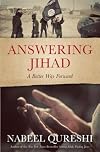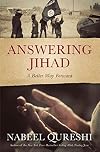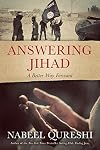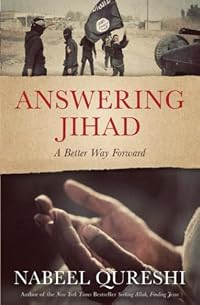
Answering Jihad: A Better Way Forward
by Nabeel Qureshi
On This Page
Description
From New York Times bestselling author and former Muslim Nabeel Qureshi comes this personal, challenging, and respectful answer to the many questions surrounding jihad, the rise of ISIS, and Islamic terrorism. San Bernardino was the most lethal terror attack on American soil since 9/11, and it came on the heels of a coordinated assault on Paris. There is no question that innocents were slaughtered in the name of Allah and in the way of jihad, but do the terrorists' actions actually reflect show more the religion of Islam? The answer to this question is more pressing than ever, as waves of Muslim refugees arrive in the West seeking shelter from the violent ideology of ISIS. Setting aside speculations and competing voices, what really is jihad? How are we to understand jihad in relation to our Muslim neighbors and friends? Why is there such a surge of Islamist terrorism in the world today, and how are we to respond? show lessTags
Recommendations






Member Reviews
This book provides a deeper understanding of Islam, and is set up in an easy to follow question-and-answer format. It's informative and thought provoking, and I found myself highlighting and engaging with the text throughout. I was expecting a dry, pedantic read, but I encountered a book that was apparently written with a broad audience in mind, a book that covers not only the history and teachings of Islam but also what that means for us today as we try to make sense of and move forward in a climate that is often rife with ignorance, fear, and misunderstanding.
Reading this book has given me a functional understanding of the religious and historical foundations of radical Islam. For groups like ISIS and Boko Haram, jihad is often a show more violent physical struggle for a much higher spiritual purpose, which is why actions deemed evil by the West are, to their way of thinking, actually divine. We are talking about two very different world views that will probably never be able to peaceably coexist in the long term because they are so incredibly disparate. To radicals, nothing less than strict adherence to sharia law is permissible, and there can be no peace outside of worldwide submission to "pure," fundamental Islam, an Islam that goes back to the religion's roots and is free from any outside influence.
However, three points stand out clearly from the beginning of Answering Jihad: the author understands that not all Muslims believe or practice the same, just as not all Jews or Christians practice the same within their faiths; the author feels that any religion should be defined by the characteristics that set its initial adherents apart from nonbelievers, so an understanding of the history and foundations of Islam are vital; and the author strongly believes that one must love Muslims, even if and while criticizing Islamic teachings. Qureshi isn't calling for war; he's calling for understanding, compassion, and love.
For some Muslims, Islam is a religion of peace, whereas for others, a religion of violence. According to the author, neither the Quran nor the teachings and traditions of Mohammed ever define Islam as a religion of peace, and, in fact, they prove otherwise. Qureshi states that some Muslim scholars actually consider proclamations that Islam is a religion of peace to be an "effort by the West to emasculate Islam." Clearly, peace is in the eye of the beholder.
This is an important book, well written and thoroughly researched, and though it provides some difficult truths, it is a book that must be read by anyone who hopes to understand why radical Muslims believe and behave as they do; it is, in fact, because of the truths presented herein that this book deserves to read, considered, and carefully digested. show less
Reading this book has given me a functional understanding of the religious and historical foundations of radical Islam. For groups like ISIS and Boko Haram, jihad is often a show more violent physical struggle for a much higher spiritual purpose, which is why actions deemed evil by the West are, to their way of thinking, actually divine. We are talking about two very different world views that will probably never be able to peaceably coexist in the long term because they are so incredibly disparate. To radicals, nothing less than strict adherence to sharia law is permissible, and there can be no peace outside of worldwide submission to "pure," fundamental Islam, an Islam that goes back to the religion's roots and is free from any outside influence.
However, three points stand out clearly from the beginning of Answering Jihad: the author understands that not all Muslims believe or practice the same, just as not all Jews or Christians practice the same within their faiths; the author feels that any religion should be defined by the characteristics that set its initial adherents apart from nonbelievers, so an understanding of the history and foundations of Islam are vital; and the author strongly believes that one must love Muslims, even if and while criticizing Islamic teachings. Qureshi isn't calling for war; he's calling for understanding, compassion, and love.
For some Muslims, Islam is a religion of peace, whereas for others, a religion of violence. According to the author, neither the Quran nor the teachings and traditions of Mohammed ever define Islam as a religion of peace, and, in fact, they prove otherwise. Qureshi states that some Muslim scholars actually consider proclamations that Islam is a religion of peace to be an "effort by the West to emasculate Islam." Clearly, peace is in the eye of the beholder.
This is an important book, well written and thoroughly researched, and though it provides some difficult truths, it is a book that must be read by anyone who hopes to understand why radical Muslims believe and behave as they do; it is, in fact, because of the truths presented herein that this book deserves to read, considered, and carefully digested. show less
Summary: Contends that there is a basis in the foundations of Islam for violent, and not merely defensive, jihad, which neither can be ignored, nor assumed of all Muslims, but calls for a proactive response, particularly of Christians, of love and friendship with the hope of breaking the cycle of violence.
In this book Nabeel Qureshi, a convert from Islam to Christianity, details his own realization, particularly in the aftermath of 9/11 that Islam at its foundations was not the "religion of peace" in which he was raised, that many Muslims as well as American political figures touted to differentiate the perpetrators of terror from the mass of Muslims.
Qureshi contends in this book that it is true that many Muslims were raised as he was, show more and that the vast majority of Muslims indeed simply want what all want: to live peaceably, to be financially secure in fulfilling work, and to raise healthy families in their faith. However, what he found as he researched the foundational texts and early history of the Prophet Muhammad, was a trajectory toward increasing violence, both in the Qur'an, and in the acts of Muhammad, and that not all of this was merely defensive. He particularly points out that Surah 9, the last of the Surahs is the most violent and, he would contend, abrogates earlier peaceable Surahs.
What he faced, and he believes faces young Muslims who turn to these teachings, particularly as they are promoted online, is that there is a choice between apostasy through leaving Islam, apathy through ignoring Muhammad's teaching or "radicalization" which seeks to obey all his teachings, including those concerning jihad as violent struggle, not merely "spiritual" struggle as it is sometimes portrayed. Thus he would propose that efforts to separate violent radicalism from religiously rooted motivations are misinformed and dangerous.
The book consists of a series of short chapters, each which attempts to answer a single question. The first part is concerned with the origins of jihad and explores whether Islam is a religion of peace, what is jihad, is it in the Qur'an and the life of Muhammad, and what is sharia. Many of the conclusions mentioned above come from this section.
The second turns to jihad today, asking what is radical Islam, does Islam need a reformation, who are Al Qaeda, ISIS, and Boko Haram, and why Muslims are being radicalized. He would contend that the "reformation" of Islam is actually at the heart of violent radicalism, and that what is needed is re-imagining a peaceful Islam, but does not hold out much hope for this because it means ignoring or de-emphasizing some of the teachings of Muhammad.
The final section compares Islam and Christianity. He contends that what Christians and Muslims believe about God is sufficiently different that they do not worship the same God, contra theologians like Miroslav Volf. In fact, he criticizes Volf for stifling dialogue because of Volf's categorical statements denying that there was any theological justification for the suspension of Larycia Hawkins from the Wheaton faculty for affirming that Christians and Muslims worship the same God. At the same time, Qureshi acknowledges differences here and would like to see more dialogue, which he believes Volf's statements precluded.
In this final section Qureshi also discusses the comparisons of jihad with holy war in the Old Testament and with the Crusades. He quotes a friend who said, "If you want to follow the biblical model of attacking a land, the first thing you have to do is wait 400 years." He also contrasts the biblical and Islamic trajectories--the former begins with war but ends in the New Testament with a renunciation of violence that carried through the first 300 years of the church's existence, where Christians were martyred but did not fight back; the latter becomes increasingly violent in the later Surahs and its earliest centuries are filled with violent conquest and often viewed as the Golden Age of Islam.
What Qureshi would contend is that we need to have eyes wide open to these things--and to proactively love even those who could turn out to be enemies. It is a call neither to close our eyes and minds to discerning the roots of violence that he contends is at the heart of Islam, nor to close our hearts to Muslim neighbors, including those who seek refuge. It raises the question of whether we can be both vigilant and compassionate. It is a call that recognizes the possibility that some may be "radicalized" and yet that many others may be won by friends, who like a Christian friend of his, suggested that radicalization was not the only option.
It strikes me that Qureshi exemplifies the "both-and" thinking that characterizes Christians who believe the gospel calls us to a "Third Way". Vigilant compassion succumbs neither to naive sentimentality nor to fear and hatred. It reckons with the fallen, violent world in which we live, and holds to the redemptive possibilities in the way of the Christ. As Qureshi concludes, this is not the final answer, but rather a way forward.
____________________________
Disclosure of Material Connection: I received this book free from the publisher. I was not required to write a positive review. The opinions I have expressed are my own. show less
In this book Nabeel Qureshi, a convert from Islam to Christianity, details his own realization, particularly in the aftermath of 9/11 that Islam at its foundations was not the "religion of peace" in which he was raised, that many Muslims as well as American political figures touted to differentiate the perpetrators of terror from the mass of Muslims.
Qureshi contends in this book that it is true that many Muslims were raised as he was, show more and that the vast majority of Muslims indeed simply want what all want: to live peaceably, to be financially secure in fulfilling work, and to raise healthy families in their faith. However, what he found as he researched the foundational texts and early history of the Prophet Muhammad, was a trajectory toward increasing violence, both in the Qur'an, and in the acts of Muhammad, and that not all of this was merely defensive. He particularly points out that Surah 9, the last of the Surahs is the most violent and, he would contend, abrogates earlier peaceable Surahs.
What he faced, and he believes faces young Muslims who turn to these teachings, particularly as they are promoted online, is that there is a choice between apostasy through leaving Islam, apathy through ignoring Muhammad's teaching or "radicalization" which seeks to obey all his teachings, including those concerning jihad as violent struggle, not merely "spiritual" struggle as it is sometimes portrayed. Thus he would propose that efforts to separate violent radicalism from religiously rooted motivations are misinformed and dangerous.
The book consists of a series of short chapters, each which attempts to answer a single question. The first part is concerned with the origins of jihad and explores whether Islam is a religion of peace, what is jihad, is it in the Qur'an and the life of Muhammad, and what is sharia. Many of the conclusions mentioned above come from this section.
The second turns to jihad today, asking what is radical Islam, does Islam need a reformation, who are Al Qaeda, ISIS, and Boko Haram, and why Muslims are being radicalized. He would contend that the "reformation" of Islam is actually at the heart of violent radicalism, and that what is needed is re-imagining a peaceful Islam, but does not hold out much hope for this because it means ignoring or de-emphasizing some of the teachings of Muhammad.
The final section compares Islam and Christianity. He contends that what Christians and Muslims believe about God is sufficiently different that they do not worship the same God, contra theologians like Miroslav Volf. In fact, he criticizes Volf for stifling dialogue because of Volf's categorical statements denying that there was any theological justification for the suspension of Larycia Hawkins from the Wheaton faculty for affirming that Christians and Muslims worship the same God. At the same time, Qureshi acknowledges differences here and would like to see more dialogue, which he believes Volf's statements precluded.
In this final section Qureshi also discusses the comparisons of jihad with holy war in the Old Testament and with the Crusades. He quotes a friend who said, "If you want to follow the biblical model of attacking a land, the first thing you have to do is wait 400 years." He also contrasts the biblical and Islamic trajectories--the former begins with war but ends in the New Testament with a renunciation of violence that carried through the first 300 years of the church's existence, where Christians were martyred but did not fight back; the latter becomes increasingly violent in the later Surahs and its earliest centuries are filled with violent conquest and often viewed as the Golden Age of Islam.
What Qureshi would contend is that we need to have eyes wide open to these things--and to proactively love even those who could turn out to be enemies. It is a call neither to close our eyes and minds to discerning the roots of violence that he contends is at the heart of Islam, nor to close our hearts to Muslim neighbors, including those who seek refuge. It raises the question of whether we can be both vigilant and compassionate. It is a call that recognizes the possibility that some may be "radicalized" and yet that many others may be won by friends, who like a Christian friend of his, suggested that radicalization was not the only option.
It strikes me that Qureshi exemplifies the "both-and" thinking that characterizes Christians who believe the gospel calls us to a "Third Way". Vigilant compassion succumbs neither to naive sentimentality nor to fear and hatred. It reckons with the fallen, violent world in which we live, and holds to the redemptive possibilities in the way of the Christ. As Qureshi concludes, this is not the final answer, but rather a way forward.
____________________________
Disclosure of Material Connection: I received this book free from the publisher. I was not required to write a positive review. The opinions I have expressed are my own. show less
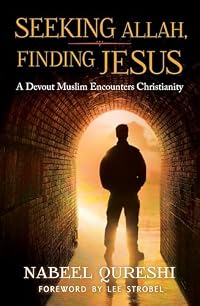
In the preface to Answering Jihad: A Better Way Forward, Nabeel Qureshi writes that he never wanted to write a book on jihad, because it is such a charged topic. Qureshi is a former Muslim who describes his conversion to Christianity in his memoir, Seeking Allah, Finding Jesus. After the terrorist attacks in Paris on November 13, 2015, the increasing Syrian refugee crisis, and responses to a blog post he wrote entitled "Do Muslims and Christians Worship the Same God?" Qureshi writes:
The feedback I received confirmed a growing suspicion in my mind: There is too much confusion, too much misdirected anger, too much misinformation, too little balance and too little grace to remain silent any longer
The book is structure into eighteen show more questions, such as "What is Islam?," "What is Jihad?," "Is Islam a Religion of Peace?" and ending with "What Does Jesus Have To Do With Jihad?" In the process of answering these questions, Qureshi discusses and examines many foundational Islamic principles and the history of Islam. The study reveals that violence and warfare are foundational to the traditional Islamic faith. Yet, Qureshi addresses his topic carefully and with compassion. At no point does he disrespect the Islamic faith.
For those unfamiliar with Islamic teachings and beliefs, this is a good introductory book that answers many of the most frequently asked questions clearly and concisely. Qureshi effectively uses the Islamic texts and the life of Muhammad to support his answers. He attempts to be objective, and I feel he is largely successful. However, he does not try to hide his Christian beliefs, and his solution to jihad is the Gospel of Jesus Christ.
Qureshi is careful to say that "Islam is not Muslims, and Muslims are not Islam." There is a great deal of diversity among Muslims in the specifics of what they believe and practice. He writes:
On one end of the spectrum, many assume that if the Quran teaches something then all Muslims believe it. That is false. Many Muslims have not heard of a given teaching, some might interpret it differently, and others may frankly do their best to ignore it.
He also calls for caution in judging Muslims. This is especially important as we continue to see violent attacks and the 24-hour news cycle fans the flames. He writes, "At the same time, we must be careful not to slide down the slippery slope of assuming every Muslim is a threat. Of the thousands of Muslims I have known in my personal life, only one has become radicalized to the point of explicitly supporting violence, and none have actually undertaken violent jihad."
I want to point out that Qureshi was raised in a small Muslim sect called Ahmadiyyat that many Muslims will argue are not "real Muslims." Therefore, some will argue he can't speak on any topic regarding Islam with any authority. He addresses this openly in the appendix to this book and argues why Ahmadiyyat is indeed part of Islam. He states early in the acknowledgements that he studied briefly under David Cook an Islamic studies professor at Rice University. He addresses the fact that he is a Christian and is passionate about this topic. He says he cannot be completely unbiased, as no one can truly do that, but he attempts to be as objective as he can using what Islam says about itself through its texts and history. He also clearly states that this book is not meant to be an in depth study of Islam or jihad, but a primer attempting to answer common questions. show less
The feedback I received confirmed a growing suspicion in my mind: There is too much confusion, too much misdirected anger, too much misinformation, too little balance and too little grace to remain silent any longer
The book is structure into eighteen show more questions, such as "What is Islam?," "What is Jihad?," "Is Islam a Religion of Peace?" and ending with "What Does Jesus Have To Do With Jihad?" In the process of answering these questions, Qureshi discusses and examines many foundational Islamic principles and the history of Islam. The study reveals that violence and warfare are foundational to the traditional Islamic faith. Yet, Qureshi addresses his topic carefully and with compassion. At no point does he disrespect the Islamic faith.
For those unfamiliar with Islamic teachings and beliefs, this is a good introductory book that answers many of the most frequently asked questions clearly and concisely. Qureshi effectively uses the Islamic texts and the life of Muhammad to support his answers. He attempts to be objective, and I feel he is largely successful. However, he does not try to hide his Christian beliefs, and his solution to jihad is the Gospel of Jesus Christ.
Qureshi is careful to say that "Islam is not Muslims, and Muslims are not Islam." There is a great deal of diversity among Muslims in the specifics of what they believe and practice. He writes:
On one end of the spectrum, many assume that if the Quran teaches something then all Muslims believe it. That is false. Many Muslims have not heard of a given teaching, some might interpret it differently, and others may frankly do their best to ignore it.
He also calls for caution in judging Muslims. This is especially important as we continue to see violent attacks and the 24-hour news cycle fans the flames. He writes, "At the same time, we must be careful not to slide down the slippery slope of assuming every Muslim is a threat. Of the thousands of Muslims I have known in my personal life, only one has become radicalized to the point of explicitly supporting violence, and none have actually undertaken violent jihad."
I want to point out that Qureshi was raised in a small Muslim sect called Ahmadiyyat that many Muslims will argue are not "real Muslims." Therefore, some will argue he can't speak on any topic regarding Islam with any authority. He addresses this openly in the appendix to this book and argues why Ahmadiyyat is indeed part of Islam. He states early in the acknowledgements that he studied briefly under David Cook an Islamic studies professor at Rice University. He addresses the fact that he is a Christian and is passionate about this topic. He says he cannot be completely unbiased, as no one can truly do that, but he attempts to be as objective as he can using what Islam says about itself through its texts and history. He also clearly states that this book is not meant to be an in depth study of Islam or jihad, but a primer attempting to answer common questions. show less
I chose to read, Answering Jihad A Better Way Forward by Nabeel Qureshi to gain insight and understanding into the Islamic religion and how it affects the citizens of the United States of America. I was not disappointed. This book is written for a very broad audience, as the author clearly states, and as such it is not meant to be a comprehensive study into the complexities of the Islamic religion, but rather to provide the reader with a sketch of the current climate within our nation as it relates to Muslims. This book falls within the Christian genre, but it is an important read for Christians and non-Christians alike.
Dr. Nabeel Qureshi manages to deliver a courteously thoughtful work on a very intense and highly charged subject. As show more I pondered how to review this book, I immediately thought of the words in 1 Peter 3:15 : "Be ready to speak up and tell anyone who asks why you're living the way you are, and always with the utmost courtesy." Throughout the book, the author delivers answers for his choice to leave the Islamic religion and convert to Christianity. He communicates these answers so eloquently and also reveals a deep level of unquestionable authenticity.
Answering Jihad provides a broad outline of the fundamental teachings of the Islamic religion according to the Quran. In a concise question and answer format, the flow of this book could not be any better. It uncovers that the "average American Muslim agrees that the Quran and hadith are the ultimate basis of their faith," but that "many have not critically read the traditions." The author, who was raised as a devout Muslim in the United States asserts that many Muslims throughout the world "would be surprised to find violent, offensive jihad shot through the foundations of Islam." The important fact that there are an expansive number of Islamic fundamental teachings and therefore wide variances of how Islam is practiced is a significant point to absorb as you digest the book.
Dr. Qureshi expresses his opinion that we should not be defining Islam as the "practice of Muslims", but rather Islam should be defined as the "teachings of Muhammad". This simple statement alone brings a lot of clarity to the confusion and chaos of terminology and generalizations that are thrown around on a daily basis within the varied media outlets. Keeping that in mind, he goes a step farther to explain that the personal and peaceful practice of some Muslims, does not mean that Islam is a religion of peace. In fact, those that are concerned by the "increasing frequency and scale of Islamist terrorism" need to comprehend that there is an Islamic reformation currently taking place and it is built upon the life of Muhammad (the named prophet of Islam) who was born in 570AD. It is an "attempt to raze centuries of traditions of various schools of Islamic thought and return to the canonical texts of the Quran and Muhammad's life." He shares that radical Muslim organizations are very clear that their goal is to reform Islam. Islam follows the Quran and the final chapter is the "the Disavowal", which deny any treaties of peace that came before it. It is also the final and most violent chapter "commanding Muslims to fight and subdue non-Muslims."
Each chapter within this book, Answering Jihad ~A Better Way Forward provides so much information to the casual learner of this subject, that after reading it, I find myself with a plan to reread it. While Dr. Qureshi has written it for the "wider audience" (not history, theology and political majors...in other words), I still found myself feeling quite ignorant. His vast array of knowledge and references leaves my head spinning, but definitely in a good way....if that's possible.
This book is eye opening. The level of transparency and the potential for open dialogue that may be generated is immeasurable. His call to learn the truth about Islam and maintain compassion for Muslims through a life lived proactively rather than in a reactionary stance is clearly presented. This is one man's perspective, however the collection of data to support his stand is quite persuasive. At the very least Qureshi's invitation may pave the way for an increased awareness into our world's present state of affairs. Whether you agree or disagree with Nabeel Qureshi's conclusions, I can assure you that after reading this book, you will have a greater level of insight into the growing concerns surrounding terrorism in our time.
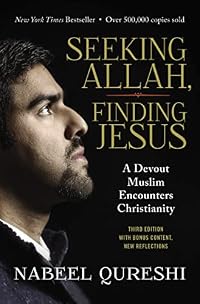
Dr. Qureshi is the author of three books: Seeking Allah, Finding Jesus: A Devout Muslim Encounters Christianity (Zondervan, February 2014), Answering Jihad: A Better Way Forward (Zondervan, March 2016), and No God But One—Allah or Jesus (Zondervan, August 2016).
I would like to thank ZONDERVAN publishing through the BookLook Blogging program for this free review copy of Answering Jihad by Nabeel Qureshi. It was a privilege to read this book and provide an honest summary of my reading experience. I was not required to write a favorable review, but simply to give a genuine opinion. show less
Dr. Nabeel Qureshi manages to deliver a courteously thoughtful work on a very intense and highly charged subject. As show more I pondered how to review this book, I immediately thought of the words in 1 Peter 3:15 : "Be ready to speak up and tell anyone who asks why you're living the way you are, and always with the utmost courtesy." Throughout the book, the author delivers answers for his choice to leave the Islamic religion and convert to Christianity. He communicates these answers so eloquently and also reveals a deep level of unquestionable authenticity.
Answering Jihad provides a broad outline of the fundamental teachings of the Islamic religion according to the Quran. In a concise question and answer format, the flow of this book could not be any better. It uncovers that the "average American Muslim agrees that the Quran and hadith are the ultimate basis of their faith," but that "many have not critically read the traditions." The author, who was raised as a devout Muslim in the United States asserts that many Muslims throughout the world "would be surprised to find violent, offensive jihad shot through the foundations of Islam." The important fact that there are an expansive number of Islamic fundamental teachings and therefore wide variances of how Islam is practiced is a significant point to absorb as you digest the book.
Dr. Qureshi expresses his opinion that we should not be defining Islam as the "practice of Muslims", but rather Islam should be defined as the "teachings of Muhammad". This simple statement alone brings a lot of clarity to the confusion and chaos of terminology and generalizations that are thrown around on a daily basis within the varied media outlets. Keeping that in mind, he goes a step farther to explain that the personal and peaceful practice of some Muslims, does not mean that Islam is a religion of peace. In fact, those that are concerned by the "increasing frequency and scale of Islamist terrorism" need to comprehend that there is an Islamic reformation currently taking place and it is built upon the life of Muhammad (the named prophet of Islam) who was born in 570AD. It is an "attempt to raze centuries of traditions of various schools of Islamic thought and return to the canonical texts of the Quran and Muhammad's life." He shares that radical Muslim organizations are very clear that their goal is to reform Islam. Islam follows the Quran and the final chapter is the "the Disavowal", which deny any treaties of peace that came before it. It is also the final and most violent chapter "commanding Muslims to fight and subdue non-Muslims."
Each chapter within this book, Answering Jihad ~A Better Way Forward provides so much information to the casual learner of this subject, that after reading it, I find myself with a plan to reread it. While Dr. Qureshi has written it for the "wider audience" (not history, theology and political majors...in other words), I still found myself feeling quite ignorant. His vast array of knowledge and references leaves my head spinning, but definitely in a good way....if that's possible.
This book is eye opening. The level of transparency and the potential for open dialogue that may be generated is immeasurable. His call to learn the truth about Islam and maintain compassion for Muslims through a life lived proactively rather than in a reactionary stance is clearly presented. This is one man's perspective, however the collection of data to support his stand is quite persuasive. At the very least Qureshi's invitation may pave the way for an increased awareness into our world's present state of affairs. Whether you agree or disagree with Nabeel Qureshi's conclusions, I can assure you that after reading this book, you will have a greater level of insight into the growing concerns surrounding terrorism in our time.
Dr. Qureshi is the author of three books: Seeking Allah, Finding Jesus: A Devout Muslim Encounters Christianity (Zondervan, February 2014), Answering Jihad: A Better Way Forward (Zondervan, March 2016), and No God But One—Allah or Jesus (Zondervan, August 2016).
I would like to thank ZONDERVAN publishing through the BookLook Blogging program for this free review copy of Answering Jihad by Nabeel Qureshi. It was a privilege to read this book and provide an honest summary of my reading experience. I was not required to write a favorable review, but simply to give a genuine opinion. show less
The author is a Christian who was converted from Islam. While he is knowledgeable about Islam and has researched jihad, his final conclusions are faulty. I appreciated his exposition of Islamic history but found myself disappointed with his proposal of Christianity as the solution to Muslin radicals.
This was a fascinating book to read. I would strongly recommend it to everyone. It will help to clear up most misconceptions people have about Islam and Muslims as a whole. Most people have only the barest idea of Islam, most of it hype and fear induced.
This book centers around 18 questions that most of us have wondered about. It is written in a open factual way, without being biased and inflammatory.
It is a very short abbreviated book, but gives so much information that is not commonly known. I was quite surprised by many of the facts mentioned. What I also appreciated was the fact that [a:Nabeel Qureshi|7216902|Nabeel Qureshi|https://images.gr-assets.com/authors/1398562025p2/7216902.jpg] wrote compassionately about Muslims and show more throughout the book encouraged fostering friendship and dialogue between Muslims and other faiths.
Thank you Netgalley and Zondervan for allowing me to read and review this book. show less
This book centers around 18 questions that most of us have wondered about. It is written in a open factual way, without being biased and inflammatory.
It is a very short abbreviated book, but gives so much information that is not commonly known. I was quite surprised by many of the facts mentioned. What I also appreciated was the fact that [a:Nabeel Qureshi|7216902|Nabeel Qureshi|https://images.gr-assets.com/authors/1398562025p2/7216902.jpg] wrote compassionately about Muslims and show more throughout the book encouraged fostering friendship and dialogue between Muslims and other faiths.
Thank you Netgalley and Zondervan for allowing me to read and review this book. show less
[Answering Jihad]: A Better Way Forward by [[Nabeel Qureshi]] is a clear and informative analysis of what jihad means from an Islamic perspective and how Christians can best respond to it. The author, reared as a Pakistani Muslim, came to a crisis in his faith after studying the original passages of the Quran and the associated hadiths, oral traditions from that time. He faced a decision: apostasy, apathy, or radicalization. He became a Christian.
Dr. Qureshi, more than any other writer I've read, explains lucidly and convincingly how many Muslims are radicalized over the internet by groups such as ISIS, al-Qaeda, and Boko-Haram. He structures his book in the form of eighteen questions about jihad, with chapter length answers to each.
Dr. show more Qureshi closes the book with a comparison of God and Jesus from a Muslim and Christian points of view and with recommendations on how Christians should best respond to jihad. The answer is with the love, compassion and courage of Jesus. show less
Dr. Qureshi, more than any other writer I've read, explains lucidly and convincingly how many Muslims are radicalized over the internet by groups such as ISIS, al-Qaeda, and Boko-Haram. He structures his book in the form of eighteen questions about jihad, with chapter length answers to each.
Dr. show more Qureshi closes the book with a comparison of God and Jesus from a Muslim and Christian points of view and with recommendations on how Christians should best respond to jihad. The answer is with the love, compassion and courage of Jesus. show less
Members
- Recently Added By
Author Information

14 Works 3,092 Members
Nabeel Qureshi is a speaker with Ravi Zacharias International Ministries. He holds an MD from Eastern Virginia Medical School, an MA in Christian apologetics from Biola University, and an MA in religion from Duke University. He is currently pursuing a PhD in New Testament at Oxford University.
Classifications
Statistics
- Members
- 371
- Popularity
- 83,951
- Reviews
- 11
- Rating
- (4.13)
- Languages
- English, Swedish
- Media
- Paper, Audiobook, Ebook
- ISBNs
- 7
- UPCs
- 1
- ASINs
- 2