
James R. White (1) (1962–)
Author of The King James Only Controversy: Can You Trust the Modern Translations?
For other authors named James R. White, see the disambiguation page.
About the Author
James R. White is the author of several acclaimed books; including The God Who Justifies and The Forgotten Trinity. The director of Alpha and Omega Ministries, he is an accomplished debater of Muslim apologists and an elder of the Phoenix Reformed Baptist Church. Tie arid his family live in show more Phoenix, Arizona. show less
Image credit: Used by permission of Baker Publishing Group, copyright © 2008. All rights to this material are reserved. Materials are not to be distributed to other web locations for retrieval, published(see © info.)
Works by James R. White
The King James Only Controversy: Can You Trust the Modern Translations? (1995) 1,305 copies, 11 reviews
The Potter's Freedom: A Defense of the Reformation and the Rebuttal of Norman Geisler's Chosen But Free (2000) 713 copies, 5 reviews
Scripture Alone: Exploring the Bible's Accuracy, Authority and Authenticity (1997) 443 copies, 2 reviews
The Same Sex Controversy: Defending and Clarifying the Bible's Message About Homosexuality (2002) 227 copies, 1 review
Is the Mormon My Brother?: Discerning the Differences Between Mormonism and Christianity (1997) 177 copies, 1 review
Few are Chosen 4 copies
Religious Education 1 copy
the baptism debate 1 copy
How We Got the Bible 1 copy
Associated Works
Sola Scriptura: The Protestant Position on the Bible (2013) — Contributor, some editions — 711 copies, 4 reviews
Tagged
Common Knowledge
- Legal name
- White, James Robert
- Birthdate
- 1962-12-17
- Gender
- male
- Education
- Fuller Theological Seminary (MA in Theology)
North-West University (PhD Candidate) - Occupations
- theologian
seminary professor
apologist
evangelist - Organizations
- Alpha and Omega Ministries (founder)
Phoenix Reformed Baptist Church
Apologia Church (elder) - Nationality
- USA
- Places of residence
- Phoenix, Arizona, USA
- Associated Place (for map)
- Arizona, USA
Members
Reviews
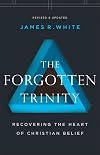
The doctrine of the Trinity is perhaps one of the most misunderstood, abused, attacked, or ignored doctrines of Christianity. However, it is also the very heart of the faith once for all delivered. In this book, James White offers a precise and compact primer on what the Trinity means, what it doesn't mean, why we believe Scripture teaches it, and why it matters. With the denial of any of the doctrine's three pillars -- absolute monotheism, the real existence of three separate divine show more persons, and the full deity of Christ and the Spirit -- there is no Christianity and there is no salvation.
The doctrine of the Trinity has spawned any number of lengthy theological tomes, but I recommend this to anyone who wants a brief, readable, convincing introduction to the critical importance of this teaching. A central insight I hadn't fully considered is that the Trinity was revealed not in the Old or New Testaments, but between the testaments in the incarnation of the Son and the coming of the Spirit. By the time the New Testament was written in attestation of Trinitarian truth, the experience of God's self-revelation in Christ and in the Spirit-filled Church had already planted this doctrine deep in the hearts of the first believers. White draws out this insight and many others in clear and precise language, and I can't recommend this book highly enough. show less
The doctrine of the Trinity has spawned any number of lengthy theological tomes, but I recommend this to anyone who wants a brief, readable, convincing introduction to the critical importance of this teaching. A central insight I hadn't fully considered is that the Trinity was revealed not in the Old or New Testaments, but between the testaments in the incarnation of the Son and the coming of the Spirit. By the time the New Testament was written in attestation of Trinitarian truth, the experience of God's self-revelation in Christ and in the Spirit-filled Church had already planted this doctrine deep in the hearts of the first believers. White draws out this insight and many others in clear and precise language, and I can't recommend this book highly enough. show less
Same Sex Controversy, The: Defending and Clarifying the Bible's Message About Homosexuality by James R. White
I read this book almost as a companion to Michael Brown's A Queer Thing Happened to America. Brown's book looked almost solely to the cultural and political issues surrounding homosexuality in America, but did not address the theological much. It simply wasn't the purpose of that particular book.
White and Niell, on the other hand, address the issue from a solely theological point of view. The authors carefully go through the relevant passages, defending along the way that they say exactly show more what they seem to say -- that homosexuality is a sin from which there should be repentance.
They counter the the objections for each passage, and in doing so create a brief, but worthwhile and thorough, defense of the biblical position.
But at the same time, they do not approach the book as an attack against homosexuals. To be sure, they are firm and unapologetic when it comes to their defense of the Bible, but they make it clear that they care deeply for homosexuals and desire their repentance. While they maintain that homosexuality, in both desire and practice, is sinful, they also are clear that it is only a sin, and not something that cannot be forgiven because of Jesus' sacrifice on the Cross.
I do recommend this book, especially to Christians who are wondering where to come down on this issue. As more "Christian" denominations are affirming sin, White and Niell very capably explain why this is something we must not do. We must love the homosexual, we must compassionately call them to the Gospel, but we mustn't ever excuse or accept sin. show less
White and Niell, on the other hand, address the issue from a solely theological point of view. The authors carefully go through the relevant passages, defending along the way that they say exactly show more what they seem to say -- that homosexuality is a sin from which there should be repentance.
They counter the the objections for each passage, and in doing so create a brief, but worthwhile and thorough, defense of the biblical position.
But at the same time, they do not approach the book as an attack against homosexuals. To be sure, they are firm and unapologetic when it comes to their defense of the Bible, but they make it clear that they care deeply for homosexuals and desire their repentance. While they maintain that homosexuality, in both desire and practice, is sinful, they also are clear that it is only a sin, and not something that cannot be forgiven because of Jesus' sacrifice on the Cross.
I do recommend this book, especially to Christians who are wondering where to come down on this issue. As more "Christian" denominations are affirming sin, White and Niell very capably explain why this is something we must not do. We must love the homosexual, we must compassionately call them to the Gospel, but we mustn't ever excuse or accept sin. show less
The Potter's Freedom: A Defense of the Reformation and the Rebuttal of Norman Geisler's Chosen But Free by James R. White

White's response to Chosen But Free. In general, Geisler's book was warmly received by everyday laypeople, but critically received by scholars. Because Geisler is well respected (even by people who are dismayed by Chosen But Free), an entire book was considered needful. A few observations: much of the criticism is that Geisler has misrepresented calvinism. I'm intrigued that misrepresenting Scripture seems to be a secondary focus, which is backwards to me, and fits my unscholarly assessment show more that many calvinists are more devoted to Calvin than Scripture. Not all, of course. But White doesn't help the cause, from my perspective. It is an able defense of reformed doctrine, and will be helpful for those looking for a readable discussion of a reformed response to nonreformed arguments. show less
The Potter's Freedom: A Defense of the Reformation and the Rebuttal of Norman Geisler's Choosen But Free by James R. White
When I read Geisler's Chosen but Free, I was astonished. My wife actually asked me to stop reading it, since it was making me angry. And it was making me angry because we had such a solid and respected Christian brother jumping into a debate that he didn't even understand. It was clear from the first chapter that he didn't really know what Calvinism was teaching, and yet he was attacking it.
White's response is wonderfully thorough and carefully documented. White examines Geisler's beliefs, show more his sources, and his wording, not to tear down Geisler, but to try to present a fair and Bible-based presentation of Calvinism, something Geisler did not do.
Geisler wrote a bad book, but I wouldn't tell people not to read it. Read it! Read it, and then take a look at what White says. I think more Calvinists will be the result.
If you have not read Geisler's book, I think this one will still be understandable, though there are other works on Reformed Theology that may be a better start.
Just please don't fall into the trap that Geisler did -- letting your traditions dictate how you read the Bible, and therefore end up twisting Scripture and other sources alike (as well as misrepresenting your opposition) just to defend it. show less
White's response is wonderfully thorough and carefully documented. White examines Geisler's beliefs, show more his sources, and his wording, not to tear down Geisler, but to try to present a fair and Bible-based presentation of Calvinism, something Geisler did not do.
Geisler wrote a bad book, but I wouldn't tell people not to read it. Read it! Read it, and then take a look at what White says. I think more Calvinists will be the result.
If you have not read Geisler's book, I think this one will still be understandable, though there are other works on Reformed Theology that may be a better start.
Just please don't fall into the trap that Geisler did -- letting your traditions dictate how you read the Bible, and therefore end up twisting Scripture and other sources alike (as well as misrepresenting your opposition) just to defend it. show less
Lists
You May Also Like


Associated Authors
Statistics
- Works
- 44
- Also by
- 1
- Members
- 6,198
- Popularity
- #3,961
- Rating
- 4.2
- Reviews
- 34
- ISBNs
- 70
- Languages
- 2
- Favorited
- 13
