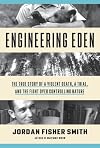
Engineering Eden: The True Story of a Violent Death, a Trial, and the Fight over Controlling Nature
by Jordan Fisher Smith
On This Page
Description
"The fascinating story of a trial that opened a window onto the century-long battle to control nature in the national parks. When twenty-five-year-old Harry Walker was killed by a bear in Yellowstone Park in 1972, the civil trial prompted by his death became a proxy for bigger questions about American wilderness management that had been boiling for a century. At immediate issue was whether the Park Service should have done more to keep bears away from humans, but what was revealed as the show more trial unfolded was just how fruitless our efforts to regulate nature in the parks had always been. The proceedings drew to the witness stand some of the most important figures in twentieth century wilderness management, including the eminent zoologist A. Starker Leopold, who had produced a landmark conservationist document in the 1950s, and all-American twin researchers John and Frank Craighead, who ran groundbreaking bear studies at Yellowstone. Their testimony would help decide whether the government owed the Walker family restitution for Harry's death, but it would also illuminate decades of patchwork efforts to preserve an idea of nature that had never existed in the first place. In this remarkable excavation of American environmental history, nature writer and former park ranger Jordan Fisher Smith uses Harry Walker's story to tell the larger narrative of the futile, sometimes fatal, attempts to remake wilderness in the name of preserving it. Tracing a course from the founding of the national parks through the tangled twentieth-century growth of the conservationist movement, Smith gives the lie to the portrayal of national parks as Edenic wonderlands unspoiled until the arrival of Europeans, and shows how virtually every attempt to manage nature in the parks has only created cascading effects that require even more management. Moving across time and between Yellowstone, Yosemite, and Glacier national parks, Engineering Eden shows how efforts at wilderness management have always been undone by one fundamental problem--that the idea of what is 'wild' dissolves as soon as we begin to examine it, leaving us with little framework to say what wilderness should look like and which human interventions are acceptable in trying to preserve it. In the tradition of John McPhee's The Control of Nature and Alan Burdick's Out of Eden, Jordan Fisher Smith has produced a powerful work of popular science and environmental history, grappling with critical issues that we have even now yet to resolve"-- show lessTags
Recommendations








Member Recommendations
amerynth Great account by a woman who worked in the park and wintered over. Includes an interesting interview about fed bears in Yellowstone.
Member Reviews
Jordan Fisher Smith doesn't confine himself to recounting the violent bear attack that killed Harry Walker in Yelllowstone National Park, but places his story in historical context, tracing the evolution of the National Parks systems, the men who came to hold sway over its management and the sometimes-fatal mistakes they made. Two women are attacked and killed by a bear earlier, but the Park Service sets in motion the very circumstances that set up Walker's fatal encounter with an aging "dump bear.''
A vivid and evocative writer, Smith makes us care about the young man, Harry Walker, at the center of his tale by sharing details of Walker's childhood ad family life, and the new romantic relationship blossoming in the park on the night he show more was killed. Smith doesn't spend much time in the courtroom but gets the reader outdoors, into the great wide open where the story unfolds.
He ends with a postscript on where the players in the real-life drama are now.
Highly recommended. show less
A vivid and evocative writer, Smith makes us care about the young man, Harry Walker, at the center of his tale by sharing details of Walker's childhood ad family life, and the new romantic relationship blossoming in the park on the night he show more was killed. Smith doesn't spend much time in the courtroom but gets the reader outdoors, into the great wide open where the story unfolds.
He ends with a postscript on where the players in the real-life drama are now.
Highly recommended. show less
 This review was written for LibraryThing Early Reviewers.
Everyone understands, at least intuitively, that all things are interconnected - ALL things. Ecology is the study of those interconnections. And managing the entire wild ecology of America's national parks is the impossible task that the National Park Service has been chartered to accomplish - to "...conserve the scenery and the national and historic objects and the wild life therein and to provide for the enjoyment of the same in such manner and by such means as will leave them unimpaired for the enjoyment of future generations." (The National Park Service Organic Act of 1916)
Also intuitively, no one completely understands what the future ramifications are of the actions of one species on all of the other species and objects, flora, show more fauna and mineral, within an ecosystem. Yet mankind, just one of the innumerable entities that are part of the ecosystems of the national parks, tries to manage, to control, to conserve and preserve, all without completely understanding what will be the results of its actions. The Service has acted valorously in trying to meet its goals, stumbling at times, picking itself up and trying again - sometimes through trial and error, sometimes on blind faith and unsupported beliefs, sometimes on scientific study and analysis, sometimes just in unquestioning compliance with policies set by commercial interests or political interests or public pressure for individual enjoyment - all ranging from fancy lady's hats festooned with feathers and sometimes entire stuffed birds to heedless orgies of killing of millions of animals - elk, bison, bears, antelope, beaver, ducks, quail, grouse, passenger pigeons, salmon, etc., etc., and the loss or endangerment of sequoia, whitebark pine and so forth.
These conflicting forces are constantly at play in all of the park ecosystems, but the focus in Jordan Fisher Smith's riveting work, Engineering Eden: The True Story of a Violent Death, a Trial, and the Fight over Controlling Nature, is on the Greater Yellowstone Ecosystem. Smith takes an unusual but downright masterful approach to discussing all of the factors at play in the Greater Yellowstone Ecosystem - he hangs all of his history and analysis of the intricate underpinnings on the skeleton of a civil lawsuit over the Park Service's responsibility in the fatal mauling and death of a young man by a grizzly bear in Yellowstone National Park in 1972.
The range of the book's undertakings is extreme - from tracing the geological structure of the park from eighteen million years ago to its present classification as an active volcano; from the role of the native American tribes, the Nez Perce, the Blackfeet, Crow, Sheepeaters, Bannock and other Shoshone groups who were sharing the area, to the US Army campaigning against them and later assuming management of Yellowstone in order to control the depredation of its species from the bloody orgies of hunting that ensued; from that hunting to today's sprawling network of rules and regulations and bureaus and departments and authorities that determine or interpret and enforce the policies for the management of the park's ecology; from the intensive lobbying by the Northern Pacific Railroad for the park's creation because it would be an incentive to the public to buy its railroad bonds, to the present glut of concessionaires; from the desires of prospective hunters of Yellowstone's wildlife to the farmers and ranchers who live in the area to the innumerable people throughout the world who are affected by the success or failure of the strategies tried at Yellowstone to manage nature. It's a tautology - everything's connected - and it's to Jordan Smith's extreme credit that he was able to come up with a structure that would allow him to explore all of these competing and intricately interwoven factors and still maintain a clear and forward progressing discussion of their import.
Smith's work does not present any definitive solutions to the Park Service's quandaries, but it does illuminate the critical need for scientific investigation and for the development of policies based on data rather than unsupported beliefs. His rendition of the policy history and interpretation is particularly relevant because the U. S. Fish and Wildlife Service is, right now, trying to decide if the North American grizzly bear should be taken off the endangered species list, thus allowing it to be hunted and killed. Policy makers and, indeed, all environmental studies students should read and take to heart the material in Engineering Eden if we wish to have the benefit and glory of wild nature in our lives.
I received a free copy of this book from the publisher in exchange for an honest review. show less
Also intuitively, no one completely understands what the future ramifications are of the actions of one species on all of the other species and objects, flora, show more fauna and mineral, within an ecosystem. Yet mankind, just one of the innumerable entities that are part of the ecosystems of the national parks, tries to manage, to control, to conserve and preserve, all without completely understanding what will be the results of its actions. The Service has acted valorously in trying to meet its goals, stumbling at times, picking itself up and trying again - sometimes through trial and error, sometimes on blind faith and unsupported beliefs, sometimes on scientific study and analysis, sometimes just in unquestioning compliance with policies set by commercial interests or political interests or public pressure for individual enjoyment - all ranging from fancy lady's hats festooned with feathers and sometimes entire stuffed birds to heedless orgies of killing of millions of animals - elk, bison, bears, antelope, beaver, ducks, quail, grouse, passenger pigeons, salmon, etc., etc., and the loss or endangerment of sequoia, whitebark pine and so forth.
These conflicting forces are constantly at play in all of the park ecosystems, but the focus in Jordan Fisher Smith's riveting work, Engineering Eden: The True Story of a Violent Death, a Trial, and the Fight over Controlling Nature, is on the Greater Yellowstone Ecosystem. Smith takes an unusual but downright masterful approach to discussing all of the factors at play in the Greater Yellowstone Ecosystem - he hangs all of his history and analysis of the intricate underpinnings on the skeleton of a civil lawsuit over the Park Service's responsibility in the fatal mauling and death of a young man by a grizzly bear in Yellowstone National Park in 1972.
The range of the book's undertakings is extreme - from tracing the geological structure of the park from eighteen million years ago to its present classification as an active volcano; from the role of the native American tribes, the Nez Perce, the Blackfeet, Crow, Sheepeaters, Bannock and other Shoshone groups who were sharing the area, to the US Army campaigning against them and later assuming management of Yellowstone in order to control the depredation of its species from the bloody orgies of hunting that ensued; from that hunting to today's sprawling network of rules and regulations and bureaus and departments and authorities that determine or interpret and enforce the policies for the management of the park's ecology; from the intensive lobbying by the Northern Pacific Railroad for the park's creation because it would be an incentive to the public to buy its railroad bonds, to the present glut of concessionaires; from the desires of prospective hunters of Yellowstone's wildlife to the farmers and ranchers who live in the area to the innumerable people throughout the world who are affected by the success or failure of the strategies tried at Yellowstone to manage nature. It's a tautology - everything's connected - and it's to Jordan Smith's extreme credit that he was able to come up with a structure that would allow him to explore all of these competing and intricately interwoven factors and still maintain a clear and forward progressing discussion of their import.
Smith's work does not present any definitive solutions to the Park Service's quandaries, but it does illuminate the critical need for scientific investigation and for the development of policies based on data rather than unsupported beliefs. His rendition of the policy history and interpretation is particularly relevant because the U. S. Fish and Wildlife Service is, right now, trying to decide if the North American grizzly bear should be taken off the endangered species list, thus allowing it to be hunted and killed. Policy makers and, indeed, all environmental studies students should read and take to heart the material in Engineering Eden if we wish to have the benefit and glory of wild nature in our lives.
I received a free copy of this book from the publisher in exchange for an honest review. show less
This review was written for LibraryThing Early Reviewers.What goes around comes around
A great deal of thought went into the structuring of Engineering Eden. It could have been a long condemnation of the National Parks Service. It could have been a collection of profiles of ecologists and their accomplishments (and crimes). It could have been a timeline of fatal park mismanagement. Or it could have been a depressing retelling of extinctions. Instead, Jordan Fisher Smith employs a lawsuit by the family of someone killed by a Yellowstone bear to weave a superstructure – a framework – to tell all the ancillary stories.
The scene of the crimes is Yellowstone. The main crime is the mismanagement of a precious resource. The park and its flora and fauna are unique and should never have been show more treated the way they have – as Coney Island West. The players are Parks Service people, ecologists, victims of bears and the occasional politician. It turns out they, or their work, all had some effect on the trial that connects them. Their paths cross again and again over their lifetimes, and Smith lets them grow and develop before our eyes. The overall effect is intricate and reinforcing, without being overwhelming. Smith has assembled an unforgettable tale, and told it unforgettably.
Yellowstone Park began with the best intentions. Roads were built to let materials in, so they wouldn’t have to strip the natural resources already there. But immediately thereafter, hotels, restaurants and campgrounds turned the park into a playground. All the refuse everyone produced went into feeding bears. Various administrations wanted the park to be clean, groomed and spiffy; natural was uncouth. All the predator animals clearly had to go. Then they had to deal with massive overpopulations of elk. It is really rather pathetic.
Scientists know so little it is frightening. As Smith shows, they fight over their own ignorance. Their opinions become policy, to the detriment of the planet. We spend massive resources preventing forest fires, without understanding that life can depend on them for regeneration. For example, the Giant Sequoia’s seeds don’t thrive in soil, and very few seedlings made it through the era of fire prevention, threatening the species’ very existence. Their seed cones open during fires, and the seeds germinate and flourish in the ashes. That’s how it worked for millions of years until we managed it better. For the grizzlies, allowing them to feed on garbage led to them growing bigger and having more cubs. When the feeding stopped, the grizzlies were forced to find more human food where they could. And sometimes – sometimes a hundred times a year – it was humans themselves.
In the early 70s, the Parks Service executed nearly 200 grizzly bears, and dumped their bodies over a cliff, accumulating into a minor holocaust scene. They had to make the park safe from its inhabitants. Soon afterwards, the Fish and Wildlife Service classed the bears as an endangered species, protecting them and their habitat from any further such “management”. Still, Yellowstone grizzlies kept declining, to under a hundred in 1999, though they are now finally increasing.
The good, if any, that came of it all is that scientists now generally regard ecology as an imprecise term. It is not a fixed state or a rigid balance, but an ongoing process. It might favor some species for a while, but compensating species might take it in a new direction. The only thing certain is change, and trying to hold nature in a frozen position is wrong. Engineering nature is wrong. We prove it every day.
David Wineberg show less
A great deal of thought went into the structuring of Engineering Eden. It could have been a long condemnation of the National Parks Service. It could have been a collection of profiles of ecologists and their accomplishments (and crimes). It could have been a timeline of fatal park mismanagement. Or it could have been a depressing retelling of extinctions. Instead, Jordan Fisher Smith employs a lawsuit by the family of someone killed by a Yellowstone bear to weave a superstructure – a framework – to tell all the ancillary stories.
The scene of the crimes is Yellowstone. The main crime is the mismanagement of a precious resource. The park and its flora and fauna are unique and should never have been show more treated the way they have – as Coney Island West. The players are Parks Service people, ecologists, victims of bears and the occasional politician. It turns out they, or their work, all had some effect on the trial that connects them. Their paths cross again and again over their lifetimes, and Smith lets them grow and develop before our eyes. The overall effect is intricate and reinforcing, without being overwhelming. Smith has assembled an unforgettable tale, and told it unforgettably.
Yellowstone Park began with the best intentions. Roads were built to let materials in, so they wouldn’t have to strip the natural resources already there. But immediately thereafter, hotels, restaurants and campgrounds turned the park into a playground. All the refuse everyone produced went into feeding bears. Various administrations wanted the park to be clean, groomed and spiffy; natural was uncouth. All the predator animals clearly had to go. Then they had to deal with massive overpopulations of elk. It is really rather pathetic.
Scientists know so little it is frightening. As Smith shows, they fight over their own ignorance. Their opinions become policy, to the detriment of the planet. We spend massive resources preventing forest fires, without understanding that life can depend on them for regeneration. For example, the Giant Sequoia’s seeds don’t thrive in soil, and very few seedlings made it through the era of fire prevention, threatening the species’ very existence. Their seed cones open during fires, and the seeds germinate and flourish in the ashes. That’s how it worked for millions of years until we managed it better. For the grizzlies, allowing them to feed on garbage led to them growing bigger and having more cubs. When the feeding stopped, the grizzlies were forced to find more human food where they could. And sometimes – sometimes a hundred times a year – it was humans themselves.
In the early 70s, the Parks Service executed nearly 200 grizzly bears, and dumped their bodies over a cliff, accumulating into a minor holocaust scene. They had to make the park safe from its inhabitants. Soon afterwards, the Fish and Wildlife Service classed the bears as an endangered species, protecting them and their habitat from any further such “management”. Still, Yellowstone grizzlies kept declining, to under a hundred in 1999, though they are now finally increasing.
The good, if any, that came of it all is that scientists now generally regard ecology as an imprecise term. It is not a fixed state or a rigid balance, but an ongoing process. It might favor some species for a while, but compensating species might take it in a new direction. The only thing certain is change, and trying to hold nature in a frozen position is wrong. Engineering nature is wrong. We prove it every day.
David Wineberg show less
A book about the civil trial centered around the death of Harry Walker at Yellowstone National Park, "Engineering Eden" seemed to me to be choppy and disjointed, with the Walker narrative (what there was of it) taking a back seat to biographies of the expert witnesses and lawyers on both sides, essays about park management and environmental policies, and the occasional other horrific bear attack. Harry Walker felt like a bit player in this somewhat hefty book (336 pages plus notes), showing up for a few paragraphs or pages every once in a while. I would have liked a more complete story of him instead of the people who used his death to further a cause.
This review was written for LibraryThing Early Reviewers.We should protect the forests from forest fires…right? People come to parks to see wildlife, so we should give them what they want… right? Ecology is a fixed and exact science… right? It is OK to feed the grizzly bears… right?
…or maybe we need to think these thing through a bit more critically?!
This book is a bit hard to classify. It is the story of the National Park Service and their attempt to “manage” the land and wildlife under their care. It is the story of the emerging science of ecology, and the strong difference of opinion among the early practitioners. It is the story of the bears of Yellowstone National Park, how we fed them human food for decades, then withdrew those feedings and expected them to return to show more ignoring humans and munching berries. That would be funny if the outcomes were not so tragic. Tying all this together is the brief story of one young man who camped in the wrong place and the wrong time in this tragic opera and paid for it with his life.
Highly recommended for anyone who like science and the American West. show less
…or maybe we need to think these thing through a bit more critically?!
This book is a bit hard to classify. It is the story of the National Park Service and their attempt to “manage” the land and wildlife under their care. It is the story of the emerging science of ecology, and the strong difference of opinion among the early practitioners. It is the story of the bears of Yellowstone National Park, how we fed them human food for decades, then withdrew those feedings and expected them to return to show more ignoring humans and munching berries. That would be funny if the outcomes were not so tragic. Tying all this together is the brief story of one young man who camped in the wrong place and the wrong time in this tragic opera and paid for it with his life.
Highly recommended for anyone who like science and the American West. show less
This review was written for LibraryThing Early Reviewers.I expected Engineering Eden to be about the balance between protecting wild places and protecting the sometimes foolish people who visit them, but Jordan Fisher Smith had much larger issues in mind. He uses the story of a young man who was killed by a grizzly bear in 1972, and the subsequent trial, as a framework to discuss the evolution of the Park Service's approach to managing the national parks, specifically Yellowstone and Yosemite.
Yellowstone was the first national park. The strongest proponent for establishing a nature reserve there was the financier Jay Cooke, whose Northern Pacific Railroad would benefit greatly from the tourists who would want to go there.
The author contends that the Park Service began with the idea that show more entertaining visitors should take precedence over protection of wildlife and habitats. He provides an overview of Yellowstone's geology, the history of Native Americans who used the area, and the sad state of the Yellowstone ecosystem when the park was established. The wanton slaughter of wildlife across the plains extended into Yellowstone, and in the early days the Army had to be sent in to protect the few animals that remained.
The federal government had a policy of exterminating predators, including wolves, bears, and big cats, that persisted until fairly recent times. Until the 1970s, all garbage from the park was left in open dumps, where bears fed freely. Food was also tossed out close to the main lodge to entertain visitors, and feeding of bears was tolerated. (Having grown up in an area with bears, I remember being appalled by these practices when I first visited Yellowstone in 1972.)
When the increasing number of bear attacks made it obvious that habituating bears to humans was a problem, park rangers and the biologists studying the bears had very different ideas about the best approach for weaning the bears off human food. On this and other management issues, arguments raged within the park, and at the highest levels of the Park Service. What exactly is "natural", and if you agree that human interference has made the park ecosystem something less than natural, what is the best approach for restoring a natural state?
Nature reasserted itself with the massive wildfires of 1988, and the reintroduction of wolves helped to further restore balance in the park. At Yellowstone and the other parks, the Park Service eventually came to realize that ecosystems do not respect boundaries. And apparently, neither do humans. In the week before I wrote this review, a young man from Oregon left the boardwalk and died in the hottest thermal spring in the park, and a selfie-taking tourist was gored by a bison.
I obtained this book through LibraryThing's Early Reviewers program. show less
Yellowstone was the first national park. The strongest proponent for establishing a nature reserve there was the financier Jay Cooke, whose Northern Pacific Railroad would benefit greatly from the tourists who would want to go there.
The author contends that the Park Service began with the idea that show more entertaining visitors should take precedence over protection of wildlife and habitats. He provides an overview of Yellowstone's geology, the history of Native Americans who used the area, and the sad state of the Yellowstone ecosystem when the park was established. The wanton slaughter of wildlife across the plains extended into Yellowstone, and in the early days the Army had to be sent in to protect the few animals that remained.
The federal government had a policy of exterminating predators, including wolves, bears, and big cats, that persisted until fairly recent times. Until the 1970s, all garbage from the park was left in open dumps, where bears fed freely. Food was also tossed out close to the main lodge to entertain visitors, and feeding of bears was tolerated. (Having grown up in an area with bears, I remember being appalled by these practices when I first visited Yellowstone in 1972.)
When the increasing number of bear attacks made it obvious that habituating bears to humans was a problem, park rangers and the biologists studying the bears had very different ideas about the best approach for weaning the bears off human food. On this and other management issues, arguments raged within the park, and at the highest levels of the Park Service. What exactly is "natural", and if you agree that human interference has made the park ecosystem something less than natural, what is the best approach for restoring a natural state?
Nature reasserted itself with the massive wildfires of 1988, and the reintroduction of wolves helped to further restore balance in the park. At Yellowstone and the other parks, the Park Service eventually came to realize that ecosystems do not respect boundaries. And apparently, neither do humans. In the week before I wrote this review, a young man from Oregon left the boardwalk and died in the hottest thermal spring in the park, and a selfie-taking tourist was gored by a bison.
I obtained this book through LibraryThing's Early Reviewers program. show less
This review was written for LibraryThing Early Reviewers.While framed around the story of a particular court case, and a specific death of a camper killed by a Grizzly in Yellowstone park, the true heart of this book is looking at the growth and establishment of ecology (and its related applied profession of "wildlife management") as an independent discipline within the academy and national parks.
I'm familiar with the story of how the parks were established in the early part of the 20th Cen, and have visited many of them, many times -- but the larger institutional story of how they got from the late Victorian era to now is one that I have been largely ignorant of. I've also fallen prey to the common notion that ecology as such didn't really begin until it sprang full-formed from Rachel show more Carson in the 60s, and had nothing to do with gov't and other institutions until the 80s at the earliest. This book has disabused me of that understanding and filled in a lot of the gaps for me in terms of how the science evolved, how the institutions evolved, and what was happening that led to the odd ways that old fights became new fights in the wildlife front of the "culture wars" of the 80s and 90s.
Here are three pull quotes that capture the heart of the book:
"Bears are known for their long memories, part of a general tendency in nature to remember more than it forgets, in layers of stone, in the concentric rings of ancient trees, the migrations of elk, deer, bison, and trumpeter swans; even our own recollections of the joys and sorrows of childhood. The autopsy was part of an arrangement of facts with which Zetterberg intended to indict authorities at Yellowstone National Park for believing that nature would forget our past mistakes the minute we tried to remedy them. Zetterberg didn't think nature worked that way any more than people did. He had watched nature, hiking in the San Gabriel mountains near his home, and in Yosemite, but he spent much of his working life in court, and courtrooms are full of long-remembered grievances." (p8)
"A farm is a manipulated ecosystem, at once complex and far simpler than the famously diverse Appalachian lowlands Wallace had cleared to make way for it. From the grasses that grew in the lower pasture, to the cows that came up from it at night to wait for Wallace to milk them, to the dogs that herded the cows, the koi that cleaned the watering trough, the plants the Walkers harvested for silage, the farm machinery that harvested the plants, and the bacteria that fermented the silage to release its nutrients, the Walker farm was a ballet of men, women, plants, animals, and implements, each element of which seemed to know exactly what was expected of it. Farming wasn't always easy, successful, or environmentally sustainable, but a well-run family farm such as the Walker's was the result of nine millennia of human experiment with domesticated animals and cleared land. A lot more thought had gone into how human beings lived with cows, horses, dogs, feed corn, and alfalfa than how they could live with wild animals and untamed land." (p29)
"We take for granted that millions of people are allowed to wander more or less freely in national parks, where they intermingle with grizzly bears, mountain lions, wolves, poisonous snakes, spiders, alligators and crocodiles. At a zoo, a much simpler and older -- Nimrud, the capital of Assyria in what is today's Iraq, had a zoo in the ninth century BCE--arrangement, we wouldn't think of allowing the very same species to be in such unrestricted proximity to people. But the national park idea is some twenty-eight centuries fresher, and the details of this perilous arrangement are still being worked out -- at times, in courtrooms like Judge Hauk's. Both animals and people are sometimes confused by the arrangement. People are occasionally gored while having their picture taken with a Yellowstone bison." (p34)
I highly recommend this book to anyone interested in our complex web of modern conservation institutions, or simply in our national parks and how they became what they are today.
(2016 Review #15) show less
I'm familiar with the story of how the parks were established in the early part of the 20th Cen, and have visited many of them, many times -- but the larger institutional story of how they got from the late Victorian era to now is one that I have been largely ignorant of. I've also fallen prey to the common notion that ecology as such didn't really begin until it sprang full-formed from Rachel show more Carson in the 60s, and had nothing to do with gov't and other institutions until the 80s at the earliest. This book has disabused me of that understanding and filled in a lot of the gaps for me in terms of how the science evolved, how the institutions evolved, and what was happening that led to the odd ways that old fights became new fights in the wildlife front of the "culture wars" of the 80s and 90s.
Here are three pull quotes that capture the heart of the book:
"Bears are known for their long memories, part of a general tendency in nature to remember more than it forgets, in layers of stone, in the concentric rings of ancient trees, the migrations of elk, deer, bison, and trumpeter swans; even our own recollections of the joys and sorrows of childhood. The autopsy was part of an arrangement of facts with which Zetterberg intended to indict authorities at Yellowstone National Park for believing that nature would forget our past mistakes the minute we tried to remedy them. Zetterberg didn't think nature worked that way any more than people did. He had watched nature, hiking in the San Gabriel mountains near his home, and in Yosemite, but he spent much of his working life in court, and courtrooms are full of long-remembered grievances." (p8)
"A farm is a manipulated ecosystem, at once complex and far simpler than the famously diverse Appalachian lowlands Wallace had cleared to make way for it. From the grasses that grew in the lower pasture, to the cows that came up from it at night to wait for Wallace to milk them, to the dogs that herded the cows, the koi that cleaned the watering trough, the plants the Walkers harvested for silage, the farm machinery that harvested the plants, and the bacteria that fermented the silage to release its nutrients, the Walker farm was a ballet of men, women, plants, animals, and implements, each element of which seemed to know exactly what was expected of it. Farming wasn't always easy, successful, or environmentally sustainable, but a well-run family farm such as the Walker's was the result of nine millennia of human experiment with domesticated animals and cleared land. A lot more thought had gone into how human beings lived with cows, horses, dogs, feed corn, and alfalfa than how they could live with wild animals and untamed land." (p29)
"We take for granted that millions of people are allowed to wander more or less freely in national parks, where they intermingle with grizzly bears, mountain lions, wolves, poisonous snakes, spiders, alligators and crocodiles. At a zoo, a much simpler and older -- Nimrud, the capital of Assyria in what is today's Iraq, had a zoo in the ninth century BCE--arrangement, we wouldn't think of allowing the very same species to be in such unrestricted proximity to people. But the national park idea is some twenty-eight centuries fresher, and the details of this perilous arrangement are still being worked out -- at times, in courtrooms like Judge Hauk's. Both animals and people are sometimes confused by the arrangement. People are occasionally gored while having their picture taken with a Yellowstone bison." (p34)
I highly recommend this book to anyone interested in our complex web of modern conservation institutions, or simply in our national parks and how they became what they are today.
(2016 Review #15) show less
This review was written for LibraryThing Early Reviewers.Members
- Recently Added By
Lists

Books Read in 2017
4,249 works; 129 members
Author Information

3 Works 395 Members
Jordan Fisher Smith has worked as a park ranger along the north coast and Sierra Nevada of California, Wyoming's Grand Tetons, and the Alaskan Bush
Awards and Honors
Common Knowledge
- Important places
- Wyoming, USA; Yellowstone National Park, USA
- Blurbers
- Wulf, Andrea; Barry, John M.; Haskell, David George; Nash, Roderick; Starr, Kevin; Haslam, Gerald (show all 7); Kizzia, Tom
Classifications
- Genres
- Science & Nature, Nonfiction, General Nonfiction, History, Sports and Leisure, Politics and Government
- DDC/MDS
- 978.7 — History & geography History of North America Western United States Wyoming
- LCC
- F722 .S643 — Local History of the United States, Canada and Latin America United States local history Rocky Mountains. Yellowstone National Park
- BISAC
Statistics
- Members
- 115
- Popularity
- 282,054
- Reviews
- 40
- Rating
- (3.85)
- Languages
- English
- Media
- Paper, Audiobook, Ebook
- ISBNs
- 6
- ASINs
- 2