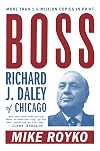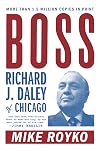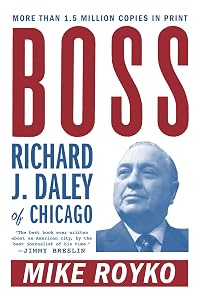
Boss: Richard J. Daley of Chicago
by Mike Royko
On This Page
Description
In the turbulent world of Chicago politics, Boss dives deep into the captivating life and legacy of Richard J. Daley, the influential politician and mastermind behind the city's Democratic Party machine. Mike Royko's scathing and meticulously researched account follows Richard J. Daley's rise to power, from his inauspicious youth on Chicago's South Side through his rapid climb to the seat of power as the city's mayor. This engrossing biography brings to life the most powerful political show more figure of his time. With witty insight and unwavering honesty, Royko unveils Daley's controversial tactics, his laissez-faire policy toward corruption, and his unprecedented influence as a "kingmaker." From milestone achievements to cardinal sins, this eye-opening biography paints a vivid portrait of Daley, making Boss a must-listen for history buffs, political enthusiasts, and anyone fascinated by the inner workings of power. Uncover the secrets and the undeniable legacy of the last of the backroom Caesars in this compelling portrait of politics and power. This new edition includes an introduction in which the author reflects on Daley's death and the future of Chicago. show lessTags
Recommendations











Member Recommendations

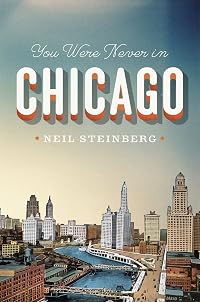
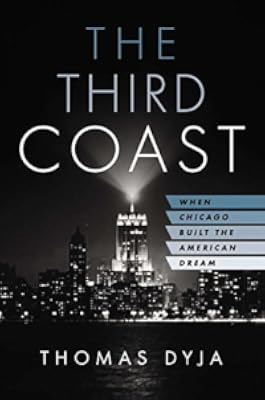
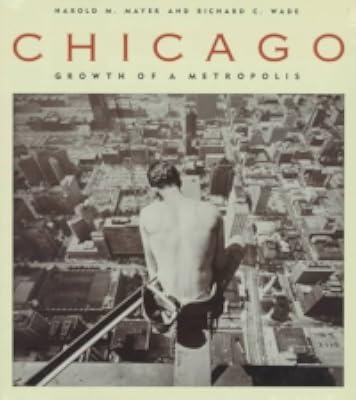
lilithcat Mike Royko and Richard J. Daley were both towering, and often antagonistic, figures in Chicago, in journalism and politics respectively. Read both these books, and you get a very real and definitive picture of how Chicago worked.
Member Reviews
A very brief kind of political biography that Robert Caro would make deadly in The Power Broker and the never-ending series of dives into the career and life of Lyndon Johnson. Like Caro's enormous books, this volume has the odd combination of the author's admiration for its subject, as stated in the introduction/eulogy (which was added after the book was originally published, upon the death of Daley) juxtaposed to an unflattering portrait of a bigoted and reactionary--not to mention mind-bogglingly corrupt and dishonest--machine politician.
Aside from that, the book is a fascinating and illuminating portrait of the mess machine politics and--despite the author's desperate attempts to obscure the basic point--post-New Deal Democratic show more control has made of America's big cities. The concentration of power into all levels of government to "plan" development translates here into a sordid and corrupt tale whose casualties are the outs--racially, politically, and otherwise--, the poor, and even the ins when their "boss" decides to chuck them over the side. The most amazing part of the story is that the city of Chicago has managed to persist at all in spite of the sad excuse for "planning" and "management" provided by the likes of people described within these pages. show less
Aside from that, the book is a fascinating and illuminating portrait of the mess machine politics and--despite the author's desperate attempts to obscure the basic point--post-New Deal Democratic show more control has made of America's big cities. The concentration of power into all levels of government to "plan" development translates here into a sordid and corrupt tale whose casualties are the outs--racially, politically, and otherwise--, the poor, and even the ins when their "boss" decides to chuck them over the side. The most amazing part of the story is that the city of Chicago has managed to persist at all in spite of the sad excuse for "planning" and "management" provided by the likes of people described within these pages. show less
A scathing, unflinching look at the machine that ran Chicago politics for much of the post-1930 era, and in particular, the career of Richard J. Daley. The book is not particularly flattering to the Boss, as in many respects it shows him at his double-dealing worst, and the corrosive effect of some of his policies, particularly in the area of urban redevelopment. Racial relations also come under harsh scrutiny as well. Some of the observations are still germane to this day. Recommended.
The first third of this book compiles so much detailed growth of the bossism "Machine" that I thought I would not like it at all. It really gathers steam in the identification of Chicago P.D. corruption, especially with the Summerdale scandals and building to a "police riot" (as described in the Walker Report) as the 1968 Democratic National Convention. A point is made that journalists were targeted. This is portrayed as a natural consequence of his public shoot-to-kill and -maim orders running up to the "first police riot" during the April 27, 1968 peace march to the Civic Center in Chicago.
The Black Panther raid is used to imply the malicious use of police violence continued under Daley. show less
Daley did nothing about the first police riot, although he was bombarded with complaints from victims and people who had seen it, including someshow more
from conservatives, who, while not sympathetic to the marchers, were appalled by the police attack. By doing nothing, Daley permitted the police to take of both gloves. The first had come off after the shoot-to-kill order [during the April 5-6, 1968 riots]
The Black Panther raid is used to imply the malicious use of police violence continued under Daley. show less
This book is about the interplay between politics and crime in the 1960's and before. Daley isn't the stuff of noble aspiration, but such men as he are part of the American political landscape. Royko is a clear writer, and has given an account which conveys historical information, while avoiding libel under american law, and the threat of violent retaliation, a rumoured but not proven tactic in the circles described. it is well worth reading for fans of real politik.
I obviously read an earlier edition.
I obviously read an earlier edition.
A classic of political biography, this is also the story of the city that was ruled by Mayor Richard J. Daley. Daley, still mayor at the printing of this book, ruled Chicago for over 20 years, continuing a tradition of graft, corruption and iron efficiency.
Definitely one person's viewpoint on Daley, but an important one. Gave me a great perspective on Chicago politics in the 20th century.
Definitely one person's viewpoint on Daley, but an important one. Gave me a great perspective on Chicago politics in the 20th century.
Members
- Recently Added By
Author Information

14+ Works 1,374 Members
Mike Royko was born in Chicago in 1932 and for much of his youth lived in the flat above his family's tavern on Milwaukee Avenue. Not only did he become the most widely read columnist in Chicago history, but his column was syndicated in more than 600 newspapers across the country. He was also the author of the classic account of city machine show more politics, Boss. Mike Royko's last column in the Chicago Tribune appeared in March 1997, a month before his death. His memorial service was held on a sunny day in Wrigley Field. show less
Awards and Honors
Distinctions
Common Knowledge
- Original publication date
- 1971
- People/Characters
- Richard J. Daley
- Important places
- Chicago, Illinois, USA; Cook County, Illinois, USA; Illinois, USA
- Dedication
- For Dave and Rob and all the Sundays missed.
- First words
- The workday begins early.
- Last words
- (Click to show. Warning: May contain spoilers.)And in 1970, ready or not, it wasn't getting any.
Classifications
- Genres
- Nonfiction, General Nonfiction, Biography & Memoir, History, Politics and Government
- DDC/MDS
- 977.3 — History & geography History of North America North central United States Illinois
- LCC
- F548.52 .D35 .R67 — Local History of the United States, Canada and Latin America United States local history Illinois
- BISAC
Statistics
- Members
- 638
- Popularity
- 45,643
- Reviews
- 7
- Rating
- (3.96)
- Languages
- English
- Media
- Paper, Audiobook, Ebook
- ISBNs
- 13
- ASINs
- 14