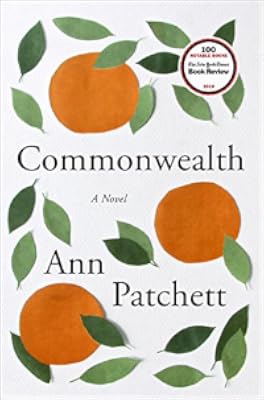
Commonwealth
by Ann Patchett
On This Page
Description
"The acclaimed, bestselling author--winner of the PEN/Faulkner Award and the Orange Prize--tells the enthralling story of how an unexpected romantic encounter irrevocably changes two families' lives. One Sunday afternoon in Southern California, Bert Cousins shows up at Franny Keating's christening party uninvited. Before evening falls, he has kissed Franny's mother, Beverly--thus setting in motion the dissolution of their marriages and the joining of two families. Spanning five decades, show more Commonwealth explores how this chance encounter reverberates through the lives of the four parents and six children involved. Spending summers together in Virginia, the Keating and Cousins children forge a lasting bond that is based on a shared disillusionment with their parents and the strange and genuine affection that grows up between them. When, in her twenties, Franny begins an affair with the legendary author Leon Posen and tells him about her family, the story of her siblings is no longer hers to control. Their childhood becomes the basis for his wildly successful book, ultimately forcing them to come to terms with their losses, their guilt, and the deeply loyal connection they feel for one another. Told with equal measures of humor and heartbreak, Commonwealth is a meditation on inspiration, interpretation, and the ownership of stories. It is a brilliant and tender tale of the far-reaching ties of love and responsibility that bind us together"-- "Commonwealth is the story of two broken families and the paths their lives take over the course of 40 years, through love and marriage, death and divorce, and a dark secret from childhood that lies underneath it all"-- show lessTags
Recommendations

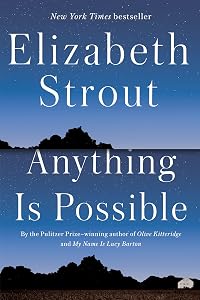
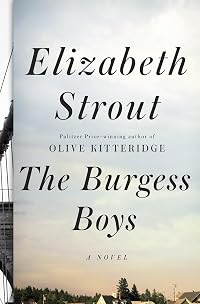
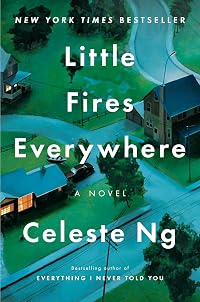
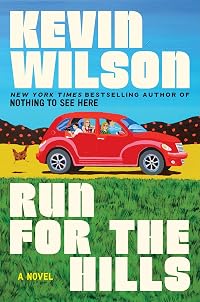















Member Recommendations
BookshelfMonstrosity These literate family sagas follow American Catholic families through the decades. Commonwealth portrays two families that break apart and come back together in new combinations, while the drama in After This stems from a changing world.
LAKobow Several families and the way their actions are intertwined.
Member Reviews
Summary: Traces the lives of six children and the parents from two families over five decades from the beginnings of an affair at a christening that broke up two marriages and threw the children together.
"The christening party took a turn when Albert Cousins arrived with gin."
In one sense, the whole story of Commonwealth turns on that first line. Albert Cousins joins Fix Keating's wife Beverly in the kitchen as they make drinks, and imbibe in a few, setting up the beginnings of an affair that led each to divorce their spouses, Teresa and Fix, throwing together the two Keating girls, Caroline and Franny, and the four Cousins children together, Cal, Holly, Jeannette, and Albie, who spend much of their growing up years together in Virginia show more (the Commonwealth).
The book moves between their childhood together, how this "blended family" negotiates the passage into adulthood, and maturity. Two of the six children dominate the narrative--Franny and Albie.
Franny, the baby at the christening seems to wander through much of her life, dropping out of law school, unlike her successful patent attorney sister, working as a cocktail waitress, and living for a number of years with novelist Leon Posen, who appropriates the family story in a best selling novel, Commonwealth, rejuvenating his career.
Albie, the youngest Cousins was the annoying younger brother, often dealt with by "tic-tacs" from his older brother (benedryl) that put him to sleep and out of their hair, which he was on the fatal day when Cal dies on an outing with the others. Only when he reads Posen's book, given him as a bicycle messenger to publishers in New York, does he understand the unwitting part he played in his brother's death, and figures out how the family's story was appropriated. He's staying with Jeannette and her husband in a cramped New York apartment. Meanwhile, Holly is off in Switzerland, meditating.
Fifty years later, Fix is dying of esophageal cancer and the other parents are aging. We see how the surviving children of these two families come to terms with their shared family history, the parents they lived with, and those they visited on custodial visits. The tender moments with Fix those with Franny. Albie, who nearly burned down a school when he was living a difficult adolescence with Teresa becomes the one who checks in on her in her later years. Weirdly, despite Albie's anger with Franny for giving away the family story, there is a bond between them as the youngest children that brings them together in the closing parts of the book.
Guns, kept but unused, figure both in the death of Cal, and with Fix who wants Franny to end his suffering. Gin also recurs at the end of the story between Albert and the baby at the christening--now mature Franny, married to Kumar in Chicago. Circles close, but Franny makes different choices, keeping "something for herself."
I'm still deciding what I think of this book. As always, I love the writing of Patchett and the complexity of her characters and their relationships. There is no great crisis or drama--simply the wandering ways of different children trying to find their ways in life, the quarrels and reconciliations that occur in families. The number of children, the movements between childhood, early and later adulthood felt disjointed at times. Perhaps as much as anything, this reflects the disruption and disjointedness that affairs and divorce bring into the lives of all who are touched by them, and the ways children have to come to terms with step-parents, step siblings, non-custodial birth parents. It all seems very modern, a story many readers have lived themselves. Will they see themselves in Patchett's characters? Will they like what they see or gain insight as they follow these characters through life? Will they want to? I'll leave that to you. show less
"The christening party took a turn when Albert Cousins arrived with gin."
In one sense, the whole story of Commonwealth turns on that first line. Albert Cousins joins Fix Keating's wife Beverly in the kitchen as they make drinks, and imbibe in a few, setting up the beginnings of an affair that led each to divorce their spouses, Teresa and Fix, throwing together the two Keating girls, Caroline and Franny, and the four Cousins children together, Cal, Holly, Jeannette, and Albie, who spend much of their growing up years together in Virginia show more (the Commonwealth).
The book moves between their childhood together, how this "blended family" negotiates the passage into adulthood, and maturity. Two of the six children dominate the narrative--Franny and Albie.
Franny, the baby at the christening seems to wander through much of her life, dropping out of law school, unlike her successful patent attorney sister, working as a cocktail waitress, and living for a number of years with novelist Leon Posen, who appropriates the family story in a best selling novel, Commonwealth, rejuvenating his career.
Albie, the youngest Cousins was the annoying younger brother, often dealt with by "tic-tacs" from his older brother (benedryl) that put him to sleep and out of their hair, which he was on the fatal day when Cal dies on an outing with the others. Only when he reads Posen's book, given him as a bicycle messenger to publishers in New York, does he understand the unwitting part he played in his brother's death, and figures out how the family's story was appropriated. He's staying with Jeannette and her husband in a cramped New York apartment. Meanwhile, Holly is off in Switzerland, meditating.
Fifty years later, Fix is dying of esophageal cancer and the other parents are aging. We see how the surviving children of these two families come to terms with their shared family history, the parents they lived with, and those they visited on custodial visits. The tender moments with Fix those with Franny. Albie, who nearly burned down a school when he was living a difficult adolescence with Teresa becomes the one who checks in on her in her later years. Weirdly, despite Albie's anger with Franny for giving away the family story, there is a bond between them as the youngest children that brings them together in the closing parts of the book.
Guns, kept but unused, figure both in the death of Cal, and with Fix who wants Franny to end his suffering. Gin also recurs at the end of the story between Albert and the baby at the christening--now mature Franny, married to Kumar in Chicago. Circles close, but Franny makes different choices, keeping "something for herself."
I'm still deciding what I think of this book. As always, I love the writing of Patchett and the complexity of her characters and their relationships. There is no great crisis or drama--simply the wandering ways of different children trying to find their ways in life, the quarrels and reconciliations that occur in families. The number of children, the movements between childhood, early and later adulthood felt disjointed at times. Perhaps as much as anything, this reflects the disruption and disjointedness that affairs and divorce bring into the lives of all who are touched by them, and the ways children have to come to terms with step-parents, step siblings, non-custodial birth parents. It all seems very modern, a story many readers have lived themselves. Will they see themselves in Patchett's characters? Will they like what they see or gain insight as they follow these characters through life? Will they want to? I'll leave that to you. show less
The story begins with the christening party of Franny, the second daughter of Fix and Beverly Keating. Bert Cousins comes to the party uninvited and, since everyone is drunk, ends up kissing Beverly, setting in motion the events that shape the Keatings’ and Cousinses’ lives thereafter. The narrative is a collection of anecdotes, really, told from the perspectives of the four parents and six children, but each reflects on the past in a way that eventually illuminates the whole story. These are ordinary lives, touched at times by tragedy but mostly filled with reflections and moments like those that make up most ordinary lives, but through Patchett’s magical touch, they add up to something poignant and meaningful.
This is a story about stories, particularly family stories, and how our lives are made up of these stories we tell and who we tell them to, and how these stories construct meaning for our lives. It’s astonishing to me how Patchett elevates such ordinary family stories into something quite extraordinary. show less
“This was theshow more
deal of taking her father to chemo when none of the doctors spoke in terms of a cure: this was the time she had, these were all the stories she was going to get. It was why she and Caroline took turns flying out to Los Angeles, because they’d never been with him for very long. It was to give Marjorie a break because it was Marjorie who did all the work, but more than anything it was to have a chance at the stories he was going to take with him.”
This is a story about stories, particularly family stories, and how our lives are made up of these stories we tell and who we tell them to, and how these stories construct meaning for our lives. It’s astonishing to me how Patchett elevates such ordinary family stories into something quite extraordinary. show less
One word came to mind when I was reading the book - humane. How humane the characters are. They are flawed but as they grow older, they grow wiser and learn to treasure their family, forming lasting relationships. Like what Teresa Cousins says, they got through life, in their own way. You don't think you are going to, but then you do. That's what all of them did. Teresa became a successful paralegal and found love a second time; Jeanette enjoyed a close relationship with her mother when the rest moved out, got married, and spent Christmas with her father; Franny and Caroline stopped fighting and grew closer as they got older; Beverly and Bert settled down in their ways, and Fix Keating found love a second time and valiantly battled show more cancer. The story revolves around Franny more than the others but the transition from one character to another is so seamless and effortless. And who can forget Albie? The prodigal son turned good, the small gestures of kindness he showed to Jeanette and her family when he stayed with them, and turning to read to pass the time. He was thus the one who read Commonwealth and found his family inside there, and off he went to find Leo Poulsen, finding not only him but Franny as well. This book brings hope to us all, that things will turn out fine in the end. show less
“Did you ever want to be a writer?” “No,” she said, and she would have told him. “I only wanted to be a reader.”
“Half the things in this life I wish I could remember and the other half I wish I could forget.”
A christening party, one Sunday afternoon, in southern California. Copious amounts of gin are consumed, leading to an illicit kiss. This brief encounter, in the kitchen, sets off a chain-reaction, breaking apart two families, and bringing them together again, with pieces missing or askew.
Loosely, based on Patchett's own tumultous childhood, the novel spans five deacades, looking closely at the lives of all six children and the parents. Yes, some are dysfunctional, groping their way to an uncertain future and show more others are more sure-footed. Unlikely friendships evolve among the siblings and some end up, hopelessly out of reach.
This book caught me by surprise, with it's depth, sense of humor and uncanny insight, into the human condition. And of course, the prose is delicious.
Patchett's work seems to be divisive, among readers, including this one but that leaves me somewhat baffled, because I think she is one of the best American writers working today. show less
“Half the things in this life I wish I could remember and the other half I wish I could forget.”
A christening party, one Sunday afternoon, in southern California. Copious amounts of gin are consumed, leading to an illicit kiss. This brief encounter, in the kitchen, sets off a chain-reaction, breaking apart two families, and bringing them together again, with pieces missing or askew.
Loosely, based on Patchett's own tumultous childhood, the novel spans five deacades, looking closely at the lives of all six children and the parents. Yes, some are dysfunctional, groping their way to an uncertain future and show more others are more sure-footed. Unlikely friendships evolve among the siblings and some end up, hopelessly out of reach.
This book caught me by surprise, with it's depth, sense of humor and uncanny insight, into the human condition. And of course, the prose is delicious.
Patchett's work seems to be divisive, among readers, including this one but that leaves me somewhat baffled, because I think she is one of the best American writers working today. show less
“She couldn't follow all the lines out in every direction: all the people to whom she was by marriage mysteriously related.” —
Ann Patchett, “Commonwealth”
If a character in Ann Patchett's “Commonwealth” (2016) can't keep the members of her own family straight, pity the poor reader. But that is the point of this wonderful novel: Families are complicated.
That confused character is Franny, the novel's main character, if there is one. She is a baby at her own christening party when the novel opens, a mature woman well into her 50s when it ends at another family party. The chapters jump around from here to there, finally giving a picture of an American family as complicated as any of them.
At that christening party an uninvited show more guest named Albert Cousins shows up with a bottle of gin, a most unsuitable christening gift. Bert only wanted an excuse to get away from his own house and his own family on a Sunday afternoon. Soon other alcohol is brought to the party, guests drink too much and by the end Bert is kissing Beverly, Franny's beautiful mother, and an affair begins that leads to the breakup of both families.
The six children from the two families often share time together because of custody arrangements. But then new marriages crumble, leading to more divorces, more stepparents and an ever more complicated family.
As if things weren't complicated enough, Franny, in her 20s, has an affair with a prominent novelist, Leo Possen, who is looking for an idea for his next book. Franny's family story becomes the plot for this novel, which is also called “Commonwealth.” The book complicates her family even more as members start reading it. Years later it is turned into a movie, making everything still worse.
Franny feels guilty for her unplanned role in bringing embarrassment to her own family, just as she is sorry for all the trouble that resulted from that kiss at her christening party. And yet she thinks, too, of all the good that resulted. So it goes with families. Bad marriages result in good children. Youthful indiscretions lead to mature wisdom. Negatives sometimes become positives, and vice versa.
Families are complicated. show less
Ann Patchett, “Commonwealth”
If a character in Ann Patchett's “Commonwealth” (2016) can't keep the members of her own family straight, pity the poor reader. But that is the point of this wonderful novel: Families are complicated.
That confused character is Franny, the novel's main character, if there is one. She is a baby at her own christening party when the novel opens, a mature woman well into her 50s when it ends at another family party. The chapters jump around from here to there, finally giving a picture of an American family as complicated as any of them.
At that christening party an uninvited show more guest named Albert Cousins shows up with a bottle of gin, a most unsuitable christening gift. Bert only wanted an excuse to get away from his own house and his own family on a Sunday afternoon. Soon other alcohol is brought to the party, guests drink too much and by the end Bert is kissing Beverly, Franny's beautiful mother, and an affair begins that leads to the breakup of both families.
The six children from the two families often share time together because of custody arrangements. But then new marriages crumble, leading to more divorces, more stepparents and an ever more complicated family.
As if things weren't complicated enough, Franny, in her 20s, has an affair with a prominent novelist, Leo Possen, who is looking for an idea for his next book. Franny's family story becomes the plot for this novel, which is also called “Commonwealth.” The book complicates her family even more as members start reading it. Years later it is turned into a movie, making everything still worse.
Franny feels guilty for her unplanned role in bringing embarrassment to her own family, just as she is sorry for all the trouble that resulted from that kiss at her christening party. And yet she thinks, too, of all the good that resulted. So it goes with families. Bad marriages result in good children. Youthful indiscretions lead to mature wisdom. Negatives sometimes become positives, and vice versa.
Families are complicated. show less
All the stories go with you, Franny thought, closing her eyes. All the things I didn't listen to, won't remember, never got right, wasn't around for. All the ways to get to Torrance.
This is a novel about two ordinary families, tied together by divorce and remarriage, who are messed up in ordinary ways. What makes this book so extraordinary is Patchett's writing, which is so perfect as to fade into invisibleness, never getting in the way of this story, and her compassion and interest in every member of these two families.
Each chapter reads like a short story, complete unto itself, and joined together, the chapters tell the story over several decades, beginning with the christening party where Bert Cousins first meets Beverly Keating, a show more meeting that will eventually result in six children spending summers together largely unsupervised, not naturally drawn together, but connected by proximity and shared experience in a way that will bond them through their adult lives.
I'm not drawn to family sagas and I'm glad I had no idea what the book was about before beginning, or I would have put off reading it. All I knew, opening the book to the first chapter, was that people were losing their minds over this book. This book is wonderful; that's all you need to know about it before you start. Enjoy. show less
This is a novel about two ordinary families, tied together by divorce and remarriage, who are messed up in ordinary ways. What makes this book so extraordinary is Patchett's writing, which is so perfect as to fade into invisibleness, never getting in the way of this story, and her compassion and interest in every member of these two families.
Each chapter reads like a short story, complete unto itself, and joined together, the chapters tell the story over several decades, beginning with the christening party where Bert Cousins first meets Beverly Keating, a show more meeting that will eventually result in six children spending summers together largely unsupervised, not naturally drawn together, but connected by proximity and shared experience in a way that will bond them through their adult lives.
I'm not drawn to family sagas and I'm glad I had no idea what the book was about before beginning, or I would have put off reading it. All I knew, opening the book to the first chapter, was that people were losing their minds over this book. This book is wonderful; that's all you need to know about it before you start. Enjoy. show less
One beautiful summer afternoon in the middle of a christening party for little Frances Keating, the fate of two families is permanently changed. The events of that day ultimately lead to marital breakup for both Fix & Beverly Keating and Bert & Theresa Cousins. Commonwealth is the story of the impact on their children and on the children’s relationships with their parents and one another throughout their lives.
A commonwealth is defined as “a group of sovereign states and their dependencies associated by their own choice and linked with common objectives and interests,” and is a perfect metaphor for the two Keating and four Cousins children. Every summer they come together in Virginia (incidentally, also a Commonwealth), sharing show more bedrooms, adjusting to different family rules, and enjoying more freedom as a group than they are granted on their own. But this freedom comes at a cost, which has a profound effect on the adult each child becomes.
Much of the story is conveyed through an adult Franny, with chapters told by some of the Cousins children that fill in details Franny either wouldn’t have known or would have experienced very differently. The full picture comes together slowly and in pieces, like working on a “paint by number” project one number at a time. As the novel moves towards its conclusion, the children have become adults, the parents have become elderly, and the children have assumed their inevitable caregiving roles. At this point, Franny reflects on a series of “what ifs” in her life which would have prevented certain bad things from happening. But then she realizes that for every bad thing there was a good thing, which she would not have wanted to live without. This interconnectedness, even in the most dysfunctional of families, was a moving way to connect several threads, deliver emotional impact, and leave me with that satisfied feeling that comes from a very well-written novel. show less
A commonwealth is defined as “a group of sovereign states and their dependencies associated by their own choice and linked with common objectives and interests,” and is a perfect metaphor for the two Keating and four Cousins children. Every summer they come together in Virginia (incidentally, also a Commonwealth), sharing show more bedrooms, adjusting to different family rules, and enjoying more freedom as a group than they are granted on their own. But this freedom comes at a cost, which has a profound effect on the adult each child becomes.
Much of the story is conveyed through an adult Franny, with chapters told by some of the Cousins children that fill in details Franny either wouldn’t have known or would have experienced very differently. The full picture comes together slowly and in pieces, like working on a “paint by number” project one number at a time. As the novel moves towards its conclusion, the children have become adults, the parents have become elderly, and the children have assumed their inevitable caregiving roles. At this point, Franny reflects on a series of “what ifs” in her life which would have prevented certain bad things from happening. But then she realizes that for every bad thing there was a good thing, which she would not have wanted to live without. This interconnectedness, even in the most dysfunctional of families, was a moving way to connect several threads, deliver emotional impact, and leave me with that satisfied feeling that comes from a very well-written novel. show less
Members
- Recently Added By
Published Reviews
ThingScore 92
...spans over 50 years, and the stories of how these children move uncertainly into adulthood — and how their parents adjust to the misfortunes that accrue — are painfully beautiful. (I went from bristling to weeping at 3 a.m.) Escaping the cage of your childhood can be one of the sublime miracles of growing up, though it sometimes requires more tools than the average jailbreak.
added by charl08
a compelling novel, full of characters who ring true.
added by charl08
Patchett sucker-punches you, but leaves you feeling you had it coming – whether for underestimating her, or her characters, or humanity, is hard to say.
In particular, Commonwealth is one of the most discerning novels about siblings I can recall. One pair of stepsiblings share an equivocal bond: “In that sense the two of them had been a team, albeit a team neither one of them wanted to be show more on.” show less
In particular, Commonwealth is one of the most discerning novels about siblings I can recall. One pair of stepsiblings share an equivocal bond: “In that sense the two of them had been a team, albeit a team neither one of them wanted to be show more on.” show less
added by charl08
Lists

Female Author
1,234 works; 65 members

Best 21st Century Books (So Far)
679 works; 86 members

Top Five Books of 2016
795 works; 229 members

Best Family Stories
241 works; 22 members
Southern Fiction
212 works; 52 members

Top Five Books on LibraryThing
24 works; 7 members
Female Protagonist
1,056 works; 57 members

Top Five Books of 2018
802 works; 265 members
Top Five Books of 2017
757 works; 231 members
Contemporary Fiction
109 works; 7 members

Kirkus Starred Fiction Reviews of Books Published in 2016
63 works; 3 members

Bitter Southerner Summer Reading Roundup
198 works; 8 members

Indie Next Picks
196 works; 4 members

Writers as Characters in Fiction
120 works; 19 members

Books Read in 2016
4,666 works; 199 members

Books Read in 2020
4,379 works; 124 members

Books Set in Virginia
5 works; 3 members

Books Read in 2022
5,226 works; 115 members

Allie's List of Books I Want To Read
93 works; 1 member

To Read
617 works; 7 members

Books Read in 2018
4,360 works; 110 members

Alphabetical Books
211 works; 3 members

2024-2025 Ezra Klein Guest Recommendations
213 works; 6 members

Books Read in 2026
2,116 works; 70 members
Author Information

31+ Works 55,845 Members
Ann Patchett was born on December 2, 1963. She received the Orange Prize for Fiction and the PEN/Faulkner Award in 2002 for her novel Bel Canto. Her other novels include The Patron Saint of Liars, Taft, The Magician's Assistant, and State of Wonder. She has also written several nonfiction works including Truth and Beauty: A Friendship, The Getaway show more Car, The Bookshop Strikes Back, and This Is the Story of a Happy Marriage. Ann's title's Commonweatlth and The Patron Saint of Liars made the New York Time bestseller list. (Bowker Author Biography) show less
Some Editions
Awards and Honors
Awards
Distinctions
Series
Belongs to Publisher Series
Work Relationships
Is contained in
Common Knowledge
- Canonical title*
- Orange amère
- Original title
- Commonwealth
- Original publication date
- 2016; 2019-01-02 (French) (French)
- People/Characters
- Frances "Franny" Xavier Keating Mehta; Albert Cousins; Francis Xavier "Fix" Keating; Beverly Keating Cousins Dine; Caroline Keating Wharton; Tom Keating (show all 32); Betty Keating; Teresa Cousins Chen; Calvin Cousins; Holly Cousins; Jeanette Cousins; Albert "Albie" John Cousins; Lomer; Bonnie; Joe Mike; Wallis; Leon "Leo" Ariel Posen; Fode; Dayo; Ariel Posen; Natalie Posen; Eric; Marisol; Astrid; Eugene Wharton; Nick Wharton; Marjorie Keating; Ravi Mehta; Amit Mehta; Kumar Mehta; Jack Dine; Jim Chen
- Important places
- Los Angeles, California, USA; Torrance, California, USA; Arlington, Virginia, USA; Chicago, Illinois, USA; Brooklyn, New York, New York, USA; Amagansett, New York, USA (show all 8); Santa Monica, California, USA; Lucerne, Lucerne, Switzerland
- Epigraph*
- /
- Dedication
- to Mike Glasscock
- First words
- The christening party took a turn when Albert Cousins arrived with gin.
- Quotations
- Half the things in this life I wish I could remember and the other half I wish I could forget.
The priest, whose mind was wandering like the Jews in the desert, tried to focus again on his sermon
You could see just a trace of the daughter there, the way she held her shoulders back, the length of her neck. It was a crime what time did to women.
When the six of them were together they looked more like a day camp than a family, random children dropped off on the same curb.
Caroline was a lot angrier than the rest of them. It was there in her voice all the time. Then again, it could have been that Cal was the angriest and his anger just manifested itself in different ways.
Heinrich had always thought there was something German about her, the yellow hair, the clear blue ice of her eyes, but Americans were never Germans. Americans were mutts, all of them.
Franny had her arm around Leo Posen's waist as she steered the course between the dark icebergs of her tables.
Now here he was, as thin and as quiet as a knife.
But when the toilets stopped flushing and the showers went dry, well, that was intolerable. Everyone agreed the water bill had to be paid on time.
It was after Cal died that her mother finally lost her freckles, as if even they had abandoned her.
Without the buzzing overhead lights the sunlight fell down the walls and across the linoleum tiles, collecting in watery pools around their feet.
Albie's bicycle was an amalgamation of so many different replacement parts it could no longer rightfully be called a Schwinn.
When he arrived at his destination, he lifted his bike onto his shoulder like it was his younger brother and carried it with him into the elevator.
He was a living skeleton with his black tattoos and his thick black braid, like Death himself had come for them, ready to ride them out on his handlebars.
All those stories go with you, Franny thought, closing her eyes. All the things I didn't listen to, won't remember, never got right, wasn't around for.
She picked it up, even though nothing good ever came from answering the phone in the middle of the night.
By the time the plane landed at Charles de Gualle she had aged twenty years. Prosecutors should insist the trials of murderers and drug lords be held in economy class on crowded transatlantic flights, where any suspect would ... (show all)confess to any crime in exchanges for the promise of a soft bed in a dark, quiet room. Off the plane, stiff and slow, she shuffled into the river of life: the roll-aboard suitcases trailing behind the cell-phone-talkers like obedient dogs, everyone walking with such assurance that it never occurred to her not to follow them.
She eased her heels out of the backs of her shoes even though she knew it was a mistake. Her feet would expand like bread dough and she would never be able to cram them back in.
Teresa looked back and forth between Bert and the pretty ring on her hand and thought she must be emitting light from her entire body she loved him so much.
"For the vast majority of the people on this planet," Fix had said, "the thing that's going to kill them is already on the inside."
Franny, half asleep on top of the bedspread beside her husband, was unable to map out all the ways the future would unravel without the moorings of the past. - Last words
- (Click to show. Warning: May contain spoilers.)She had needed to keep something for herself.
- Blurbers
- Freud, Esther
- Original language
- English
*Some information comes from Common Knowledge in other languages. Click "Edit" for more information.
Classifications
Statistics
- Members
- 4,460
- Popularity
- 3,335
- Reviews
- 205
- Rating
- (3.87)
- Languages
- 9 — Dutch, English, French, German, Italian, Portuguese, Spanish, Turkish, Ukrainian
- Media
- Paper, Audiobook, Ebook
- ISBNs
- 43
- UPCs
- 2
- ASINs
- 9