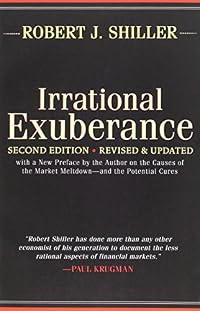
Irrational Exuberance
by Robert J. Shiller
On This Page
Description
In this revised, updated, and expanded edition of his bestseller, Nobel Prize-winning economist Robert Shiller, who warned of both the tech and housing bubbles, cautions that signs of irrational exuberance among investors have only increased since the 2008-9 financial crisis. With high stock and bond prices and the rising cost of housing, the post-subprime boom may well turn out to be another illustration of Shiller's influential argument that psychologically driven volatility is an inherent show more characteristic of all asset markets. In other words, Irrational Exuberance is as relevant as ever. Previous editions covered the stock and housing markets-and famously predicted their crashes. This edition expands its coverage to include the bond market, so that the book now addresses all of the major investment markets. It also includes updated data throughout, as well as Shiller's 2013 Nobel Prize lecture, which places the book in broader context. In addition to diagnosing the causes of asset bubbles, Irrational Exuberance recommends urgent policy changes to lessen their likelihood and severity-and suggests ways that individuals can decrease their risk before the next bubble bursts. No one whose future depends on a retirement account, a house, or other investments can afford not to listen to this book. show lessTags
Recommendations




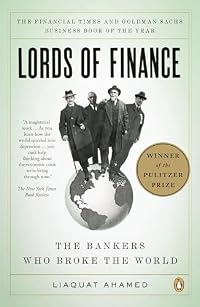
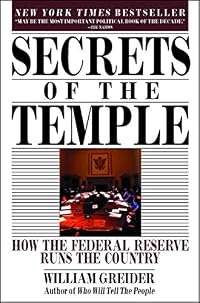
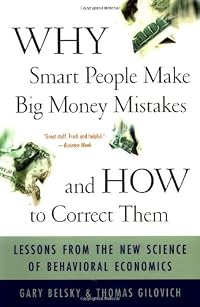
Member Reviews
I had to rush through the last third of ‘Irrational Exuberance’ as it was due back at the library today. This also means I don’t have it in front of me, so must rely on my vague recollections to compose a review. Consider that a disclaimer.
It is important to note that I read the second edition of the book, published in 2005. The first edition, published in 2000, warned of a potential bubble in stock market prices. Lo, there was. This edition warns of a bubble in real estate prices. Two for two! That said, Shiller merely warns of the dangers of mortgage over-lending, based on over-optimism about the future. He does not go into the multiplying factor of mortgage-backed securities, collateralised debt obligations, and other financial show more instruments, which precipitated the massive financial contagion of 2007 onwards. Interestingly, though, there is a disclaimer in the front of the book stating that he is (or was) associated with a company selling securities of some description. In any event, he deserves credit for identifying a house price bubble, even without considering its associated problems.
The thesis of this book is essentially behavioural economics writ macro. This is unusual, as most books I’ve come across in behavioural economics focus on individuals and small groups, rather than seeking to multiply up the effects to the economy as a whole. Shiller touches on why this is the case - the pervasiveness of the efficient free market hypothesis. Most macroeconomics simply assumes that any irrationalities at the micro level even themselves out, ensuring that macro-scale distortions do not occur. Shiller marshalls a variety of theory and evidence to counter this assertion. This ranges from behavioural microeconomic findings (which in my view only demonstrate the behaviour of undergraduate students, the usual experimental subjects used) to statistical analysis of stock market movements over the last 150 years, with a sprinkling of anecdotes on the way.
To be honest, I didn’t really need convincing of the central idea that frames ‘Irrational Exuberance’. All the macroeconomics I’ve ever been taught based on efficient free markets seemed highly dubious at the time and has ever since. Shiller’s most crucial (and simplest) assertion is that investors do not make independent decisions. (This is one of the most idiotic assumptions of neoclassical economics.) Instead, they observe and react to each other’s behaviour. In some ways, this could be considered part and parcel of rational information-gathering, but Shiller notes that it is fraught with irrationalities. A key example is the mental short-cut of assuming that if something has happened recently, it is more likely. This ties into the tendency to assume that the future will be much like the present, or akin to some ‘anchoring fact’. Tied into all this is the (sometimes reasonable) assumption that if a large number of people think the same thing then it must be correct. Then there’s the often-inaccurate barrage of soundbites provided by the media. Add to that the incredible human power of rationalisation and the sheer tedious complexity of financial markets.
I think Shiller argues his case well, but doesn’t devote nearly enough time and space to the implications. A few policy proscriptions are suggested in the conclusion, although not in detail. I would have also liked more on the moral hazard side of things, which of course leads neatly into the antecedents of the financial crisis; mis-selling of financial products, excessive complexity making valuation impossible, and a bubble based on hysteria about profit opportunities. It’s still a good book, though, and would do well to be read with [b:Freefall: America, Free Markets, and the Sinking of the World Economy|6581449|Freefall America, Free Markets, and the Sinking of the World Economy|Joseph E. Stiglitz|https://images.gr-assets.com/books/1348431624s/6581449.jpg|6774891] by Joseph Stiglitz, which covers some subsequent implications of Shiller’s theories. show less
It is important to note that I read the second edition of the book, published in 2005. The first edition, published in 2000, warned of a potential bubble in stock market prices. Lo, there was. This edition warns of a bubble in real estate prices. Two for two! That said, Shiller merely warns of the dangers of mortgage over-lending, based on over-optimism about the future. He does not go into the multiplying factor of mortgage-backed securities, collateralised debt obligations, and other financial show more instruments, which precipitated the massive financial contagion of 2007 onwards. Interestingly, though, there is a disclaimer in the front of the book stating that he is (or was) associated with a company selling securities of some description. In any event, he deserves credit for identifying a house price bubble, even without considering its associated problems.
The thesis of this book is essentially behavioural economics writ macro. This is unusual, as most books I’ve come across in behavioural economics focus on individuals and small groups, rather than seeking to multiply up the effects to the economy as a whole. Shiller touches on why this is the case - the pervasiveness of the efficient free market hypothesis. Most macroeconomics simply assumes that any irrationalities at the micro level even themselves out, ensuring that macro-scale distortions do not occur. Shiller marshalls a variety of theory and evidence to counter this assertion. This ranges from behavioural microeconomic findings (which in my view only demonstrate the behaviour of undergraduate students, the usual experimental subjects used) to statistical analysis of stock market movements over the last 150 years, with a sprinkling of anecdotes on the way.
To be honest, I didn’t really need convincing of the central idea that frames ‘Irrational Exuberance’. All the macroeconomics I’ve ever been taught based on efficient free markets seemed highly dubious at the time and has ever since. Shiller’s most crucial (and simplest) assertion is that investors do not make independent decisions. (This is one of the most idiotic assumptions of neoclassical economics.) Instead, they observe and react to each other’s behaviour. In some ways, this could be considered part and parcel of rational information-gathering, but Shiller notes that it is fraught with irrationalities. A key example is the mental short-cut of assuming that if something has happened recently, it is more likely. This ties into the tendency to assume that the future will be much like the present, or akin to some ‘anchoring fact’. Tied into all this is the (sometimes reasonable) assumption that if a large number of people think the same thing then it must be correct. Then there’s the often-inaccurate barrage of soundbites provided by the media. Add to that the incredible human power of rationalisation and the sheer tedious complexity of financial markets.
I think Shiller argues his case well, but doesn’t devote nearly enough time and space to the implications. A few policy proscriptions are suggested in the conclusion, although not in detail. I would have also liked more on the moral hazard side of things, which of course leads neatly into the antecedents of the financial crisis; mis-selling of financial products, excessive complexity making valuation impossible, and a bubble based on hysteria about profit opportunities. It’s still a good book, though, and would do well to be read with [b:Freefall: America, Free Markets, and the Sinking of the World Economy|6581449|Freefall America, Free Markets, and the Sinking of the World Economy|Joseph E. Stiglitz|https://images.gr-assets.com/books/1348431624s/6581449.jpg|6774891] by Joseph Stiglitz, which covers some subsequent implications of Shiller’s theories. show less
An excellent inbetween book. Not too academic and dry but also not too simplistic. The most complete treatment of bubbles I've read.
Shiller is a great empiricist, and tests out efficient markets hypothesis through various econometric tests and survey data. Shiller actually asks investors through extensive survey data to see what their motivations and logic is, a pretty simple but radical move from assuming them to be rationally calculating agents. Through this data Shiller shows how irrational, and self contradicting investment behavior can be. Additionally, Shiller does alot of searches through news and media in order to see if the news portion of efficient markets theory holds i.e. is there actually news that explains price movements? show more To my knowledge both of these attempts at gathering data are novel (and in hindsight) obvious.
An interesting take on speculative bubbles. Shiller shows (at least to my satisfaction) that 1) Bubbles in asset prices do exist and 2) We should look beyond pure financial theory to explain the behavior of bubbles. Shiller explores possible explanations for increases in asset price, and shows that at least, there is no real rational basis for certain increases in prices (looking at population growth, construction price and interest rates do not explain the housing prices for example), and that certain implications of efficient markets are violated. In particular, he could not find any news to explain large price movements, and that stock prices are too volatile compared to dividends growth (an apparent violation of the Gordon discount model).
Shiller then goes on to suggest some possible explanations for the behavior of bubbles. He argues many factors, a combination of social, psychological and cultural factors. He goes in length about feedback loops, herd behavior, word of mouth contagion, and the role of media in drawing attention to issues. Shiller discusses how certain vivid stories (in particular "new era" theories) can capture the imagination of investors and unmoor asset prices. Shiller also describes how irrational enthusiasm, mixed in with a convincing story can overwhelm quantitative fact and forecasts driving self-creating bubbles. Sometimes investors, encouraged by the raise in prices, jealous of others "success" and with a gambler's high can pile on into markets. Shiller also surveys behavioral economics, in particular anchoring, and overconfidence in their roles in bubbles. This section actually seems a bit weak to me, Shiller seems to be throwing everything at the wall to see what sticks, and some of these explanations (while I believe happen to be true) are difficult if not impossible to falsify.
Ultimately, Shiller suggests improving markets by broadening participation, encouraging opinion leaders to educate investors and reducing short constraints (for example creating markets to allow investors to short asset prices such as housing easily). An enjoyable (if somewhat technical at points) read overall. show less
Shiller is a great empiricist, and tests out efficient markets hypothesis through various econometric tests and survey data. Shiller actually asks investors through extensive survey data to see what their motivations and logic is, a pretty simple but radical move from assuming them to be rationally calculating agents. Through this data Shiller shows how irrational, and self contradicting investment behavior can be. Additionally, Shiller does alot of searches through news and media in order to see if the news portion of efficient markets theory holds i.e. is there actually news that explains price movements? show more To my knowledge both of these attempts at gathering data are novel (and in hindsight) obvious.
An interesting take on speculative bubbles. Shiller shows (at least to my satisfaction) that 1) Bubbles in asset prices do exist and 2) We should look beyond pure financial theory to explain the behavior of bubbles. Shiller explores possible explanations for increases in asset price, and shows that at least, there is no real rational basis for certain increases in prices (looking at population growth, construction price and interest rates do not explain the housing prices for example), and that certain implications of efficient markets are violated. In particular, he could not find any news to explain large price movements, and that stock prices are too volatile compared to dividends growth (an apparent violation of the Gordon discount model).
Shiller then goes on to suggest some possible explanations for the behavior of bubbles. He argues many factors, a combination of social, psychological and cultural factors. He goes in length about feedback loops, herd behavior, word of mouth contagion, and the role of media in drawing attention to issues. Shiller discusses how certain vivid stories (in particular "new era" theories) can capture the imagination of investors and unmoor asset prices. Shiller also describes how irrational enthusiasm, mixed in with a convincing story can overwhelm quantitative fact and forecasts driving self-creating bubbles. Sometimes investors, encouraged by the raise in prices, jealous of others "success" and with a gambler's high can pile on into markets. Shiller also surveys behavioral economics, in particular anchoring, and overconfidence in their roles in bubbles. This section actually seems a bit weak to me, Shiller seems to be throwing everything at the wall to see what sticks, and some of these explanations (while I believe happen to be true) are difficult if not impossible to falsify.
Ultimately, Shiller suggests improving markets by broadening participation, encouraging opinion leaders to educate investors and reducing short constraints (for example creating markets to allow investors to short asset prices such as housing easily). An enjoyable (if somewhat technical at points) read overall. show less
It is good to be right. An exceptional book that provided me with a different mathematical model with which to look at the stock market. The author successfully integrates arguments from history, psychology, and economics to demonstrate how the "New Economy" was neither new nor economically viable. An excellent example of an academic creating an accessible book that becomes a best seller without resorting to excessive journalistic tendancies.
I couldn't resist a book with a chapter called, 'Naturally Occurring Ponzi Processes'. That has to be my favourite title for anything in the last 10 years. Talk about the what that explains everything. "Donna, what happened to you? Are you just another fuck-up? Is that it? What happened to you?" "No. No! It's those naturally occurring ponzi processes. They get me every time. And now...(exhale)...they got me that one time too many."
This book has a lot of information you don't know you need to know, explained clearly. Even if you have no money, and the taxman doesn't talk to you about poetry, it's good to be mindful of the steps in a random walk.
This book has a lot of information you don't know you need to know, explained clearly. Even if you have no money, and the taxman doesn't talk to you about poetry, it's good to be mindful of the steps in a random walk.
The rarest of beasts: a book by an academic economist that's approachable, clear and polymathic. Shiller weaves a narrative that includes social trends, psychology, history, behaviour theory, business fundamentals and government policy. Peppered with terrific insights and anecdotes, he makes a clear case for why 'efficient market theory' in investment is just plain wrong. A genuinely illuminating and entertaining read.
Prior to reading this book, I have listened to various lectures and speeches by Professor Shiller that I have found on Youtube and online. What I appreciate is that I can follow and largely understand his explanations and analysis (for the most part) as someone who did not do well with my economic courses in college. Fortunately this book was also user-friendly. It’s not written exclusively for other economists and academics.
I am trying to gain a better understanding of economics in general but also trying to understand investing and what factors affect the stock market, housing market and finance. Shiller provides an excellent overview of the American economy and history including the 1929 Stock Market crash and the 2007-2008 show more downturn (I read the third edition of this book that included the 2007-2008 downturn.)
There are lots of chart, data and information throughout the book. Shiller also has an informative section of how the press and media affect the Stock Market and economy. This is not an easy read but the effort was worthwhile, at least for this reader. show less
I am trying to gain a better understanding of economics in general but also trying to understand investing and what factors affect the stock market, housing market and finance. Shiller provides an excellent overview of the American economy and history including the 1929 Stock Market crash and the 2007-2008 show more downturn (I read the third edition of this book that included the 2007-2008 downturn.)
There are lots of chart, data and information throughout the book. Shiller also has an informative section of how the press and media affect the Stock Market and economy. This is not an easy read but the effort was worthwhile, at least for this reader. show less
A prominent strain of investing advice asserts that market timing is hopeless, and encourages investing heavily in index funds without attempting to judge how reasonable their current price level is. I’m not sure to what extent Shiller’s own concrete investment advice - this book offers little of it - would differ, but his discussions of stock market history, real estate market history, and the efficient market hypothesis do provide a very intriguing note of caution to that sort of thinking.
Members
- Recently Added By
Author Information

14 Works 3,071 Members
Robert J. Shiller is the Stanley B. Resor Professor of Economics at Yale University. Also the author of the award-winning "Macro Markets" as well as "Market Volatility", he lives in New Haven, Connecticut. (Bowker Author Biography)
Awards and Honors
Awards
Distinctions
Classifications
Statistics
- Members
- 1,048
- Popularity
- 24,474
- Reviews
- 18
- Rating
- (3.83)
- Languages
- 9 — Chinese, English, French, German, Hungarian, Italian, Portuguese, Russian, Spanish
- Media
- Paper, Audiobook, Ebook
- ISBNs
- 29
- ASINs
- 8