The Key of Solomon the King
by Pseudo Solomon
On This Page
Description
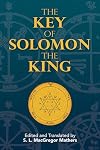
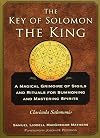
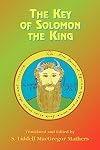
This book, translated and edited by the occultist Samuel Liddell Mathers (1854-1918) and published in 1889, introduced to Victorian England an important work of Renaissance esoterica. Purportedly the deathbed testament of King Solomon to his son, distilling all the angelic wisdom he received in his lifetime, it provided its readers with detailed instructions in conjuring, divining and summoning God's power to work 'experiments', or spells. For Mathers, it represented 'the fountain-head and show more storehouse of Qabalistical Magic' and formed a central part of his efforts to lend scholarly respectability to occult research. Mathers edited the text using available manuscripts at the British Museum, and it continues to offer insight into both Renaissance occultism and its Victorian revival. This edition includes a table of the planetary hours and their magical names, and spells. show lessTags
Recommendations


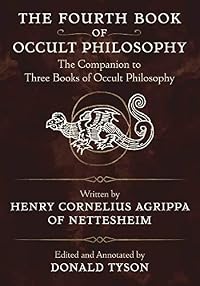
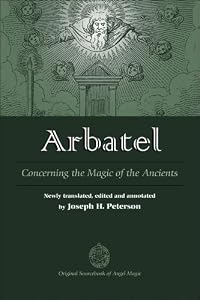
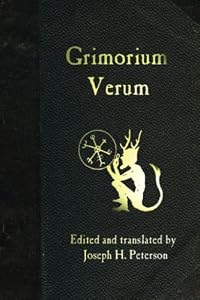
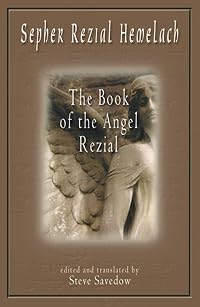



Member Reviews
For my own personal benefit I’d like to note that the deities of the hours (or whatever) go in the following order: Saturn, Jupiter, Mars, Sun, Venus, Mercury, Moon. The deity of the day of the week starts off, with the first hour beginning at sunrise; ie probably not 7:00 exactly or whatever.
Since a lot of these rituals are meant to be done at very specific times, I think I’ll just comment on that. Ie, many of them apparently are meant to be done at a specific time of the YEAR, like, oh, it’s not August? It’s December? Well then, don’t need to do it just yet, buddy…. 😹 And I’m not sure that I’d wait months and months to do a spell or ritual, you know. But then, in one of the pagan-perspective YouTube videos from show more 2009, (yes, I’m in the archive, lol) Cara/cutewitch772 (very much as the portrait of the Millennial as a young person) said although she understood spells worked best at certain times, she wouldn’t even wait for the ‘right’ phase of the MOON to come if she felt she needed magic-right-now, you know. And I don’t know; I’m a modern too, so I get that, but in a normative way, I’m like 😩
You know, it’s like, recentism defeats longer life-spans in terms of what we feel like we ‘have time for’, and whether we can play the long game, you know, as moderns. In the past, I mean, some people were turd-like, but a lot of people played the long game even if that meant looking at their ~next life~, you know, whereas with our medical science, we’ll still be here for much of the future…. But with recentism/youth culture/click bait habits, it’s like, we either think we’ll be as good as dead, or just the thought of the long game just never crosses our addled little minds, you know.
Sometimes life is an emergency, and you have to Move, and not wait, but, realistically, usually it isn’t.
The other point is that also many of the rituals are kinda Christianized/biblical, as the identity of the ‘speaker’, I guess you could call him, (to use the literary term), ‘Solomon’, implies, and my magic will probably be less biblical as I feel like people have more choices now and polytheism provides a lot of choices; however, the exact forms of pre-Christian religion are gone forever for many reasons, and I’m trying to form a type of modern/future religion, not to bow down in loyalty to the departed past, so I think angels and Hebrew words and Bible paraphernalia, although not known to “our pagan ancestors” or whatever, are, at least in part, useful things that the human journey has acquired along the way in its magical journey, and it would be a weird sort of historical re-enactment to pretend that it had never happened. Or that it could never be useful.
Of course, with modern technology versus medieval technology, sometimes a medieval magical intervention doesn’t map obviously onto something that would be helpful now; however, maybe I’m not thinking creatively enough about it all yet. show less
Since a lot of these rituals are meant to be done at very specific times, I think I’ll just comment on that. Ie, many of them apparently are meant to be done at a specific time of the YEAR, like, oh, it’s not August? It’s December? Well then, don’t need to do it just yet, buddy…. 😹 And I’m not sure that I’d wait months and months to do a spell or ritual, you know. But then, in one of the pagan-perspective YouTube videos from show more 2009, (yes, I’m in the archive, lol) Cara/cutewitch772 (very much as the portrait of the Millennial as a young person) said although she understood spells worked best at certain times, she wouldn’t even wait for the ‘right’ phase of the MOON to come if she felt she needed magic-right-now, you know. And I don’t know; I’m a modern too, so I get that, but in a normative way, I’m like 😩
You know, it’s like, recentism defeats longer life-spans in terms of what we feel like we ‘have time for’, and whether we can play the long game, you know, as moderns. In the past, I mean, some people were turd-like, but a lot of people played the long game even if that meant looking at their ~next life~, you know, whereas with our medical science, we’ll still be here for much of the future…. But with recentism/youth culture/click bait habits, it’s like, we either think we’ll be as good as dead, or just the thought of the long game just never crosses our addled little minds, you know.
Sometimes life is an emergency, and you have to Move, and not wait, but, realistically, usually it isn’t.
The other point is that also many of the rituals are kinda Christianized/biblical, as the identity of the ‘speaker’, I guess you could call him, (to use the literary term), ‘Solomon’, implies, and my magic will probably be less biblical as I feel like people have more choices now and polytheism provides a lot of choices; however, the exact forms of pre-Christian religion are gone forever for many reasons, and I’m trying to form a type of modern/future religion, not to bow down in loyalty to the departed past, so I think angels and Hebrew words and Bible paraphernalia, although not known to “our pagan ancestors” or whatever, are, at least in part, useful things that the human journey has acquired along the way in its magical journey, and it would be a weird sort of historical re-enactment to pretend that it had never happened. Or that it could never be useful.
Of course, with modern technology versus medieval technology, sometimes a medieval magical intervention doesn’t map obviously onto something that would be helpful now; however, maybe I’m not thinking creatively enough about it all yet. show less
You missed
There's a mystery to solve. But you have to study more. Keep that in mind when you read this. It's not about magic, it's about understanding.
There's a mystery to solve. But you have to study more. Keep that in mind when you read this. It's not about magic, it's about understanding.
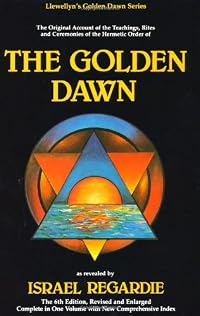
Although the author of this grimoire was traditionally the biblical King Solomon, it was probably written in the 13th Century A.D. It was translated by S. Liddell MacGregor Mathers in 1888; Mathers subsequently had a lot of influence in the Golden Dawn movement, one of the sources of modern ritual magic; it is said that he co-wrote its rituals with W.B. Yeats. Mathers also translated the Kabbalah.
Ratings
Members
- Recently Added By
Author Information

12+ Works 1,456 Members
Some Editions
Series
Belongs to Publisher Series
Common Knowledge
- Canonical title
- The Key of Solomon the King
- Original title
- Clavicula Salomonis; Clavis Solomonis
- Alternate titles
- The Clavis or Key to the Magic of Solomon
- People/Characters
- Ebenezer Sibley; Fredrick Hockley
- First words
- Whoever wishes to make progress in the Study, must take care that no part of it is neglected in all of the Circumstances that relate to the Mysteries and Operations of this great Great Art.
- Last words
- (Click to show. Warning: May contain spoilers.)SATURN------------------------------------
Grains of Black Peper, Grains of Hogsbane, Roots of Mandrake, powder of Loadstone, Myrrh of the East, pulverized and made into a paste with the Blood of a bat and the Brains of a Black Cat.
Classifications
- Genres
- Religion & Spirituality, Nonfiction, General Nonfiction
- DDC/MDS
- 133.43 — Philosophy and Psychology Parapsychology & occultism Specific topics in parapsychology and occultism Demonology and witchcraft Magic and witchcraft
- LCC
- BF1601 .C5313 — Philosophy, Psychology and Religion Psychology Occult sciences Magic. Hermetics. Necromancy
- BISAC
Statistics
- Members
- 796
- Popularity
- 34,733
- Reviews
- 3
- Rating
- (3.74)
- Languages
- 7 — Czech, Danish, Dutch, English, German, Hebrew, Spanish
- Media
- Paper, Ebook
- ISBNs
- 61
- UPCs
- 2
- ASINs
- 19