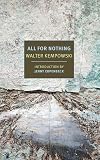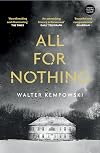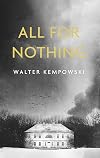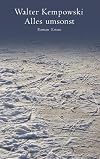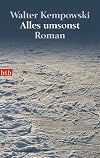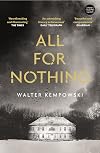
All for Nothing
by Walter Kempowski
On This Page
Description
"The last novel by one of Germany's most important postwar writers, All for Nothing was published in Germany in 2006, just before Walter Kempowski's death. It describes with matter-of-fact clarity and acuity, and a roving point of view, the atmosphere in East Prussia during the winter of 1944-1945 as the German forces are in retreat and the Red Army approaches. The von Globig family's manor house, the Georgenhof, is falling into a state of disrepair. Auntie runs the estate as best she can show more since Eberhard von Globig, a special officer in the German army, went to war, leaving behind his beautiful but vague wife, Katharina, and her bookish twelve-yearold son, Peter. As the road beside the house fills with Germans fleeing the occupied territories, the Georgenhof receives strange visitors--a Nazi violinist, a dissident painter, a Baltic baron, even a Jewish refugee--but life continues in the main as banal, wondrous, and complicit as ever for the main characters, until their caution, their hedged bets and provisions, their wondering, and their denial are answered by the wholly expected events they haven't allowed themselves to imagine"-- show lessTags
Recommendations
























Member Recommendations
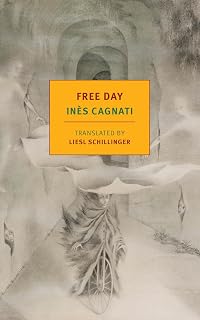
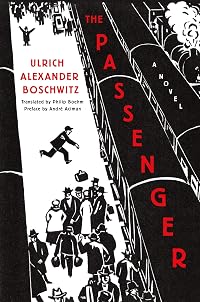
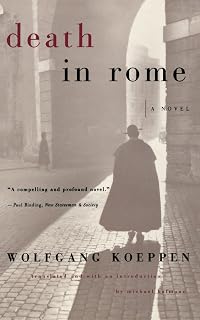
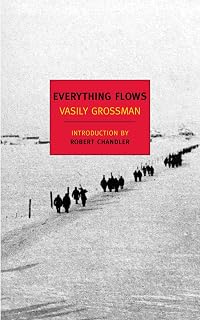
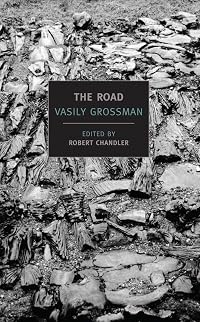
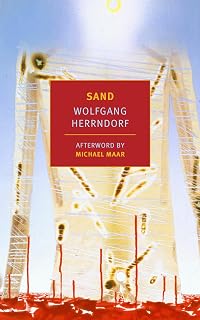
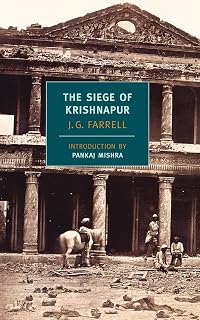
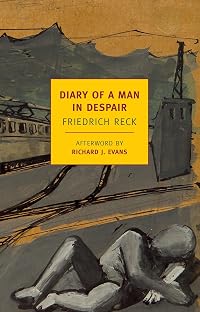
Ciruelo Completely different eras and locations but both are historical fiction written in a style that suspends judgement, is narrated by many characters, and lets the reader feel how it would be to live daily in that time and place.
Member Reviews
The old folk were transported on an open horse-drawn cart sitting on straw packed well around them. They were nodding their heads in time to cheerful tunes played on a concertina. They never thought they would have to go on the road again in their old age with cannulas sticking out of them like hedgehog quills, with colostomy bags and devices for getting air into their thoracic cavities. They were bad on their feet and had trouble with their water-works. It hadn’t been so bad in Mitkau. They got used to the place. Can’t people leave us in peace?
At times Kempowski manages to inject humor into his story of a young boy’s journey westward from East Prussia during the dying days of WWII.
The boy, Peter comes from a wealthy Mitkau show more family. His mother, beautiful and dreamy has little contact with young Peter, and his father is far away in Italy on business with the Reich. His main contact, emotional and intellectual is with his tutor, and he spends most of his time learning and playing with scientific instruments like his magnifying glass and binoculars.
With the Soviet army advancing and the German army retreating, East Europeans start to move west. Peter with his aunt , mother and tutor set off, but are quickly separated in the refugee chaos. It’s a hazardous journey. Peter gets some help along the way. He’s a determined little chap and he carries his magnifying glass under his arm. He manages with his wit, intelligence and innate charm to make the journey.
Peter becomes a storyteller and entertains the people who help him with his tales. Each town reflects a step deeper into the disintegration of German life and society as the war closes in.
Peter meets all types of people from the different counties that made up Eastern Europe before they were reorganized, again. Jews moving west toward the Reich not aware that they were being treated worse there, but fearing the communists. People from old people’s home, trades people, artists, parents and babies.
From Mitkau to Wehlau (now Znamensk, Russia), Heilsberg (now Lidzbark Warmiński, Poland), Rastenburg, now in Poland, Osterode, Allenstein (now Olsztyn, Poland),nand Braunsberg (now Braniewo ) in northern Poland, the stream of refuges grew. Then Peter becomes separated from the larger group. At this stage many of the refuges were trying to go by sea to Denmark, but Peter is forced to continue on. Alone with his microscope.
“All for Nothing” is not just another refugee book. “All for Nothing” is set in the latest stages of the war from the standpoint of Eastern Europen civilians. The refugees in “All for Nothing” are unusual in novels nowadays, in that they are fleeing towards Germany, though more so in the beginning of the book. The mix of motives, the chaos of war, the human ability to push through, the human kindness, and the human callousness are all put together in this surprisingly delightful book.
Refugees come in all shapes and sizes now. A few years back we were all worried about people crossing the seas to Europe. Now we have Gaza where there are no refugees because there’s no way out. In America citizens can become refugees in their own country. In my country Australia no boat carrying refugees can make landfall. We all see these problems every day when we look at our newspapers or screens. But how many of us do anything?
I highly recommend this book. show less
At times Kempowski manages to inject humor into his story of a young boy’s journey westward from East Prussia during the dying days of WWII.
The boy, Peter comes from a wealthy Mitkau show more family. His mother, beautiful and dreamy has little contact with young Peter, and his father is far away in Italy on business with the Reich. His main contact, emotional and intellectual is with his tutor, and he spends most of his time learning and playing with scientific instruments like his magnifying glass and binoculars.
With the Soviet army advancing and the German army retreating, East Europeans start to move west. Peter with his aunt , mother and tutor set off, but are quickly separated in the refugee chaos. It’s a hazardous journey. Peter gets some help along the way. He’s a determined little chap and he carries his magnifying glass under his arm. He manages with his wit, intelligence and innate charm to make the journey.
Peter becomes a storyteller and entertains the people who help him with his tales. Each town reflects a step deeper into the disintegration of German life and society as the war closes in.
Peter meets all types of people from the different counties that made up Eastern Europe before they were reorganized, again. Jews moving west toward the Reich not aware that they were being treated worse there, but fearing the communists. People from old people’s home, trades people, artists, parents and babies.
From Mitkau to Wehlau (now Znamensk, Russia), Heilsberg (now Lidzbark Warmiński, Poland), Rastenburg, now in Poland, Osterode, Allenstein (now Olsztyn, Poland),nand Braunsberg (now Braniewo ) in northern Poland, the stream of refuges grew. Then Peter becomes separated from the larger group. At this stage many of the refuges were trying to go by sea to Denmark, but Peter is forced to continue on. Alone with his microscope.
“All for Nothing” is not just another refugee book. “All for Nothing” is set in the latest stages of the war from the standpoint of Eastern Europen civilians. The refugees in “All for Nothing” are unusual in novels nowadays, in that they are fleeing towards Germany, though more so in the beginning of the book. The mix of motives, the chaos of war, the human ability to push through, the human kindness, and the human callousness are all put together in this surprisingly delightful book.
Refugees come in all shapes and sizes now. A few years back we were all worried about people crossing the seas to Europe. Now we have Gaza where there are no refugees because there’s no way out. In America citizens can become refugees in their own country. In my country Australia no boat carrying refugees can make landfall. We all see these problems every day when we look at our newspapers or screens. But how many of us do anything?
I highly recommend this book. show less
An outstanding novel about the waning days of World War II in eastern Germany.
Peter is a quiet, twelve-year-old boy, enamored with his microscope and train set. His father, currently away serving the Reich in Italy as a procurement officer, had purchased the 14,000 acre estate of Georgenhof for the family, but sold all but the manor house and surrounding grounds. There Peter lives with his dreamy, artistic mother and his practical Auntie, who runs things. There are also two Ukrainian housemaids and Vladimir, the Polish handyman. They lead an insular life, only occasionally troubled by the busybody Nazi, Drygalski, who lives across the way in a new settlement. Other than losing their shares in English steel and a Romanian flour show more business, they have been untroubled by the war so far. Peter's father sends lots of luxury goods like cigarettes, chocolate, liquors, and food stuffs from abroad, which offsets the family's financial losses, but ominous rumors are circulating from the eastern front.
As the Russians draw closer, they drive before them a wave of refugees. At first a trickle, and then a flood of people from the Baltics and eastern Prussia surge westward toward the safety of the Reich. At first the occasional intrusion from a refugee is a welcome break from the monotony of their daily routine, but as the refugees increase in number and desperation, Katharina is forced to make decisions for the family, a role to which she is unaccustomed. As the sounds of the front moves nearer, the tension increases and they must decide whether to stay or join the wave of humanity trudging past their gate.
This was Walter Kempowski's last published novel, and it is well-informed by both his own experiences and his massive project to collect primary materials documenting the war. The writing is clean and unsentimental, despite the sentimental nature of some of his characters. The pacing is excellent, and I had a hard time putting the book down as the tension built. But perhaps most stunning of all is Kempowski's characters—from Peter to his mother, from the gentlemanly tutor Dr. Wagner to the one-armed soldier who plays the piano—each character seems drawn from real life, so vividly are they portrayed. I found the book emotionally impactful and one I will not soon forget. Highly recommended. show less
Peter is a quiet, twelve-year-old boy, enamored with his microscope and train set. His father, currently away serving the Reich in Italy as a procurement officer, had purchased the 14,000 acre estate of Georgenhof for the family, but sold all but the manor house and surrounding grounds. There Peter lives with his dreamy, artistic mother and his practical Auntie, who runs things. There are also two Ukrainian housemaids and Vladimir, the Polish handyman. They lead an insular life, only occasionally troubled by the busybody Nazi, Drygalski, who lives across the way in a new settlement. Other than losing their shares in English steel and a Romanian flour show more business, they have been untroubled by the war so far. Peter's father sends lots of luxury goods like cigarettes, chocolate, liquors, and food stuffs from abroad, which offsets the family's financial losses, but ominous rumors are circulating from the eastern front.
As the Russians draw closer, they drive before them a wave of refugees. At first a trickle, and then a flood of people from the Baltics and eastern Prussia surge westward toward the safety of the Reich. At first the occasional intrusion from a refugee is a welcome break from the monotony of their daily routine, but as the refugees increase in number and desperation, Katharina is forced to make decisions for the family, a role to which she is unaccustomed. As the sounds of the front moves nearer, the tension increases and they must decide whether to stay or join the wave of humanity trudging past their gate.
This was Walter Kempowski's last published novel, and it is well-informed by both his own experiences and his massive project to collect primary materials documenting the war. The writing is clean and unsentimental, despite the sentimental nature of some of his characters. The pacing is excellent, and I had a hard time putting the book down as the tension built. But perhaps most stunning of all is Kempowski's characters—from Peter to his mother, from the gentlemanly tutor Dr. Wagner to the one-armed soldier who plays the piano—each character seems drawn from real life, so vividly are they portrayed. I found the book emotionally impactful and one I will not soon forget. Highly recommended. show less
Kempowski's epic final novel takes on the big subject of the evacuation of Germans from East Prussia during the Soviet advance into the region in the winter of 1945. This was one of the most traumatic moments of the war for German civilians: something like 750 000 people had to flee their homes, and nearly half of them were killed on their way to the west by air raids, the sinking of refugee ships, or by cold, accident or disease. It's potentially a huge story, but Kempowski keeps his focus tight and shows us events, one detail at a time, mostly from the perspective of the twelve-year-old Peter von Globig, whose parents own a small country estate in East Prussia.
The drama of the evacuation itself is all packed into the last few show more chapters, and most of the book is devoted to building up a context for it, showing us how cracks are starting to appear in German self-confidence as rumours of a Russian advance over the frontier start to get stronger, and exploring how difficult it seems to be for any of us to accept that the stable world we are living in is about to be blasted away completely. The homes, businesses and families we've built up, the wars we've fought: surely that can't have been all for nothing? Even as the artillery starts to rumble in the background and a caravan of farm carts from further east is rattling past the front door, everyone is still making excuses for postponing departure, and Peter is busy playing with his train set and his microscope.
Kempowski spent much of his life collecting ordinary people's memories, and this comes out in the wealth of everyday detail that he uses to illuminate the distorted world on the edge of the abyss: BDM-girls sent out to assist German Mothers-to-be, HJ-lads sweeping snow, forced labourers from the occupied countries doing most of the real work, the self-important block-warden using denunciation to get even with all the people he resents, bureaucrats constantly trying to invent order for the chaos around them by issuing it with papers and permits, the enforcing of rules that have long lost their purpose. Even in the midst of the panic, this is still a world where saying "Good morning" would be seen as an act of reckless subversion: Kempowski uses the insane way that people still hammer on the official "Heil Hitler!" greeting as an ironic Leitmotif throughout the book.
A hugely impressive book, but a surprisingly fine and delicate one too. show less
The drama of the evacuation itself is all packed into the last few show more chapters, and most of the book is devoted to building up a context for it, showing us how cracks are starting to appear in German self-confidence as rumours of a Russian advance over the frontier start to get stronger, and exploring how difficult it seems to be for any of us to accept that the stable world we are living in is about to be blasted away completely. The homes, businesses and families we've built up, the wars we've fought: surely that can't have been all for nothing? Even as the artillery starts to rumble in the background and a caravan of farm carts from further east is rattling past the front door, everyone is still making excuses for postponing departure, and Peter is busy playing with his train set and his microscope.
Kempowski spent much of his life collecting ordinary people's memories, and this comes out in the wealth of everyday detail that he uses to illuminate the distorted world on the edge of the abyss: BDM-girls sent out to assist German Mothers-to-be, HJ-lads sweeping snow, forced labourers from the occupied countries doing most of the real work, the self-important block-warden using denunciation to get even with all the people he resents, bureaucrats constantly trying to invent order for the chaos around them by issuing it with papers and permits, the enforcing of rules that have long lost their purpose. Even in the midst of the panic, this is still a world where saying "Good morning" would be seen as an act of reckless subversion: Kempowski uses the insane way that people still hammer on the official "Heil Hitler!" greeting as an ironic Leitmotif throughout the book.
A hugely impressive book, but a surprisingly fine and delicate one too. show less
Peter von Globig, "hair all over the place, mind all over the place too", lived an odd but relatively contented existence for a twelve year old boy in wartime. True, his father was posted to Italy, and the family's income had certainly decreased what with international funds curtailed, but life had continued largely unchanged for Peter. The main exception was that visiting family and friends, who used to come with full sacks and leave with empty ones, now arrived carrying empty sacks and left with full. Life was hard in East Prussia in January 1945, and was becoming increasingly harder.
A string of people started travelling the road in front of the von Globig estate: a scattered few at first, soon turning into a steady stream, all show more heading west. Most of them passed right by the estate, but a few made the trip down the drive to Peter's home. The first of these called himself a "political economist". By no means an academic, he studied the households contents with an educated eye for value.
The economist was followed by a succession of characters, all novel to Peter. There was the violinist and the one armed piano player, the painter, the refugee hidden from all by Peter's mother, the baron, and the schoolteacher with his family. Meanwhile, on the domestic front, the two Ukrainian women in the kitchen, and Vladimir the Pole who was in charge of the animals, were becoming more and more agitated, as was Auntie who ran the household. Peter's mother on the other hand withdrew more and more into her own world.
The time finally came for the household to join the throngs heading west. Kempowski does a superb job of portraying the disintegration into shambles of the most careful planning, and the subsequent chaos of flight. Skilfully he shows this new world through Peter's eyes, with brief vignettes along the road, each one clarifying or complicating what Peter had thought he knew. He learned how people's true natures emerge in crisis. Some are lost to him in the maelstrom and never heard of by him again, but the reader learns their fate.
This is more than the story of one child though. It is the universal story of war and upheaval, of refugees on the road, a place where fate appears to be the only determinant in life. Can there be redemption at the end, or is it truly all for nothing? show less
A string of people started travelling the road in front of the von Globig estate: a scattered few at first, soon turning into a steady stream, all show more heading west. Most of them passed right by the estate, but a few made the trip down the drive to Peter's home. The first of these called himself a "political economist". By no means an academic, he studied the households contents with an educated eye for value.
The economist was followed by a succession of characters, all novel to Peter. There was the violinist and the one armed piano player, the painter, the refugee hidden from all by Peter's mother, the baron, and the schoolteacher with his family. Meanwhile, on the domestic front, the two Ukrainian women in the kitchen, and Vladimir the Pole who was in charge of the animals, were becoming more and more agitated, as was Auntie who ran the household. Peter's mother on the other hand withdrew more and more into her own world.
The time finally came for the household to join the throngs heading west. Kempowski does a superb job of portraying the disintegration into shambles of the most careful planning, and the subsequent chaos of flight. Skilfully he shows this new world through Peter's eyes, with brief vignettes along the road, each one clarifying or complicating what Peter had thought he knew. He learned how people's true natures emerge in crisis. Some are lost to him in the maelstrom and never heard of by him again, but the reader learns their fate.
This is more than the story of one child though. It is the universal story of war and upheaval, of refugees on the road, a place where fate appears to be the only determinant in life. Can there be redemption at the end, or is it truly all for nothing? show less
The von Globigs—the reclusive Katharina, her 12-year-old son, “Auntie,” and the “help”—live in Georgenhof, the family’s decaying rural mansion in East Prussia. It is January 1945. Husband Eberhard, a high-ranking Army officer, is in Italy procuring supplies even as the Red Army is massing just 60 miles away. A host of minor characters also inhabit these pages: Drygalski, the vociferous local Nazi; Dr. Wagner, who is tutoring the son; Lothar, the mayor; Father Brahms; and a revolving cast of refugees, escapees, and others who appear at the Georgenhof at intervals. The Reich is crumbling; shortages encroach; and the line of those with carts stuffed to overflowing with their belongings grows daily. Even the minor characters show more are sharply, indelibly drawn and we are sucked into the lives of each one in turn, wondering what will happen next. Death haunts the book and although it occurs suddenly, unexpectedly—it’s World War II, after all—the novel mirrors life in Kempowski’s refusal to linger. Not all is as it appears—it never is—but Kempowski maintains tight control and his portrayal of the family’s departure brilliantly evokes the timeless, almost inconceivable price paid by the innocent…and the not-so-innocent alike. show less
I discovered Walter Kempowski’s 2006 gem “All for Nothing” (“Alles umsonst”) quite by accident, reading a column on the New York Times Sunday Book Review.
Environmental journalist and author Elizabeth Kolbert called it the best book she had ever read. That seemed pretty high praise. As I was finishing the book I tweeted Kolbert and asked her what was it about the story that had so moved her.
She answered “I think it was the unvarnished grimness of it all, but also the way it did call attention to its grimness. I found it very affecting. Also, of course, it’s very well written (and translated).
Grim indeed. This story is about the collapse of East Prussian society in the winter of 1945 as it is clear Russian forces are only show more days away from over-running the region.
Most of the able-bodied men are away at the front. The characters are largely men, women, and children who for one reason or another have been excluded from service, including local Nazi functionaries intent on upholding the rule of (their) law in the disintegrating conditions.
For me there was a parallel between Kolbert’s own writings on environmental collapse and the societal collapse of the Nazi state. In this story, people are rushing presumably to safe zones oblivious to the tsunami about to overtake them.
The heroine of the story, Katharina von Globig, is swept up in a search of Jew-lovers and imprisoned for having harboured a Jew in her boudoir for a single evening.
As I read her interrogation I wanted to break into the story and say to her interrogators “Wait a minute: in a few short days you and all your cronies will be judged by the world as criminals in the highest degree having imprisoned, gassed, burned, and destroyed entire communities of innocent people. In the millions.”
Her husband is on the Italian front and about the same time puts a gun to his temple after finally accepting the inevitable has arrived.
Her young son Peter with the help of an aunt follows the tide of refugees through the streets of ancient towns and choked roads of people heading toward....what? A better life? Protection from the Russian hordes?
In reality, there is no escape.
I learned that this was among Kempowski’s last writings. He died of intestinal cancer in 2007 after having written more than 40 books and collected huge archives from the end of The Third Reich.
I was struck not only by the parallels with our own demonstrable environmental catastrophe but also by the parallels on the recent attacks on the US Capitol in Washington, DC.
On TV we watched polite society break down as rioters believing the US election had been stolen from Donald Trump and followers of a fictional hero Qanon sought to save freedom from itself.
As though a broad swath of American society was waking up to the pathology of a cult before its own eyes.
I found the opening pages of the story so evocative of the failed state: the black crows, the crumbling walls, the abandoned farm implements. Kempowski had that Chekovian gift of making such a huge canvas seem so close and suffocating.
This was such an apt read for the times. show less
Environmental journalist and author Elizabeth Kolbert called it the best book she had ever read. That seemed pretty high praise. As I was finishing the book I tweeted Kolbert and asked her what was it about the story that had so moved her.
She answered “I think it was the unvarnished grimness of it all, but also the way it did call attention to its grimness. I found it very affecting. Also, of course, it’s very well written (and translated).
Grim indeed. This story is about the collapse of East Prussian society in the winter of 1945 as it is clear Russian forces are only show more days away from over-running the region.
Most of the able-bodied men are away at the front. The characters are largely men, women, and children who for one reason or another have been excluded from service, including local Nazi functionaries intent on upholding the rule of (their) law in the disintegrating conditions.
For me there was a parallel between Kolbert’s own writings on environmental collapse and the societal collapse of the Nazi state. In this story, people are rushing presumably to safe zones oblivious to the tsunami about to overtake them.
The heroine of the story, Katharina von Globig, is swept up in a search of Jew-lovers and imprisoned for having harboured a Jew in her boudoir for a single evening.
As I read her interrogation I wanted to break into the story and say to her interrogators “Wait a minute: in a few short days you and all your cronies will be judged by the world as criminals in the highest degree having imprisoned, gassed, burned, and destroyed entire communities of innocent people. In the millions.”
Her husband is on the Italian front and about the same time puts a gun to his temple after finally accepting the inevitable has arrived.
Her young son Peter with the help of an aunt follows the tide of refugees through the streets of ancient towns and choked roads of people heading toward....what? A better life? Protection from the Russian hordes?
In reality, there is no escape.
I learned that this was among Kempowski’s last writings. He died of intestinal cancer in 2007 after having written more than 40 books and collected huge archives from the end of The Third Reich.
I was struck not only by the parallels with our own demonstrable environmental catastrophe but also by the parallels on the recent attacks on the US Capitol in Washington, DC.
On TV we watched polite society break down as rioters believing the US election had been stolen from Donald Trump and followers of a fictional hero Qanon sought to save freedom from itself.
As though a broad swath of American society was waking up to the pathology of a cult before its own eyes.
I found the opening pages of the story so evocative of the failed state: the black crows, the crumbling walls, the abandoned farm implements. Kempowski had that Chekovian gift of making such a huge canvas seem so close and suffocating.
This was such an apt read for the times. show less
This is the final novel of German author Walter Kempowski. Published in 2006, the novel is a harrowing, though purposefully muted, description of life in East Prussia during the final months of World War Two, as the Russian guns become audible just over the horizon and hundreds of thousands of people take to the roads amidst bitter winter cold to try to make their way west. Kempowski, in fact, lived through this time as a teenager.
A once proud family, or what is left of it, is hunkered down in what is left of their estate, surviving on hoarded supplies and "awaiting events." The father is serving in the German army in Italy. The Nazi authorities attempt to maintain control over the populace even as the front is collapsing only 100 show more kilometers off. The road is full of refugees already, and the family--mother, adolescent son, spinster aunt and three servants, puts people up, one night at a time. The boy's tutor still arrives every day for lessons. And the family's level of denial of their actual circumstances is acute. What will become of them?
As mentioned above, the tone of the narrative is muted. In fact, there is a somewhat surreal quality to the book's dreamlike atmosphere, the characters just a touch absurd. Certain phrases and anecdotes are repeated to create a feeling of stasis and ennui. In my New York Review Classics edition, novelist Jenny Erpenback's Introduction makes an apt comparison to Chekhov.
Despite the somewhat "warped looking glass" quality of the storytelling, we do come to care about the fate of these characters. I highly recommend the book. I never would have heard of it had not my wife read a recent review of it in The New Yorker occasioned by All for Nothing's recent new edition in English as part of the New York Review of Books' Classics series. She thought I would like it and bought for me as a gift, then deciding to read it herself first. show less
A once proud family, or what is left of it, is hunkered down in what is left of their estate, surviving on hoarded supplies and "awaiting events." The father is serving in the German army in Italy. The Nazi authorities attempt to maintain control over the populace even as the front is collapsing only 100 show more kilometers off. The road is full of refugees already, and the family--mother, adolescent son, spinster aunt and three servants, puts people up, one night at a time. The boy's tutor still arrives every day for lessons. And the family's level of denial of their actual circumstances is acute. What will become of them?
As mentioned above, the tone of the narrative is muted. In fact, there is a somewhat surreal quality to the book's dreamlike atmosphere, the characters just a touch absurd. Certain phrases and anecdotes are repeated to create a feeling of stasis and ennui. In my New York Review Classics edition, novelist Jenny Erpenback's Introduction makes an apt comparison to Chekhov.
Despite the somewhat "warped looking glass" quality of the storytelling, we do come to care about the fate of these characters. I highly recommend the book. I never would have heard of it had not my wife read a recent review of it in The New Yorker occasioned by All for Nothing's recent new edition in English as part of the New York Review of Books' Classics series. She thought I would like it and bought for me as a gift, then deciding to read it herself first. show less
Members
- Recently Added By
Lists

War Literature
101 works; 19 members

Kirkus Starred Fiction Reviews of Books Published in 2018
330 works; 3 members

Books Read in 2021
5,361 works; 113 members

Top Five Books of 2025
954 works; 303 members
Author Information

Walter Kempowski (1929-2007) was one of Germany's most important postwar writers. In the 1980s he began gathering diaries, letters, and memoirs of World War II, which he edited into ten volumes published in German. This is the first portion to appear in English. Shaun Whiteside's translations from the German include classics by Freud, Musil, and show more Nietzsche. show less
Some Editions
Awards and Honors
Awards
Series
Belongs to Publisher Series
Common Knowledge
- Canonical title
- All for Nothing
- Original title
- Das Echolot. Abgesang 45. Ein kollektives Tagebuch ( [1945]) ( [1945]); Alles umsonst
- Original publication date
- 2015 (English translation) (English translation); 2006
- Important places
- Germany
- Important events
- World War II
- Epigraph
- To save our souls from sin, dear Lord,
Our lives are all in vain.
Only Thy grace and Holy Word
Obliterate its stain.
Martin Luther (1524) - Dedication
- For Jörg
- First words
- January 1945. (Introduction)
The Georgenhof estate was not far from Mitkau, a small town in East Prussia, and now, in winter, the Georgenhof, surrounded by old oaks, lay in the landscape like a black island in a white sea. - Last words
- (Click to show. Warning: May contain spoilers.)Was everything all right now?
- Blurbers
- Birch, Carol; Lichtig, Toby
- Original language
- German
Classifications
- Genres
- Fiction and Literature, General Fiction, Historical Fiction
- DDC/MDS
- 833.914 — Literature & rhetoric German & related literatures German fiction 1900- 1900-1990 1945-1990
- LCC
- PT2671 .E43 .A7713 — Language and Literature German, Dutch and Scandinavian literatures German literature Individual authors or works 1961-2000
- BISAC
Statistics
- Members
- 616
- Popularity
- 47,234
- Reviews
- 24
- Rating
- (4.04)
- Languages
- 9 — Dutch, English, French, German, Italian, Polish, Portuguese, Spanish, Swedish
- Media
- Paper, Audiobook, Ebook
- ISBNs
- 29
- ASINs
- 9