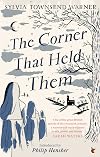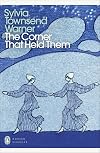
The Corner That Held Them
by Sylvia Townsend Warner
On This Page
Description
"To become a nun in the fourteenth century was often a business transaction rather than a spiritual calling; it is small wonder, then, that the inhabitants of the Benedictine convent of Oby are prey to worldly ambitions, frustrations, pleasures and jealousies. An outbreak of the Black Death the collapse of the convent spire and a disappearance are the dramas that strike this cloistered community, which is brought vividly to life in Sylvia Townsend Warner's masterpiece"--Tags
Recommendations








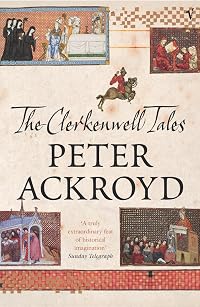



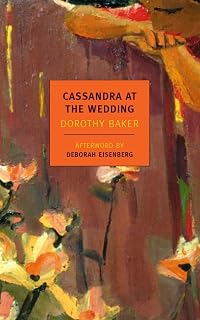




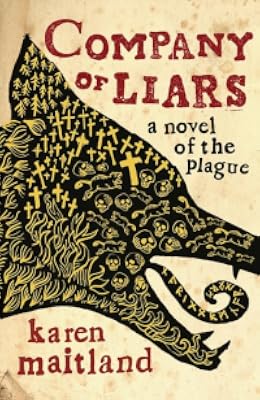
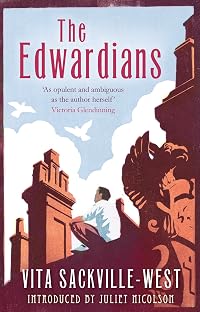










Member Recommendations

CurrerBell The Corner That Held Them has a great deal of comedy and humor, while In This House of Brede is more serious in tone.
20

CurrerBell The last couple of chapters of The Corner That Held Them (this is no SPOILER) involve the Peasant's Revolt of 1381.
by aprille

Ciruelo Completely different eras and locations but both are historical fiction written in a style that suspends judgement, is narrated by many characters, and lets the reader feel how it would be to live daily in that time and place.
Member Reviews
Here is a distinctive historical novel that greatly reminded me of a non-fiction book, [b:Montaillou: Cathars and Catholics in a French Village 1294-1324|45530|Montaillou Cathars and Catholics in a French Village 1294-1324|Emmanuel Le Roy Ladurie|https://images.gr-assets.com/books/1348618556s/45530.jpg|44742]. Eschewing traditional plot structure, Sylvia Townsend Warner recounts life in a small Benedictine convent during the 14th century. The narrative begins with the convent’s somewhat inauspicious founding and covers the subsequent 33 years. Rather than centring on any particular incident or character, multiple perspectives are used to evoke the shape of daily life. Of course, it takes an extremely skillful writer to conjure up the show more prosaic details of existence 700 years ago with any conviction. Illnesses, petty disagreements, financial troubles, and lapses of sanity occur and are dealt with by the resilient community of nuns. ‘The Corner that Held Them’ subtly shows how women achieved greater freedom in the closed environment of a convent to the patriarchal world outside. Despite the setting of an obscure rural backwater, a sense of gradual historical change filters in through new forms of music and rumours of peasant uprisings. The democratic election of prioresses by popular vote was delightful.
While I found the lack of obvious plot took a little while to get used to, I was pleasantly surprised to also find much of the novel very funny. I should have expected this from Townsend Warner, whose wit I so loved in [b:Lolly Willowes|937105|Lolly Willowes|Sylvia Townsend Warner|https://images.gr-assets.com/books/1320554609s/937105.jpg|922084] and [b:Summer Will Show|958670|Summer Will Show|Sylvia Townsend Warner|https://images.gr-assets.com/books/1228918840s/958670.jpg|943580]. I didn’t adore ‘The Corner that Held Them’ with the same intensity as the former two, but it still made me smile on a long train journey with observations of this sort:
And this made me laugh:
A dear friend once told me, ‘The more I think about it, the more I realise that you’d have made a brilliant medieval nun.’ On the basis of this novel, I think she has a point. Although I would have hated getting up early for Matins, the self-governing community of women in this novel is very appealing. The presence of spirituality is secondary to practical organisation, guardianship of the novices, and creation of objects to enhance the convent, such as illuminated texts and embroidered altar pieces. Sylvia Townsend Warner brings this world of the past to life beautifully, with a mordant wit and eye for striking details. show less
While I found the lack of obvious plot took a little while to get used to, I was pleasantly surprised to also find much of the novel very funny. I should have expected this from Townsend Warner, whose wit I so loved in [b:Lolly Willowes|937105|Lolly Willowes|Sylvia Townsend Warner|https://images.gr-assets.com/books/1320554609s/937105.jpg|922084] and [b:Summer Will Show|958670|Summer Will Show|Sylvia Townsend Warner|https://images.gr-assets.com/books/1228918840s/958670.jpg|943580]. I didn’t adore ‘The Corner that Held Them’ with the same intensity as the former two, but it still made me smile on a long train journey with observations of this sort:
Entering, Dame Matilda received a meaning glance of comradeship from her prioress. It was as if with one mind and soul that the prioress and treasuress of Oby conversed with Steven Ludcott. For the cloistered life develops in women infinite resources both of resentment and intuition; or perhaps it merely develops their sensibility, from which arise both understanding and delight in being misunderstood. Dame Matilda and the prioress might have been rehearsing their strategy for months. Though Steven Ludcott left Oby with every jot of his errand completed, the interest agreed on and his spleen vented, he rode away with the sensation of having been horribly mauled between the pair of them.
He was no sooner out of the house than a spirited defensive action became a defeat. The prioress had hysterics, Dame Matilda cursed like a crusader, and Dame Margaret, who had sat reading her psalter during the interview, sped off to tell the convent that Oby was certainly ruined and would most likely be dissolved by the bishop.
It was to the aftermath of all that that Pernelle Barstable returned, explaining that the Waxelby merchants were asking such exorbitant prices that she had thought it best to go on to Lambsholme, where she had bought such raisins as had never before been eaten at Oby. The price of raisins was the only thing in her story that made an impression. Dame Matilda said it was much too high.
And this made me laugh:
But when that subject was exhausted, his own plight came to his lips and he broke out into a complaint of his isolation at Lintoft.
“What else can you expect?” cried Sir Ralph briskly. “A strong young man like you must do more than preach and say masses if he is to earn the esteem of his parishioners. You should work, young man, you should work! If you want to be a good priest you must have the best sow, the best beans, the sweetest honey, the cock that crows loudest. You will do nothing with book and prayers. Turn your mind to pigs.”
As though he had summoned them a number of pigs just then rushed screaming and grunting into the parsonage cabbage-yard. Screaming and grunting the priest’s house-keeper rushed out and drove them away by jabbing at their noses with an iron-shod staff.
“I hate pigs!”
“Very well, then!” - Sir Ralph’s voice was injuriously tolerant - “Why not take up basket-making?”
A dear friend once told me, ‘The more I think about it, the more I realise that you’d have made a brilliant medieval nun.’ On the basis of this novel, I think she has a point. Although I would have hated getting up early for Matins, the self-governing community of women in this novel is very appealing. The presence of spirituality is secondary to practical organisation, guardianship of the novices, and creation of objects to enhance the convent, such as illuminated texts and embroidered altar pieces. Sylvia Townsend Warner brings this world of the past to life beautifully, with a mordant wit and eye for striking details. show less
Ok, I loved, loved, loved The Corner That Held Them so I’m about to go on way too long about it. #SorryNotSorry #TLDR
What did I love?
The cover and the title!
The characters!
Yes there are a lot of them. “Innumerable and insignificant” as the author herself wrote, to a friend. I don’t know how she did it, but the author managed to give us a rundown of the first 200-years of the convent of Oby in a mere 24 pages. Then, on page 25 we meet Sir Ralph Kello in 1349, during the Black Plague. The rest of the book is about him and the nuns over a course of only 33 years. During that short period of time there are four different Prioresses: Alicia, Johanna, Matilda, and Margaret. Then we have the various nuns, novices, bishops, baliffs, show more villagers, laborers, and beggars.
Plot
Even the author says there’s not really a plot. For me, there are many individual “plots” as each character has a specific desire or fear that they go about getting or avoiding.
One character wants a beautiful spire for the chapel, another character wants to be Prioress, another anchoress, another priest…bishop. One has a secret and struggles with being damned and fear of being found out,
There were also several adventures taken…
a journey to York to find a lawyer,
a journey to Brocton to acquire a new hawk where a poem about a gentle giant is discovered
a journey to Esselby to collect rents. On the way, this particular character is introduced to and sings Ars Nova style with a Chaplain and a leper (How cool that we can pull up the Kyrie by Machault on Spotify!) “Again! Let us sing it again!” he cries.
There is drama. A murder. There is scandal. There are rumors, and slander. People go mad.
The Candlemas Cuckoo!!!
The Fish-Pond!!!
The alter-hanging!
The green staff!
All the drama that unfolds after the nuns decide they must hide their gold & silver from the insurgents!!
Structure
I loved how there would be one long paragraph about a new character and then a one-sentence segue into some new situation or drama, such as “It was through him (new character) that the novices began to practice levitation.”
I learned stuff!
I didn’t know anything about medieval times or how convents worked so I found all of it quite fascinating and had to take a lot of notes and look up a lot of words. I had my (paper) dictionary next to me at all times.
I learned about
convents and manor houses and about convents relying on the nuns dowries (ranging from money to a yearly supply of wine), and about the various roles in a convent, prioress, infirmress, treasuress, cellaress, etc.
the importance of receiving relics (one of Magdalene’s tears in a bottle, the tooth of one of the Holy Innocents–I had to Google “Holy Innocents”)
the Interdict of 1208 which was a real thing
composers Machault & Landini
Definitions and meanings I had to look up
harridan , extreme unction, wicket, pursuivant, shrive, he left in a dudgeon, efficacious, contrition, stripes were salutary, cavils, for the nonce, lollardry, Trinity cope, corrodian, custo, dropsy, acedia (accidie), anchoress, retinue, mitre, admonitory end of his crozier, pedantic, laity, confederate tooth, a white sepulchre, music in measure, prolations, triste loysir, mors demoy, the longs (in music), Kyrie, Guillaume de Machaut, sarsenet, verderer, apoplexy, somnolent…
Unfusable – I couldn’t find this spelling in the dictionary or via Google so I’m still not sure what it means.
Aquinas – Still trying to find out what that is. A character puts a letter away in one so it’s not St. Thomas Aquinas. Hmm…maybe he was reading a publication by or about Aquinas so he shoved the letter in the book? Dunno.
Writing – Random blurbs that grabbed me.
The nuns arrived, bright as a flock of magpies.
They would then be able to give an undivided attention to the mortifying tranquility of their lives.
What love is to some women, and needlework to more, litigation was to Richenda.
Dame Cecilia had fits & began to prophesy. This infuriated Richenda, to whom any talk of the end of the world after she had worked so hard and successfully to put the convent on a good footing for the next century, seemed rank ingratitude.
The Bishop was still nursing his wrath.
The Bishop’s approval was not necessary, but after the business of Prior Isabella, no one at Oby was going to risk slighting a Bishop.
For in times of calamity people will do nothing unless they are paid on the nail for it.
All across Europe the pestilence had come, and now it would traverse England, and nothing could stop it, wherever there were men living it would seek them out, and turn back, as a wolf does, to snap at the man it had passed by.
Black Death, a sorcerer travelling from China had shifted the balance of Christendom & killed half the folk in England.
…talking calmly (as one does when all hope is gone).
When a Priest starts manspaining to Dame Blanch: “Pedantic fool!” She thought.
You did not disturb me. A flea bit me in the breast.
Dame Salome didn’t want to be treasurer but they picked her because the position was going to be uncomfortable and Dame Salome is one of those mild, pillowy women who can be squeezed into tight places.
Pernelle Bastable, a bower woman, arrives and scarcely had she done with exclaiming over the delight of being settled and tranquil at last before the horse was saddled and Pernelle hooded for another journey.
Arriving at the Inn, Pernelle takes charge, ordering hot water, chickens, pillows…”It is wonderful what God sends us” remarked Dame Helen. “First a Priest, now a Pernelle.”
A frosty day coming in December scratched one’s eyes, the sunlight was so suddenly brilliant.
Time – No summer is so long, so wide, as the summer before it. Time, a river, hollows out its bed and every year the river flows in a narrower channel and flows faster.
She plunged her smooth hand into the belly of a goose.
The nuns found it hard to conceal their weariness and their disillusionment (for it is disillusioning to discover that compassion stretched out too long, materializes into nothing more than a feat of endurance.
Dame Salome, with one of those flashes of worldly wisdom which at times emerge from very stupid well-meaning people, said: Now we can expect a crop of slanders. For when people do you an injury they always slander you afterwards.
Of all menaces to peace & quiet, a visionary nun is the worst, and when that nun is the novice mistress the worst is ten times worsened.
That is the drawback of being so very sensible: one cannot take counsel because it is against common sense to seek it. The metal of common sense is so lonely and unfusable that for people like Dame Matilda there is no career except to be a tyrant or a superlative drudge.
But then what is a belief? A thought lodges in the mind, will not out, preserves its freshness and color and flexibility like the corpse of a saint: Is this belief or is it heresy.
The tweedle of a wren.
He lacked whatever it is that holds a man to his purpose.
People who allowed themselves to mock at a priest were but half a step from beastly lollardry.
No matter. We are nuns, we don’t think.
In every community there must be someone who is odd man out.
Wasps are the laity of bees.
Sanctimonious old gadfly.
Routine and its slow mildewing of the mind.
He laid out a music-book among the mutton bones and the breadcrumbs.
If Triste Loysir had seemed a foretaste of paradise, the Kyrie was paradise itself. Again! Let us sing it again!
As he lay in bed at the Chaplain’s house: It struck him that every bug in the place must have heard the good news and forsaken the lepers for flesh that was a novelty.
William Holly thinks he swallowed a tiny toad in his salad.
“God’s bones!”
Those experienced in dispair are seldom good comforters, though the world prefers to believe otherwise.
Bible humor
“This is my 7th year as custos of Oby. It’s a long time. At least it is a long time in which to have got nothing done.”
“The patriarch Jacob served seven years for Leah and another seven years for Rachael. And I don’t know that he got much out of it,” remarked Sir Ralph.
This book was written in 1948, but wouldn’t this make a good social media profile?
Perkin de Craye – Bishop. A fat, smooth, proud man with a stammer. Caring only for Our Lady, works of art, ritual, and foreign cheeses.
Shout out to Lory @ Entering The Enchanted Castle for introducing me to Sylvia Townsend Warner vand to Helen @ Gallimaufry for her Sylvia Townsend Warner Reading Week posts. show less
What did I love?
The cover and the title!
The characters!
Yes there are a lot of them. “Innumerable and insignificant” as the author herself wrote, to a friend. I don’t know how she did it, but the author managed to give us a rundown of the first 200-years of the convent of Oby in a mere 24 pages. Then, on page 25 we meet Sir Ralph Kello in 1349, during the Black Plague. The rest of the book is about him and the nuns over a course of only 33 years. During that short period of time there are four different Prioresses: Alicia, Johanna, Matilda, and Margaret. Then we have the various nuns, novices, bishops, baliffs, show more villagers, laborers, and beggars.
Plot
Even the author says there’s not really a plot. For me, there are many individual “plots” as each character has a specific desire or fear that they go about getting or avoiding.
One character wants a beautiful spire for the chapel, another character wants to be Prioress, another anchoress, another priest…bishop. One has a secret and struggles with being damned and fear of being found out,
There were also several adventures taken…
a journey to York to find a lawyer,
a journey to Brocton to acquire a new hawk where a poem about a gentle giant is discovered
a journey to Esselby to collect rents. On the way, this particular character is introduced to and sings Ars Nova style with a Chaplain and a leper (How cool that we can pull up the Kyrie by Machault on Spotify!) “Again! Let us sing it again!” he cries.
There is drama. A murder. There is scandal. There are rumors, and slander. People go mad.
The Candlemas Cuckoo!!!
The Fish-Pond!!!
The alter-hanging!
The green staff!
All the drama that unfolds after the nuns decide they must hide their gold & silver from the insurgents!!
Structure
I loved how there would be one long paragraph about a new character and then a one-sentence segue into some new situation or drama, such as “It was through him (new character) that the novices began to practice levitation.”
I learned stuff!
I didn’t know anything about medieval times or how convents worked so I found all of it quite fascinating and had to take a lot of notes and look up a lot of words. I had my (paper) dictionary next to me at all times.
I learned about
convents and manor houses and about convents relying on the nuns dowries (ranging from money to a yearly supply of wine), and about the various roles in a convent, prioress, infirmress, treasuress, cellaress, etc.
the importance of receiving relics (one of Magdalene’s tears in a bottle, the tooth of one of the Holy Innocents–I had to Google “Holy Innocents”)
the Interdict of 1208 which was a real thing
composers Machault & Landini
Definitions and meanings I had to look up
harridan , extreme unction, wicket, pursuivant, shrive, he left in a dudgeon, efficacious, contrition, stripes were salutary, cavils, for the nonce, lollardry, Trinity cope, corrodian, custo, dropsy, acedia (accidie), anchoress, retinue, mitre, admonitory end of his crozier, pedantic, laity, confederate tooth, a white sepulchre, music in measure, prolations, triste loysir, mors demoy, the longs (in music), Kyrie, Guillaume de Machaut, sarsenet, verderer, apoplexy, somnolent…
Unfusable – I couldn’t find this spelling in the dictionary or via Google so I’m still not sure what it means.
Aquinas – Still trying to find out what that is. A character puts a letter away in one so it’s not St. Thomas Aquinas. Hmm…maybe he was reading a publication by or about Aquinas so he shoved the letter in the book? Dunno.
Writing – Random blurbs that grabbed me.
The nuns arrived, bright as a flock of magpies.
They would then be able to give an undivided attention to the mortifying tranquility of their lives.
What love is to some women, and needlework to more, litigation was to Richenda.
Dame Cecilia had fits & began to prophesy. This infuriated Richenda, to whom any talk of the end of the world after she had worked so hard and successfully to put the convent on a good footing for the next century, seemed rank ingratitude.
The Bishop was still nursing his wrath.
The Bishop’s approval was not necessary, but after the business of Prior Isabella, no one at Oby was going to risk slighting a Bishop.
For in times of calamity people will do nothing unless they are paid on the nail for it.
All across Europe the pestilence had come, and now it would traverse England, and nothing could stop it, wherever there were men living it would seek them out, and turn back, as a wolf does, to snap at the man it had passed by.
Black Death, a sorcerer travelling from China had shifted the balance of Christendom & killed half the folk in England.
…talking calmly (as one does when all hope is gone).
When a Priest starts manspaining to Dame Blanch: “Pedantic fool!” She thought.
You did not disturb me. A flea bit me in the breast.
Dame Salome didn’t want to be treasurer but they picked her because the position was going to be uncomfortable and Dame Salome is one of those mild, pillowy women who can be squeezed into tight places.
Pernelle Bastable, a bower woman, arrives and scarcely had she done with exclaiming over the delight of being settled and tranquil at last before the horse was saddled and Pernelle hooded for another journey.
Arriving at the Inn, Pernelle takes charge, ordering hot water, chickens, pillows…”It is wonderful what God sends us” remarked Dame Helen. “First a Priest, now a Pernelle.”
A frosty day coming in December scratched one’s eyes, the sunlight was so suddenly brilliant.
Time – No summer is so long, so wide, as the summer before it. Time, a river, hollows out its bed and every year the river flows in a narrower channel and flows faster.
She plunged her smooth hand into the belly of a goose.
The nuns found it hard to conceal their weariness and their disillusionment (for it is disillusioning to discover that compassion stretched out too long, materializes into nothing more than a feat of endurance.
Dame Salome, with one of those flashes of worldly wisdom which at times emerge from very stupid well-meaning people, said: Now we can expect a crop of slanders. For when people do you an injury they always slander you afterwards.
Of all menaces to peace & quiet, a visionary nun is the worst, and when that nun is the novice mistress the worst is ten times worsened.
That is the drawback of being so very sensible: one cannot take counsel because it is against common sense to seek it. The metal of common sense is so lonely and unfusable that for people like Dame Matilda there is no career except to be a tyrant or a superlative drudge.
But then what is a belief? A thought lodges in the mind, will not out, preserves its freshness and color and flexibility like the corpse of a saint: Is this belief or is it heresy.
The tweedle of a wren.
He lacked whatever it is that holds a man to his purpose.
People who allowed themselves to mock at a priest were but half a step from beastly lollardry.
No matter. We are nuns, we don’t think.
In every community there must be someone who is odd man out.
Wasps are the laity of bees.
Sanctimonious old gadfly.
Routine and its slow mildewing of the mind.
He laid out a music-book among the mutton bones and the breadcrumbs.
If Triste Loysir had seemed a foretaste of paradise, the Kyrie was paradise itself. Again! Let us sing it again!
As he lay in bed at the Chaplain’s house: It struck him that every bug in the place must have heard the good news and forsaken the lepers for flesh that was a novelty.
William Holly thinks he swallowed a tiny toad in his salad.
“God’s bones!”
Those experienced in dispair are seldom good comforters, though the world prefers to believe otherwise.
Bible humor
“This is my 7th year as custos of Oby. It’s a long time. At least it is a long time in which to have got nothing done.”
“The patriarch Jacob served seven years for Leah and another seven years for Rachael. And I don’t know that he got much out of it,” remarked Sir Ralph.
This book was written in 1948, but wouldn’t this make a good social media profile?
Perkin de Craye – Bishop. A fat, smooth, proud man with a stammer. Caring only for Our Lady, works of art, ritual, and foreign cheeses.
Shout out to Lory @ Entering The Enchanted Castle for introducing me to Sylvia Townsend Warner vand to Helen @ Gallimaufry for her Sylvia Townsend Warner Reading Week posts. show less
Not for everyone. Long, slow (if anything that leaps forward periods of years in a sentence can be called slow), complex, musing, imaginative. Characters come and go, arrive and die, power bases shift, and a community of medieval nuns bickers, palavers, worries, schemes, grieves, and stumbles on through plague, storm, theft, bureaucratic meddlings, and monetary (*always* monetary!) concerns. It is a group portrait, not individual spotlighting. It's difficult to keep the women straight sometimes, but it almost doesn't matter - it's more a study of how an enclosed group functions, with almost zero autonomy or ability to solve their own problems except by conniving and subterfuge. What struck me is that in a novel written by a gay woman, show more the women characters are far less complex than the very few men. They are rather shallow personalities, tending to be driven by emotion - only the men have any intellectual or cerebral thought on theology, music, politics. Is this because the cloistered life - or actually, the entire society and religious institutions- have imposed these limits on women's minds and opportunities, and ended up imprisoning them in their ignorance, petty rivalries, and spites? By the end, I wanted to be an anchoress too, rather than spend the rest of my life among these sisters.
Chops for writing about the medieval era entirely without Gadzooks and Prithees, yet evoking beautifully what it might have been like to live there: deaths in number, the force of weather and seasons and disease, the risks of unreliable builders and superiors, the treatment of young women by men and women alike as chattel pure and simple, as sources of money. A merciless look at a difficult age and the people who inhabited it. show less
Chops for writing about the medieval era entirely without Gadzooks and Prithees, yet evoking beautifully what it might have been like to live there: deaths in number, the force of weather and seasons and disease, the risks of unreliable builders and superiors, the treatment of young women by men and women alike as chattel pure and simple, as sources of money. A merciless look at a difficult age and the people who inhabited it. show less
The first thing I look for in an historical novel is the authors ability to place the reader in the time and place of her choosing (much the same could be said for science fiction and fantasy novels, but they have the advantage of placing their readers in an uncertain future rather than a historical past). Warner achieves this transportation back in time with consummate ease and she goes further by conveying convincingly the mindset of village people in 14th century England, however the main characters in The Corner That held Them are not ordinary village people: they are convent nuns living near the marshlands of Oby in Norfolk and her great achievement is allowing us to see the world through their eyes. It is unusual to find a book show more that hardly puts a foot wrong in distancing a 20th century viewpoint from one of a period so far back in history.
Most of the nuns were placed in the convent by their families and it was their job to serve god in prayer and virtue, their life was special and most spent their lives in a community that we would call institutionalised. In her first chapter Warner introduces the convent by sketching in the history of its founding and the book then proceeds to cover the period from April 1349 to March 1382: from the coming of the Plague to just beyond the peasants revolt of the summer of 1381. Two bookends that serve to enclose the lives of the women and their priest who pass through the book leaving fragmentary but lasting impressions. Four Prioresses are elected during this time and the lives of the nuns come and go; serving god and the convent, bickering, fighting, manoeuvring for position doing their duty and preparing for death. Ralph Kello (Sir Ralph) the nun’s priest is one of the few constant characters during this time outliving all of his nuns and hiding a terrible secret. There is no central story other than the nuns continual struggle to maintain their place in a world that is slowly changing. They are always short of money, their convent is poorly situated and they are dependent on the ancient rites and tithes that are slowly being eroded. Warner engages the reader in the nuns struggles, their daily routines, their brief moments of joy and their acceptance of a life that has them peering myopically at a world outside of their wicket gate.
Warner’s most striking achievement is to introduce her readers to the religious climate that was so much a part of 14th century life. Very important for the nuns of course whose lives were ruled by their religious (catholic) devotions, but also important for those outside of the convent because the religious communities were a part of everyday life and governed their day to day existence in varying degrees. We learn about the work that must be done on convent lands, the services that the nuns expected to be given to them and for their part their duties as providers of relief to the poor, these duties were onerous on both sides and it was duty allied with a fear of God (or more accurately a fear of the power of the church) that kept people in check. Warner is careful to make clear that it was an accepted belief that souls could be saved by people’s actions during their life on earth. The nuns were clear about this and their devotion and chastity could save their souls and help to save others. It was a time when religious people heard the voice of God or of the saints, they had visions, they fasted and were scourged as a matter of course. They made pilgrimages, visited shrines and fervently prayed, but they also sought answers to questions, sometimes believing in God’s will, but also clinging to more pagan and superstitious beliefs. Life was much more of a mystery to them and they needed some sort of answer to fill the gaps.
Warner writes beautifully about the landscape, the hot summers and cold wet winters, flowing water is used as a metaphor for changes to the lives inside the convent as the local river changes course after winter floods. Life ebbed and flowed around the seasons. She is careful not to reveal everything that happens, leaving the reader to form their own conclusion; for example it is not clear whether dame Susana committed suicide under the falling spire, or who played the greater part in the murder of Magdalen Figg. There is a mystery attached to some of the main events making this a thoughtful and at times puzzling read. Information was hard to come by, communications were slow and many a story became distorted in the telling and retelling and we get a sense of this through Warners prose.
There are dramatic moments: a spire collapses, plague visits the convent, there are elopements, murders and violence, but there are also some beautiful moments, for example; the novice nuns believing they can learn to fly, the joy of singing and individual acts of kindness. The Characters are very well described and their foibles, dreams, and ambitions become the stuff that drives the book along.
Sylvia Townsend Warner was a lover of early music and she brings her knowledge to bear on one of the best pieces of writing that I have read on the joy of hearing and performing new music. Singing was a part of religious life and the excitement of discovering new music of the Ars Nova from the continent provides a night to remember for the young Henry Yellowlees. Warner is able to describe why the music was so different and to imagine the effect it would have on a lover of music performing it for the first time. It is also historically accurate as is so much of this book. The peasants revolt of 1381 when the sturdy beggars united with labourers and farmworker to march on London is woven into the story as is the visitation of the black death.
It is hard to believe that “the Corner that Held Them was published in 1948 as its view of history seems more up to date with current thinking. She is not tempted to romanticise the past nor does she overindulge in cruelties or violence; no wisecracks, no jokes, no dumbing down, she just goes about painting her near perfect temporal portrait of a corner of England that happened to hold a convent of nuns in the late fourteenth century. What a great way to start a new year of reading with this special book and so 4.5 stars. show less
Most of the nuns were placed in the convent by their families and it was their job to serve god in prayer and virtue, their life was special and most spent their lives in a community that we would call institutionalised. In her first chapter Warner introduces the convent by sketching in the history of its founding and the book then proceeds to cover the period from April 1349 to March 1382: from the coming of the Plague to just beyond the peasants revolt of the summer of 1381. Two bookends that serve to enclose the lives of the women and their priest who pass through the book leaving fragmentary but lasting impressions. Four Prioresses are elected during this time and the lives of the nuns come and go; serving god and the convent, bickering, fighting, manoeuvring for position doing their duty and preparing for death. Ralph Kello (Sir Ralph) the nun’s priest is one of the few constant characters during this time outliving all of his nuns and hiding a terrible secret. There is no central story other than the nuns continual struggle to maintain their place in a world that is slowly changing. They are always short of money, their convent is poorly situated and they are dependent on the ancient rites and tithes that are slowly being eroded. Warner engages the reader in the nuns struggles, their daily routines, their brief moments of joy and their acceptance of a life that has them peering myopically at a world outside of their wicket gate.
Warner’s most striking achievement is to introduce her readers to the religious climate that was so much a part of 14th century life. Very important for the nuns of course whose lives were ruled by their religious (catholic) devotions, but also important for those outside of the convent because the religious communities were a part of everyday life and governed their day to day existence in varying degrees. We learn about the work that must be done on convent lands, the services that the nuns expected to be given to them and for their part their duties as providers of relief to the poor, these duties were onerous on both sides and it was duty allied with a fear of God (or more accurately a fear of the power of the church) that kept people in check. Warner is careful to make clear that it was an accepted belief that souls could be saved by people’s actions during their life on earth. The nuns were clear about this and their devotion and chastity could save their souls and help to save others. It was a time when religious people heard the voice of God or of the saints, they had visions, they fasted and were scourged as a matter of course. They made pilgrimages, visited shrines and fervently prayed, but they also sought answers to questions, sometimes believing in God’s will, but also clinging to more pagan and superstitious beliefs. Life was much more of a mystery to them and they needed some sort of answer to fill the gaps.
Warner writes beautifully about the landscape, the hot summers and cold wet winters, flowing water is used as a metaphor for changes to the lives inside the convent as the local river changes course after winter floods. Life ebbed and flowed around the seasons. She is careful not to reveal everything that happens, leaving the reader to form their own conclusion; for example it is not clear whether dame Susana committed suicide under the falling spire, or who played the greater part in the murder of Magdalen Figg. There is a mystery attached to some of the main events making this a thoughtful and at times puzzling read. Information was hard to come by, communications were slow and many a story became distorted in the telling and retelling and we get a sense of this through Warners prose.
There are dramatic moments: a spire collapses, plague visits the convent, there are elopements, murders and violence, but there are also some beautiful moments, for example; the novice nuns believing they can learn to fly, the joy of singing and individual acts of kindness. The Characters are very well described and their foibles, dreams, and ambitions become the stuff that drives the book along.
Sylvia Townsend Warner was a lover of early music and she brings her knowledge to bear on one of the best pieces of writing that I have read on the joy of hearing and performing new music. Singing was a part of religious life and the excitement of discovering new music of the Ars Nova from the continent provides a night to remember for the young Henry Yellowlees. Warner is able to describe why the music was so different and to imagine the effect it would have on a lover of music performing it for the first time. It is also historically accurate as is so much of this book. The peasants revolt of 1381 when the sturdy beggars united with labourers and farmworker to march on London is woven into the story as is the visitation of the black death.
It is hard to believe that “the Corner that Held Them was published in 1948 as its view of history seems more up to date with current thinking. She is not tempted to romanticise the past nor does she overindulge in cruelties or violence; no wisecracks, no jokes, no dumbing down, she just goes about painting her near perfect temporal portrait of a corner of England that happened to hold a convent of nuns in the late fourteenth century. What a great way to start a new year of reading with this special book and so 4.5 stars. show less
A strange and lovely book, very drily funny and really hits a sweet spot between current events/politics (the Black Plague, Peasants' Revolt) and everyday interpersonal life. Beautiful descriptions of the natural world, as well. There's no plot other than that corner of the world and its history, but that's enough, honestly—or else I was just in the mood for that kind of narrative that feels as though you're floating by in a boat taking note of the details. Unlike anything else I've read in a while, and I have a feeling bits and pieces will keep surfacing in my head at odd moments.
This was an interesting book. It doesnt really have a plot or a central character. It focuses on the mundane and the human even though they are cloistered nuns. They are just as much victims of society as everyone else. Safety is a fragile illusion. The truth is out there, not found behind a veil of secrecy. Human life is shaped by material condition, something emphasized by Warner who claimed to write this story within a Marxist frame and she quite often laces the narrative with irony. She criticises religion in a novel ostensibly set in a nunnery. It's a strangely subversive novel. The convent is largely a female commune. There are quite a few characters and it was a challenge at times for me to keep track of everyone. Life is show more basically endurance and survival, not the unfolding of some grand and divine plan.
It's certainly is a book that can withstand a rereading or two. show less
It's certainly is a book that can withstand a rereading or two. show less
It's hard for me to know what I liked best about this delightful and absorbing novel: the wonderful characters, both important and minor, the setting of a 14th century British nunnery, the sly, biting wit, or Warner's subtly brilliant writing. Perhaps it is that Warner creates a world that is both very different from ours today and a lot the same. The nuns worry about money, and how to pay the bills; people have petty jealousies and violent dislikes and secrets and resentments; after disasters, workers charge more; contractors do shabby work and then come back and fix it, and so on. The fact that this is happening in the community of the Oby convent in the 14th century, in a rural area, dependent on farming, that has some contact with show more larger towns, including one that is the seat of the bishop who oversees the convents, does not seem surprising in the least. Warner also beautifully depicts the natural world that was so much a part of 14th century life, without the kind of nature descriptions that seem over the top.
Not much happens plotwise in this novel: prioresses die and new ones are elected; relationships within the convent change; in the time of the plague, they acquire a priest who isn't a priest who remains with them for most of the rest of the novel; visitors come and go; nature rules over all; the local people who support the convent sometimes support it more and sometimes less; a prioress goes to visit her relatives for a christening; a boy grows up in the convent, the child of one of the nuns; a clerk appointed by a bishop to keep an eye on the convent discovers a new style of music and is entranced by it; the priest, when dying, becomes obsessed with a poem a woman had entrusted to him many years earlier; the bishops come and go. Basically life happens and the reader is immersed in it.
Most of all, Warner has a deep insight into people and their motivations and a wonderful ability to convey ideas in a completely natural way. There are so many wonderful moments that I can't begin to describe them all, but here is an example of Warner's writing: "But no summer is so long, so wide, as the summer before it. Time, a river, hollows out its bed, and every year the river flows in a narrower channel and flows faster." p. 49
As a side note, I found it interesting to think about the role of convents in the lives of these women. It was certainly a step up for many of them; although they had to give up sex, and life wasn't easy for anyone, they didn't have to deal with the demands of men and children, which could be particularly harsh in those times. They were both in the world and out of it. show less
Not much happens plotwise in this novel: prioresses die and new ones are elected; relationships within the convent change; in the time of the plague, they acquire a priest who isn't a priest who remains with them for most of the rest of the novel; visitors come and go; nature rules over all; the local people who support the convent sometimes support it more and sometimes less; a prioress goes to visit her relatives for a christening; a boy grows up in the convent, the child of one of the nuns; a clerk appointed by a bishop to keep an eye on the convent discovers a new style of music and is entranced by it; the priest, when dying, becomes obsessed with a poem a woman had entrusted to him many years earlier; the bishops come and go. Basically life happens and the reader is immersed in it.
Most of all, Warner has a deep insight into people and their motivations and a wonderful ability to convey ideas in a completely natural way. There are so many wonderful moments that I can't begin to describe them all, but here is an example of Warner's writing: "But no summer is so long, so wide, as the summer before it. Time, a river, hollows out its bed, and every year the river flows in a narrower channel and flows faster." p. 49
As a side note, I found it interesting to think about the role of convents in the lives of these women. It was certainly a step up for many of them; although they had to give up sex, and life wasn't easy for anyone, they didn't have to deal with the demands of men and children, which could be particularly harsh in those times. They were both in the world and out of it. show less
Members
- Recently Added By
Lists

Books featuring monks and/or nuns
166 works; 33 members

Top Five Books of 2022
736 works; 272 members

Books I've Read More Than Once
602 works; 49 members

CONVENTional novels
19 works; 1 member
Monastic life
31 works; 1 member

History in the long view
55 works; 3 members

Books Read in 2025
4,091 works; 97 members

Reading LIst
648 works; 1 member
Author Information

69+ Works 6,129 Members
Some Editions
Awards and Honors
Series
Belongs to Publisher Series
Work Relationships
Is contained in
Common Knowledge
- Canonical title
- The Corner That Held Them
- Original title
- The Corner That Held Them
- Original publication date
- 1948
- People/Characters*
- Brian de Retteville; Père Ralph Kello; Henry Yellowlees; Monseigneur Walter Dunford; Jackie; Soeur Alicia (show all 14); Soeur Matilda; Soeur Beatrix; Soeur Salomé; Soeur Alice; Soeur Lilias; Soeur Sibilla; Soeur Adela; Soeur Lovisa
- Important places
- Oby; Linsoft; Waxelby; Norfolk, England, UK
- Important events
- Black Death; Peasants' Revolt (1381)
- Epigraph
- For neither might the corner that held them
keep them from fear
THE WISDOM OF SOLOMON XVII 4 - Dedication
- To
Valentine Ackland - First words
- Alianor de Retteville lay on her bed and looked at Giles who was her lover. She did not speak. She had nothing to say. He did not speak either.
Of Sylvia Townsend Warner's seven novels, The Corner That Held Them was her favourite and one of the most popular. (Introduction) - Last words
- (Click to show. Warning: May contain spoilers.)Their singing swelled out like a banner on the wind as they fell into step and marched southward.
(Click to show. Warning: May contain spoilers.)Nothing could be more suitable to a book which conveys so clearly the pulse of life. (Introduction) - Blurbers
- Steiner, George
- Original language
- English
*Some information comes from Common Knowledge in other languages. Click "Edit" for more information.
Classifications
Statistics
- Members
- 763
- Popularity
- 36,716
- Reviews
- 22
- Rating
- (3.94)
- Languages
- English, French
- Media
- Paper, Audiobook, Ebook
- ISBNs
- 15
- ASINs
- 10