
Piers Plowman
by William Langland, Henry W. Wells
On This Page
Description
Piers Plowman, William Langland's visionary medieval work about one man's quest for the true Christian life, is an allegorical journey through dream visions and visions within dreams. During the course of his journey, the narrator (William Langland) meets Piers Plowman, who gradually reveals himself to be the son of God. Through Piers, William learns of the virtues in poverty, the temptations of wealth, and of the perfect society that is to come under the rule of Piers Plowman. Each vision show more and conversation is presented in buoyant, lyrical, alliterative verse that conveys the thoughts and rejoicings of 14thcentury England, and comes alive in A.V.C. Schmidt's contemporary translation of the 'B' text. show lessTags
Recommendations
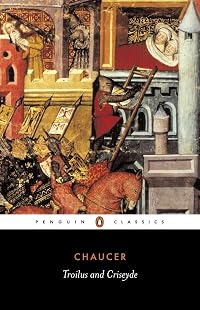

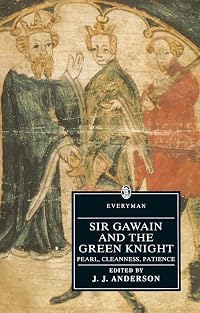


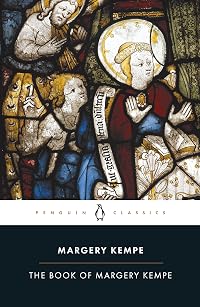

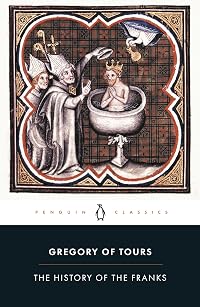








Member Recommendations
myshelves Some similar themes are covered, especially with regard to religious issues.
Member Reviews
After approximately a year of wading through Middle-English alliterative verse at an average rate of approximately one page per day, I have finally come to the end of The Vision of Piers Plowman. So was it worth it?
Yes! It is by some stretch my most ambitious undertaking in regard to reading Middle-English; I have not read two of the Canterbury Tales together and have only read about half of it (by number of lines - many fewer than half the Tales) and that's the limit of my Chaucer. I've never tackled Sir Gawain and the Green Knight in the original and although I have read most of Malory, it is prose and more recent and again, not read as one big lump. Piers Plowman is not merely longer, though - it is, despite Langland being show more contemporary with Chaucer, fundamentally more difficult because the dialect is not Chaucer's. The London dialect went on to become the dominant one in the development from Middle to Modern English and is therefore somewhat easier for the modern reader. The concentration required and necessary time spent reading glosses and notes was rewarded, however. (It is slow going when one can only tackle it before going to sleep - hence one year to do it justice.)
The Vision of Piers Plowman is a Christian allegory and a deeply serious, heart-felt as well as intellectual one. Langland uses the older Alliterative verse style rather than adopting the new-fangled rhyming, iambic schemes as Chaucer did. I am a fan of this approach to narrative verse as it adds colour and interest (makes the story poetic!) without the risk of the unvaried rhythm of iambic metre sending one to snooze-land prematurely. Alliterative verse forms have strict rules, just as iambic metres do and it takes considerable skill to compose in them.
The seriousness and evident profound feeling behind the poem stands in stark contrast to the Canterbury Tales (insofar as I've read them) even though there are some themes in common. No matter where one stands regarding the debate about whether Chaucer's "very parfit gentle knyght" is being satirised or not, it is clear that the Tales in general are full of satire and humour and the various types of clergy are presented as a corrupt, greedy, hypocritical lot. Chaucer seems not to have much anger behind his satire, though - the Tales seem something of a frivolous entertainment. When Langland tackles such folk as friers and pardoners they come in for a metaphorical roasting and it is plain that he expects most of them to experience a literal one after Judgement Day. The only other Middle English poem I've read (in Tolkien's translation) that competes for expressing deep feeling on the part of its author is Pearl - another dream-vision, about the author's grief at the loss of a young daughter. Piers Plowman is on an altogether bigger scale, though. In a series of dreams (and dreams within dreams, which can get tricky to keep track of at one page a day) not only is a Utopian society envisaged, but every major question of Christian theology is addressed as the spiritual progress of both Piers and the dreamer are chronicled right up to the final battle between good and evil forces within humanity...
The prologue starts things of with an exciting little story where rats, mice and a cat take the place of nobles, commoners and the King. Matters continue apace and rather wittily with the Marriage of Mede, which gets tangled up in legal battles and corrupt practice. Later Piers sets up his farm and barn, eventually to be the scene of the dramatic finale. Most of this is lively and the narrative helps drag one through the worst difficulties of the language. (One learns as one progresses - once you know that "ac" means "but" it isn't a problem at future encounters, for example.)
Piers wanders off on a pilgrimage at about the half-way point as he believes he needs to understand the Biblical message better. The proceeding third or so of the poem is easily the most dull and dry as it descends into a series of theological discussions usually expounded by various characters quoting liberal quantities of Latin at each other. These matters were evidently important to Langland (and to many intellectual Christians, I suspect) but the excitement of the initial quarter of the poem becomes a distant memory. Things pick up again with the appearance of the Actyf Man (I love that name) and steadily accelerate to an Apocalyptic conclusion worthy of a poem of such scale and ambition.
We are lucky to have as much Middle English literature as we do and this work is a fine example of it: read it if you are a Christian, or if your interest in poetry will withstand 362 pages requiring total focus. show less
Yes! It is by some stretch my most ambitious undertaking in regard to reading Middle-English; I have not read two of the Canterbury Tales together and have only read about half of it (by number of lines - many fewer than half the Tales) and that's the limit of my Chaucer. I've never tackled Sir Gawain and the Green Knight in the original and although I have read most of Malory, it is prose and more recent and again, not read as one big lump. Piers Plowman is not merely longer, though - it is, despite Langland being show more contemporary with Chaucer, fundamentally more difficult because the dialect is not Chaucer's. The London dialect went on to become the dominant one in the development from Middle to Modern English and is therefore somewhat easier for the modern reader. The concentration required and necessary time spent reading glosses and notes was rewarded, however. (It is slow going when one can only tackle it before going to sleep - hence one year to do it justice.)
The Vision of Piers Plowman is a Christian allegory and a deeply serious, heart-felt as well as intellectual one. Langland uses the older Alliterative verse style rather than adopting the new-fangled rhyming, iambic schemes as Chaucer did. I am a fan of this approach to narrative verse as it adds colour and interest (makes the story poetic!) without the risk of the unvaried rhythm of iambic metre sending one to snooze-land prematurely. Alliterative verse forms have strict rules, just as iambic metres do and it takes considerable skill to compose in them.
The seriousness and evident profound feeling behind the poem stands in stark contrast to the Canterbury Tales (insofar as I've read them) even though there are some themes in common. No matter where one stands regarding the debate about whether Chaucer's "very parfit gentle knyght" is being satirised or not, it is clear that the Tales in general are full of satire and humour and the various types of clergy are presented as a corrupt, greedy, hypocritical lot. Chaucer seems not to have much anger behind his satire, though - the Tales seem something of a frivolous entertainment. When Langland tackles such folk as friers and pardoners they come in for a metaphorical roasting and it is plain that he expects most of them to experience a literal one after Judgement Day. The only other Middle English poem I've read (in Tolkien's translation) that competes for expressing deep feeling on the part of its author is Pearl - another dream-vision, about the author's grief at the loss of a young daughter. Piers Plowman is on an altogether bigger scale, though. In a series of dreams (and dreams within dreams, which can get tricky to keep track of at one page a day) not only is a Utopian society envisaged, but every major question of Christian theology is addressed as the spiritual progress of both Piers and the dreamer are chronicled right up to the final battle between good and evil forces within humanity...
The prologue starts things of with an exciting little story where rats, mice and a cat take the place of nobles, commoners and the King. Matters continue apace and rather wittily with the Marriage of Mede, which gets tangled up in legal battles and corrupt practice. Later Piers sets up his farm and barn, eventually to be the scene of the dramatic finale. Most of this is lively and the narrative helps drag one through the worst difficulties of the language. (One learns as one progresses - once you know that "ac" means "but" it isn't a problem at future encounters, for example.)
Piers wanders off on a pilgrimage at about the half-way point as he believes he needs to understand the Biblical message better. The proceeding third or so of the poem is easily the most dull and dry as it descends into a series of theological discussions usually expounded by various characters quoting liberal quantities of Latin at each other. These matters were evidently important to Langland (and to many intellectual Christians, I suspect) but the excitement of the initial quarter of the poem becomes a distant memory. Things pick up again with the appearance of the Actyf Man (I love that name) and steadily accelerate to an Apocalyptic conclusion worthy of a poem of such scale and ambition.
We are lucky to have as much Middle English literature as we do and this work is a fine example of it: read it if you are a Christian, or if your interest in poetry will withstand 362 pages requiring total focus. show less
One of the great Christian poems about humanity. For Langland, of whom almost nothing is known outside this work, human relations are not isolated. Dealings between people are functions of the prior relationship with God. Every act, each thought, has eternal consequences. Intense. Fifteenth century lights -- ranging from rage to sardonic, lyrical, humorous and sublime. He has a clear sense of doom and glory, a mystical mind that is eminently practical in the face of survival.
This is a remnant of a whole system of allegorical thinking that has almost -- "virtually" -- disappeared.
Allegory is not just a writing device. The core allegore is that Man is in the image of God, Nature is the instrument of God, and existence is the divine show more expression of God. Langland explores experience in a universe full of meanings.
The poem is an inquiry into How can a Man win salvation? He carefully considers, interestingly, the details of various alternatives. Some Thomist influences. But he really looks at reality. For example, he seeks to interpret vivid scenes of strife, debauchery, cozening, glorification, bragging, idleness, and destitution.
Social historians have found gold here. He will break off in the middle of a theology point to describe some scene of pity for a cottager, or to damn the monks' treachery, lechery, sophistry, lying and grabbing!
Compared with the intense devotion of Langland, contemporary "believers" in the "entertainment" tax havens calling themselves "churches" today, are simply not credible. show less
This is a remnant of a whole system of allegorical thinking that has almost -- "virtually" -- disappeared.
Allegory is not just a writing device. The core allegore is that Man is in the image of God, Nature is the instrument of God, and existence is the divine show more expression of God. Langland explores experience in a universe full of meanings.
The poem is an inquiry into How can a Man win salvation? He carefully considers, interestingly, the details of various alternatives. Some Thomist influences. But he really looks at reality. For example, he seeks to interpret vivid scenes of strife, debauchery, cozening, glorification, bragging, idleness, and destitution.
Social historians have found gold here. He will break off in the middle of a theology point to describe some scene of pity for a cottager, or to damn the monks' treachery, lechery, sophistry, lying and grabbing!
Compared with the intense devotion of Langland, contemporary "believers" in the "entertainment" tax havens calling themselves "churches" today, are simply not credible. show less
This is one of the last major poems (along with the work of the Gawain-poet) to use the old alliterative verse forms inherited from the Germanic past for a major poem. Despite using a shade more freedom than, say, the author of Beowulf did, this is firmly within that tradition, not a nostalgic or antiquarian harking-back: the old poetic tradition clearly had survived organically in the North, and this is its last flowering before English poetry becomes defined by the French-influenced verse of Chaucer, Gower, and their successors.
The content, however, is sui generis: a tapestry of devotional and homiletic elements tied together by a depiction of general lived experience.
It represents the general weaknesses of mediaeval architectonics: show more "I have made a heap of all that I could find", says Nennius, and this is as much a heap as any other kind of structure. The dream/vision model helps to justify the transitions, however, and it has thorough thematic unity.
It may also be the most liturgical of all major poems: the Latin verses which appear throughout would have been familiar to the devout reader, as they are not so much biblical (most of them are biblical, but not all: the Vexilla Regis, for example, gets a look in in the Harrowing of Hell passage) as drawn from the propers, both major and minor, of the missal.
There are, accordingly, threshold issues for the typical modern reader, but this is nevertheless well worth taking the effort to read.
(Review is of Skeat's edition of the B-text.) show less
The content, however, is sui generis: a tapestry of devotional and homiletic elements tied together by a depiction of general lived experience.
It represents the general weaknesses of mediaeval architectonics: show more "I have made a heap of all that I could find", says Nennius, and this is as much a heap as any other kind of structure. The dream/vision model helps to justify the transitions, however, and it has thorough thematic unity.
It may also be the most liturgical of all major poems: the Latin verses which appear throughout would have been familiar to the devout reader, as they are not so much biblical (most of them are biblical, but not all: the Vexilla Regis, for example, gets a look in in the Harrowing of Hell passage) as drawn from the propers, both major and minor, of the missal.
There are, accordingly, threshold issues for the typical modern reader, but this is nevertheless well worth taking the effort to read.
(Review is of Skeat's edition of the B-text.) show less
I read the version published in Everyman and edited by A. V. C. Schmidt. This is the B text in Middle English and I found it a struggle to read. Having just read the Riverside Chaucer I was fairly optimistic I would cope with this, but Langland's English is different again and it has taken me about six weeks to read it through.
At the start of the poem Will is found wandering around the countryside and becoming tired he lays down to sleep and has a dream vision. This happens eight times during the course of the poem and so it does feel that the it stops and starts, sometimes covering ground previously covered. If I had to summarise the poem I would say that these visions demonstrate to Will what it takes to be a good Christian. The show more visions are in effect sermons or homily's in an allegorical framework, which at times spring into life and make it worthwhile to struggle on with the text. An example is the description of Gluttony:
His guttes gonne to gothelen as two gredy sowes;
He pissed a potel in a Paternoster-while
And blew his rounde ruwet at his ruggebones ende
That all that herde that horn helde hir nose after....
This example shows the alliteration that runs through the whole poem and makes it fun to read aloud
The poem has been the subject of much literary criticism and has been described as:
"An attack on church and state, a poem with unity"
or
"Has a tendency to rambling and vagueness sometimes degenerating into incoherence."
For me the answer lies somewhere between these two viewpoints. There are certainly vigorous attacks on the clergy especially the mendicant friars and on rich people in general, with an exhortation for the common man to follow the scriptures. This led me to wonder what audience had Langland in mind when he wrote the poem. It would have been far out of the reach of even the educated common man.
The text contains many Latin phrases, which are translated in footnotes in this version. The glosses beside the text are sometimes essential for an understanding but sometimes they get in the way and I found it was better to ignore them and just plough through reading aloud. This is not an essential read, but then I am glad I took the time to battle with it, perhaps I would have been better to have read it in translation, but then I would have missed out on the poetry of the original show less
At the start of the poem Will is found wandering around the countryside and becoming tired he lays down to sleep and has a dream vision. This happens eight times during the course of the poem and so it does feel that the it stops and starts, sometimes covering ground previously covered. If I had to summarise the poem I would say that these visions demonstrate to Will what it takes to be a good Christian. The show more visions are in effect sermons or homily's in an allegorical framework, which at times spring into life and make it worthwhile to struggle on with the text. An example is the description of Gluttony:
His guttes gonne to gothelen as two gredy sowes;
He pissed a potel in a Paternoster-while
And blew his rounde ruwet at his ruggebones ende
That all that herde that horn helde hir nose after....
This example shows the alliteration that runs through the whole poem and makes it fun to read aloud
The poem has been the subject of much literary criticism and has been described as:
"An attack on church and state, a poem with unity"
or
"Has a tendency to rambling and vagueness sometimes degenerating into incoherence."
For me the answer lies somewhere between these two viewpoints. There are certainly vigorous attacks on the clergy especially the mendicant friars and on rich people in general, with an exhortation for the common man to follow the scriptures. This led me to wonder what audience had Langland in mind when he wrote the poem. It would have been far out of the reach of even the educated common man.
The text contains many Latin phrases, which are translated in footnotes in this version. The glosses beside the text are sometimes essential for an understanding but sometimes they get in the way and I found it was better to ignore them and just plough through reading aloud. This is not an essential read, but then I am glad I took the time to battle with it, perhaps I would have been better to have read it in translation, but then I would have missed out on the poetry of the original show less
Got through a little under half of this. The allegories are an interesting reflection of religious, political and social issues of the time, but I felt no urge to continue with it. The author's background is a stark contrast from that of his contemporary, Chaucer, and very little is known about William Langland, who exists only through the clues in the work itself - there is no other contemporary evidence of his existence.
I read this for its historical importance. Langland's poem is a quest: How to lead a good Catholic life in Medieval England. It was a little difficult to read, but if done shortly after you read Chaucer, it is far easier.
A religious poem from the Middle Ages that deals with problems of the times and the Christian attitude towards God. The author contemplates life and death and sin and the role the church plays in each. He enters different settings through dreams as he explores different aspects of Christianity to solve his dilemma.
Members
- Recently Added By
Lists

Set in the Middle Ages
42 works; 9 members

100 Books to Read in a Lifetime (That Are Older Than 200 Years)
415 works; 176 members

University literature
145 works; 5 members

GreatBooks Worldview Academy Lists
133 works; 4 members

Favourite Medieval Books
49 works; 17 members

Books You Read For University
184 works; 3 members

Books Read in 2006
424 works; 8 members

Read in 2006
140 works; 1 member

Books Read in 2025
4,128 works; 98 members

Lectuurlijst
63 works; 1 member
Talk Discussions
Past Discussions
Folio Archives 382: Vision of Piers the Plowman, The by William Langland - 2014 in Folio Society Devotees (July 2024)
Piers the Plowman in Folio Society Devotees (February 2023)
Piers Plowman in Combiners! (May 2013)
Author Information

39+ Works 2,937 Members
William Langland is the name generally attributed to the author of Piers Plowman, a classic Middle English poem. Written in an unrhymed, alliterative style that was traditional at the time, the poem is composed of a series of dream visions in which the dreamer grapples with issues such as the nature of Christ's love and the relationship between show more people and God. Piers Plowman is considered to be one of the greatest religious poems in the English language, and Langland ranks among the best of the Middle English authors, along with Geoffrey Chaucer and the anonymous author of Sir Gawain and the Green Knight. Langland is believed to have lived from about 1331 to 1400. Based on the poem, which is thought to be partly autobiographical, Langland probably spent his early years in the Malvern and later lived in London. Some scholars believe that Langland was a poor cleric in one of the minor religious orders; others suggest that he was a monk. Whichever is true, it is evident from his work that he was well-educated, a gifted poet, and very knowledgeable about both the political and the ecclesiastical controversies of his time. It is not certain whether any more of Langland's work has survived. Piers the Plowman's Creed and Richard Redeless, two shorter poems that were previously attributed to Langland, are now believed to have been written by others. (Bowker Author Biography) show less
7 Works 1,955 Members
Some Editions
Series
Belongs to Publisher Series
Work Relationships
Is contained in
Inspired
Has as a study
Has as a commentary on the text
Common Knowledge
- Canonical title
- Piers Plowman
- Original title
- Piers Plowman
- Alternate titles
- Piers the Ploughman; The Vision of Piers the Plowman
- Original publication date
- 1367 -70 (A ms.) (A ms.); 1400s; 1377 - 79 (B ms.) (B ms.); 1380s (C ms.) (C ms.); 1959 (English ∙ Goodridge) (English ∙ Goodridge); 1967 (Salter/Pearsell edition) (Salter/Pearsell edition)
- People/Characters
- Will; Dowel; Dobet; Dobest; Piers Plowman
- Important places
- Malvern Hills, Worcestershire, England, UK; Worcestershire, England, UK; Malvern Hills, England, UK
- First words
- In a summer season when the sun was mild
I clad myself in clothes as I'd become a sheep;
In the habit of a hermit unholy of works
Walked wide in this world, watching for wonders. (Donaldson Translation)
(C-Text)
In a somur sesoun whan softe was the sonne
Y shope me into shroudes as y a shep were;
In abite as an heremite, vnholy of werkes,
Wente forth in the world wondres to here,
And say many sellies and selko... (show all)uthe thynges.
(C-Text, Pearsall/Salter edition)
In a somur sesoun, whan softe was the sonne
I shope me into shroudes, as I a shep were,
In abite as an heremite, unholy of werkes,
Wente forth in the world wondres to here,
And... (show all) saw many selles and selcouthe thynges. - Last words
- (Click to show. Warning: May contain spoilers.)And Conscious cried for Graced until I became wakeful. (Donaldson Translation)
(Click to show. Warning: May contain spoilers.)(C-Text)
And sethe he gradde aftur Grace tyl y gan awake. - Publisher's editor
- Rieu, E. V. (Penguin Books); Radice, Betty (Penguin Books)
- Disambiguation notice
- This work includes both Middle English texts and modern English translations of the B-text--the most widely read and translated; also editions of an undetermined version.
The A-text, the C- text, and the Norton Critica... (show all)l Edition are separate works.
Classifications
Statistics
- Members
- 1,947
- Popularity
- 10,936
- Reviews
- 10
- Rating
- (3.60)
- Languages
- 6 — English, English (Middle), French, German, Norwegian (Bokmål), Polish
- Media
- Paper, Audiobook, Ebook
- ISBNs
- 44
- ASINs
- 63
