On This Page
Description
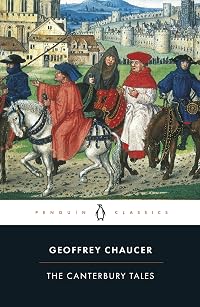
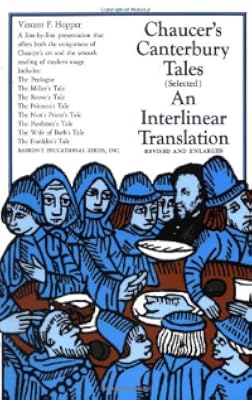
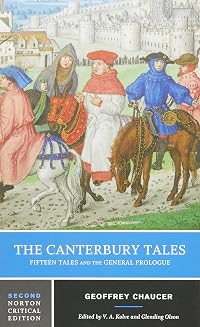
Chaucer's finest work begins at the Tabard Inn, where thirty travelers of widely varying classes and occupations are gathering to make the annual pilgrimage to Becket's shrine at Canterbury. It is agreed that each traveler will tell four tales to help pass the time during their long journey, and that the host of the inn will reward the best storyteller with a free supper upon their return. Thus we hear, translated into modern English, the knight's tale, the merchant's tale, the miller's show more tale, the wife of Bath's tale, twenty-some tales in all. Some are bawdy, some spiritual, some romantic, some mysterious, some chivalrous. Between the stories, the travelers converse, joke, and argue, revealing much of their individual outlooks upon life as well as what life was like in late-fourteenth-century England. show lessTags
Recommendations
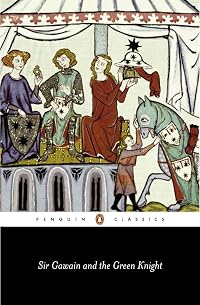
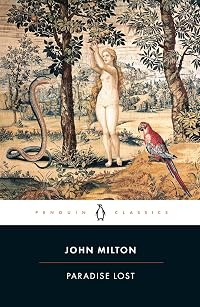

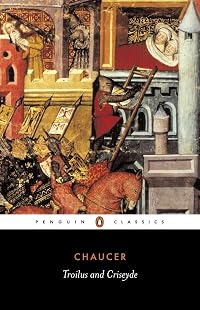
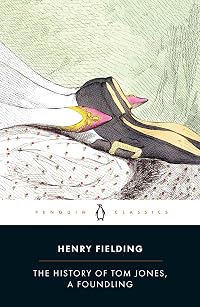


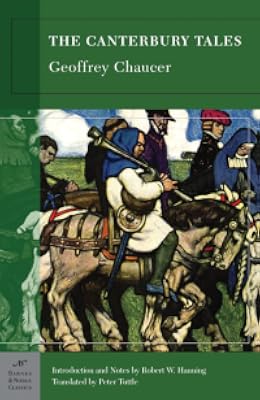
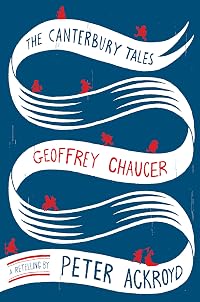
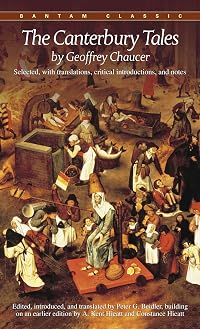
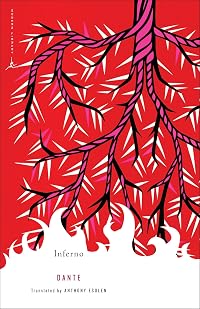








Member Recommendations

myshelves Some similar themes are covered, especially with regard to religious issues.
50
myshelves The Mercy Seller, a novel about the religious ferment in the early 15th century, features a Pardoner who is not happy about the portrayal of the Pardoner in The Canterbury Tales.
30



JenniferRobb Both contain stories of travelers who have stopped to "rest" in their journey.
Cecrow Nonfiction study of Chaucer's period, with several references to his Tales.
11
Member Reviews
As I was going to Canterbury
I passed two men, called Tom and Jerry.
Each of these men had seven cats,
Each of the cats wore seven hats.
Upon each hat were two bow ties,
On each bow tie there were no flies.
Flies, ties, hats, cats, Tom, and Jerry,
How many were going to Canterbury?
That's right, the answer is thirty-one (thirty-two once we pass Boughton-under-Blean). The prologue to The Canterbury Tales is ostensibly a dramatis personæ, introducing twenty-nine pilgrims plus their host and a satirical version of Chaucer himself. Together they are the tellers of the eponymous tales. Sitting here six hundred years later, though, the prologue is less of a cast list and more of a fascinating cross section of fourteenth century England. From the show more noble Knight down to the lowly cook, we get to see English history not through its Kings or its wars or its treaties, but through its people and through the stories they choose to tell. And the result is truly enlightening.
The tales themselves are of course the meat and two veg of this salacious sandwich, but Chaucer doesn't let us forget the framework that these tales sit within: that of a bunch of people of different classes and personalities swapping stories to pass the time on a long journey. Several of the tales are interrupted by the other travellers because they aren't appreciating them, and some of the characters tell stories that are clearly intended to mock one of their co-travellers. Such as the Reeve, an erstwhile carpenter, who deliberately pillories a miller in his tale as revenge for the Miller's story of a carpenter who is roundly abased and cuckolded by a student. The Friar and the Summoner also attack one another's professions in their respective stories, the quarrel here beginning when the Friar interrupts the Wife of Bath's prologue that the Summoner had been enthralled by.
Alas, then, that I was not overly fond of many of the stories. The recurring theme of fidelity and the roles of husbands and wives in matrimony gets repetitive rather quickly, and some of the more sermonic stories were excruciatingly preachy. There are the famously bawdy ones, like the Miller's and the Reeve's, that amused my inner teenage-boy, but I'm nevertheless glad that these ones were few and far between. And then there are tales like the Nun's Priest's which is packed with cunning rhetorical devices that would've vastly amused Chaucer's learned contemporaries but that go straight over modern reader's heads, leaving just an amusing multi-moralled parable. My edition's translator, Nevill Coghill, compares it to the different delights garnered from Alexander Pope's The Rape of the Lock by a reader familiar with the Aeneid and a reader unfamiliar with it. He then adds, tongue delightfully in cheek, that "The penalties of barbarism are heavy."
That is not to say that all the tales failed to amuse me. The Franklin's tale certainly touched me in my happy places. It's a classical comedy but the happy ending comes not through divine intervention or some other deus ex machina but because all the characters therein are, for once, simply good people. The Canon's Yeoman, the thirty second pilgrim and a late arrival to the mix, also has a natty tale to relate on the shortcomings of alchemy. His exposé on the trade is fun and surprisingly timeless: replace his crooked alchemist with a modern homeopath or psychic medium and you realise with horror that we've really not come so far in six hundred years.
So as a collection of short stories The Canterbury Tales is a mixed bag. But as an insight into the past the work is wonderful. And if the past is indeed a foreign country as L.P. Hartley claimed, then where Chaucer's work really excels is in giving us an insight into the inhabitants of this other land. And wouldn't you know it, like all foreigners, it turns out they're not so different from us. show less
I passed two men, called Tom and Jerry.
Each of these men had seven cats,
Each of the cats wore seven hats.
Upon each hat were two bow ties,
On each bow tie there were no flies.
Flies, ties, hats, cats, Tom, and Jerry,
How many were going to Canterbury?
That's right, the answer is thirty-one (thirty-two once we pass Boughton-under-Blean). The prologue to The Canterbury Tales is ostensibly a dramatis personæ, introducing twenty-nine pilgrims plus their host and a satirical version of Chaucer himself. Together they are the tellers of the eponymous tales. Sitting here six hundred years later, though, the prologue is less of a cast list and more of a fascinating cross section of fourteenth century England. From the show more noble Knight down to the lowly cook, we get to see English history not through its Kings or its wars or its treaties, but through its people and through the stories they choose to tell. And the result is truly enlightening.
The tales themselves are of course the meat and two veg of this salacious sandwich, but Chaucer doesn't let us forget the framework that these tales sit within: that of a bunch of people of different classes and personalities swapping stories to pass the time on a long journey. Several of the tales are interrupted by the other travellers because they aren't appreciating them, and some of the characters tell stories that are clearly intended to mock one of their co-travellers. Such as the Reeve, an erstwhile carpenter, who deliberately pillories a miller in his tale as revenge for the Miller's story of a carpenter who is roundly abased and cuckolded by a student. The Friar and the Summoner also attack one another's professions in their respective stories, the quarrel here beginning when the Friar interrupts the Wife of Bath's prologue that the Summoner had been enthralled by.
Alas, then, that I was not overly fond of many of the stories. The recurring theme of fidelity and the roles of husbands and wives in matrimony gets repetitive rather quickly, and some of the more sermonic stories were excruciatingly preachy. There are the famously bawdy ones, like the Miller's and the Reeve's, that amused my inner teenage-boy, but I'm nevertheless glad that these ones were few and far between. And then there are tales like the Nun's Priest's which is packed with cunning rhetorical devices that would've vastly amused Chaucer's learned contemporaries but that go straight over modern reader's heads, leaving just an amusing multi-moralled parable. My edition's translator, Nevill Coghill, compares it to the different delights garnered from Alexander Pope's The Rape of the Lock by a reader familiar with the Aeneid and a reader unfamiliar with it. He then adds, tongue delightfully in cheek, that "The penalties of barbarism are heavy."
That is not to say that all the tales failed to amuse me. The Franklin's tale certainly touched me in my happy places. It's a classical comedy but the happy ending comes not through divine intervention or some other deus ex machina but because all the characters therein are, for once, simply good people. The Canon's Yeoman, the thirty second pilgrim and a late arrival to the mix, also has a natty tale to relate on the shortcomings of alchemy. His exposé on the trade is fun and surprisingly timeless: replace his crooked alchemist with a modern homeopath or psychic medium and you realise with horror that we've really not come so far in six hundred years.
So as a collection of short stories The Canterbury Tales is a mixed bag. But as an insight into the past the work is wonderful. And if the past is indeed a foreign country as L.P. Hartley claimed, then where Chaucer's work really excels is in giving us an insight into the inhabitants of this other land. And wouldn't you know it, like all foreigners, it turns out they're not so different from us. show less
24. The Canterbury Tales by Geoffrey Chaucer
edition: Broadview Editions, Second Edition, edited by Robert Boenig & Andrew Taylor (2012)
OPD: 1400
format: 503-page large paperback
acquired: April read: Dec 30, 2023 – Apr 27, 2024, time reading: 62:07, 7.4 mpp
rating: 5
genre/style: Middle English Poetry theme: Chaucer
locations: on the road from London to Canterbury
about the author: Chaucer (~1342 – October 25, 1400) was an English poet and civil servant.
Chaucer is tricky because he’s hard to read and his tales vary so much, they are hard to summarize or classify. There is a Boccaccio element to them, but it’s a very different experience. Like Boccaccio, one thing that stands out is Chaucer’s naughty stories – sex and farts and show more trickery, money and wealth often playing a central role. The plague also has a role. One of Chaucer's tales is about three youths who hunt for Death because he has killed so many, and tragically find what they’re looking for. But what makes Chaucer most stand out from Boccaccio are the tellers of the tales. In Boccaccio, the ten youths are all of a class and many of them blend together, hard to differentiate. Chaucer’s tale is a social mixture – good and bad, wealthy and common. They are each distinct, wonderfully distinct, so much so that they, the tellers, stand out way more in memory than the tales themselves. These characters come out in the story prologues and there is simply more creativity, more social commentary, more insight into this medieval world than anything the stories themselves can accomplish, no matter how good the stories are. The Merchant’s Tale, my favorite, includes many references and wonderful debate between Hades and Persephone, a battle of the sexes. But it doesn’t touch on the Wife of Bath’s 1000-line prologue on being a wife to five men and all the experiences and judgments and justifications within, it’s not even close. She’s the best, but the Miller comes in early, drunkenly inserting this tale of sex and fart jokes, and bringing the whole level of content down. The Miller says, "I wol now quite the Knightes tale!" The knight has just told a more proper Boccaccio-inspired tale. By "quiting", the Miller means he his giving him some payback, getting back at him. (His tale has thematic consistency, but with common characters, farts and sex.) And the Cook’s tale is so awfully improper that it hasn’t been preserved, or maybe Chaucer only wrote 50 lines. Later, the Cook will throw up and fall off his horse. The Canon’s Yeoman exposes his own canon’s alchemy and trickery, getting fired on the spot before he tells his tale. This is all quite terrific stuff in and of itself, a rowdy uncontrolled mixture of societal levels, and mostly humorous confrontations (notably in a post-plague era of social mobility).
The other thing Chaucer does that Boccaccio doesn’t do in the Decameron, is write in verse. This is special all by itself. If you have read excerpts of Chaucer, there's a fair chance that like me you have been bewildered by it. It’s a weird language, oddly drawn out, then oddly compressed, obscuring the meaning, jamming in a weird accent. It doesn't make for great quotes or easy visits. But if you get deep into it, focus hard on it, something happens. It becomes magical, inimical, and lush in sound and freedom, the random inconsistent spelling as beautiful as the random inconsistent and sometimes heavily obscured phrasing. It also becomes recognizable. The more you read it, the more sense it makes. Although I was never able to scan it. Show me a page of Chaucer, and I’m immediately lost in indecipherable letters. I have to begin to read it and find the flow before it comes to life.
I find it interesting, but not inappropriate, that when Chaucer is discussed, it’s almost always his opening lines that are quoted - Whan that Aprill with hise shoures soote/The droghte of March had perced to the roote/And bathed every veyne in swich liquor/Of which vertu engendered is the flour What’s interesting is that Chaucer really doesn’t write that beautifully anywhere else. His language is generally much tamer and less trying, the rhythm more casual.
Last year I read [Troilus and Criseyde] and was enraptured in the language. There is no question the language there is better than here. And is drawn out, as he stays with long monologues that go pages and pages, the reader lost in the rhythms. This here is just not quite like that. Yes, he gets carried away a lot. But it’s always a little jerky and bumpy. There are monologues, but these are story telling monologues, with quick-ish plots. While I liked staying in the Merchant’s Tale, the writing clearly elevated and interesting, it was not the same. But T&C is both made and limited by its singular story. The Canterbury Tales expands on its cacophony of voices. The stories for me actually fade. But the prologues leave such lush impressions, they are somehow so real, and charming and Discworld-ish, and uncontained. It’s a much more powerful thing in my head.
As many know, I read this every morning beginning with April’s shoures soote on January 1. And, with the exception of the prose tales, the Tale of Melibee and The Pardoner’s Tale, it was always the best part of my day. The same could be said for T&C last year. I’ll miss being lost in this. A really special experience, and special gift to English speakers and the language's history.
2024
https://www.librarything.com/topic/360386#8521275 show less
edition: Broadview Editions, Second Edition, edited by Robert Boenig & Andrew Taylor (2012)
OPD: 1400
format: 503-page large paperback
acquired: April read: Dec 30, 2023 – Apr 27, 2024, time reading: 62:07, 7.4 mpp
rating: 5
genre/style: Middle English Poetry theme: Chaucer
locations: on the road from London to Canterbury
about the author: Chaucer (~1342 – October 25, 1400) was an English poet and civil servant.
Chaucer is tricky because he’s hard to read and his tales vary so much, they are hard to summarize or classify. There is a Boccaccio element to them, but it’s a very different experience. Like Boccaccio, one thing that stands out is Chaucer’s naughty stories – sex and farts and show more trickery, money and wealth often playing a central role. The plague also has a role. One of Chaucer's tales is about three youths who hunt for Death because he has killed so many, and tragically find what they’re looking for. But what makes Chaucer most stand out from Boccaccio are the tellers of the tales. In Boccaccio, the ten youths are all of a class and many of them blend together, hard to differentiate. Chaucer’s tale is a social mixture – good and bad, wealthy and common. They are each distinct, wonderfully distinct, so much so that they, the tellers, stand out way more in memory than the tales themselves. These characters come out in the story prologues and there is simply more creativity, more social commentary, more insight into this medieval world than anything the stories themselves can accomplish, no matter how good the stories are. The Merchant’s Tale, my favorite, includes many references and wonderful debate between Hades and Persephone, a battle of the sexes. But it doesn’t touch on the Wife of Bath’s 1000-line prologue on being a wife to five men and all the experiences and judgments and justifications within, it’s not even close. She’s the best, but the Miller comes in early, drunkenly inserting this tale of sex and fart jokes, and bringing the whole level of content down. The Miller says, "I wol now quite the Knightes tale!" The knight has just told a more proper Boccaccio-inspired tale. By "quiting", the Miller means he his giving him some payback, getting back at him. (His tale has thematic consistency, but with common characters, farts and sex.) And the Cook’s tale is so awfully improper that it hasn’t been preserved, or maybe Chaucer only wrote 50 lines. Later, the Cook will throw up and fall off his horse. The Canon’s Yeoman exposes his own canon’s alchemy and trickery, getting fired on the spot before he tells his tale. This is all quite terrific stuff in and of itself, a rowdy uncontrolled mixture of societal levels, and mostly humorous confrontations (notably in a post-plague era of social mobility).
The other thing Chaucer does that Boccaccio doesn’t do in the Decameron, is write in verse. This is special all by itself. If you have read excerpts of Chaucer, there's a fair chance that like me you have been bewildered by it. It’s a weird language, oddly drawn out, then oddly compressed, obscuring the meaning, jamming in a weird accent. It doesn't make for great quotes or easy visits. But if you get deep into it, focus hard on it, something happens. It becomes magical, inimical, and lush in sound and freedom, the random inconsistent spelling as beautiful as the random inconsistent and sometimes heavily obscured phrasing. It also becomes recognizable. The more you read it, the more sense it makes. Although I was never able to scan it. Show me a page of Chaucer, and I’m immediately lost in indecipherable letters. I have to begin to read it and find the flow before it comes to life.
I find it interesting, but not inappropriate, that when Chaucer is discussed, it’s almost always his opening lines that are quoted - Whan that Aprill with hise shoures soote/The droghte of March had perced to the roote/And bathed every veyne in swich liquor/Of which vertu engendered is the flour What’s interesting is that Chaucer really doesn’t write that beautifully anywhere else. His language is generally much tamer and less trying, the rhythm more casual.
Last year I read [Troilus and Criseyde] and was enraptured in the language. There is no question the language there is better than here. And is drawn out, as he stays with long monologues that go pages and pages, the reader lost in the rhythms. This here is just not quite like that. Yes, he gets carried away a lot. But it’s always a little jerky and bumpy. There are monologues, but these are story telling monologues, with quick-ish plots. While I liked staying in the Merchant’s Tale, the writing clearly elevated and interesting, it was not the same. But T&C is both made and limited by its singular story. The Canterbury Tales expands on its cacophony of voices. The stories for me actually fade. But the prologues leave such lush impressions, they are somehow so real, and charming and Discworld-ish, and uncontained. It’s a much more powerful thing in my head.
As many know, I read this every morning beginning with April’s shoures soote on January 1. And, with the exception of the prose tales, the Tale of Melibee and The Pardoner’s Tale, it was always the best part of my day. The same could be said for T&C last year. I’ll miss being lost in this. A really special experience, and special gift to English speakers and the language's history.
2024
https://www.librarything.com/topic/360386#8521275 show less
As you can probably guess from my blithering, I really liked this one. As you probably also guessed, this is actually my second time reading this, and no, I’m not reviewing my rereads as a rule. However, this one took me a month to get through (Middle English and all that) and, as I’ve said, I really liked it, so I figure it deserves some thoughts. So:
Chaucer is a really good writer, y’all. He somehow manages to encapsulate characters and relationships in small amounts of space; tell stories that are still interesting, relevant, and relatable 650-odd years later; make you laugh and cry and worry while sticking to some pretty rigid poetic forms; and run the gamut of medieval literary genres in, like, 400 pages. Admittedly, his show more frame story is more of a sketch and some of the tales get into territory (usually misogynistic, in one instance racial) that makes me-the-21st-century-reader uncomfortable, but I also don’t think I should fail him for not living up to standards that didn’t exist when he was writing.
The Tales were pretty eye-opening for me too, since I was a teen the last time I read them and I’m a lot more widely read now. Like, that trope goes back that far? He was writing that genre? Had read that book? I also think a lot of the satire and sex went over my head the first time, but that has, thankfully, now been corrected.
All that said, unless you’re a masochistic nerd like me, read it in Modern English. You’ll get all the best bits, even if it loses something in translation.
10/10 show less
Chaucer is a really good writer, y’all. He somehow manages to encapsulate characters and relationships in small amounts of space; tell stories that are still interesting, relevant, and relatable 650-odd years later; make you laugh and cry and worry while sticking to some pretty rigid poetic forms; and run the gamut of medieval literary genres in, like, 400 pages. Admittedly, his show more frame story is more of a sketch and some of the tales get into territory (usually misogynistic, in one instance racial) that makes me-the-21st-century-reader uncomfortable, but I also don’t think I should fail him for not living up to standards that didn’t exist when he was writing.
The Tales were pretty eye-opening for me too, since I was a teen the last time I read them and I’m a lot more widely read now. Like, that trope goes back that far? He was writing that genre? Had read that book? I also think a lot of the satire and sex went over my head the first time, but that has, thankfully, now been corrected.
All that said, unless you’re a masochistic nerd like me, read it in Modern English. You’ll get all the best bits, even if it loses something in translation.
10/10 show less
The Canterbury Tales is by a wide margin the best-known work of English literature from the medieval period. It's not only enshrined in the school History syllabus between Crop Rotation, Monasticism and Castles, but it's a book that many modern readers still seem to turn to for pleasure, despite the obvious difficulties caused by the linguistic and cultural distance of six centuries. I've often dipped into it pleasurably before, and I've had a copy sitting on my shelves for many years, but this is the first time I've tried a cover-to-cover read.
I found the language easier to deal with than I expected - Chaucer's version of southern English is a lot more straightforward for the modern reader than the nearly contemporary Sir Gawain and show more the Green Knight. Anyone who knows a bit of French or Latin and a bit of German or Dutch ought to be able to read it fairly easily with the help of the marginal glosses. Especially with 600 pages to practice on, you soon get the hang of what it means and a rough idea of how it sounds (I listened to an audio recording of the General Prologue for help with this). In fact, the pronunciation of Middle English is usually more logical than that of Modern English. If what's written is "knight", it makes far more sense to say cnicht (or kerniggut if you're John Cleese) than nite...
Like most people, I had mixed reactions to the Tales. The bawdy ones were fun - it's always interesting to see that people enjoyed fart-jokes as much (or perhaps even more) in those days as they do now. The chivalric-romance style of several other Tales was colourful but sometimes a bit slow for modern tastes (some of the descriptions in the "Knight's Tale" seem to go on for ever), but it was revealing to see that Chaucer was well aware of that and was prepared to make fun of it in the mock-heroic "Nun's Priest's Tale" and the deliberately boring and directionless "Tale of Sir Thopas", which is supposedly being told by the poet's narrator-persona, "Chaucer", until he's cut off by the Host.
There are several "high-minded" religious Tales that look as though they are meant to be taken straight - the blatantly antisemitic - "Prioress's Tale" is perhaps best ignored; the "Physician's Tale", a gruesome story about an honour-killing, is not much better, except that there at least the narrator seems to distance himself a little from the idea that it's better to kill your (innocent) daughter than risk shame attaching to her; the "Second Nun's Tale" (the gloriously over-the-top martyrdom of St Cecilia) is almost readable, but even I was forced into skimming by the "Parson's Tale", a lengthy and very dry sermon on the subject of "penance" (it does get a bit livelier when it's discussing the Seven Deadly Sins...).
Probably the most interesting aspect of the Tales overall is what Chaucer has to say about the relations between men and women. Several Tales deal with this topic explicitly in various different ways, and the core of the argument is obviously in the "Wife of Bath's Prologue and Tale" - she argues powerfully and directly that the world will not collapse into disorder if women are allowed to decide the course of their own lives. The "Franklin's Tale" also takes up the idea of an equitable marriage in which neither partner owes obedience to the other and presents it in a positive light. It's tempting to read something of the Chaucers' domestic situation into this, but of course we don't have the slightest bit of evidence for anything other than that Philippa Chaucer had a career of her own.
We read this for its scope, vitality and colour, and for the liveliness of Chaucer's verse, which manages to jump the centuries without any problem. It's striking how we're so used to groaning and expecting dullness or difficulty when we see a passage of verse in a modern prose novel - here it's precisely the opposite; we (rightly) groan when we see the prose text of the "Parson's Tale" and the "Tale of Melibee" coming up, and are relieved when we get back to verse again...
One - irrelevant - thought that struck me for the first time on this reading was to wonder how the practicalities of storytelling on horseback work out. Even on foot, it's difficult to talk to more than two or three people at once whilst walking along, and when riding you can't get as close together as you can on foot, plus you've got the noise of the horses. So I don't know how you would go about telling a story to a group of 29 riders in a way that they can all hear it. If they were riding two abreast, they would be spread out over something like 50m of road, and it's unlikely that the A2 was more than two lanes wide in the 14th century... show less
I found the language easier to deal with than I expected - Chaucer's version of southern English is a lot more straightforward for the modern reader than the nearly contemporary Sir Gawain and show more the Green Knight. Anyone who knows a bit of French or Latin and a bit of German or Dutch ought to be able to read it fairly easily with the help of the marginal glosses. Especially with 600 pages to practice on, you soon get the hang of what it means and a rough idea of how it sounds (I listened to an audio recording of the General Prologue for help with this). In fact, the pronunciation of Middle English is usually more logical than that of Modern English. If what's written is "knight", it makes far more sense to say cnicht (or kerniggut if you're John Cleese) than nite...
Like most people, I had mixed reactions to the Tales. The bawdy ones were fun - it's always interesting to see that people enjoyed fart-jokes as much (or perhaps even more) in those days as they do now. The chivalric-romance style of several other Tales was colourful but sometimes a bit slow for modern tastes (some of the descriptions in the "Knight's Tale" seem to go on for ever), but it was revealing to see that Chaucer was well aware of that and was prepared to make fun of it in the mock-heroic "Nun's Priest's Tale" and the deliberately boring and directionless "Tale of Sir Thopas", which is supposedly being told by the poet's narrator-persona, "Chaucer", until he's cut off by the Host.
There are several "high-minded" religious Tales that look as though they are meant to be taken straight - the blatantly antisemitic - "Prioress's Tale" is perhaps best ignored; the "Physician's Tale", a gruesome story about an honour-killing, is not much better, except that there at least the narrator seems to distance himself a little from the idea that it's better to kill your (innocent) daughter than risk shame attaching to her; the "Second Nun's Tale" (the gloriously over-the-top martyrdom of St Cecilia) is almost readable, but even I was forced into skimming by the "Parson's Tale", a lengthy and very dry sermon on the subject of "penance" (it does get a bit livelier when it's discussing the Seven Deadly Sins...).
Probably the most interesting aspect of the Tales overall is what Chaucer has to say about the relations between men and women. Several Tales deal with this topic explicitly in various different ways, and the core of the argument is obviously in the "Wife of Bath's Prologue and Tale" - she argues powerfully and directly that the world will not collapse into disorder if women are allowed to decide the course of their own lives. The "Franklin's Tale" also takes up the idea of an equitable marriage in which neither partner owes obedience to the other and presents it in a positive light. It's tempting to read something of the Chaucers' domestic situation into this, but of course we don't have the slightest bit of evidence for anything other than that Philippa Chaucer had a career of her own.
We read this for its scope, vitality and colour, and for the liveliness of Chaucer's verse, which manages to jump the centuries without any problem. It's striking how we're so used to groaning and expecting dullness or difficulty when we see a passage of verse in a modern prose novel - here it's precisely the opposite; we (rightly) groan when we see the prose text of the "Parson's Tale" and the "Tale of Melibee" coming up, and are relieved when we get back to verse again...
One - irrelevant - thought that struck me for the first time on this reading was to wonder how the practicalities of storytelling on horseback work out. Even on foot, it's difficult to talk to more than two or three people at once whilst walking along, and when riding you can't get as close together as you can on foot, plus you've got the noise of the horses. So I don't know how you would go about telling a story to a group of 29 riders in a way that they can all hear it. If they were riding two abreast, they would be spread out over something like 50m of road, and it's unlikely that the A2 was more than two lanes wide in the 14th century... show less
I read this one in high school for English. I remember being impressed by the bawdiness of the tales, particularly concerning when it was written. I was under the impression that the Catholic Church was too powerful, too intolerant to allow this sort of thing to be published. Could it be that the Black Death had a silver lining? Anyway, it was low brow literature for its time, but so what? I enjoyed it for what it was: a revelation that people are still people, even centuries removed in time.
Read in a Penguin Classics translation from the 50s, this is a re-read for me. I last read this approaching 20 years ago when I needed distracting on a long haul flight. And having read it again, I can see why it did it's job! It's not exactly an easy read, it demands attention and concentration - no skimming here. but it rewards the attention with some classic pieces of story telling. The concept was enormous, each of the pilgrims (and there are approaching 30 identified) were to tell two tales. He didn't even get as far as one tale each, the work remains unfinished, but some of the stories are just sparkling studies of human nature even now. A lot of the stories are relayed as if the pilgrim is telling a story they have heard show more elsewhere, so a lot of them can be traced to other sources - there's little in the narrative arc that is original. What is all Chaucer is the linking passages, the representation of all of life in one group. They are a mixture of positions in life and it is noticeable that the ladies represented in the group and in the tales tend to be very strong females - very few shrinking violets here. For his time, that strikes me as noticeable. The introduction, when the pilgrims are introduces, could be (with a little tweaking) any group of random strangers you could gather together today. OK, there are a few more religious job titles then than now (they'd be bankers or management consultants now) but they're such an assorted bunch that they seem to spring to life as you read. I think that's part of the charm, this is the English at the birth of a national consciousness - these are my people, this is part of what makes us who we are. show less
As I was going to Canterbury
I passed two men, called Tom and Jerry.
Each of these men had seven cats,
Each of the cats wore seven hats.
Upon each hat were two bow ties,
On each bow tie there were no flies.
Flies, ties, hats, cats, Tom, and Jerry,
How many were going to Canterbury?
That's right, the answer is thirty-one (thirty-two once we pass Boughton-under-Blean). The prologue to The Canterbury Tales is ostensibly a dramatis personæ, introducing twenty-nine pilgrims plus their host and a satirical version of Chaucer himself. Together they are the tellers of the eponymous tales. Sitting here six hundred years later, though, the prologue is less of a cast list and more of a fascinating cross section of fourteenth century England. From the show more noble Knight down to the lowly cook, we get to see English history not through its Kings or its wars or its treaties, but through its people and through the stories they choose to tell. And the result is truly enlightening.
The tales themselves are of course the meat and two veg of this salacious sandwich, but Chaucer doesn't let us forget the framework that these tales sit within: that of a bunch of people of different classes and personalities swapping stories to pass the time on a long journey. Several of the tales are interrupted by the other travellers because they aren't appreciating them, and some of the characters tell stories that are clearly intended to mock one of their co-travellers. Such as the Reeve, an erstwhile carpenter, who deliberately pillories a miller in his tale as revenge for the Miller's story of a carpenter who is roundly abased and cuckolded by a student. The Friar and the Summoner also attack one another's professions in their respective stories, the quarrel here beginning when the Friar interrupts the Wife of Bath's prologue that the Summoner had been enthralled by.
Alas, then, that I was not overly fond of many of the stories. The recurring theme of fidelity and the roles of husbands and wives in matrimony gets repetitive rather quickly, and some of the more sermonic stories were excruciatingly preachy. There are the famously bawdy ones, like the Miller's and the Reeve's, that amused my inner teenage-boy, but I'm nevertheless glad that these ones were few and far between. And then there are tales like the Nun's Priest's which is packed with cunning rhetorical devices that would've vastly amused Chaucer's learned contemporaries but that go straight over modern reader's heads, leaving just an amusing multi-moralled parable. My edition's translator, Nevill Coghill, compares it to the different delights garnered from Alexander Pope's The Rape of the Lock by a reader familiar with the Aeneid and a reader unfamiliar with it. He then adds, tongue delightfully in cheek, that "The penalties of barbarism are heavy."
That is not to say that all the tales failed to amuse me. The Franklin's tale certainly touched me in my happy places. It's a classical comedy but the happy ending comes not through divine intervention or some other deus ex machina but because all the characters therein are, for once, simply good people. The Canon's Yeoman, the thirty second pilgrim and a late arrival to the mix, also has a natty tale to relate on the shortcomings of alchemy. His exposé on the trade is fun and surprisingly timeless: replace his crooked alchemist with a modern homeopath or psychic medium and you realise with horror that we've really not come so far in six hundred years.
So as a collection of short stories The Canterbury Tales is a mixed bag. But as an insight into the past the work is wonderful. And if the past is indeed a foreign country as L.P. Hartley claimed, then where Chaucer's work really excels is in giving us an insight into the inhabitants of this other land. And wouldn't you know it, like all foreigners, it turns out they're not so different from us. show less
I passed two men, called Tom and Jerry.
Each of these men had seven cats,
Each of the cats wore seven hats.
Upon each hat were two bow ties,
On each bow tie there were no flies.
Flies, ties, hats, cats, Tom, and Jerry,
How many were going to Canterbury?
That's right, the answer is thirty-one (thirty-two once we pass Boughton-under-Blean). The prologue to The Canterbury Tales is ostensibly a dramatis personæ, introducing twenty-nine pilgrims plus their host and a satirical version of Chaucer himself. Together they are the tellers of the eponymous tales. Sitting here six hundred years later, though, the prologue is less of a cast list and more of a fascinating cross section of fourteenth century England. From the show more noble Knight down to the lowly cook, we get to see English history not through its Kings or its wars or its treaties, but through its people and through the stories they choose to tell. And the result is truly enlightening.
The tales themselves are of course the meat and two veg of this salacious sandwich, but Chaucer doesn't let us forget the framework that these tales sit within: that of a bunch of people of different classes and personalities swapping stories to pass the time on a long journey. Several of the tales are interrupted by the other travellers because they aren't appreciating them, and some of the characters tell stories that are clearly intended to mock one of their co-travellers. Such as the Reeve, an erstwhile carpenter, who deliberately pillories a miller in his tale as revenge for the Miller's story of a carpenter who is roundly abased and cuckolded by a student. The Friar and the Summoner also attack one another's professions in their respective stories, the quarrel here beginning when the Friar interrupts the Wife of Bath's prologue that the Summoner had been enthralled by.
Alas, then, that I was not overly fond of many of the stories. The recurring theme of fidelity and the roles of husbands and wives in matrimony gets repetitive rather quickly, and some of the more sermonic stories were excruciatingly preachy. There are the famously bawdy ones, like the Miller's and the Reeve's, that amused my inner teenage-boy, but I'm nevertheless glad that these ones were few and far between. And then there are tales like the Nun's Priest's which is packed with cunning rhetorical devices that would've vastly amused Chaucer's learned contemporaries but that go straight over modern reader's heads, leaving just an amusing multi-moralled parable. My edition's translator, Nevill Coghill, compares it to the different delights garnered from Alexander Pope's The Rape of the Lock by a reader familiar with the Aeneid and a reader unfamiliar with it. He then adds, tongue delightfully in cheek, that "The penalties of barbarism are heavy."
That is not to say that all the tales failed to amuse me. The Franklin's tale certainly touched me in my happy places. It's a classical comedy but the happy ending comes not through divine intervention or some other deus ex machina but because all the characters therein are, for once, simply good people. The Canon's Yeoman, the thirty second pilgrim and a late arrival to the mix, also has a natty tale to relate on the shortcomings of alchemy. His exposé on the trade is fun and surprisingly timeless: replace his crooked alchemist with a modern homeopath or psychic medium and you realise with horror that we've really not come so far in six hundred years.
So as a collection of short stories The Canterbury Tales is a mixed bag. But as an insight into the past the work is wonderful. And if the past is indeed a foreign country as L.P. Hartley claimed, then where Chaucer's work really excels is in giving us an insight into the inhabitants of this other land. And wouldn't you know it, like all foreigners, it turns out they're not so different from us. show less
Members
- Recently Added By
Lists

Favourite Medieval Books
49 works; 17 members

Novels/Poems/Short Stories/Anything Storytelling Related
112 works; 2 members

Mustich's 1000 Books to Read Before You Die: A Life Changing List
1,001 works; 19 members

Recommended Literary Books
111 works; 1 member

AP Lit
363 works; 6 members

Greatest Books, allegedly
484 works; 9 members

Well-Educated Mind
150 works; 3 members

Shaking a Leg
111 works; 3 members

Best First Lines
133 works; 8 members

How to Read a Book's Recommended Reading List
309 works; 10 members

Rory Gilmore Book Club
193 works; 5 members
Books I read in high school
52 works; 1 member

Books Read in 2023
5,547 works; 145 members
1964 College Preparatory Reading List
202 works; 8 members

The Road to Freedom (Will Durant's 100 Best Books for an Education)
100 works; 8 members
Mensa for Kids Excellence in Reading Award Program (Grades 9-12)
116 works; 3 members
Books available on Open Library
171 works; 4 members
Mensa for Kids Excellence in Reading Award Program (Grades 9-12)
116 works; 5 members

No, you can't just watch the movie. A Study Guide.
5 works; 2 members

United Kingdom
82 works; 4 members

Literary Classics To Read (pre 1900)
19 works; 2 members

Edad Media
33 works; 1 member

Trinity College Booklist (1951): Class Ten, English Literature
358 works; 5 members
Books With Our Favorite First Lines
168 works; 104 members
New Lifetime Reading Plan by Fadiman and Major
225 works; 5 members

The College Board: 101 Great Books Recommended for College-Bound Readers
111 works; 7 members
Books With Place Names in the Title
215 works; 10 members

bound
100 works; 1 member

In Our Time books
4,934 works; 2 members

Novels with a city or town in the title
61 works; 1 member

Read Aloud Revival
108 works; 4 members

.
396 works; 1 member

el
1,139 works; 1 member

Books talked about in Pamela Dean's Tam Lin
74 works; 1 member
School Made Us Read It
380 works; 196 members
.
194 works; 2 members

The Complete Rory Gilmore Reading List
506 works; 5 members

Famously Incomplete Novels
16 works; 1 member
Western Canon
24 works; 1 member

Recommended Reading : 600 Classics Reviewed, Editors of Salem Press, 2015
634 works; 6 members
The Well-Educated Mind, Susan Wise Bauer, 2016
179 works; 3 members
important
24 works; 1 member
poetry
15 works; 1 member

current
52 works; 1 member

Books We Love to Reread
688 works; 296 members
BitLife
212 works; 4 members

living room bookshelf
150 works; 1 member

Beautiful Feet Books
304 works; 7 members

Books You Read For University
184 works; 3 members

Amanda's Guaranteed Books
110 works; 5 members
http://thegreatestbooks.org's Greatest Fiction Books
59 works; 1 member

Unread books
1,063 works; 87 members

Books that changed the world
67 works; 64 members
Philip Ward's Lifetime Reading Plan
592 works; 22 members

Short Story Collections and Anthologies
261 works; 42 members
Newsweek's Top 100 Books: The Meta-List
100 works; 18 members
The Telegraph's 110 Best Books: The Perfect Library
101 works; 18 members
501 Must-Read Books
529 works; 72 members
Favorite Long Books
330 works; 42 members
"I'd Group-Read That"
20 works; 6 members

The 100 Best Books of All Time by Norwegian Book Club (World Library)
104 works; 23 members

Metafiction
86 works; 23 members
Set in the Middle Ages
42 works; 9 members

50 Tough Books for Extreme Readers
71 works; 40 members
Best Books About Journeys and Quests
117 works; 30 members

Books You Read During High School (For School)
301 works; 53 members

Classics you know you should have read but probably haven't
421 works; 408 members

Best Satire
188 works; 29 members
Best of British Literature
226 works; 41 members

Works with inappropriate subject headings on LibraryThing
35 works; 5 members
Bibliography for Among Others
159 works; 15 members
Books featuring monks and/or nuns
166 works; 33 members
Folio Society
831 works; 53 members
Unreliable Narrators
170 works; 43 members
The Top Ten: Writers Pick Their Favorite Books
240 works; 31 members
Great Books Favorites
71 works; 6 members

100 Most Recommended Works
100 works; 11 members

Literary Works Read in College
316 works; 15 members
Five star books
1,767 works; 110 members

Harold Bloom - The Western Canon: B. The Aristocratic Age
231 works; 13 members
Banned or Challenged Books
400 works; 41 members

Western World's Greatest Books - Project Gutenberg
295 works; 15 members
Truly old classics
63 works; 6 members
Elegant Prose
80 works; 4 members
Literature About Adultery
69 works; 10 members

SantaThing 2014 Gifts
299 works; 17 members
100 World Classics
99 works; 15 members

I Can't Finish This Book
189 works; 22 members
Banned Books Week 2014
268 works; 63 members

Story Within a Story
65 works; 17 members
Literature Before the 17th Century
20 works; 5 members

Poetry Corner
187 works; 15 members

CCE 100 Great Books List
145 works; 8 members

University literature
145 works; 5 members
Most difficult novels
68 works; 27 members
The Greatest Books
99 works; 5 members

Books Featured on Gilmore Girls
307 works; 21 members
100 Books to Read in a Lifetime (That Are Older Than 200 Years)
415 works; 173 members

Ambleside Books
459 works; 18 members

Christianity Books You've Read
179 works; 19 members

Lectuurlijst
63 works; 1 member
Talk Discussions
Past Discussions
Folio Archives 323: The Canterbury Tales by Geoffrey Chaucer 1990 in Folio Society Devotees (April 2025)
LE Canterbury Tales in Folio Society Devotees (June 2023)
Author Information

462+ Works 45,790 Members
Geoffrey Chaucer, one of England's greatest poets, was born in London about 1340, the son of a wine merchant and deputy to the king's butler and his wife Agnes. Not much is known of Chaucer's early life and education, other than he learned to read French, Latin, and Italian. His experiences as a civil servant and diplomat are said to have show more developed his fascination with people and his knowledge of English life. In 1359-1360 Chaucer traveled with King Edward III's army to France during the Hundred Years' War and was captured in Ardennes. He returned to England after the Treaty of Bretigny when the King paid his ransom. In 1366 he married Philippa Roet, one of Queen Philippa's ladies, who gave him two sons and two daughters. Chaucer remained in royal service traveling to Flanders, Italy, and Spain. These travels would all have a great influence on his work. His early writing was influenced by the French tradition of courtly love poetry, and his later work by the Italians, especially Dante, Boccaccio, and Petrarch. Chaucer wrote in Middle English, the form of English used from 1100 to about 1485. He is given the designation of the first English poet to use rhymed couplets in iambic pentameter and to compose successfully in the vernacular. Chaucer's Canterbury Tales is a collection of humorous, bawdy, and poignant stories told by a group of fictional pilgrims traveling to the shrine of St. Thomas a Becket. It is considered to be among the masterpieces of literature. His works also include The Book of the Duchess, inspired by the death of John Gaunt's first wife; House of Fame, The Parliament of Fowls, and The Legend of Good Women. Troilus and Criseyde, adapted from a love story by Boccaccio, is one of his greatest poems apart from The Canterbury Tales. Chaucer died in London on October 25, 1400. He was buried in Westminster Abbey, in what is now called Poet's Corner. (Bowker Author Biography) show less
Some Editions
Awards and Honors
Notable Lists
Series

Belongs to Publisher Series
Winkler Weltliteratur Dünndruckausgabe (Chaucer)
Perpetua reeks (26)
Penguin Clothbound Classics (2013)
Modern Library (161)
Limited Editions Club (S:17.01)
Prisma Klassieken (38)
The World's Classics (76)
La nostra biblioteca Edipem (97-98)
Everyman's Library (307)
insel taschenbuch (1006)
Penguin Classics (L022)
Reclams Universal-Bibliothek (7744)
Work Relationships
Is contained in
Contains
Chaucer : the prologue, the knightes tale the nonne preestes tale from the Canterbury tales by Geoffrey Chaucer
The Reeve's Prologue and Tale with the Cook's Prologue and the Fragment of his Tale by Geoffrey Chaucer
The Tale of the Man of lawe;: The Pardoneres tale; the Second nonnes tale; the Chanouns yemannes tale, from the Canterbu by Geoffrey Chaucer
The Prioresses tale,: Sir Thopas, the Monkes tale, the Clerkes tale, the Squieres tale, from the Canterbury tales; (Clar by Geoffrey Chaucer
The Canterbury tales; the Prologue and four tales, with the Book of the duchess and six lyrics, by Frank Ernest Hill
The General Prologue & The Physician's Tale: In Middle English & In Modern Verse Translation by Geoffrey Chaucer
Is retold in
Has the adaptation
Is abridged in
Is parodied in
Inspired
Has as a reference guide/companion
Has as a supplement
Has as a commentary on the text
Has as a student's study guide
Has as a teacher's guide
Common Knowledge
- Canonical title
- The Canterbury Tales
- Original title
- Tales of Caunterbury
- Alternate titles
- The Canterbury Tales
- Original publication date
- 1380–1399; 1394 (Original manuscripts completed & circulated) (Original manuscripts completed & circulated); 1478 (Earliest printed edition issued in London ∙ UK ∙ by William Caxton) (Earliest printed edition issued in London ∙ | UK ∙ | by William Caxton); 1484 (Reprinted by William Caxton) (Reprinted by William Caxton); 1498 (Second Edition by Wynkyn de Worde ∙ Caxton's successor) (Second Edition by Wynkyn de Worde ∙ | Caxton's successor); 1526 (First Edition of Collected Works in Three Volumes ∙ published by Richard Pynson ∙ de Worde's successor) (First Edition of Collected Works in Three Volumes ∙ | published by Richard Pynson ∙ | de Worde's successor) (show all 10); 1532, 1561, 1598 (other editions of Collected Worksm following the first one) (other editions of Collected Worksm following the first one); 1894 (the Oxford Chaucer [standard authoritative edition] edited by Walter w. Skeat | the Oxford Chaucer [standard authoritative edition] edited by Walter w. Skeat) (the Oxford Chaucer [standard authoritative edition] edited by Walter w. Skeat | the Oxford Chaucer [standard authoritative edition] edited by Walter w. Skeat); 1934 (translated by Frank Ernest Hill into modern English verse) (translated by Frank Ernest Hill into modern English verse); 1946 (revised by translator Hill and issued with illustrations by Arthur Szyk) (revised by translator Hill and issued with illustrations by Arthur Szyk)
- People/Characters
- The Wife of Bath/Alisoun/Alyson/Alys; The Knight; The Miller; The Reeve; The Cook; The Man of Law (show all 23); The Friar (Hubert); The Summoner; The Clerk; The Merchant; The Squire; The Franklin; The Physician; The Pardoner; The Shipman; The Prioress; The Monk; The Nun; The Manciple; The Canon; The Parson; Chaucer the Pilgrim; The Nun's Priest
- Important places
- Canterbury, Kent, England, UK; Kent, England, UK; Southwark, London, England, UK; London, England, UK; England, UK
- Important events
- Middle Ages
- Related movies
- A Knight's Tale (2001 | IMDb); Canterbury Tales (2003 | IMDb); I racconti di Canterbury (1972 | IMDb)
- Epigraph
- . . . I have translated some parts of his works, only that I might perpetuate his memory, or at least refresh it, amongst my countrymen. If I have altered him anywhere for the better, I must at the same time acknowledge, t... (show all)hat I could have done nothing without him. . . .
JOHN DRYDEN on translating Chaucer
Preface to the Fables
1700
------
And such as Chaucer is, shall Dryden be.
ALEXANDER POPE
Essay on Criticism
1711
(Penguin Classics, Nevill Coghill ed., 1974 reprint). - Dedication
- For
Hester Lewellen
and for
Larry Luchtel
For Richard Freeman, Brian Bell, Glynne Wickham, Peter Whillans, Graham Binns
(Penguin Classics, Nevill Coghill ed., 1974 reprint). - First words
- When the sweet showers of April have pierced
The drought of March, and pierced it to the root,
And every vein is bathed in that moisture
Whose quickening force will engender the flower;
And when the west wind too ... (show all)with its sweet breath
Has given life in every wood and field
To tender shoots, and when the stripling sun
Has run his half-course in Aries, the Ram,
And when small birds are making melodies,
That sleep all the night long with open eyes,
(Nature so prompts them, and encourages);
Then people long to go on pilgrimages,
And palmers to take ship for foreign shores,
And distant shrines, famous in different lands;
And most especially, from all the shires
Of England, to Canterbury they come,
The holy blessed martyr there to seek,
Who gave his help to them when they were sick.
When in April the sweet showers fall
And pierce the drought of March to the root, and all
The veins are bathed in liquor of such power
As brings about the engendering of the flower,
When also Zephyrus with his swe... (show all)et breath
Exhales an air in every grove and heath
Upon the tender shoots, and the young sun
His half-course in the sign of the Ram has run,
And the small fowl are making melody
That sleep away the night with open eye
(So nature pricks them and their heart engages)
Then people long to go on pilgrimages
And palmers long to seek the stranger strands
Of far-off saints, hallowed in sundry lands,
And specially, from every shire's end
Of England, down to Canterbury they wend
To seek the holy blissful martyr, quick
To give his help to them when they were sick.
(translated by Nevill Coghill, 1951)
Once upon a time, as old stories tell us, there was a duke named Theseus; Of Athens he was a lord and governor, And in his time such a conqueror, That greater was there none under the sun.
[Preface] The first part of this Norton Critical Edition of "The Canterbury Tales: Seventeen Tales and the General Prologue"--the glossed Chaucer text--is addressed specifically to students making their first acquaintance wi... (show all)th Chaucer in his own language, and it takes nothing for granted.
[Chaucer's Language] There are many differences between Chaucer's Middle English and modern English, but they are minor enough that a student can learn to adjust to them in a fairly short time. - Quotations
- Sloth makes men believe that goodness is so painfully hard and so complicated that it requires more daring than they possess, as Saint George says.
- Last words
- (Click to show. Warning: May contain spoilers.)Therefore I advise you now this counsel take: Forsake sin, before your sins you forsake.
Therfore I rede yow this conseil take, forsaketh sinne, er sinne ye forsake.
(Click to show. Warning: May contain spoilers.)[Preface] At Norton Carol Bemis was as ever supportive and inspiring, and Rachel Goodman a prompt and patient editor.
(Click to show. Warning: May contain spoilers.)[Norton-Chaucer's Language] For further guidance, see the bibliography on "Chaucer's Language" at the end of this volume, p. 675.
(Click to show. Warning: May contain spoilers.)[Norton] Here is ended the book of the Tales of Caunterbury, compiled by Geffrey Chaucer, of whos soule Jesu Crist have mercy. Amen
(Click to show. Warning: May contain spoilers.)[Introduction-Penguin Classics] It is his mater stroke, as endearing as it is witty, and profound in its implications for our notion of the relation between the literary creator and his creation.] - Publisher's editor
- Simon, Henry W.
- Blurbers
- Blake, William
- Original language
- English (Middle) (Middle)
- Canonical DDC/MDS
- 821.1
- Canonical LCC
- PR1870.A1
- Disambiguation notice
- This record is for the unabridged Canterbury Tales. Please do not combine selected tales or incomplete portions of multi-volume sets onto this record. Thank you!
The ISBN 0192510347 and 0192815970 correspond to the World's classics editions (Oxford University Press). One occurrence, however, is entitled "The Canterbury Tales: A Selection".
Classifications
Statistics
- Members
- 25,044
- Popularity
- 187
- Reviews
- 185
- Rating
- (3.71)
- Languages
- 23 — Catalan, Chinese, Czech, Danish, Dutch, English, English (Middle), Estonian, Finnish, French, German, Greek, Hebrew, Hungarian, Italian, Korean, Norwegian (Bokmål), Portuguese, Romanian, Russian, Spanish, Swedish, Turkish
- Media
- Paper, Audiobook, Ebook
- ISBNs
- 429
- UPCs
- 4
- ASINs
- 428
