The Clerkenwell Tales
by Peter Ackroyd
On This Page
Description
From the foremost contemporary chronicler of London’s history, a suspenseful novel that ingeniously draws on Chaucer’s The Canterbury Tales to recreate the city’s 14th century religious and political intrigues. London, 1399. Sister Clarice, a nun born below Clerkenwell convent, is predicting the death of King Richard II and the demise of the Church. Her visions can be dismissed as madness, until she accurately foretells a series of terrorist explosions. What is the role of the show more apocalyptic Predestined Men? And the clandestine Dominus? And what powers, ultimately, will prevail?In Peter Ackroyd’s deft and suprising narrative, The Miller, the Prioress, the Wife of Bath and other characters from Canterbury Tales pursue these mysteries through a pungently vivid medieval London. show lessTags
Recommendations










Member Recommendations

Member Reviews
The very first thing you notice when you pick up Clerkenwell Tales is that the table of contents look a lot like the table of contents from Chaucer's Canterbury Tales. This was definitely intentional. In fact, all of the characters are the same as Chaucer's only fleshed out a little differently than Chaucer. We start off with a deranged nun full of prophesy and a group of presumed heretics called the Lollards. The Lollards are a secret society of men who seek to overthrow the church, dethrone the king, wreak havoc across London. As a result, chaos will ensue for sure!
There are times when I see the blurbs on cover of a book I've just finished and wonder if I'd been reading an entirely different book. And so it was with Peter Ackroyd's The Clerkenwell Tales; a book that seemed to have all the elements of a good read but proved to be — if not a dud exactly — a big disappointment.
I chose this novel to represent England in my Reading along the Prime Meridian challenge. It's set in the heart of London in 1399 which was a tumultuous year in English history. King Richard II, a staunch advocate of the divine right of kings to rule, has his throne threatened by a revolutionary army led by Henry Bolingbroke. Bolingbroke is not the only one who wants to overthrow the King. Dominus, a clandestine group of show more high-powered officials that seems to be in league with an apocalyptic religious sect is similarly intent on causing mayhem. The atmosphere of fear and anxiety is exacerbated by a nun whose prophesies of Richard's demise are unleashed on a superstitious public.
Murder, arson, conspiracy. With a plot like that, how can a book fail especially when written by an author with a tremendous skill with period detail? Ackroyd doesn't disappoint in that respect. His descriptions of daily life, of meals and mystery plays, of footwear and headwear, of tooth sellers and medical potions turn the past into a fascinating though smelly present. Next time I'm feeling ill, I won't bother my local GP, I'll just follow one of the cures from the leech featured in Ackroyd's book:
'he was much discomforted by her heaviness of stomach and suggested she mix the grease of a boar and the grease of a rat, the grease of a horse and the grease of a badger's, souse the concoction in vinegar, add sage and then put it upon her belly."
The problem with this book is the way Ackroyd chooses to tell his story. Each of his chapters is named after a character from Chaucer's The Canterbury Tales. Each of these characters has only partial knowledge of the plots and intrigues so what the reader experiences is a gradual revelation of the story. It's a clever idea, almost akin to the way witnesses in a trial contribute to the jury's understanding of the whole picture, but since none of the characters enters the story for more than a few pages it's difficult to get know them in anything more than a superficial way. It's such a shame because some of them have a lot of promise that is just bursting to be fully realised. But it never does. show less
I chose this novel to represent England in my Reading along the Prime Meridian challenge. It's set in the heart of London in 1399 which was a tumultuous year in English history. King Richard II, a staunch advocate of the divine right of kings to rule, has his throne threatened by a revolutionary army led by Henry Bolingbroke. Bolingbroke is not the only one who wants to overthrow the King. Dominus, a clandestine group of show more high-powered officials that seems to be in league with an apocalyptic religious sect is similarly intent on causing mayhem. The atmosphere of fear and anxiety is exacerbated by a nun whose prophesies of Richard's demise are unleashed on a superstitious public.
Murder, arson, conspiracy. With a plot like that, how can a book fail especially when written by an author with a tremendous skill with period detail? Ackroyd doesn't disappoint in that respect. His descriptions of daily life, of meals and mystery plays, of footwear and headwear, of tooth sellers and medical potions turn the past into a fascinating though smelly present. Next time I'm feeling ill, I won't bother my local GP, I'll just follow one of the cures from the leech featured in Ackroyd's book:
'he was much discomforted by her heaviness of stomach and suggested she mix the grease of a boar and the grease of a rat, the grease of a horse and the grease of a badger's, souse the concoction in vinegar, add sage and then put it upon her belly."
The problem with this book is the way Ackroyd chooses to tell his story. Each of his chapters is named after a character from Chaucer's The Canterbury Tales. Each of these characters has only partial knowledge of the plots and intrigues so what the reader experiences is a gradual revelation of the story. It's a clever idea, almost akin to the way witnesses in a trial contribute to the jury's understanding of the whole picture, but since none of the characters enters the story for more than a few pages it's difficult to get know them in anything more than a superficial way. It's such a shame because some of them have a lot of promise that is just bursting to be fully realised. But it never does. show less
"The Clerkenwell Tales," by Peter Ackroyd, is set in 1399 London; a young nun starts hearing the voice of God and she becomes a prophet, foretelling, among other things, the death of Richard II. Meanwhile, there are hidden groups of men, conspirators, working toward making the nun’s prophecies come true, by whatever means necessary…. This is a nicely constructed novel, modeled on Chaucer with each chapter being someone’s tale, or the part that individual plays in the overall plot - there’s even a Wife of Bath here! Ackroyd writes with a mixture of elegant prose and very earthy imagery, not unlike one might expect of 14th Century England, and the story itself is quite a lot of fun. His final chapter, “The Author’s Tale,” is show more actually comprised of his notes about the book, including what exists now in locations mentioned in the story; to be honest, I was never quite sure how much of his story is real and how much imagined. Fans of historical fiction will get a kick out of this one; recommended. show less
I find that I'm working my way through the Peter Ackroyd corpus this year, and the latest to find its way to the top of the pile is The Clerkenwell Tales (Anchor, 2004). In the form of a send-up to Chaucer, Ackroyd has appropriated the well-known characters from the Canterbury Tales, given them identities and backstories, and put them to use here (one chapter is told from the perspective of each character).
The plot here is something like a political thriller set in London at the very end of the fourteenth century, during the turmoils at the end of the reign of Richard II. Secret societies, obscure religious sects, raving nuns, and the intrigues of London life are the stuff of Ackroyd's story, which is well-padded with fascinating show more historical details. But for all that, the book never quite managed to get off the ground for me. I liked it just fine, but I don't think it's going to be a book that sticks with me.
http://philobiblos.blogspot.com/2010/09/book-review-clerkenwell-tales.html show less
The plot here is something like a political thriller set in London at the very end of the fourteenth century, during the turmoils at the end of the reign of Richard II. Secret societies, obscure religious sects, raving nuns, and the intrigues of London life are the stuff of Ackroyd's story, which is well-padded with fascinating show more historical details. But for all that, the book never quite managed to get off the ground for me. I liked it just fine, but I don't think it's going to be a book that sticks with me.
http://philobiblos.blogspot.com/2010/09/book-review-clerkenwell-tales.html show less
I enjoyed The Clerkenwell Tales. Ackroyd is a wonderful writer. I have not always liked him, but I did like Dan Lemo and The Limehouse Golem and I thought his biography of Dickens was wonderful. The Clerkenwell Tales is an historical novel set in London in 1399. It is a time of great unease in the land under Richard II, but threatened by Henry Bolingbroke who did finally usurp the throne and became Henry IV. He had Richard murdered or starved to death in 1400. The novel, based on the structure of Chaucer's Canterbury Tales, tells the story of a group of heretics, known as the predestined men, who were manipulated by a more powerful group bent upon the removal of Richard II, and who sought to sow disorder and chaos to undermine the show more credibility of Richard's rule. The predestined men, also known as Lollards, thought they were fighting against the official church and its beliefs, but in this case, they were being used.
Lollardy (or Lollardry) was the political and religious movement of the Lollards from the late 14th century to early in the time of the English Reformation . Lollardy followed from the teaching of John Wyclif, a prominent theologian at Oxford, beginning in the 1350s. Its demands were primarily for reform of the Catholic Church. It taught that piety was a requirement for a priest to be a "true" priest or to perform the sacraments, and that a pious layman had power to perform those same rites, believing that religious power and authority came through piety and not through the Church hierarchy;. Similarly, Lollardy emphasized the authority of the Scriptures over the authority of priests. It taught the concept of the "Church of the Saved", meaning that Christ's true church was the community of the faithful, which overlapped with but was not the same as the official Church of Rome. It taught a form of predestination. It advocated apostolic poverty and taxation of Church properties. It also denied transubstantiation in favour of consubstantiation. It is not difficult to see why the official Church would take umbrage and fight against such "heretical" beliefs.
The Lollard philosophy also echoes that of the Gospel of Thomas. In the novel, Ackroyd has one of the characters refer to "the good doctor Thomas", who, "tells us that the soul has a faculty of its own for apprehending the true and that it may reach towards God with will and understanding". (See Elaine Pagels, Beyond Belief, on the Gospel of Thomas.)
The story is well told with a wide cast of characters. Ackroyd knows London well in all of its periods (he wrote a book on the Biography of London), and he captures the sights and sounds and smells (particularly the smells) of medieval London, plus the intrigues, the superstitions, and the mores of a community and a time when lives were nasty, brutish, and short. And he does it with the vocabulary of the day! I also learned that ancient London was riven with various streams and rivers that fed into the Thames, the courses of which today follow a number of streets. The river Fleet, for example, figures prominently in the story. show less
Lollardy (or Lollardry) was the political and religious movement of the Lollards from the late 14th century to early in the time of the English Reformation . Lollardy followed from the teaching of John Wyclif, a prominent theologian at Oxford, beginning in the 1350s. Its demands were primarily for reform of the Catholic Church. It taught that piety was a requirement for a priest to be a "true" priest or to perform the sacraments, and that a pious layman had power to perform those same rites, believing that religious power and authority came through piety and not through the Church hierarchy;. Similarly, Lollardy emphasized the authority of the Scriptures over the authority of priests. It taught the concept of the "Church of the Saved", meaning that Christ's true church was the community of the faithful, which overlapped with but was not the same as the official Church of Rome. It taught a form of predestination. It advocated apostolic poverty and taxation of Church properties. It also denied transubstantiation in favour of consubstantiation. It is not difficult to see why the official Church would take umbrage and fight against such "heretical" beliefs.
The Lollard philosophy also echoes that of the Gospel of Thomas. In the novel, Ackroyd has one of the characters refer to "the good doctor Thomas", who, "tells us that the soul has a faculty of its own for apprehending the true and that it may reach towards God with will and understanding". (See Elaine Pagels, Beyond Belief, on the Gospel of Thomas.)
The story is well told with a wide cast of characters. Ackroyd knows London well in all of its periods (he wrote a book on the Biography of London), and he captures the sights and sounds and smells (particularly the smells) of medieval London, plus the intrigues, the superstitions, and the mores of a community and a time when lives were nasty, brutish, and short. And he does it with the vocabulary of the day! I also learned that ancient London was riven with various streams and rivers that fed into the Thames, the courses of which today follow a number of streets. The river Fleet, for example, figures prominently in the story. show less
My first encounter with Peter Ackroyd was in Albion: The Origins of the English Imagination (2003), which is quite a tome. In fact, it is so chock full of information that I should have turned right around and read it again. It's hard to absorb so much detail from essentially fifteen hundred years of history. One thing that was clear, though, was the extent of Ackroyd's erudition. This man knows everything about British literary history.
So it was with a bit of a smile that I picked up The Clerkenwell Tales, which I understood to have a sort of oblique relationship with The Canterbury Tales, and I thought it might be kind of a fun read. Again, Ackroyd's knowledge of London history must have needed a place to go, because indirectly this show more little book gives the reader a painless dose of actual history in the process of weaving a tale of intrigue that occurs in 1399.
Now, it turns out that 1399 was a pivotal year. This was, first of all, the year before Chaucer's death. Second and more important, this was the year Henry Bolingbroke stole the throne from Richard II. The plot of Ackroyd's tale surrounds not one but two conspiracies that were both aimed at achieving an upset in the status quo, although their motivations differed substantially. One was anti-Church and involved the underclass, while the other involved the political class and aristocracy and was avidly pro-Bolingbroke. The plot structure provides room for all of the classes and types represented by the Canterbury pilgrims to shine — for better or worse. Ackroyd has cleverly named each chapter after a character — "The Prioress's Tale," "The Clerk's Tale," etc — coincidentally most of whom were on that famed Canterbury pilgrimage, but here there is no pilgrimage planned, there are no separate "tales," so to speak, and the entire action takes place in the extended London environs.
The final chapter, "The Author's Tale," consists of endnotes which are supposed to lend an air of authority to all the goings on, but it would probably be a good idea to fact- check before accepting the whole story hook, line and sinker.
This was an enjoyable quick read, although I was disappointed that it wasn't more of a reminiscence of The Canterbury Tales, which I read originally at university. But actually, if I really want to reminisce, I guess I could read the real thing again! show less
So it was with a bit of a smile that I picked up The Clerkenwell Tales, which I understood to have a sort of oblique relationship with The Canterbury Tales, and I thought it might be kind of a fun read. Again, Ackroyd's knowledge of London history must have needed a place to go, because indirectly this show more little book gives the reader a painless dose of actual history in the process of weaving a tale of intrigue that occurs in 1399.
Now, it turns out that 1399 was a pivotal year. This was, first of all, the year before Chaucer's death. Second and more important, this was the year Henry Bolingbroke stole the throne from Richard II. The plot of Ackroyd's tale surrounds not one but two conspiracies that were both aimed at achieving an upset in the status quo, although their motivations differed substantially. One was anti-Church and involved the underclass, while the other involved the political class and aristocracy and was avidly pro-Bolingbroke. The plot structure provides room for all of the classes and types represented by the Canterbury pilgrims to shine — for better or worse. Ackroyd has cleverly named each chapter after a character — "The Prioress's Tale," "The Clerk's Tale," etc — coincidentally most of whom were on that famed Canterbury pilgrimage, but here there is no pilgrimage planned, there are no separate "tales," so to speak, and the entire action takes place in the extended London environs.
The final chapter, "The Author's Tale," consists of endnotes which are supposed to lend an air of authority to all the goings on, but it would probably be a good idea to fact- check before accepting the whole story hook, line and sinker.
This was an enjoyable quick read, although I was disappointed that it wasn't more of a reminiscence of The Canterbury Tales, which I read originally at university. But actually, if I really want to reminisce, I guess I could read the real thing again! show less
I enjoyed reading this reimagination of the world of the Canterbury Tales, with some of the same characters. It's all set in London, and aspects of it apply as much to 1999 as to 1399. Mayhem, religious ecstasy, a power struggle. What else is new?
Members
- Recently Added By
Published Reviews
As usual, Ackroyd's learning is as impressive as his imagination, ranging from astrology and religious debate to the deep-rooted iconography that shaped the medieval mindset. But it is the description of daily life, of meals and mystery plays, of footwear and farting, which makes the past a smelly and fascinating presence.
added by KayCliff
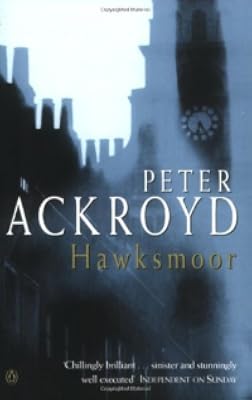
The London of The Clerkenwell Tales is stalked by terrorists who use the most advanced explosives the 14th century can offer to destroy five churches, and the churches are chosen for the significance of their locations. Fans of Hawksmoor will recognise not only this theme, but also the subversive theology, the debate between reason and belief, the labyrinths under churches, the blackmail, the show more way gentlemen in taverns pee where they're sitting, and the purgative powers of flagellation. show less
added by KayCliff
Lists

Novels with a city or town in the title
61 works; 1 member

Books With Place Names in the Title
315 works; 12 members
Author Information

90+ Works 31,852 Members
Peter Ackroyd was born in London in 1949. He graduated from Cambridge University and was a Fellow at Yale (1971-1973). A critically acclaimed and versatile writer, Ackroyd began his career while at Yale, publishing two volumes of poetry. He continued writing poetry until he began delving into historical fiction with The Great Fire of London show more (1982). A constant theme in Ackroyd's work is the blending of past, present, and future, often paralleling the two in his biographies and novels. Much of Ackroyd's work explores the lives of celebrated authors such as Dickens, Milton, Eliot, Blake, and More. Ackroyd's approach is unusual, injecting imagined material into traditional biographies. In The Last Testament of Oscar Wilde (1983), his work takes on an autobiographical form in his account of Wilde's final years. He was widely praised for his believable imitation of Wilde's style. He was awarded the British Whitbread Award for biography in 1984 of T.S. Eliot, and the Whitbread Award for fiction in 1985 for his novel Hawksmoor. Ackroyd currently lives in London and publishes one or two books a year. He still considers poetry to be his first love, seeing his novels as an extension of earlier poetic work. (Bowker Author Biography) Peter Ackroyd is the award-winning author of four biographies, most recently the national bestseller "The Life of Thomas More", as well as ten novels, including "Chatterton" & "Hawksmoor". He lives in London, where he is at work on his next book, "London: The Biography. (Publisher Provided) Peter Ackroyd is a bestselling writer of both fiction and nonfiction. He lives in London. (Publisher Provided) show less
Series
Belongs to Publisher Series
Work Relationships
Was inspired by
Common Knowledge
- Canonical title
- The Clerkenwell Tales
- Original publication date
- 2003
- Important places
- London, England, UK
- First words
- Dame Agnes de Mordaunt was sitting in the window of her Chamber, looking out over the garden of the house of Mary at Clerkenwell.
- Quotations
- [[Hamo] was trained as an illuminator in the scriptorium. He prepared the inks and the paints; he smoothed the parchments and drew lines upon them with rule and charcoal pencil. He learned to mix black and red, white and yell... (show all)ow. Then he was trained in the art of drawing outlines with a brush of squirrel hair. He was taught how to plaster the walls of the church in preparation for the murals; he would cover them with lime putty, rendered damp for the better retention of colour.
Hamo turned the corner of Paternoster Row, into the street of the illuminators and parchment-makers whose work was displayed all around him.
Here was a rich volume indeed, illuminated with great coloured capitals though which birds and monkeys ran. Jolland felt the vellum paper with his forefinger. "Every page takes the skin of a sheep. So here we have many flocks... (show all) before us." He turned the page very carefully, in case one of them might crack or tear.
Cole Bateman, the miller for the convent of Clerkenwell, was kneeling in the north transept of St Sepulchre. He had just delivered twelve sacks of flour to the parish priest of that church; the priest had agreed to act as arb... (show all)iter in the miller's dispute with the bailiff over that stretch of the [River] Fleet that ran between them. The bailiff had in turn presented him with a mastiff, since the priest had complained of roarers and masked men who seemed strangely drawn to the Newgate prison. The mill beside the Fleet was less thn a mile beyond the city gates, and Coke Bateman often drove his cart within the walls. For him it was a city of springs and streams. He had got so accustomed to the sound of water rushing beneath the mill that it seemed to him to be the sound of the world. He slept with the rush of waters, and awoke with their rhythms in his head. He knew the harsh and hasty sound of the Fleet, therefore, and compared it carefully and deliberately with the other rivers within the city. He recognised the soft sound of the Falcon sighing through reeds, the disturbed and excitable Westbourne with its hidden springs sending out competing currents, the slow and heavy Tyburn winding through marshes, the light Walbrook gliding over stones and pebbles, and the Fleet itself with its strong and sweeping central current running like a sigh through the city. And then of course there was the Thames, majestic, many-voiced, at one moment a mass of dark turbulance and at the next a gleaming sheet of light.
"If a man full penitent come to me and pay for his sin," [said the pardoner], "I will assoil him. Here is the authority granted me." The pardoner held up a sheet of vellum decorated with a great initial "I" in which monkeys c... (show all)lambered among vines. "If anyone gives seven shillings to Anthony's [St Anthony's Hospital, Threadneedle Street], I will bestow upon him an indulgence of seven hundred years. I am entrusted to do this by the pope himself." He rolled up the papal bull and carefully placed it within his bag.
He was much discomforted by her heaviness of stomach and suggested she mix the grease of a boar and the grease of a rat, the grease of a horse and the grease of a badger's, souse the concoction in vinegar, add sage and then p... (show all)ut it upon her belly. - Last words
- (Click to show. Warning: May contain spoilers.)We will rule behind the king. So be of good heart. Dominus Rises.
Classifications
Statistics
- Members
- 856
- Popularity
- 32,074
- Reviews
- 24
- Rating
- (3.39)
- Languages
- 8 — Dutch, English, French, German, Polish, Portuguese, Russian, Spanish
- Media
- Paper, Audiobook, Ebook
- ISBNs
- 19
- ASINs
- 5