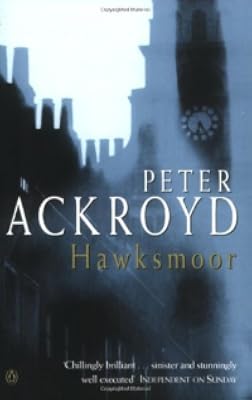
Hawksmoor
by Peter Ackroyd
On This Page
Description
'There is no Light without Darknesse and no Substance without Shaddowe.' So proclaims Nicholas Dyer, assistant to Sir Christopher Wren and man with a commission to build seven London churches to stand as beacons of the enlightenment. But Dyer plans to conceal a dark secret at the heart of each church - to create a forbidding architecture that will survive for eternity. Two hundred and fifty years later, London detective Nicholas Hawksmoor is investigating a series of gruesome murders on the show more sites of certain eighteenth-century churches - crimes that make no sense to the modern mind . . . Cover art by- Barn'whether the book addresses graffiti explicitly, evoke a city from the past, or are considered cult classics, the novels all share the quality - like street art - of speaking to their time.' Guardian Gallery show lessTags
Recommendations















Member Recommendations
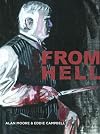
by kmcmahon


Member Reviews
I have read this book several times since it was first published in 1985, and I stil think it is the best of his fictional works. It works on several levels: the historical, the supernatural, biographical, but it has the ability even now to make my flesh creep. There is something curious about the language which makes it unsettling. Nicholas Dyer does not smile but he grins, or shows his teeth. I love the way Ackroyd makes connections between different centuries. He seems to imply that history is destined to repeat itself, and that traces or memories of events are contained within spaces and buildings, which is a theme also explored by Iain Sinclair in his studies of London.
6-6-22 Updated review of Hawksmoor after re-reading.
Hawksmoor is one of those novels that make you view the world a little bit differently, and I mean that in a literal sense. This book was so well written it was easy to forget that it wasn't a horrifying portrayal of an actual man, it was easy to forget that it was fiction. The great thing about Hawksmoor is that it impressed itself on me, captured my imagination, and even after finishing it, I keep thinking about it.
Hawksmoor is a book that makes me do a double-take while walking, just to make sure I'm not being followed by a shadowy white haired figure, while at the same time I'm pondering the interpretations of life, time and human nature that the novel postulates, all the while I show more cannot figure out what actually happened in the book. In a strange way, Hawksmoor is refreshing, scary, and thought provoking. I understood and appreciated it much better on this second read than on the first.
Although it wasn't a page turner by any means, or an easy read, nor is Hawksmoor for everyone, it remains by far my favorite novel.
---------------------------------------------------------
Original Review 4-7-22
Hawksmoor was a truly unique read. This book is unlike anything I have read before. In the vein of the good classics, Ackroyd used the novel as a vehicle to express and postulate a worldview. It wasn’t merely fluffy fiction and a good story.
Some have called novel ‘post-modern’ I beg to differ with that classification. The fact that Ackroyd wrote half this book in exquisite 18th century prose indicates that Hawksmoor is something more than just a postmodern novel. There were times when I forgot that Nicholas Dyer was not a real character, and that we were not actually reading his journal penned in the early 1700s. I have read plenty of books that attempt to imitate 18th or early 19th century prose, but this is the only one that has been convincing.
Right until the end of Hawksmoor, I couldn’t decide whether or not I liked it. I kept swinging from absolutely adoring it, to utter contempt. In the end, I would have to give it 4.5 starts, unreservedly. I did listen to an audiobook, and I’m pretty sure that if I had read it, it would have been much better. Hawksmoor is hands-down, one of my favorite novels. I cannot wait to get a physical copy and re-read it. show less
Hawksmoor is one of those novels that make you view the world a little bit differently, and I mean that in a literal sense. This book was so well written it was easy to forget that it wasn't a horrifying portrayal of an actual man, it was easy to forget that it was fiction. The great thing about Hawksmoor is that it impressed itself on me, captured my imagination, and even after finishing it, I keep thinking about it.
Hawksmoor is a book that makes me do a double-take while walking, just to make sure I'm not being followed by a shadowy white haired figure, while at the same time I'm pondering the interpretations of life, time and human nature that the novel postulates, all the while I show more cannot figure out what actually happened in the book. In a strange way, Hawksmoor is refreshing, scary, and thought provoking. I understood and appreciated it much better on this second read than on the first.
Although it wasn't a page turner by any means, or an easy read, nor is Hawksmoor for everyone, it remains by far my favorite novel.
---------------------------------------------------------
Original Review 4-7-22
Hawksmoor was a truly unique read. This book is unlike anything I have read before. In the vein of the good classics, Ackroyd used the novel as a vehicle to express and postulate a worldview. It wasn’t merely fluffy fiction and a good story.
Some have called novel ‘post-modern’ I beg to differ with that classification. The fact that Ackroyd wrote half this book in exquisite 18th century prose indicates that Hawksmoor is something more than just a postmodern novel. There were times when I forgot that Nicholas Dyer was not a real character, and that we were not actually reading his journal penned in the early 1700s. I have read plenty of books that attempt to imitate 18th or early 19th century prose, but this is the only one that has been convincing.
Right until the end of Hawksmoor, I couldn’t decide whether or not I liked it. I kept swinging from absolutely adoring it, to utter contempt. In the end, I would have to give it 4.5 starts, unreservedly. I did listen to an audiobook, and I’m pretty sure that if I had read it, it would have been much better. Hawksmoor is hands-down, one of my favorite novels. I cannot wait to get a physical copy and re-read it. show less
A fascinating if ultimately remote book. I loved many of its ideas: the problematisation of time and reality as we understand them; the psychogeographic exploration of London's darkness (if cities can fall victim to such things, it's a character assassination); and most of all, Dyer's dark, syncretic version of Christianity.
It could be engaged with as folk horror – a fascinating and particularly British genre that was only identified about 20 years after the book's writing, and one I love. But it also shares some of that genre's common failings, not least a wilful obscurity that pushes the reader away even as it tries to draw you in. (It's not the book's fault, but certain elements, such as the refrain of nursery rhymes, have become show more cliche in the years since its publication.)
Overall, a book that it's easier to admire than to enjoy. Recommended for those who found From Hell that bit too accessible. show less
It could be engaged with as folk horror – a fascinating and particularly British genre that was only identified about 20 years after the book's writing, and one I love. But it also shares some of that genre's common failings, not least a wilful obscurity that pushes the reader away even as it tries to draw you in. (It's not the book's fault, but certain elements, such as the refrain of nursery rhymes, have become show more cliche in the years since its publication.)
Overall, a book that it's easier to admire than to enjoy. Recommended for those who found From Hell that bit too accessible. show less
A couple of recommendations if you chance upon this review before attempting the book. (1) if you’ve picked this up because you love a good, literary murder mystery, you may wish to reconsider; though murders occur, and there’s a detective intent upon solving them, you’ll find almost every other traditional mystery trope – clues, motives, suspects, an investigation, a denoument – unsettlingly absent here. (2) Fully half the book is written utilizing 17th century literary conventions (complete with period-appropriate erratic spelling, punctuation, and grammar) – if this doesn’t appeal to you, you’ve another reason to move on. (3) Though I tend to avoid spoilers, in this case you may actually want to start off by reading show more one or more of the many literary essays devoted to this book, so that you don’t waste three quarters of the book (as I did) trying desperately to make sense of incidents that, it turns out, aren’t necessarily meant to make sense – at least not in any traditional, logical way.
For Hawksmoor is, according to people smarter than me, a work of “postmodern” literature – a deliberate effort on the part of Ackroyd, the novel’s erudite author, to pervert narrative conventions, genre, character development – even chronological time. In the process, he’s created an uneven tale consisting of two parallel narratives, one of them a great deal more fully-realized and engaging than the other.
The more engaging narrative, set in late 17th century London, tells the tale of Nicholas Dyer, an architect in charge of building a series of major churches throughout the city and also, secretly, a worshipper of ancient, fearful gods who, among other things, require that each of his churches be consecrated by a human sacrifice. His professional and philosophical rival is Sir Christopher Wren, a fellow architect who, in contrast, is a champion of the Age of Reason, intent upon displacing the old gods and setting new ones – science and logic - in their place. This juxtaposition allows Ackroyd to explore both these forces – and especially the opposition between them – at some length, resulting in a series of richly imagined, often disturbing scenes and set-pieces. (Seriously, some of the scenes are presented in the form of miniature plays – more postmodern experimentation, I presume, but it works.)
Perhaps because these chapters are so rich, dark, and disturbing, the half of the narrative set in (more or less) modern-day London, featuring Det. Hawksmoor and his attempts to solve a series of murders at churches designed by Dyer, can’t help but pale in comparison. Dyer’s gradual descent into madness is satisfyingly convincing and creepy; Hawksmoors’, alas, is merely tedious.
Before too long you begin to notice that the two narratives are tied together by more than Dyer’s churches (which, by the way, are laid out in the form of a pentagon, along ancient “lay lines” of power); increasingly, incidents in the lives of Hawksmoor and Dyer parallel/intersect, the intent of which could be interpreted in any number of ways. My own interpretation is that Ackroyd means us to understand that the conflict between reason and chaos, though less visible beneath our 20th century veneer of reason, continues unabated, particularly at sites (like Dyer’s churches) where ancient evils have long festered and concentrated. This interpretation is supported, I believe, by the parallels that Ackroyd draws between his London of 1690 and his London of today – despite the passage of years, the two Londons are eerily similar, from the songs the urchins sing in the streets to the cries of the vendors selling their wares, from buildings perched uneasily upon the foundations of structures dating back to prehistory to the timeless cruelty and bullying of children, from streets still named after their ancient antecedents to the sad, desperate lives of the beggars, whores and madmen who exist at the fringes of humanity.
A provocative thesis, and when combined with Ackroyd’s gift for authentic period detail and eerie narrative, enough for me to recommend this as a worthwhile read, even if “postmodern” isn’t ordinarily my cup of tea. show less
For Hawksmoor is, according to people smarter than me, a work of “postmodern” literature – a deliberate effort on the part of Ackroyd, the novel’s erudite author, to pervert narrative conventions, genre, character development – even chronological time. In the process, he’s created an uneven tale consisting of two parallel narratives, one of them a great deal more fully-realized and engaging than the other.
The more engaging narrative, set in late 17th century London, tells the tale of Nicholas Dyer, an architect in charge of building a series of major churches throughout the city and also, secretly, a worshipper of ancient, fearful gods who, among other things, require that each of his churches be consecrated by a human sacrifice. His professional and philosophical rival is Sir Christopher Wren, a fellow architect who, in contrast, is a champion of the Age of Reason, intent upon displacing the old gods and setting new ones – science and logic - in their place. This juxtaposition allows Ackroyd to explore both these forces – and especially the opposition between them – at some length, resulting in a series of richly imagined, often disturbing scenes and set-pieces. (Seriously, some of the scenes are presented in the form of miniature plays – more postmodern experimentation, I presume, but it works.)
Perhaps because these chapters are so rich, dark, and disturbing, the half of the narrative set in (more or less) modern-day London, featuring Det. Hawksmoor and his attempts to solve a series of murders at churches designed by Dyer, can’t help but pale in comparison. Dyer’s gradual descent into madness is satisfyingly convincing and creepy; Hawksmoors’, alas, is merely tedious.
Before too long you begin to notice that the two narratives are tied together by more than Dyer’s churches (which, by the way, are laid out in the form of a pentagon, along ancient “lay lines” of power); increasingly, incidents in the lives of Hawksmoor and Dyer parallel/intersect, the intent of which could be interpreted in any number of ways. My own interpretation is that Ackroyd means us to understand that the conflict between reason and chaos, though less visible beneath our 20th century veneer of reason, continues unabated, particularly at sites (like Dyer’s churches) where ancient evils have long festered and concentrated. This interpretation is supported, I believe, by the parallels that Ackroyd draws between his London of 1690 and his London of today – despite the passage of years, the two Londons are eerily similar, from the songs the urchins sing in the streets to the cries of the vendors selling their wares, from buildings perched uneasily upon the foundations of structures dating back to prehistory to the timeless cruelty and bullying of children, from streets still named after their ancient antecedents to the sad, desperate lives of the beggars, whores and madmen who exist at the fringes of humanity.
A provocative thesis, and when combined with Ackroyd’s gift for authentic period detail and eerie narrative, enough for me to recommend this as a worthwhile read, even if “postmodern” isn’t ordinarily my cup of tea. show less
“And his own image was sitting beside him, pondering deeply and sighing, and when he put out his hand and touched him he shuddered. But do not say that he touched him, say that they touched him. And when they looked at the space between them, they wept. The church trembled as the sun rose and fell, and the half-light was strewn across the floor like rushes. They were face to face, and yet they looked past one another at the pattern which they cast upon the stone; for when there was a shape there was a reflection, and when there was a light there was a shadow, and when there was a sound there was an echo, and who could say where one had ended and the other had begun? And when they spoke they spoke with one voice:
and I must have slept, show more for these figures greeted me as if they were in a dream.”
—Hawksmoor by Peter Ackroyd
Had to dig into commentary to confirm whether I’d gotten what I was supposed to have; and the research did not disappoint. Just like this book. It’s nice to come across challenging fiction that is also poetic and narratively interesting—even if the experimentation gets more rope to range into the field as far as possible from the driven stake. Actually, I prefer it that way. Far too much emphasis is placed on narrative. Far too much on character. And I get it. Those are where the hooks are, that’s where the money is made. But when a novel has so much research that it makes me look up whether the world invented was real or not (partially, in this case), I call that a huge accomplishment; especially given that I love to write pseudo-historical fiction myself. Definitely looking forward to dipping into Mr. Ackroyd’s bibliography. Such astounding dedication to research and style can hardly be expected to disappoint. Just like this book. (Wait a minute . . . am I going in circles? Oh, that’s just the ourborical structure of the book—the circular shadows swallowing their own tails.) show less
and I must have slept, show more for these figures greeted me as if they were in a dream.”
—Hawksmoor by Peter Ackroyd
Had to dig into commentary to confirm whether I’d gotten what I was supposed to have; and the research did not disappoint. Just like this book. It’s nice to come across challenging fiction that is also poetic and narratively interesting—even if the experimentation gets more rope to range into the field as far as possible from the driven stake. Actually, I prefer it that way. Far too much emphasis is placed on narrative. Far too much on character. And I get it. Those are where the hooks are, that’s where the money is made. But when a novel has so much research that it makes me look up whether the world invented was real or not (partially, in this case), I call that a huge accomplishment; especially given that I love to write pseudo-historical fiction myself. Definitely looking forward to dipping into Mr. Ackroyd’s bibliography. Such astounding dedication to research and style can hardly be expected to disappoint. Just like this book. (Wait a minute . . . am I going in circles? Oh, that’s just the ourborical structure of the book—the circular shadows swallowing their own tails.) show less
You say the timing is crucial, Superintendent, but I have to say that in this case, I don’t understand the timing at all.
Hawksmoor by Peter Ackroyd is entirely about time: how we experience it, how it flows, what we don’t comprehend about it. It’s a story with what appear to be two timelines. One is the story of Nicholas Dryer, an early 18th century architect charged with designing/rebuilding six London churches and Nicholas Hawksmoor, a Scotland Yard detective of the 1980s charged with solving a series of murders at the same London churches. Switching by chapter between the eras, Ackroyd links the two times with common names, phrases, bits of songs and poems. A compass is lost; a compass is found. A boy’s teachers bear the same show more or similar names to another boy’s schoolyard tormentors. Soon characters begin to hear snatches of conversation from another time or see shadows of the past or future. Lives and deaths are being acted out with identical plots, hundreds of years apart.
…it seemed to him that the river itself was perpetually turning and spinning: it was going no certain direction, and Hawksmoor felt for a moment that he might fall into its darkness.
Ackroyd might well be describing his vision of time instead of the Thames. In Hawksmoor time turns on itself, meeting itself where it wills.
As it happens, I felt I needed to set aside large blocks of time to read [Hawksmoor]. This is not a book to pick up and put down, reading in small snippets. The rhythm of the writing, especially in the 18th century chapters, is somewhat demanding and easier, at least for me, read in longer stretches.
I can’t say that I enjoyed Hawksmoor; it would be more truthful to say I admire it. It is very well done and quite engrossing. It’s a novel that would reveal, on further readings, even more depth and nuance, but it is unlikely I’ll ever pick it up again. Still, I’m glad I read it. show less
Hawksmoor by Peter Ackroyd is entirely about time: how we experience it, how it flows, what we don’t comprehend about it. It’s a story with what appear to be two timelines. One is the story of Nicholas Dryer, an early 18th century architect charged with designing/rebuilding six London churches and Nicholas Hawksmoor, a Scotland Yard detective of the 1980s charged with solving a series of murders at the same London churches. Switching by chapter between the eras, Ackroyd links the two times with common names, phrases, bits of songs and poems. A compass is lost; a compass is found. A boy’s teachers bear the same show more or similar names to another boy’s schoolyard tormentors. Soon characters begin to hear snatches of conversation from another time or see shadows of the past or future. Lives and deaths are being acted out with identical plots, hundreds of years apart.
…it seemed to him that the river itself was perpetually turning and spinning: it was going no certain direction, and Hawksmoor felt for a moment that he might fall into its darkness.
Ackroyd might well be describing his vision of time instead of the Thames. In Hawksmoor time turns on itself, meeting itself where it wills.
As it happens, I felt I needed to set aside large blocks of time to read [Hawksmoor]. This is not a book to pick up and put down, reading in small snippets. The rhythm of the writing, especially in the 18th century chapters, is somewhat demanding and easier, at least for me, read in longer stretches.
I can’t say that I enjoyed Hawksmoor; it would be more truthful to say I admire it. It is very well done and quite engrossing. It’s a novel that would reveal, on further readings, even more depth and nuance, but it is unlikely I’ll ever pick it up again. Still, I’m glad I read it. show less
Difficult to do justice to this complex book with so many parallels in its interwoven narrative that switches between the early 18th century and late twentieth. The narrative of Nicholas Dyer, based on the real life Nicholas Hawksmoor - whose name Ackroyd gives instead to his 20th century detective - is an impressive recreation of the thought processes and even the style of expression, down to the eccentric spelling and frequent capital letters, of a deeply sinister character whose nihilism and devil worship has been formed from the trauma of witnessing his parents' deaths in the plague and from the education given subsequently by a cult leader who took him in off the streets. Dyer secretly adds elements to the seven churches he show more designs, to embody the power of his negative religious beliefs and to ensure that the churches form an everlasting nexus of murder and degradation, sanctifying each with a human sacrifice, but as time goes on, becomes increasingly paranoid that others are onto him, with disastrous results for two of his work colleagues. Centuries later, it seems that someone is repeating the human sacrifices with many parallels and Hawksmoor unravels as he fails to solve the killings.
I like most the 18th century parts of the novel. I couldn't take to Hawksmoor, finding him a cipher rather than a character and found the ending baffling. show less
I like most the 18th century parts of the novel. I couldn't take to Hawksmoor, finding him a cipher rather than a character and found the ending baffling. show less
Members
- Recently Added By
Published Reviews
Hawksmoor speaks the words of romantic duality, and is in a number of ways a double book. It consists of two alternating narratives, one of which is set in the 18th century and the other in the present, with the earlier delivered in the first person. Each of the two principal actors glimpses his double in passing, as a reflection in a glass, and each stands to the other in the same relation show more – a relation which presupposes, as in many other Gothic texts, some sort of metempsychosis or rebirth. Both of these men are disturbed or mad. Nicholas Dyer is imagined as the builder of Nicholas Hawksmoor’s churches in the East End of London: the enlightened edifices of a rational Christianity are thereby ascribed to a devil-worshipper, while the name ‘Hawksmoor’ is assigned to the Detective Chief Superintendent who, in the later narrative, frets himself into a delirium over a series of stranglings which take place in the vicinity of the churches. The later crimes duplicate those committed by Dyer, who has wished to baptise his churches with the blood of young victims. show less
added by KayCliff
''Hawksmoor'' is a witty and macabre work of the imagination, intricately plotted, obsessive in its much-reiterated concerns with mankind's fallen nature. It is less a novel in the conventional sense of the word (in which, for instance, human relationships and their development are of central importance) than a highly idiosyncratic treatise, or testament, on the subject of evil.
added by KayCliff
Lists

1001 Books You Must Read Before You Die
1,448 works; 1,134 members

David Bowie's Top 100
97 works; 23 members

Best Books Set in London
157 works; 40 members

Weird and Weirder Fiction
270 works; 35 members

london novels (adult)
21 works; 3 members

Cawthorn and Moorcock's Fantasy: The 100 Best Books
110 works; 7 members
1,001 BYMRBYD Concensus
723 works; 27 members

Jones and Newman's Horror: The 100 Best Books
100 works; 4 members

Books Read in 2023
5,547 works; 145 members

David Pringle's Modern Fantasy: The 100 Best Novels
100 works; 5 members

BBC Radio 4 Bookclub
340 works; 13 members

Books Read in 2017
4,249 works; 129 members

Best Horror Mega-List
342 works; 6 members

mystery
1 work; 1 member

history
12 works; 1 member
BBC World Book Club
265 works; 5 members

My TBR
371 works; 3 members

Wyrd as Folk
43 works; 4 members

Books Read in 2021
5,361 works; 114 members

Allie's List of Books I Want To Read
93 works; 1 member
David Bowie's List of Top 100 Books
94 works; 6 members
David Bowie’s Top 100 Favourite Reads
100 works; 3 members
Talk Discussions
Past Discussions
1001 Group Read - January, 2013: Hawksmoor in 1001 Books to read before you die (August 2013)
Author Information

90+ Works 31,852 Members
Peter Ackroyd was born in London in 1949. He graduated from Cambridge University and was a Fellow at Yale (1971-1973). A critically acclaimed and versatile writer, Ackroyd began his career while at Yale, publishing two volumes of poetry. He continued writing poetry until he began delving into historical fiction with The Great Fire of London show more (1982). A constant theme in Ackroyd's work is the blending of past, present, and future, often paralleling the two in his biographies and novels. Much of Ackroyd's work explores the lives of celebrated authors such as Dickens, Milton, Eliot, Blake, and More. Ackroyd's approach is unusual, injecting imagined material into traditional biographies. In The Last Testament of Oscar Wilde (1983), his work takes on an autobiographical form in his account of Wilde's final years. He was widely praised for his believable imitation of Wilde's style. He was awarded the British Whitbread Award for biography in 1984 of T.S. Eliot, and the Whitbread Award for fiction in 1985 for his novel Hawksmoor. Ackroyd currently lives in London and publishes one or two books a year. He still considers poetry to be his first love, seeing his novels as an extension of earlier poetic work. (Bowker Author Biography) Peter Ackroyd is the award-winning author of four biographies, most recently the national bestseller "The Life of Thomas More", as well as ten novels, including "Chatterton" & "Hawksmoor". He lives in London, where he is at work on his next book, "London: The Biography. (Publisher Provided) Peter Ackroyd is a bestselling writer of both fiction and nonfiction. He lives in London. (Publisher Provided) show less
Some Editions
Awards and Honors
Awards
Series
Belongs to Publisher Series
Common Knowledge
- Canonical title
- Hawksmoor
- Original title
- Hawksmoor
- Original publication date
- 1985
- People/Characters
- Nicholas Dyer; Nicholas Hawksmoor; Mirabilis; Christopher Wren; Thomas Hill; Edward Robinson (Ned) (show all 39); Italian Audrey; Mrs Best; Richard Creed; Dan Dee; Mr Dee; Nat Eliot; Yorick Hayes; Mr Hill; Mrs Hill; Joseph [Hawksmoor]; Mary [Hawksmoor]; Walter Payne; Parson Priddon; Walter Pyne; Mrs West; Hawksmoor's father; The Assistant Commissioner; The Demoniack; The Gaoler; The inspector; The pathologist; The receptionist; The tramp; Brian Wilson; Matthew Hayes; John Vanbrugghe; Sir Philip Bonniface; Moneytrap; Rake; Rake's companion; First Gentleman; Second Gentleman; Thomas Robinson
- Important places
- London, England, UK
- Epigraph
- Thus in 1711, the ninth year of the reign of Queen Anne, an Act of Parliament was passed to erect seven new Parish Churches in the Cities of London and Westminster, which commission was delivered to Her Majesty's Office of... (show all) Works in Scotland Yard. And the time when Nicholas Dyer, architect, began to construct a model of the first church. His colleagues would have employed a skilled joiner to complete such a task, but Dyer preferred to work with his own hands, carving square windows in miniature and cutting steps out of the clean deal: each element could be removed or taken to pieces, so that those of an enquiring temper were able to peer into the model and see the placing of its constituent parts. Dyer took his scale from the plans he had already drawn up, and, as always, he used a small knife with a piece of frayed rope wrapped around its ivory handle. For three weeks he labored over this wooden prototype and, as by stages he fitted the spire upon the tower, we may imagine the church itself rising in Spitalfields. But there were six other churches to be built also, and once again the architect took his short brass rule, his pair of compasses, and the thick paper which he used for his draughts. Dyer worked swiftly with only his assistant, Walter Pyne, for company while, on the other side of the great city, the masons shouted to each other as they hewed out of the rough stone the vision of the architect. This is the vision we still see and yet now, for a moment, there is only his heavy breathing as he bends over his papers and the noise of the fire which suddenly flares up and throws deep shadows across the room.
- Dedication
- For Giles Gordon
- First words
- And so let us beginne; and, as the Fabrick takes shape in front of you, alwaies keep the Structure intirely in Mind as you inscribe it.
- Quotations
- My Inke is very bad: it is thick at the bottom, but thin and waterish at the Top, so that I must write according as I dip my Pen. These Memories become meer shortened Phrases, dark at their Beginning but growing faint towards... (show all) their End and each separated so, one from another, that I am not all of a peece. Here laying beside me is my convex Minor, which I use for the Art of Perspecktive, and in my Despair I look upon my sell; but when I take it up I see that my right Hand seems bigger than my Head and that my Eyes are but glassy Orbs: there are Objects swimming at the Circumference of the Glass and here I glimpse distended a doaths chest beneath the Window, with the blew damask Curtains blowing above it, a mahogany Buroe beside the Wall and there the Corner of my Bed with its blankets and bolster; there is my Elbow-chair, its Reflection curved beneath my own as I hold the Minor, and next to it my side-board Table with a brass Tea-Kettle, lamp and stand. As my Visual rays receive from the Convex superficies a curved Light, these real Things become the surface of a Dream: my Eyes meet my Eyes but they are not my Eyes, and I see my Mouth opening as if to make a screaming Sound. Now it has grown Darke, and the Minor shows only the dusky Light as it is reflected on the left side of my Face. But the voice of Nat is raised in the Kitchen below me, and coming back to my sell I place a Candle in my Lanthorn.
As I came up into Lime Street the Skie grew dark with the Cold and yet here was an old Woman with a Child on her Back singing "Fine writing Inke! Fine writing Inke!". - Last words
- (Click to show. Warning: May contain spoilers.)And then in my dream I looked down at myself and saw in what rags I stood; and I am a child again, begging on the threshold of eternity.
- Blurbers
- Fenton, James; Warner, Marina; Oates, Joyce Carol; Keates, Jonathan
- Original language
- English
Classifications
Statistics
- Members
- 1,988
- Popularity
- 10,589
- Reviews
- 42
- Rating
- (3.52)
- Languages
- 10 — Dutch, English, Estonian, Finnish, French, German, Polish, Russian, Spanish, Turkish
- Media
- Paper, Audiobook
- ISBNs
- 27
- ASINs
- 13