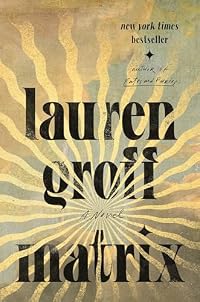
Matrix
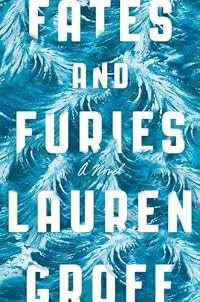
by Lauren Groff
On This Page
Description
Cast out of the royal court by Eleanor of Aquitaine, deemed too coarse and rough-hewn for marriage or courtly life, seventeen-year-old Marie de France is sent to England to be the new prioress of an impoverished abbey, its nuns on the brink of starvation and beset by disease. At first taken aback by the severity of her new life, Marie finds focus and love in collective life with her singular and mercurial sisters. In this crucible, Marie steadily supplants her desire for family, for her show more homeland, for the passions of her youth with something new to her: devotion to her sisters, and a conviction in her own divine visions. Marie, born the last in a long line of women warriors and crusaders, is determined to chart a bold new course for the women she now leads and protects. But in a world that is shifting and corroding in frightening ways, one that can never reconcile itself with her existence, will the sheer force of Marie's vision be bulwark enough? Equally alive to the sacred and the profane, Matrix gathers currents of violence, sensuality, and religious ecstasy in a mesmerizing portrait of consuming passion, aberrant faith, and a woman that history moves both through and around. Lauren Groff's new novel, her first since Fates and Furies, is a defiant and timely exploration of the raw power of female creativity in a corrupted world. show lessTags
Recommendations





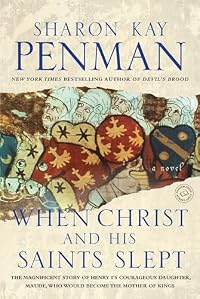
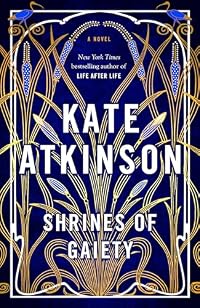
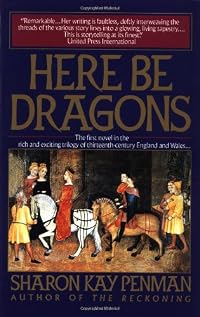
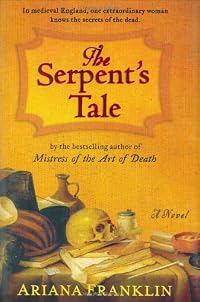









Member Recommendations
Member Reviews
This is the sort of historical novel I devoured as a teenager, and have craved ever since. Except for Hilary Mantel, no one has done for me what Lauren Groff does here since Anya Seton, Jean Plaidy/Victoria Holt and that crowd. I plunged into the world of medieval nuns and relished every cold, dirty, disease-prone moment of it. Inspired by what very little is known of the life of Marie de France and conflating her with the Abbess Mary of Shaftesbury, Groff has created a woman of such complexity and substance that, history be damned, we must believe she lived her life just this way. (There are, in fact, historians who have speculated that Marie and Mary were one and the same woman.)
Marie, illegitimate half-sister of Henry II, is an show more unattractive giantess with no marriage prospects, and so is bundled off to a remote impoverished Abbey by Henry's wife, Eleanor of Aquitaine. Taking on a role she never would have chosen for herself, Marie eventually turns the fortunes of the Abbey around, making it prosperous, directing feats of engineering that result in the design and execution of an elaborate protective labyrinth, a fine Mother House, and a dam with a system of locks to assure a constant supply of water for the sisters, their animals and gardens. This is a world not just run by women, but exclusively for women. Wealthy widows confer hefty dowries on the Abbey in exchange for the opportunity to live out their remaining days in peaceful refuge. After one unfortunate incident involving a crew of what Marie had considered necessary workmen, she resolved that never again would men be allowed into the Abbey for any reason. Not even priests were exempt from the proscription. When Marie assumed the priestly duties of saying Mass and hearing confessions, it was nearly her downfall, but she remained steadfast and prevailed even in this. This novel has nearly everything...lovely prose, crystalline characters, historical detail, drama, sexual tension, mild suspense, hints of royal intrigue. (Oh, and it might just expand your vocabulary, as it certainly did mine.) show less
Marie, illegitimate half-sister of Henry II, is an show more unattractive giantess with no marriage prospects, and so is bundled off to a remote impoverished Abbey by Henry's wife, Eleanor of Aquitaine. Taking on a role she never would have chosen for herself, Marie eventually turns the fortunes of the Abbey around, making it prosperous, directing feats of engineering that result in the design and execution of an elaborate protective labyrinth, a fine Mother House, and a dam with a system of locks to assure a constant supply of water for the sisters, their animals and gardens. This is a world not just run by women, but exclusively for women. Wealthy widows confer hefty dowries on the Abbey in exchange for the opportunity to live out their remaining days in peaceful refuge. After one unfortunate incident involving a crew of what Marie had considered necessary workmen, she resolved that never again would men be allowed into the Abbey for any reason. Not even priests were exempt from the proscription. When Marie assumed the priestly duties of saying Mass and hearing confessions, it was nearly her downfall, but she remained steadfast and prevailed even in this. This novel has nearly everything...lovely prose, crystalline characters, historical detail, drama, sexual tension, mild suspense, hints of royal intrigue. (Oh, and it might just expand your vocabulary, as it certainly did mine.) show less
The plot is the story of a medieval giantess exiled to a convent, who becomes the abbess and through force of will, mystic visions, and surprising empathy and foresight, builds the abbey into a force of power and wealth and safe harbor for the women in her care. Marie's pride and power draws itself from visions of a version of the Blessed Virgin who is powerful, independent of men. And so the book unfurls in a world without men, but where men are a constant threat, looming just out of side.
And so what Matrix is about is female power - power over their bodies, power over their labor and its fruits, power over their systems of belief.
And so what Matrix is about is female power - power over their bodies, power over their labor and its fruits, power over their systems of belief.
Filling in Marie’s Missing Pieces
Let’s start off reviewing Lauren Groff’s latest, Matrix, by remembering another Matrix, perhaps the springboard for the novel, Marie de France. This Marie, like Groff’s Marie, lived in the 12th century, was of French origin, of Aquitaine, living most of her life in England. Marie de France wrote long-form narrative poetry that, among other things, gave birth to chivalric romance popular in the High Middle Ages and beyond. And her writing was iconoclastic for the time. But apart from her name and her writing, little else is known about her, and so what an interesting opportunity to conjure a life for her, that of a nun who writes a journal of her exploits, devotion, and loves, who takes nearly show more defunct abbey and through vision, divine and temporal, organization, compassion, and hard work, molds it into a shining, thriving enclave of women. Thus, in lyrical style, Groff tells the tale of Marie, cast out to realize her best life.
The novel opens with Marie at 17 sent away from Eleanor of Aquitaine’s court to the poorest of poor abbeys in England to serve as prioress under the aging abbess. She, of course, hates being tossed out by Eleanor, whom she adores, but in due course forms bonds, one intimate, with other new members. Almost from the beginning, she works to make improvements, and with the passing of the abbess assumes the role herself. She expands the holdings of the abbey and its income by bringing the nobles of the region to heel. She organizes her charges into productive groups managing all the affairs of the abbey, from field, to bakery, to infirmary, to their spiritual lives, and as she does, allows the women to take solace in themselves. And all this, the good and the bad, she diligently records in her personal papers kept secret during her life but discovered by the new abbess upon her death, suffering a fate the real life Marie de France didn’t, at least not totally.
As Marie de France imbued her work with the details of life and realistic views of life as it was lived, so Groff provides a good deal of background detailing the grittiness of life in the High Middle Ages and of a woman who carves her place in her times by asserting herself on many levels, among them as the matrix, or mother, of a community of women who prosper on their own. show less
Let’s start off reviewing Lauren Groff’s latest, Matrix, by remembering another Matrix, perhaps the springboard for the novel, Marie de France. This Marie, like Groff’s Marie, lived in the 12th century, was of French origin, of Aquitaine, living most of her life in England. Marie de France wrote long-form narrative poetry that, among other things, gave birth to chivalric romance popular in the High Middle Ages and beyond. And her writing was iconoclastic for the time. But apart from her name and her writing, little else is known about her, and so what an interesting opportunity to conjure a life for her, that of a nun who writes a journal of her exploits, devotion, and loves, who takes nearly show more defunct abbey and through vision, divine and temporal, organization, compassion, and hard work, molds it into a shining, thriving enclave of women. Thus, in lyrical style, Groff tells the tale of Marie, cast out to realize her best life.
The novel opens with Marie at 17 sent away from Eleanor of Aquitaine’s court to the poorest of poor abbeys in England to serve as prioress under the aging abbess. She, of course, hates being tossed out by Eleanor, whom she adores, but in due course forms bonds, one intimate, with other new members. Almost from the beginning, she works to make improvements, and with the passing of the abbess assumes the role herself. She expands the holdings of the abbey and its income by bringing the nobles of the region to heel. She organizes her charges into productive groups managing all the affairs of the abbey, from field, to bakery, to infirmary, to their spiritual lives, and as she does, allows the women to take solace in themselves. And all this, the good and the bad, she diligently records in her personal papers kept secret during her life but discovered by the new abbess upon her death, suffering a fate the real life Marie de France didn’t, at least not totally.
As Marie de France imbued her work with the details of life and realistic views of life as it was lived, so Groff provides a good deal of background detailing the grittiness of life in the High Middle Ages and of a woman who carves her place in her times by asserting herself on many levels, among them as the matrix, or mother, of a community of women who prosper on their own. show less
I think that if you are the sort who questions why the figure of God and power in the Christian Church steer toward the masculine, this book may be waiting for you. Even if you consider yourself devout, I think there are interesting parables about femininity and women's communities to be found here that will make you feel hopeful and seen.
We follow Marie de France, a seventeen year old girl considered ugly and burly by her peers, who is raised by crusading warrior women and struggles to find meaning and respect in the court until she is banished to an abbey to train to be their new prioress. This curse soon turns to a blessing, as the struggling nuns and young girls have been poor and starving for so long-- Marie turns her rage (and show more all-consuming love for the queen who banished her) toward teaching the women to provide for themselves.
To give you an idea of the scale of this book, we follow Marie from sullen teenager suppressing her sexuality and lust for power to a great leader whom even the monarchy respects and fears. We watch each nun who trains alongside her grow and suffer and blossom into someone shining. I spent the last half hour of the book sobbing because I loved these women like sisters and aunts.
Some of the themes explored are highly blasphemous (think "Mother Mary and Eve sharing a kiss"), but as a queer women who left the Church I felt like this book stared straight at me. Groff's prose has a habit of doing that, I think. I was in communion with these lady sinners. I wanted what they had, their unflinching faith and goodness balanced with their bodily love for each other. To me this book was beautiful like no other, and I look forward to rereading it when I am 40 and 70 and beyond. show less
We follow Marie de France, a seventeen year old girl considered ugly and burly by her peers, who is raised by crusading warrior women and struggles to find meaning and respect in the court until she is banished to an abbey to train to be their new prioress. This curse soon turns to a blessing, as the struggling nuns and young girls have been poor and starving for so long-- Marie turns her rage (and show more all-consuming love for the queen who banished her) toward teaching the women to provide for themselves.
To give you an idea of the scale of this book, we follow Marie from sullen teenager suppressing her sexuality and lust for power to a great leader whom even the monarchy respects and fears. We watch each nun who trains alongside her grow and suffer and blossom into someone shining. I spent the last half hour of the book sobbing because I loved these women like sisters and aunts.
Some of the themes explored are highly blasphemous (think "Mother Mary and Eve sharing a kiss"), but as a queer women who left the Church I felt like this book stared straight at me. Groff's prose has a habit of doing that, I think. I was in communion with these lady sinners. I wanted what they had, their unflinching faith and goodness balanced with their bodily love for each other. To me this book was beautiful like no other, and I look forward to rereading it when I am 40 and 70 and beyond. show less
[Matrix] by [[Lauren Groff]]
Matrix is a novel that creates the life of Marie de France, a 12th century abbess and writer. There is very little actually known about her, so Groff has plenty of room to create the character she desires without worrying about appeasing historical experts. She creates a portrait of a woman who carves out a place of power and comfort for herself, when circumstances and the time period should make this practically impossible. Marie and Eleanor of Aquitaine have a relationship that develops over the book from afar.
The book has almost no mention of men in it, and I enjoyed imagining the lives of women in the 1100s, relying on each other to create a life worth living.
Matrix is a novel that creates the life of Marie de France, a 12th century abbess and writer. There is very little actually known about her, so Groff has plenty of room to create the character she desires without worrying about appeasing historical experts. She creates a portrait of a woman who carves out a place of power and comfort for herself, when circumstances and the time period should make this practically impossible. Marie and Eleanor of Aquitaine have a relationship that develops over the book from afar.
The book has almost no mention of men in it, and I enjoyed imagining the lives of women in the 1100s, relying on each other to create a life worth living.
I wasn't rushing out to read this novel. I've never read anything by Groff (her books tend to seem a little too off-beat for me) and I'm not big into religious-y stuff. But I do love historical fiction, and there was no wait for the e-book from the New York Public Library because it was the October pick for a WNYC book club. And people I trust were raving about it, so I gave it a whirl. And wow. Just wow. It's beautiful and stunning and so, so compelling. Which is funny, because it's about a nun in the 12th century. Who'd a thunk it?
Marie de France is a little known historical figure - little known by the contemporary world and one about whom little is known. From the hazy details we do have, Lauren Groff has created a remarkable and show more powerful woman and given her a story worthy of her and worthy of all the women whose stories have gone untold for too long. The writing is lush and gorgeous - I read bits of it out loud because they seemed to have a kind of rhythm to them that I wanted to hear - and the details about life in an medieval abbey grounded and made real a story which seemed at times fantastical. I love how Groff has centered the female, not just in Marie but in the other nuns, in the themes of religion and faith and Christian origins and in the multiple meanings of the title.
There are a lot of things that struck me about the novel - the almost total absence of men, except as looming presences off-stage; the narrative voice where conversations don't so much as happen but are relayed; the reality of life for women in this time period, even intelligent, educated, wealthy ones like Marie... Much of this is addressed in a great interview Groff did with the WNYC book club host, available here: https://youtu.be/DSoqCLBk5T4. show less
Marie de France is a little known historical figure - little known by the contemporary world and one about whom little is known. From the hazy details we do have, Lauren Groff has created a remarkable and show more powerful woman and given her a story worthy of her and worthy of all the women whose stories have gone untold for too long. The writing is lush and gorgeous - I read bits of it out loud because they seemed to have a kind of rhythm to them that I wanted to hear - and the details about life in an medieval abbey grounded and made real a story which seemed at times fantastical. I love how Groff has centered the female, not just in Marie but in the other nuns, in the themes of religion and faith and Christian origins and in the multiple meanings of the title.
There are a lot of things that struck me about the novel - the almost total absence of men, except as looming presences off-stage; the narrative voice where conversations don't so much as happen but are relayed; the reality of life for women in this time period, even intelligent, educated, wealthy ones like Marie... Much of this is addressed in a great interview Groff did with the WNYC book club host, available here: https://youtu.be/DSoqCLBk5T4. show less
Marie's family were most un-womanly, especially for the 12th century. Their stature was larger than usual (some called them giantesses). They were stronger and adventurous to the point of going together on a Crusade.
However, Marie’s mother had been raped by Henry II and Marie was the product. After her mother’s death, Marie was able to secretly continue Managing the family estate. Eventually it was taken from her by male relatives. She appealed to Eleanor of Aquitane, who installed her as the prioress and next abbess of Shaftesbury, a rundown abbey with starving inhabitants.
Under Marie’s leadership and miraculous visions, the abbey turned around and then thrived. Marie not only reinstated the farmlands, but initiated industry and show more built amazing defense systems to keep those men away who jealously wanted to claim the abbey once it became a prosperous watchword.
I found it an intriguing story of women without men – what they could build, achieve and dream. Some even found love in this world of their own. 4 stars show less
However, Marie’s mother had been raped by Henry II and Marie was the product. After her mother’s death, Marie was able to secretly continue Managing the family estate. Eventually it was taken from her by male relatives. She appealed to Eleanor of Aquitane, who installed her as the prioress and next abbess of Shaftesbury, a rundown abbey with starving inhabitants.
Under Marie’s leadership and miraculous visions, the abbey turned around and then thrived. Marie not only reinstated the farmlands, but initiated industry and show more built amazing defense systems to keep those men away who jealously wanted to claim the abbey once it became a prosperous watchword.
I found it an intriguing story of women without men – what they could build, achieve and dream. Some even found love in this world of their own. 4 stars show less
Members
- Recently Added By
Published Reviews
Lauren Groff's Matrix is an inspiring novel that truly demonstrates the power women wield, regardless of the era. It has sisterhood, love, war, sex — and many graphic deaths, all entangled in a once-forgotten abbey in the English countryside. Matrix introduces a warlike poet-nun, based on the real medieval author Marie de France, who challenges the Catholic church and the very foundations of show more patriarchy — while also exploring womanhood and unbridled sexuality....Abbess Marie, venerated and ambitious, is driven by a mission to achieve greatness, something many women can identify with today. Matrix exposes the complexity of being a woman living in a world where men make all the rules, regardless of the era. But it also may leave you wondering whether this is a story about one woman's feminist aspirations — or her overzealous ambition. show less
added by Lemeritus
Lauren Groff is one of the most beloved and critically acclaimed fiction writers in the country. And now that we’ve endured almost two years of quarantine and social distancing, her new novel about a 12th-century nunnery feels downright timely....When “Matrix” opens, Marie, all of 17 years old, is appointed prioress of a dilapidated abbey, founded centuries earlier, where a few nuns show more remain scavenging for food. The beautiful queen, whom Marie adores, frames this assignment as a great honor, but the young woman knows she’s “being thrown away like rubbish . . . sent into her living death alone.” ...Unable to leave and unwilling to fail, Marie brings her considerable physical and mental powers to bear on the abbey’s financial and managerial problems...inevitably, her efforts will conflict with the masculine tropes and rituals embedded in the Roman Catholic faith. How far she can push back against that outer world without provoking forces arrayed against her generates much of the novel’s suspense. show less
added by Lemeritus
Groff is a heavily allusive writer whose narratives typically carry a freight of sophisticated references. In her new novel, “Matrix,” the work of Marie de France — the 12th-century poet who leavened her traditional Breton lais with a little fairy dust — provides Groff a literary springboard into a past whose features offer a mirror to our own time....Female ambition and power are the show more central themes of “Matrix,” a math-y title that’s hard to pry off the science fiction film franchise. But the word originates from “mater,” which is Latin for mother, and thus associated with the Virgin, whose second apparition reveals Eve as the “first matrix.” In Marie’s exalted perception, her womb brought death into the world; and without Eve there could be no Mary, “no salvatrix,” and thus no deliverance....From its inauspicious beginning in the person of a sullen, selfish, godless teenager banished by an empress to perish in squalor, Marie’s transformation is that of a woman upon whom greatness is not thrust but slowly gathers. An orphan entrusted with the lives of others, calling herself their mother, gradually, by force of will, by dint of hard experience, becomes exactly that. As she reflects on her deathbed, “greatness was not the same as goodness”; but it does make for a more compelling story line. show less
added by Lemeritus
Lists

2022 Tournament of Books
18 works; 15 members

Best Historical Fiction
620 works; 257 members

Top Five Books of 2021
604 works; 181 members

Books recommended by Barack Obama
295 works; 28 members

Books featuring monks and/or nuns
166 works; 33 members

Top Five Books of 2022
736 works; 272 members

Books Set in Great Britain
191 works; 13 members

Books Read in 2023
5,547 works; 145 members

National Book Award Finalists - Fiction
377 works; 11 members

2022 Notable Books for Adults
25 works; 3 members

Books Read in 2022
5,164 works; 111 members

Book Club 2023
3 works; 1 member

Indie Next Picks
196 works; 4 members

Anticipated 2021 Reads
231 works; 7 members

FT Best books of 2021: Fiction
12 works; 1 member
Literature About Women and Girls
391 works; 39 members

Obama Reads
181 works; 3 members

Good LGBT fiction for LGBT folk and friends
537 works; 54 members

World Books
51 works; 4 members

Dublin Literary Award 2023 Longlist
67 works; 5 members

2023
32 works; 1 member

Washington Post The 10 Best Books of 2021
10 works; 1 member

Novels without quotation marks
25 works; 1 member

Historical fiction set in Britain
13 works; 1 member
Fiction Published in 2021
27 works; 1 member

KayStJ's to-read list
1,616 works; 11 members

Historical Figures in Fiction
51 works; 5 members
Monastic life
31 works; 1 member

Reading Group 2022
6 works; 1 member

Top Five Books of 2023
767 works; 317 members
Author Information

34+ Works 14,940 Members
Lauren Groff graduated from Amherst College and received an MFA in fiction from the University of Wisconsin at Madison. Her books include The Monsters of Templeton, Delicate Edible Birds, and Fates and Furies. Arcadia won of the Medici Book Club Prize. Her fiction has also won the Paul Bowles Prize for Fiction, the PEN/O. Henry Award, and the show more Pushcart Prize. Her work has appeared in numerous magazines including the New Yorker, the Atlantic Monthly, Harper's, Tin House, One Story, McSweeney's, and Ploughshares, and in the anthologies 100 Years of the Best American Short Stories, The Pushcart Prize: Best of the Small Presses, PEN/O. Henry Prize Stories, and three editions of the Best American Short Stories. (Bowker Author Biography) show less
All Editions
Some Editions
Awards and Honors
Common Knowledge
- Canonical title
- Matrix
- Original publication date
- 2021-07-09
- People/Characters
- Marie of France; Eleanor of Aquitaine; Emme; Goda; Wevua; Cecily (show all 14); Wulfhild; Nest; Tilde; Mamille; Ruth; Avice; Ursule; Sprota
- Dedication
- For all my sisters
- First words
- She rides out of the forest alone.
- Last words
- (Click to show. Warning: May contain spoilers.)And the work and the hours go on.
- Publisher's editor*
- De Bezige Bij, Amsterdam
- Blurbers
- Emma Donoghue; Brit Bennett; Sarah Waters; Daisy Johnson
- Original language*
- Engels
- Canonical DDC/MDS
- 813.6
- Canonical LCC
- PS3607.R6344
*Some information comes from Common Knowledge in other languages. Click "Edit" for more information.
Classifications
Statistics
- Members
- 2,278
- Popularity
- 8,700
- Reviews
- 111
- Rating
- (3.84)
- Languages
- 15 — Catalan, Danish, Dutch, English, Finnish, French, German, Greek, Italian, Norwegian, Polish, Portuguese, Spanish, Swedish, Vietnamese
- Media
- Paper, Audiobook, Ebook
- ISBNs
- 39
- ASINs
- 9