On This Page
Description
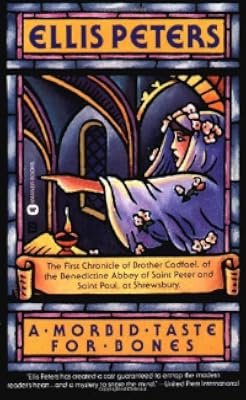
The "irresistible" and "compelling" first novel in the historical mystery series featuring a Welsh Benedictine monk in the twelfth century (The Washington Post).A Welsh Benedictine monk living at Shrewsbury Abbey in western England, Brother Cadfael spends much of his time tending the herbs and vegetables in the garden—but now there's a more pressing matter. Cadfael is to serve as translator for a group of monks heading to the town of Gwytherin in Wales. The team's goal is to collect the show more holy remains of Saint Winifred, which Prior Robert hopes will boost the abbey's reputation, as well as his own. But when the monks arrive in Gwytherin, the town is divided over the request.
When the leading opponent to disturbing the grave is found shot dead with a mysterious arrow, some believe Saint Winifred herself delivered the deadly blow. Brother Cadfael knows an earthly hand did the deed, but his plan to root out a murderer may dig up more than he can handle.
Before CSI and Law & Order, there was Brother Cadfael, "wily veteran of the Crusades" (Los Angeles Times). His knowledge of herbalism, picked up in the Holy Land, and his skillful observance of human nature are blessings in dire situations, and earned Ellis Peters a Crime Writers' Association Silver Dagger Award. A Morbid Taste for Bones kicks off a long-running and much-loved series that went on to be adapted for stage, radio, and television. show less
Tags
Recommendations




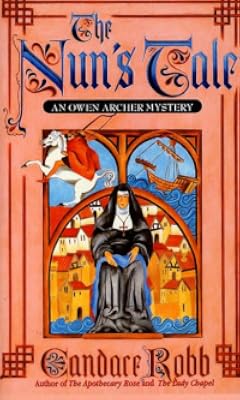
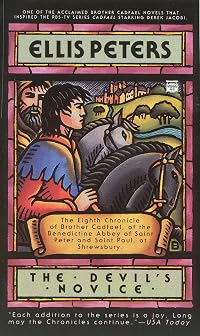


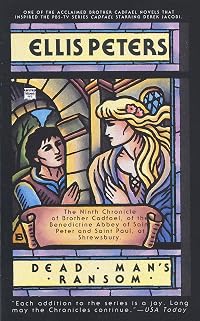
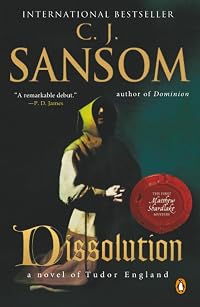
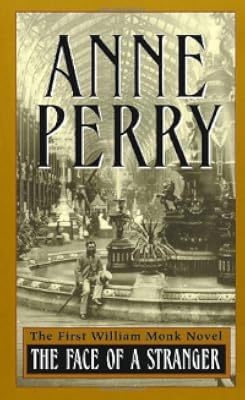
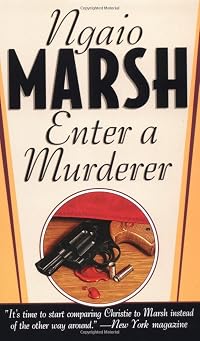
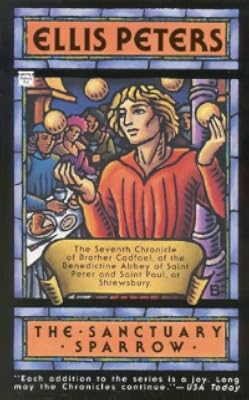
Member Recommendations

Member Reviews
Summary: Cadfael is part of a group commissioned to retrieve the bones of a Welsh saint. When the one leading landowner who opposes the removal is murdered, Cadfael helps his daughter find the murder, avenging his death.
There was a time in the 1980’s and 1990’s when a number of friends went on about the Brother Cadfael stories and television adaptations. Somehow, I missed all that. Perhaps I was reading other things at the time (I was pursuing graduate studies). So I apologize if all this is old news to you. I’m just now discovering these wonderful stories. But for those who are like me….
Ellis Peters (Edith Mary Pargeter) wrote twenty stories (and one collection of short stories) in this series between 1977 and 1994, the last show more published shortly before her death in 1995. The central character is Brother Cadfael, as you might have suspected, a Welsh Benedictine monk who is a gardener, herbalist and sometime doctor, as well as translator and medical examiner. He came to the Abbey at Shrewsbury later in life after service as a crusader and sea captain. His wide experience made him a shrewd observer of human nature, a skill he draws on to solve deaths by mysterious means in this series.
In this first in the series, Cadfael is part of a delegation sent to Gwytherin to retrieve the remains of St. Winifred, after a vision by Brother Columbanus, who has “fits” and sees visions, speaking of her grave being neglected. This is important to the standing of the Abbey at Shrewsbury, which has no relics. The bishop and the prince of Gwynedd (who later comes off as a very sensible chap as do all the Welsh), consent. Prior Robert, ambitious for the abbey, leads the delegation with Cadfael along to translate. They are also accompanied by Brother Columbanus, Brother John, whose fitness for the celibate life is quesionable, as well as Sub-Prior Richard and Prior Roberts clerk Jerome.
The delegation is received warmly but Father Huw, the local priest, advises a meeting with the free men of the parish to gain there consent. One of the most influential, Risiart, is resistant. In a private meeting Prior Robert attempts to bribe him and discovers he has run up against a man of true integrity. Risiart breaks off all talks and the others follow his lead. Father Huw attempts to patch things up and Risiart agrees to another meeting with Prior Robert the next day–but he never shows up–unusual for this man. A search finds him lying dead on a forest path along the way, apparently from an arrow through the heart.
The leading suspect is Engelard, an Englishman who works for Risiart and who has fallen in love with Risiart’s daughter, Sioned. So far, although they get along, Risiart has refused to give her hand in marriage. The hope is that she will marry Peredur, the son of a neighboring landowner and friend of Sioned since childhood. He loves her but she has only the affection of a friend.
Cadfael investigates. The arrow bears Engelard’s mark, but the angle is all wrong. The pattern of dampness is all wrong. Closer examination of the body shows his assailant stabbed him in the back with a downward blow, and then after death, the arrow was inserted angling upward from the front, following the wound pathway.
In Welsh tradition, it falls to the family to see that a murder is avenged. Risiart’s family is Sioned. Some of the best passages in the book are those in which Cadfael communicates understanding of this need and then works withi Sioned to find the killer, all the while walking a delicate balance with Prior Robert’s ambitions, the amorous feelings of Brother John and the further commanding visions of Brother Columbanus.
I see what people like about Cadfael. While a monk, he is no prude, nor is he naive. He understands both sexuality and ambition, acknowledging that were he a younger man, he would have been one of Sioned’s suitors! He works quietly toward resolution while Prior Robert gains the fame, though we discover that he might not have gained what he thought! Cadfael shows a marvelous degree of self-possession that enables him to care for others and to pursue justice, to act with shrewdness that mends both personal wounds and the social fabric. show less
There was a time in the 1980’s and 1990’s when a number of friends went on about the Brother Cadfael stories and television adaptations. Somehow, I missed all that. Perhaps I was reading other things at the time (I was pursuing graduate studies). So I apologize if all this is old news to you. I’m just now discovering these wonderful stories. But for those who are like me….
Ellis Peters (Edith Mary Pargeter) wrote twenty stories (and one collection of short stories) in this series between 1977 and 1994, the last show more published shortly before her death in 1995. The central character is Brother Cadfael, as you might have suspected, a Welsh Benedictine monk who is a gardener, herbalist and sometime doctor, as well as translator and medical examiner. He came to the Abbey at Shrewsbury later in life after service as a crusader and sea captain. His wide experience made him a shrewd observer of human nature, a skill he draws on to solve deaths by mysterious means in this series.
In this first in the series, Cadfael is part of a delegation sent to Gwytherin to retrieve the remains of St. Winifred, after a vision by Brother Columbanus, who has “fits” and sees visions, speaking of her grave being neglected. This is important to the standing of the Abbey at Shrewsbury, which has no relics. The bishop and the prince of Gwynedd (who later comes off as a very sensible chap as do all the Welsh), consent. Prior Robert, ambitious for the abbey, leads the delegation with Cadfael along to translate. They are also accompanied by Brother Columbanus, Brother John, whose fitness for the celibate life is quesionable, as well as Sub-Prior Richard and Prior Roberts clerk Jerome.
The delegation is received warmly but Father Huw, the local priest, advises a meeting with the free men of the parish to gain there consent. One of the most influential, Risiart, is resistant. In a private meeting Prior Robert attempts to bribe him and discovers he has run up against a man of true integrity. Risiart breaks off all talks and the others follow his lead. Father Huw attempts to patch things up and Risiart agrees to another meeting with Prior Robert the next day–but he never shows up–unusual for this man. A search finds him lying dead on a forest path along the way, apparently from an arrow through the heart.
The leading suspect is Engelard, an Englishman who works for Risiart and who has fallen in love with Risiart’s daughter, Sioned. So far, although they get along, Risiart has refused to give her hand in marriage. The hope is that she will marry Peredur, the son of a neighboring landowner and friend of Sioned since childhood. He loves her but she has only the affection of a friend.
Cadfael investigates. The arrow bears Engelard’s mark, but the angle is all wrong. The pattern of dampness is all wrong. Closer examination of the body shows his assailant stabbed him in the back with a downward blow, and then after death, the arrow was inserted angling upward from the front, following the wound pathway.
In Welsh tradition, it falls to the family to see that a murder is avenged. Risiart’s family is Sioned. Some of the best passages in the book are those in which Cadfael communicates understanding of this need and then works withi Sioned to find the killer, all the while walking a delicate balance with Prior Robert’s ambitions, the amorous feelings of Brother John and the further commanding visions of Brother Columbanus.
I see what people like about Cadfael. While a monk, he is no prude, nor is he naive. He understands both sexuality and ambition, acknowledging that were he a younger man, he would have been one of Sioned’s suitors! He works quietly toward resolution while Prior Robert gains the fame, though we discover that he might not have gained what he thought! Cadfael shows a marvelous degree of self-possession that enables him to care for others and to pursue justice, to act with shrewdness that mends both personal wounds and the social fabric. show less
Given that I'm generally a fan of monastic medieval mysteries, I'm not sure why it has taken me this long to finally read Cadfael! Perhaps I was unduly biased against Derek Jacobi's rarely smiling face in the promotions for the TV series in the 90s. My mother pushed me toward Peter Tremayne's (aka Peter Ellis -- now THAT's confusing/strange) Sister Fidelma series, which I love, but somehow did not seem interested in Cadfael. I'm going to guess renegade Celtic nun beat out male Crusader-turned-monk in my mother's hierarchy of protagonists/sleuths.
I adored it--the audiobook, narrated by Patrick Tull, was wonderful in picking up the subtle wit of Cadfael's thoughts and generally didn't feel it necessarily to inject gendered artifice into show more the voicings, relying more upon character differentiation. Many of the characters were surprisingly loveable -- including the good-natured and impish Brother John, and Father Huw--the parish priest at Gwytherin. I also appreciated that it was four chapters before anyone died (it is a mystery, so that's not a spoiler!) It did make it a bit predictable as to who would be the victim, but it was refreshing to have so much character building first. I might quibble with the end -- a bit too much effort to ensure we get closure on the various subplots, but it is a small quibble. The pro-Welsh quips and writing of scenic detail more than make up for it. I'm excited to read the rest of the series (finally!) show less
I adored it--the audiobook, narrated by Patrick Tull, was wonderful in picking up the subtle wit of Cadfael's thoughts and generally didn't feel it necessarily to inject gendered artifice into show more the voicings, relying more upon character differentiation. Many of the characters were surprisingly loveable -- including the good-natured and impish Brother John, and Father Huw--the parish priest at Gwytherin. I also appreciated that it was four chapters before anyone died (it is a mystery, so that's not a spoiler!) It did make it a bit predictable as to who would be the victim, but it was refreshing to have so much character building first. I might quibble with the end -- a bit too much effort to ensure we get closure on the various subplots, but it is a small quibble. The pro-Welsh quips and writing of scenic detail more than make up for it. I'm excited to read the rest of the series (finally!) show less
Six-word review: Clever medieval monk investigates Welshman's murder.
Extended review:
The first of the well-known Brother Cadfael mysteries by Edith Pargeter (writing as Ellis Peters) is also my first exposure to the series. I managed to miss all twenty of the novels, published beginning in 1977, and the four-season TV series broadcast in the nineties.
Now, it seems, I'm in for a treat.
Brother Cadfael is a Benedictine monk of the twelfth century, a Welshman living in an English abbey. After an adventuresome life as a soldier and sailor, he took the cowl in middle age. Hints of his colorful background enliven the quiet picture of a monastic herbalist and also account for his world-weary ability to see past men's poses to read the evil show more behind their acts.
In this novel, the prior of Cadfael's abbey takes it as a personal mission to annex a long-dead Welsh saint and have her relics moved from her resting place to England where they can be properly venerated. The Welsh parish that has kept her chapel over the centuries objects. A violent death ensues, amidst thwarted love, a blooming romance, clan loyalties, and ecclesiastical ambition. Only Brother Cadfael can see the way to uncover the truth of the crime and accomplish justice for the afflicted parties. show less
Extended review:
The first of the well-known Brother Cadfael mysteries by Edith Pargeter (writing as Ellis Peters) is also my first exposure to the series. I managed to miss all twenty of the novels, published beginning in 1977, and the four-season TV series broadcast in the nineties.
Now, it seems, I'm in for a treat.
Brother Cadfael is a Benedictine monk of the twelfth century, a Welshman living in an English abbey. After an adventuresome life as a soldier and sailor, he took the cowl in middle age. Hints of his colorful background enliven the quiet picture of a monastic herbalist and also account for his world-weary ability to see past men's poses to read the evil show more behind their acts.
In this novel, the prior of Cadfael's abbey takes it as a personal mission to annex a long-dead Welsh saint and have her relics moved from her resting place to England where they can be properly venerated. The Welsh parish that has kept her chapel over the centuries objects. A violent death ensues, amidst thwarted love, a blooming romance, clan loyalties, and ecclesiastical ambition. Only Brother Cadfael can see the way to uncover the truth of the crime and accomplish justice for the afflicted parties. show less
Brother Cadfael is settling in to a quiet life at the monastery, when he is called upon to travel to a remote village in Wales and act as translator for the prior, who wishes to bring back the bones of a saint; while there, one of the village leaders and their staunchest opponent is murdered, and Brother Cadfael must solve the crime with the help of the murdered man's daughter.
I enjoyed this first in a murder series, both for its historical detail and its characters. Peters tells a detective story that seems appropriately rooted in the distant past but doesn't feel remote. She even gives us two remarkable female characters, who come across not only as complete people but who also take action to change the course of events. In a story show more about monks, it would have been all too easy to forget the women. Peters injects a fair amount of humor in her story, as well as a genuine affection for most of her characters. Perhaps the Welsh villagers are all a tad too saintly, but they are also charming, and so is this novel. show less
I enjoyed this first in a murder series, both for its historical detail and its characters. Peters tells a detective story that seems appropriately rooted in the distant past but doesn't feel remote. She even gives us two remarkable female characters, who come across not only as complete people but who also take action to change the course of events. In a story show more about monks, it would have been all too easy to forget the women. Peters injects a fair amount of humor in her story, as well as a genuine affection for most of her characters. Perhaps the Welsh villagers are all a tad too saintly, but they are also charming, and so is this novel. show less
On the fine, bright morning in early May when the whole sensational affair of the Gwytherin relics may properly be considered to have begun. Brother Cadfael had been up long before Prime, pricking out cabbage seedlings before the day was aired, and his thoughts were all on birth, growth, and fertility, not at all on graves and reliquaries and violent deaths, whether of saints, sinners or ordinary decent, fallible men like himself. Nothing troubled his peace but the necessity to take himself indoors for Mass and the succeeding half-hour of chapter, which was always liable to stray over by an extra ten minutes. He grudged the time from his more congenial labors out here among the vegetables, but there was no evading his duty. He had, show more after all, chosen this cloistered life with his eyes open, he could not complain even of the parts of it he found unattractive, when the whole suited him very well. show less
I did not especially enjoy this, though I didn't dislike it either. It was going grand, and I was enjoying the story of a British monastery trying to nab the bones of a Welsh saint and annnoying the locals up until someone got murdered and it became a whodunnit and suddenly it stopped being interesting. Which is not what you want from a whodunnit.
I've read this many times since first encountering Cadfael as a pre-teen. I used to think of him as a jovial, slightly mischievous, great uncle kind of figure, and I think that still works. He is on the side of the righteous, and not always on the side of the law. In this case, a trip to Wales to bring home the bones of the neglected Saint Winifred turns sour, with murder committed to smooth the way. The supporting cast are sketched efficiently, with the various young people being happily paired off before the end. There is something intensely reassuring in the resolution and the way it is achieved.
Members
- Recently Added By
Lists

Best Historical Fiction
620 works; 261 members

Historical Fiction
889 works; 90 members

Favorite Series
238 works; 94 members

The Top 100 Crime Novels of All Time
100 works; 15 members

Crime and Mysteries to Read
746 works; 31 members

Survey of Mysteries and Crime Fiction
96 works; 17 members

Books featuring monks and/or nuns
166 works; 33 members
Top 100 Mystery Novels of All Time
98 works; 9 members

British Mystery
469 works; 14 members

Female Author
1,234 works; 65 members

Best of British Literature
226 works; 40 members

Books Set in Great Britain
191 works; 13 members

Majkia's Mystery/ Thriller TBR
86 works; 3 members
MysteryCAT: Historical Crime
27 works; 7 members

Historical Fiction Lovers
88 works; 4 members

Books I've Read More Than Once
602 works; 49 members

Religious Fiction
58 works; 13 members

Retrospective of Historical Fiction
48 works; 7 members

Books About Murder
313 works; 7 members
Detective Stories
343 works; 5 members
Monastic life
31 works; 1 member

Set in the Middle Ages
42 works; 9 members

#MysteryBingo2020Silver(Revised)
36 works; 1 member
#JustTheFacts2020Silver
48 works; 1 member

al.vick-series
381 works; 2 members
Best Mysteries With a Historical Setting
292 works; 160 members
Our Favorite Comfort Reads
334 works; 200 members

Books Read in 2019
4,052 works; 110 members

BingoDOG 2015 Challenge
49 works; 3 members

Books With Body Parts in the Title
153 works; 9 members
Edad Media
33 works; 1 member

al.vick-parents books
301 works; 1 member

Books Read in 2016
4,666 works; 199 members
Books Read in 2015
3,299 works; 129 members

Undiscovered Classics to Read
70 works; 15 members

SantaThing 2014 Gifts
299 works; 17 members

1970s
657 works; 23 members

Books Read in 2013
1,630 works; 51 members

Books Read in 2025
4,128 works; 98 members
Author Information

159+ Works 58,644 Members
Ellis Peters is the pseudonym for Edith Pargeter, who was born in Horsehay, Shropshire. She was a chemist's assistant from 1933 to 1940 and participated during World War II in the Women's Royal Navy Service. The name "Ellis Peters" was adopted by Edith Pargeter to clearly mark a division between her mystery stories and her other work. Her brother show more was Ellis and Petra was a friend from Czechoslovakia, thus the name. She came to writing mysteries, she says, "after half a lifetime of novel-writing." Her detective fiction features well-rounded, knowledgeable characters with whom the reader can empathize. Her most famous literary creation is the medieval monk Brother Cadfael. The blend of history and the formula of the detective story gives Peters's works their popular appeal. As detective hero, Brother Cadfael remains faithful to the requirements of the formula, yet the historical milieu in which he operates is both fully realized and well textured. Peters received the Mystery Writers of America's Edgar Award in 1963 and the Crime Writers Association's Silver Dagger Award in 1981. (Bowker Author Biography) show less
Some Editions
Awards and Honors
Series

Belongs to Publisher Series
Work Relationships
Is contained in
Has the adaptation
Is abridged in
Has as a student's study guide
Common Knowledge
- Canonical title
- A Morbid Taste for Bones
- Original title
- A Morbid Taste for Bones
- Alternate titles
- Um gosto mórbido por ossos (PT) (PT)
- Original publication date
- 1977
- People/Characters
- Brother Cadfael; Brother Columbanus; Brother Edmund [Chronicles of Brother Cadfael, infirmarer]; Abbot Heribert; Brother Jerome; Brother John [A Morbid Taste for Bones] (show all 23); Prior Robert Pennant; Brother Rhys; Annest; Bened; Engelard; Godwin; Father Huw; Father Ianto; Peredur [Brother Cadfael]; Rhisiart; Sioned [Brother Cadfael]; Saint Winifred; Cai; Cadwallon [Brother Cadfael]; Brother Richard; Master Urien; Padrig
- Important places
- Shrewsbury, Shropshire, England, UK; Gwynedd, Wales, UK; Abbey of St. Peter and St. Paul, Shrewsbury, Shropshire, England, UK; Gwytherin, Conwy, Wales, UK; Wales, UK (as Wales)
- Related movies
- Cadfael (1994 | IMDb); A Morbid Taste for Bones (1996 | IMDb)
- First words
- On the fine, bright morning in early May when the whole sensational affair of the Gwytherin relics may properly be considered to have begun, Brother Cadfael had been up long before Prime, pricking out cabbage seedlings before... (show all) the day was aired, and his thoughts were all on birth, growth and fertility, not at all on graves and reliquaries and violent deaths, whether of saints, sinners or ordinary decent, fallible men like himself.
- Quotations
- “When I want to hear my echo,” said Brother Cadfael, “I will at least speak first.”
“God resolves all given time,” said Cai philosophically and trudged away into the darkness. And Cadfael returned along the path with the uncomfortable feeling that God, nevertheless, required a little help from men, and w... (show all)hat he mostly got was hindrance.
Great darkness and constant, feeble light, the slow flowing of time from far beyond his conception to far beyond his power to follow, the solitude about him and the troubled and peopled world within, all these settled into th... (show all)eir perpetual pattern, a steady rhythm as perfect as sleep.
“Both men and women partake of the same human nature, Huw. We both bleed when we're wounded. That's a poor, silly woman, true, but we can show plenty of poor, silly men. There are women as strong as any of us, and as able.â... (show all)€�
He made a mistake, and there should be provision for everybody to make one fresh start.
Meet every man as you find him, for we're all made the same under habit or robe or rags.
“It's a kind of arrogance to be so certain you're past redemption.”
“When harried, we go as far as we dare, and with those we're sure of we dare go very far, knowing where forgiveness is certain.”
Miracles have nothing to do with reason. Miracles contradict reason, they strike clean across mere human deserts, and deliver and save where they will. If they made sense, they would not be miracles.
... virtually senile but doctrinally safe ... had the capacious if capricious memory of the very old - Last words
- (Click to show. Warning: May contain spoilers.)His bed-fellow won't grudge him a leaf or two from her garland!
- Original language
- English
Classifications
Statistics
- Members
- 4,448
- Popularity
- 3,353
- Reviews
- 117
- Rating
- (3.79)
- Languages
- 17 — Czech, Danish, Dutch, English, Estonian, Finnish, French, German, Greek, Hungarian, Italian, Japanese, Latvian, Norwegian (Bokmål), Portuguese, Spanish, Swedish
- Media
- Paper, Audiobook, Ebook
- ISBNs
- 81
- ASINs
- 48