
In This House of Brede
by Rumer Godden
On This Page
Description
The poignant, New York Times-bestselling novel of the spiritual and personal lives of nuns cloistered in a Benedictine monastery as change begins to rock the Catholic Church. For most of her adult life, Philippa Talbot has been a successful British professional. Now in her forties, the World War II-widow has made a startling decision: She's giving up her civil service career and elite social standing to join a convent as a postulant Roman Catholic nun. In Sussex in the south of England, show more Philippa begins her new life inside Brede Abbey, a venerable, 130-year-old Benedictine monastery. Taking her place among a diverse group of extraordinary women, young and old, she is welcomed into the surprisingly rich and complex world of the devout, whom faith, fate, and circumstance have led there. From their personal stories, both uplifting and heartbreaking, Philippa draws great strength in the weeks, months, and years that follow, as the confidence, conflicts, and poignant humanity of her fellow sisters serve to validate her love and sacred purpose. But a time of great upheaval in the hierarchy of the Catholic Church approaches as the winds of change blow at gale force. And for the financially troubled Brede and the acolytes within, it will take no less than a miracle to weather the storm. Author Rumer Godden spent three years living in close proximity to Stanbrook Abbey in Worcestershire communing with the Benedictine nuns in preparation for the writing of this beloved bestseller. The result is an honest and unforgettable novel of love, sacrifice, and devotion, a major literary achievement from the acclaimed author of Black Narcissus and The River. show lessTags
Recommendations





























Member Recommendations

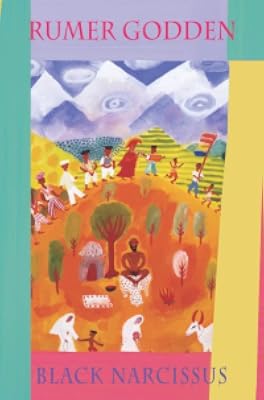
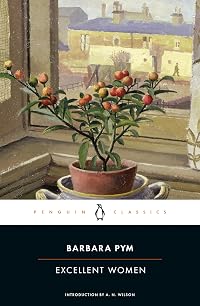
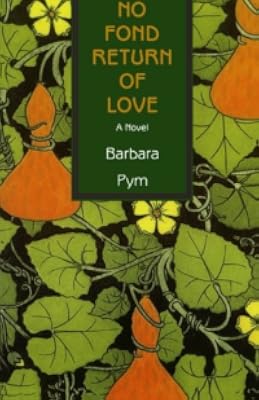
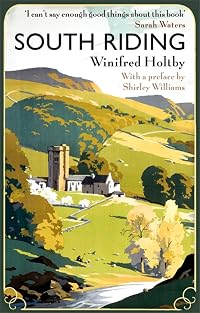
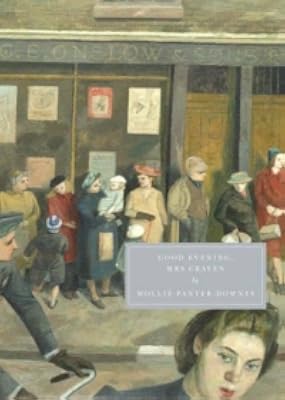
inge87 About nuns facing execution during the French Revolution, a subject that has a key role in This House of Brede

Yervant Both of these works offer realistic windows into religious life with its joys and hard work and the realities of humans living in community together.
CurrerBell The Corner That Held Them has a great deal of comedy and humor, while In This House of Brede is more serious in tone.
Member Reviews
Who knew a book about nuns would be a five star read?! I unexpectedly adored this book. It centers around a Benedictine chapter of nuns - the kind of nuns who lead a contemplative life of prayer and isolate from the outside world. Philippa Talbot makes the unusual choice, as a successful 40-something business woman, to join the order. She remains the central character, and her journey to truly accepting the lifestyle and fulling opening up her heart to it is the crux of the book. But also, we see the power dynamics, relationships navigated, illness, financial difficulties of the abbey, and how the changes in the Catholic church over the 1900s will affect the Benedictine lifestyle.
I don't consider myself at all religious anymore, and I show more know next to nothing about Catholicism. I was really ready to read the first 40 pages or so and set this one aside, but I was totally enamored. As you would expect, it's a quiet, reserved book, but the characters and situations also have a depth and heart that I loved.
I read this on my kindle from the library, and I'm really considering buying a hard copy for my shelves to reread some day. show less
I don't consider myself at all religious anymore, and I show more know next to nothing about Catholicism. I was really ready to read the first 40 pages or so and set this one aside, but I was totally enamored. As you would expect, it's a quiet, reserved book, but the characters and situations also have a depth and heart that I loved.
I read this on my kindle from the library, and I'm really considering buying a hard copy for my shelves to reread some day. show less
Picked this up as a Jo Walton's Reading List recommendation -- a little surprised that it kept my attention between the subject matter and the length -- but the writing is excellent, the connection with the seasons and descriptions of place, the characters and their slow unfolding and struggles and growth -- it's just compelling. I also love how much of this is an exploration of religious contemplation as an exercise: respectful, questioning, fervent in Christianity as one might expect, but also deeply personal, and deeply concerned with personal struggles in a way that doesn't restrict it to religious belief, and doesn't proselytize. I appreciate that for so many of them the vocation was... inconvenient, unsought, and yet so deeply felt.
Finished this on Easter, appropriately enough, since there are several great set pieces in the book that take place on Easter, and just in time for my book club discussion. We all loved the book, as did I—it's both smart and kind, and very well written. I've got a soft spot for nun stories, and the writing and structure here are great. It's a lovely portrait of the dynamics of an enclosed group of people deeply involved in each other's lives—really, anyone who thinks first person plural is an interesting way to get at a cluster consciousness but finds that it gets tiring after a while should take a look at what she does here, moving between voices and minds and even time frames with beautiful, almost acrobatic control, but the show more writing's never flashy. It's about NUNS, so of course it's not—small, deft story arcs, characters who grow through their voices and deeds, and what struck me as a beautiful portrait of the contemplative life without ever being sentimental. show less
this novel is quiet, and it is beautiful.
when i realized there were only 50 pages left, i started crying and am still. i loved this novel on its own, but as i read on and on i felt more and more as though i were reading with, even as, my mother. the benedictine principles of stability and usefulness atop the monastic vows were hers--both what she admired and what she embodied. what she strived to be is encapsulated in abbess catherine's affectionately wry take on the novitates' flights of spiritual exaltation: they long to sleep on bare boards and to kneel on hard floors but struggle to use a pencil down to its nub.
my mother was an indefatigable user of pencil-nubs.
when i realized there were only 50 pages left, i started crying and am still. i loved this novel on its own, but as i read on and on i felt more and more as though i were reading with, even as, my mother. the benedictine principles of stability and usefulness atop the monastic vows were hers--both what she admired and what she embodied. what she strived to be is encapsulated in abbess catherine's affectionately wry take on the novitates' flights of spiritual exaltation: they long to sleep on bare boards and to kneel on hard floors but struggle to use a pencil down to its nub.
my mother was an indefatigable user of pencil-nubs.
”The motto was ‘Pax,’ but the word was set in a circle of thorns. Pax: peace, but what a strange peace, made of unremitting toil and effort, seldom with a seen result; subject to constant interruptions, unexpected demands, short sleep at nights, little comfort, sometimes scant food, beset with disappointments and usually misunderstood; yet peace all the same, undeviating, filled with joy and gratitude and love. ‘It is my own peace I give unto you.’ Not, notice, the world’s peace."
Does that sound like something you would sign up for? And yet, over the centuries men and women did just that in order to gain the previously mentioned ‘peace’, accompanied by joy, gratitude and love. Phillippa Talbot was one of those women. show more Widowed during WWII, she was a very successful professional woman who had traveled throughout the world and managed hundreds of employees but felt something was missing. She made the unusual decision to leave her life among the London elites and join a cloistered Benedectine abbey, the ancient seaside Brede abbey. The narrative describes in gripping terms, all the crises that face Phillippa and the other members of the community and the sensitive ways they all choose to deal with them. The author’s rich characterizations made me admire these women, even though they weren’t all likable. Godden converted to Catholicism in 1968, the year before she wrote this book and spent three years living at the gate of a Benedectine abbey in England.
I’m not sure I can put my finger on the reason I loved this book as much as I did but I think I’m in good company. Its average LT rating is 4.36. I seldom reread but Im keeping this book with plans to read it again at some point. Simply sublime. show less
Does that sound like something you would sign up for? And yet, over the centuries men and women did just that in order to gain the previously mentioned ‘peace’, accompanied by joy, gratitude and love. Phillippa Talbot was one of those women. show more Widowed during WWII, she was a very successful professional woman who had traveled throughout the world and managed hundreds of employees but felt something was missing. She made the unusual decision to leave her life among the London elites and join a cloistered Benedectine abbey, the ancient seaside Brede abbey. The narrative describes in gripping terms, all the crises that face Phillippa and the other members of the community and the sensitive ways they all choose to deal with them. The author’s rich characterizations made me admire these women, even though they weren’t all likable. Godden converted to Catholicism in 1968, the year before she wrote this book and spent three years living at the gate of a Benedectine abbey in England.
I’m not sure I can put my finger on the reason I loved this book as much as I did but I think I’m in good company. Its average LT rating is 4.36. I seldom reread but Im keeping this book with plans to read it again at some point. Simply sublime. show less
Philippa Talbot has by all accounts been a successful business woman. But she is alone, a widow also grieving the loss of a child many years earlier, and questions whether she has truly found her purpose. When Philippa decides to enter a Benedictine monastery, she begins a journey towards finding both purpose and peace. Besides mastering Brede’s daily rituals, Philippa must also shed the trappings of her previous life, such as behaviors that put self before others. And she must blend into a community of women, each with both gifts and flaws, and work together to manage all aspects of the abbey’s operations, from worship to meals to health care.
While the main story arc is about Philippa’s journey, the novel is greatly enhanced by show more subplots that showcase its rich cast of characters. I became emotionally invested in every one of these women, and in the welfare of Brede as a whole. In This House of Brede stands the test of time and could be read again and again for new insights. show less
While the main story arc is about Philippa’s journey, the novel is greatly enhanced by show more subplots that showcase its rich cast of characters. I became emotionally invested in every one of these women, and in the welfare of Brede as a whole. In This House of Brede stands the test of time and could be read again and again for new insights. show less
Rumer Godden converted to Catholicism in 1968. Before she did, she took up residence in a gate house of an English abbey in preparation for writing her novel [In This House of Brede]. About a decade later, she wrote another novel that examined the cloistered life, [Five for Sorrow, Ten for Joy]. The Catholic Church has not had many positive examinations of late. With the scandals, it seems that the floodgates opened on seething and bitter critics. I am not, and have never been, a Catholic, so I’m probably not in a good position to comment on the fairness of it all. But I do consider myself a spiritual person. I believe in God, and I believe in a pursuing a way of life that is godly. From that standpoint, I do find it unfair that an show more entire religious group has been painted in such broad strokes. Every religion is at the mercy of its followers, because its followers are all human beings with weaknesses and failings. Personally, I believe the Catholic Church gets a lot of things wrong, but that doesn’t alter the fact that there are sincere and earnest believers in their ranks. Godden understood the struggle to live godly, and gave it life with [In This House of Brede].
Philippa Talbot, a widow, leaves her successful career in British Civil Service to enter a Benedictine monastery. In the Benedictine tradition, it takes at least five years before the nun enters into her solemn profession. During that time, Philippa strips away layer after layer of her old life, exposing her barest and most fundamental soul in service to others. Godden provides a window into the daily and yearly routine in the monastery. She also provides a window into the lives of the other members of the monastery during their journey. The most provocative element of Godden’s story is the daily struggle for these women as they try to live a more godly life.
So many books relegate religion and faith to extremists and crazies, to obsessed and hateful characters, full of bitterness and self-loathing so grand that it becomes a loathing for all humanity. When the Bible is mentioned in a story it is so commonly associated with a zealot or a fundamentalist, someone with a skewed perspective of God. But the nuns and priests of Godden’s [In This House of Brede] are common people, with common problems. They are not problems familiar to you or me because their lives have been boiled down to the very bone, boiled down to the point of basic morality. These problems lost in our frantic, sensory-overloaded lives. But here, in the midst of a life stripped bare, the inner battles of morality and goodness are important again. It is important to learn how to interact with others out of basic kindness and selfless service. When’s the last time kindness factored into our daily lives? How often do we calculate the best way to be fundamentally kind to someone at work or at the grocery store or on the road? We are all too caught up in our selfish calculation of what’s right or what we deserve or what we need. Such a thing as what’s the kind thing rarely blips on our radar.
Some see the monastic life as a retreat or an escape, and there is an element of those things present in it. In a bustling world, full of raw emotion and blatant temptation, it is harder to focus on inner morality, more of a battle. But there is nobility in people who seek to boil life down to basic goodness and service. I’m convinced that such people exist in every faith, every religion. Stories about these people can be just as provocative and valuable as any other kind of story about the human condition.
Bottom Line: A tale of simple spirituality, which is rarely simple and rarely indulged.
5 bones!!!!!
A favorite for the year. show less
Philippa Talbot, a widow, leaves her successful career in British Civil Service to enter a Benedictine monastery. In the Benedictine tradition, it takes at least five years before the nun enters into her solemn profession. During that time, Philippa strips away layer after layer of her old life, exposing her barest and most fundamental soul in service to others. Godden provides a window into the daily and yearly routine in the monastery. She also provides a window into the lives of the other members of the monastery during their journey. The most provocative element of Godden’s story is the daily struggle for these women as they try to live a more godly life.
So many books relegate religion and faith to extremists and crazies, to obsessed and hateful characters, full of bitterness and self-loathing so grand that it becomes a loathing for all humanity. When the Bible is mentioned in a story it is so commonly associated with a zealot or a fundamentalist, someone with a skewed perspective of God. But the nuns and priests of Godden’s [In This House of Brede] are common people, with common problems. They are not problems familiar to you or me because their lives have been boiled down to the very bone, boiled down to the point of basic morality. These problems lost in our frantic, sensory-overloaded lives. But here, in the midst of a life stripped bare, the inner battles of morality and goodness are important again. It is important to learn how to interact with others out of basic kindness and selfless service. When’s the last time kindness factored into our daily lives? How often do we calculate the best way to be fundamentally kind to someone at work or at the grocery store or on the road? We are all too caught up in our selfish calculation of what’s right or what we deserve or what we need. Such a thing as what’s the kind thing rarely blips on our radar.
Some see the monastic life as a retreat or an escape, and there is an element of those things present in it. In a bustling world, full of raw emotion and blatant temptation, it is harder to focus on inner morality, more of a battle. But there is nobility in people who seek to boil life down to basic goodness and service. I’m convinced that such people exist in every faith, every religion. Stories about these people can be just as provocative and valuable as any other kind of story about the human condition.
Bottom Line: A tale of simple spirituality, which is rarely simple and rarely indulged.
5 bones!!!!!
A favorite for the year. show less
Members
- Recently Added By
Lists

1001 Books You Must Read Before You Die
1,448 works; 1,134 members

Favourite Virago Modern Classics
183 works; 38 members

Recommend the 20 best books you've read in the last five years
2,168 works; 606 members

Books featuring monks and/or nuns
166 works; 33 members

Comfort Reads
221 works; 41 members

Books That Made Me Cry
199 works; 105 members

Favourite Books
1,819 works; 309 members

Top Five Books of 2014
1,064 works; 398 members

Top Five Books of 2017
757 works; 231 members

Books Read in 2014
2,343 works; 89 members

CONVENTional novels
19 works; 1 member
Monastic life
31 works; 1 member

I Could Live There
185 works; 12 members

Unmarried women
66 works; 6 members

Which house?
423 works; 16 members

Book Worlds We'd Like To Visit
322 works; 158 members

1960s
281 works; 16 members
Author Information

89+ Works 15,277 Members
Margaret Rumer Godden was born Dec. 10, 1907, in Sussex, England. She was nine months old when her family moved to India, where her father ran a shipping line. She returned to London at age 20 to learn how to teach dance to children, and opened a school back in India. Returning to England while she was pregnant, she wrote her first book, "Chinese show more Puzzle," published in 1936. Her marriage to a stockbroker, Laurence Sinclair Foster, ended in 1941, leaving her penniless. In an effort to pay off her former husband's debts, Godden moved her family into a mountain cottage where she ran a school, made herbal teas for sale, and wrote books. Another novel of India, "The River," published in 1949, was one of her most acclaimed books and was made into a film by Jean Renoir in 1951. She returned to England to stay in 1945. Rumer Godden was the author of more than 60 books, including novels, short story collections, poetry, plays and non-fiction. She published her 21st novel, "Cromartie vs. the God Shiva," in 1997. Rumer Godden died a year later on November 8, 1998, in Thornhill, Scotland, at the age of 90. (Bowker Author Biography) show less
Some Editions
Awards and Honors
Distinctions
Series
Belongs to Publisher Series
Work Relationships
Common Knowledge
- Original publication date
- 1969
- People/Characters
- Philippa Talbot; Dame Maura; Sister Cecily; Dame Agnes; Sister Julian; Dame Veronica
- Important places
- Brede Abbey
- Related movies
- In This House of Brede (1975 | IMDb)
- Dedication
- For J. L. H. D., who has endured us for five years.
- First words
- The motto was "Pax," but the word was set in a circle of thorns.
- Last words
- (Click to show. Warning: May contain spoilers.)A few minutes later it was over the sea.
- Blurbers
- Prescott, Orville
- Disambiguation notice
- Per WorldCat, ISBN 1111644489 is for Lab Manual to Accompany Refrigeration and Air Conditioning Technology: Concepts, Procedures, and Troubleshooting Techniques, 7th Edition by William C Whitman
Classifications
Statistics
- Members
- 1,611
- Popularity
- 14,071
- Reviews
- 37
- Rating
- (4.34)
- Languages
- Dutch, English, German
- Media
- Paper, Ebook
- ISBNs
- 21
- ASINs
- 24