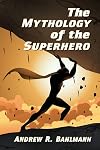
The Mythology of the Superhero
by Andrew R Bahlmann
On This Page
Description
Superheroes have been an integral part of popular society for decades and have given rise to a collective mythology familiar in popular culture worldwide. Though scholars and fans have recognized and commented on this mythology, its structure has gone largely unexplored. This book provides a model and lexicon for identifying the superhero mythos. The author examines the myth in several narratives--including Buffy the Vampire Slayer, Green Arrow and Beowulf--and discusses such diverse show more characters as Batman, Wolverine, Invincible and John Constantine. show lessTags
Recommendations



















Member Reviews
: I wrote my undergrad thesis on myth and fairy tale in Disney movies, and as such, read extensively about mythology in popular culture. This is one of the better books. With accessible prose, clear organization, logical points, and careful scholarship, Bahlmann intelligently explains the modern mythology of the superhero.
He begins by explaining what makes a superhero mythological – using “tropes” found in classic mythology, updated for the new era. Tropes like Androcentric, Codename, Sidekick, Justice over Law, and Orphan. He builds a framework for identify stories of the new mythology. In the subsequent chapters, he then applies this framework to several characters or groups of characters: Green Arrow, Buffy, Alphas, and show more Beowulf. He does not make an argument for or against (indeed he states that is not the purpose of the book) but simply shows how one might use the framework to identify, understand, and study superheroes as the new mythology.
He pulls his examples from a wide range of sources – comic books, of course, but also video games, television, and film. He clearly has extensive knowledge of superhero stories. In addition, he quotes scholars of mythology and popular cultures, including J. R. R. Tolkien, Joseph Campbell, and Arthur C. Clarke – as well as those currently studying this topic. This increased the value of his supplemental information, which includes a complete list of superhero tropes.
For anyone who enjoys superheroes or intellectual analysis of pop culture, I highly recommend this book. Fascinating and thought-provoking, it’s worth the time to read.
Note: I received this free as part of LibraryThing’s Early Review Program, in exchange for my fair and honest opinion show less
He begins by explaining what makes a superhero mythological – using “tropes” found in classic mythology, updated for the new era. Tropes like Androcentric, Codename, Sidekick, Justice over Law, and Orphan. He builds a framework for identify stories of the new mythology. In the subsequent chapters, he then applies this framework to several characters or groups of characters: Green Arrow, Buffy, Alphas, and show more Beowulf. He does not make an argument for or against (indeed he states that is not the purpose of the book) but simply shows how one might use the framework to identify, understand, and study superheroes as the new mythology.
He pulls his examples from a wide range of sources – comic books, of course, but also video games, television, and film. He clearly has extensive knowledge of superhero stories. In addition, he quotes scholars of mythology and popular cultures, including J. R. R. Tolkien, Joseph Campbell, and Arthur C. Clarke – as well as those currently studying this topic. This increased the value of his supplemental information, which includes a complete list of superhero tropes.
For anyone who enjoys superheroes or intellectual analysis of pop culture, I highly recommend this book. Fascinating and thought-provoking, it’s worth the time to read.
Note: I received this free as part of LibraryThing’s Early Review Program, in exchange for my fair and honest opinion show less
 This review was written for LibraryThing Early Reviewers.
Well written and very accessible, Bahlman's book provides a solid grounding for those looking to study more about the superhero motif in modern media, especially film and television. After a brief introduction to the vocabulary and methodology, each chapter focuses on using a specific example as the main way of interpreting and understanding a particular aspect of superhero mythology.
Personally, I would have liked to see more discussion of ancient superheroes from Classical, Norse, and world mythology, but I the author's approach is definitely well-suited to the Marvel-infused universe we seem to be inhabiting at the moment. This book would be a good read for those students who have expressed interest in superheroes, but maybe are show more looking for a more intellectual understanding and perspective. show less
Personally, I would have liked to see more discussion of ancient superheroes from Classical, Norse, and world mythology, but I the author's approach is definitely well-suited to the Marvel-infused universe we seem to be inhabiting at the moment. This book would be a good read for those students who have expressed interest in superheroes, but maybe are show more looking for a more intellectual understanding and perspective. show less
This review was written for LibraryThing Early Reviewers.This was not really what I was expecting when I volunteered to read it, but despite it being a dissertation turned into a book, I still found it to be very interesting and informative. It gave me a different perspective to consider when thinking about super heroes. I found parts to be a bit monotonous and a few sections could have been edited down to be a little clearer for your average reader, but overall, I felt it was worth the read for me. A scholarly work on the myth of superheroes and how to study them, both in understanding who fits into the myth and how does not and how closely a character fits.
This review was written for LibraryThing Early Reviewers.This books posits that the superhero story has the same relationship with culture as does mythology. The author breaks the superhero story into unique tropes, then shows how they relate to a variety of superhero stories.
The book has four distinct sections:
In the first section, chapter 1, he defines the different tropes and discusses them in the scope of one or more superhero stories.
In the second section, chapters 2-5, he performs more of an analysis of four series that he considers marginally superhero stories, these are Green Arrow, Buffy the Vampire Slayer, Alphas and Beowolf.
The third section, chapter 6, discusses the core ideas of a superhero story. It is similar to the first chapter in some ways, but approaches the idea from a show more different direction.
The last section, the appendix, is a list of the relevant tropes. This is inadequate, but is supplemented by a web page with a lot of information on it.
Overall, the book is interesting, he mentions that it is a common topic among some researchers and the boundaries of what constitutes a superhero story are not well defined.
I felt the second section was a bit slow. The book had to provide sufficient details on the storyline for a reader unfamiliar with the story can keep up. A lot of the information on various storylines was provided several times through the book.
He built arguments that stories (myths) correlate to culture. He built on that commenting that the superhero story had supplanted the western in our culture, and would eventually be replaced with something new. I was surprised that he did not discuss the possibility that the marginal superhero stories he did discuss could be part of this new and upcoming story. Theses stories, excluding Beowolf, are newer and have a strong tv influence. This influence was probably intentional by the directors translating a comic to the screen. But this does correspond to a culture change, where the screen is replacing most written forms of communication.
I did find the book interesting. I felt it was too short, it had too little information and too much redundancy to be excellent. show less
The book has four distinct sections:
In the first section, chapter 1, he defines the different tropes and discusses them in the scope of one or more superhero stories.
In the second section, chapters 2-5, he performs more of an analysis of four series that he considers marginally superhero stories, these are Green Arrow, Buffy the Vampire Slayer, Alphas and Beowolf.
The third section, chapter 6, discusses the core ideas of a superhero story. It is similar to the first chapter in some ways, but approaches the idea from a show more different direction.
The last section, the appendix, is a list of the relevant tropes. This is inadequate, but is supplemented by a web page with a lot of information on it.
Overall, the book is interesting, he mentions that it is a common topic among some researchers and the boundaries of what constitutes a superhero story are not well defined.
I felt the second section was a bit slow. The book had to provide sufficient details on the storyline for a reader unfamiliar with the story can keep up. A lot of the information on various storylines was provided several times through the book.
He built arguments that stories (myths) correlate to culture. He built on that commenting that the superhero story had supplanted the western in our culture, and would eventually be replaced with something new. I was surprised that he did not discuss the possibility that the marginal superhero stories he did discuss could be part of this new and upcoming story. Theses stories, excluding Beowolf, are newer and have a strong tv influence. This influence was probably intentional by the directors translating a comic to the screen. But this does correspond to a culture change, where the screen is replacing most written forms of communication.
I did find the book interesting. I felt it was too short, it had too little information and too much redundancy to be excellent. show less
This review was written for LibraryThing Early Reviewers.I thought that I knew what I was getting into when I began "The Mythology of the Superhero", but I was wrong. Author Andrew Bahlmann presented a well-written and well-researched book that went much deeper into superheroes than I thought it would. My superhero background is mostly from watching movies, with a few comics thrown in here and there, so maybe that is why it caught me off guard. The Notes section in the back alone makes this book worth the read, and I found it very helpful while reading through the book. I would recommend this book to any superhero fan.
This review was written for LibraryThing Early Reviewers.I had anticipated more of a casual writing style for this book, but it's really very academic in its approach of superheroes, most especially modern and in TV and movies. This is a serious work that would fit in on a research shelf for folklorists/mythologists.
I guess at the end I was a bit disappointed that "superhero" wasn't a bit more broadly defined - like Perseus, Percy Jackson, Beowulf, heroes like that. But it was perfect for DC/Marvel examples.
I guess at the end I was a bit disappointed that "superhero" wasn't a bit more broadly defined - like Perseus, Percy Jackson, Beowulf, heroes like that. But it was perfect for DC/Marvel examples.
This review was written for LibraryThing Early Reviewers.This highly theoretical treatment of the "superhero myth" confesses its key dependence on a 2006 monograph by Peter Coogan (Superhero: The Secret Origin of a Genre), as well as the tvtropes.org website. The Mythology of the Superhero is a dissertation-based product in which author Andrew Bahlmann commits rather banal scholarship. He treats discursive tropes and "mythemes" as equivalent and convertible concepts, without much detailing the original context or background of either theoretical category. Claiming to be taking only preliminary steps in the field, he sets out a delineation of the superhero myth through a system of family resemblance identified with a body of principal mythemes. At the end, he prioritizes these mythemes in a show more structure that allows for characters to be identified with a mythically-ideal superhero to a greater or lesser degree.
In between the inventory of mythemes and the structural model, Bahlmann applies his trope-based analysis in four case studies of increasingly marginal relevance to the superhero myth: the television series Arrow (with its comic-book precedents), Buffy the Vampire Slayer, and Alphas, and the Old English epic Beowulf. The chapter for this fourth one is misleadingly titled "The Superhero before the Superhero," since ultimately (and unsurprisingly) Bahlmann finds that despite the presence of some of his selected tropes, Beowulf is not a good example of a superhero story, and that its usefulness in this context is to demonstrate some continuity between superheroes and older cycles of myth, rather than the ancient existence of a superhero myth per se.
With his admitted reliance on other twenty-first-century scholarship in the relatively narrow subject of superheroes and myth, it appears that Bahlmann is only advancing the discussion in the most incremental way, and I wasn't impressed with the analytic potential of his method or the tools he claims to have produced. He seems to avoid value judgments, taking the pose of very neutral scholarship. And finally, the book is poorly written, with errors of grammar and diction common throughout. I found it a chore to read, and I cannot recommend it. show less
In between the inventory of mythemes and the structural model, Bahlmann applies his trope-based analysis in four case studies of increasingly marginal relevance to the superhero myth: the television series Arrow (with its comic-book precedents), Buffy the Vampire Slayer, and Alphas, and the Old English epic Beowulf. The chapter for this fourth one is misleadingly titled "The Superhero before the Superhero," since ultimately (and unsurprisingly) Bahlmann finds that despite the presence of some of his selected tropes, Beowulf is not a good example of a superhero story, and that its usefulness in this context is to demonstrate some continuity between superheroes and older cycles of myth, rather than the ancient existence of a superhero myth per se.
With his admitted reliance on other twenty-first-century scholarship in the relatively narrow subject of superheroes and myth, it appears that Bahlmann is only advancing the discussion in the most incremental way, and I wasn't impressed with the analytic potential of his method or the tools he claims to have produced. He seems to avoid value judgments, taking the pose of very neutral scholarship. And finally, the book is poorly written, with errors of grammar and diction common throughout. I found it a chore to read, and I cannot recommend it. show less
This review was written for LibraryThing Early Reviewers.Members
- Recently Added By
Author Information
1 Work 28 Members
Classifications
- Genres
- Nonfiction, Literature Studies and Criticism, Graphic Novels & Comics, General Nonfiction
- DDC/MDS
- 741.5 — Arts & recreation Drawing & decorative arts Drawing Comic books, graphic novels, fotonovelas, cartoons, caricatures, comic strips
- LCC
- PN6725 .B27 — Language and Literature Literature (General) Literature (General) Collections of general literature Comic books, strips, etc.
- BISAC
Statistics
- Members
- 28
- Popularity
- 983,292
- Reviews
- 10
- Rating
- (3.22)
- Languages
- English
- Media
- Paper, Ebook
- ISBNs
- 2