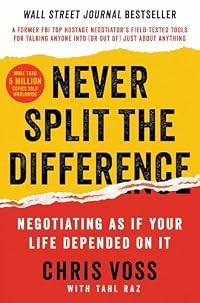
Never Split the Difference: Negotiating As If Your Life Depended on It
by Chris Voss 
On This Page
Description
A former international hostage negotiator for the FBI offers a new, field-tested approach to high-stakes negotiations-whether in the boardroom or at home. After a stint policing the rough streets of Kansas City, Missouri, Chris Voss joined the FBI, where his career as a hostage negotiator brought him face-to-face with a range of criminals, including bank robbers and terrorists. Reaching the pinnacle of his profession, he became the FBI's lead international kidnapping negotiator. Never Split show more the Difference takes you inside the world of high-stakes negotiations and into Voss's head, revealing the skills that helped him and his colleagues succeed where it mattered most: saving lives. In this practical guide, he shares the nine effective principles-counterintuitive tactics and strategies-you too can use to become more persuasive in both your professional and personal life. Life is a series of negotiations you should be prepared for: buying a car, negotiating a salary, buying a home, renegotiating rent, deliberating with your partner. Taking emotional intelligence and intuition to the next level, Never Split the Difference gives you the competitive edge in any discussion. show lessTags
Recommendations



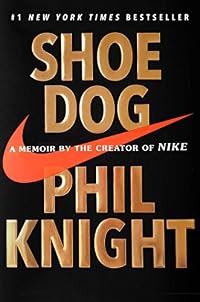
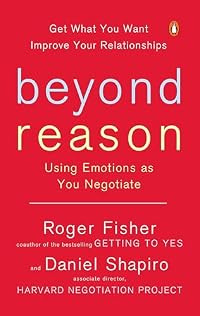
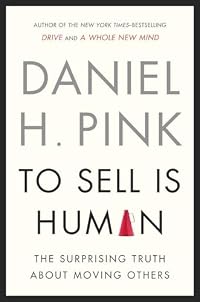
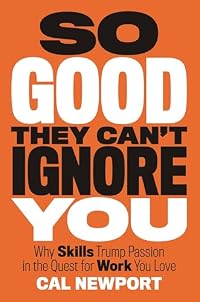
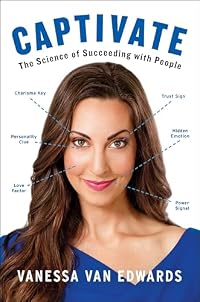
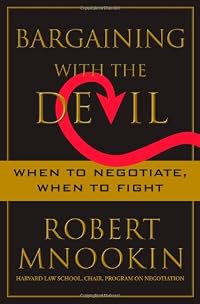
Member Recommendations
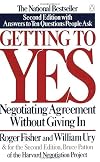
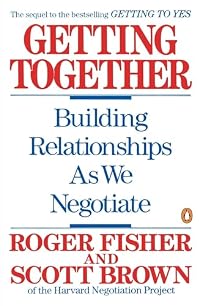
supersidvicious Whilst the work of Fisher, Ury and Patton is the reference for collaborative decision making, Voss goes beyond win-win goal to explain how to sketch out negotiations to win all making at the same time your counterpart satisfied using emotional intelligence.
Member Reviews
Honestly, I got a weird feeling when I first read the title because it felt almost like a call to arms, like I was being told that the idea of compromise was utterly insane...
and I was right. It is. But not for the sake of arguing for argument's sake. It's funny, but I really liked this book. Any book that has a call to arms like this but keeps a central tenant like "tactical empathy" and "Really, truly listening to someone" isn't crazy.
And besides, it reminds me of the old story of Solomon and the two mothers who both insist that this one baby is their own and they're totally inconsolable about it. Wise old Solomon commands them to split the baby in half and let each mother take the half they want.
That's TOTALLY LEGIT, man.
The Solomon show more story isn't in this book but it ought to be. Instead, the author just went through Quantico and has done an amazing number of successful hostage negotiations and has helped a ton of people get exactly what they want in the business world.
How? A hint: he's never belligerent. He listens, mirrors what they're saying, and stays in calm control. And when I mean he listens, he truly, actively tries to understand exactly where the other person is coming from... and then finds a solution. Often it's not even the thing the other person asks for, but simply what they need. Understanding, validation, reassurance that they won't be murdered by cops if they come out with their hands up.
Those kinds of things. :)
I simplify, of course, but this book has a ton of great practical exercises to diffuse situations and actively engage whomever you're in negotiations with. When there is a consensus, real progress can be made. That means welcoming every "no" at the table. That merely defines the context. Yes's are fine, but defining the context will get to the heart of what people really want... and oddly enough, it's usually a lot less than or completely different from what they initially demanded.
Of course, it may take a bit more time to figure out the baby situation, but here's a little hint... the mother that screams and gives up her right to the baby probably loves the baby more. I'd trust her. show less
and I was right. It is. But not for the sake of arguing for argument's sake. It's funny, but I really liked this book. Any book that has a call to arms like this but keeps a central tenant like "tactical empathy" and "Really, truly listening to someone" isn't crazy.
And besides, it reminds me of the old story of Solomon and the two mothers who both insist that this one baby is their own and they're totally inconsolable about it. Wise old Solomon commands them to split the baby in half and let each mother take the half they want.
That's TOTALLY LEGIT, man.
The Solomon show more story isn't in this book but it ought to be. Instead, the author just went through Quantico and has done an amazing number of successful hostage negotiations and has helped a ton of people get exactly what they want in the business world.
How? A hint: he's never belligerent. He listens, mirrors what they're saying, and stays in calm control. And when I mean he listens, he truly, actively tries to understand exactly where the other person is coming from... and then finds a solution. Often it's not even the thing the other person asks for, but simply what they need. Understanding, validation, reassurance that they won't be murdered by cops if they come out with their hands up.
Those kinds of things. :)
I simplify, of course, but this book has a ton of great practical exercises to diffuse situations and actively engage whomever you're in negotiations with. When there is a consensus, real progress can be made. That means welcoming every "no" at the table. That merely defines the context. Yes's are fine, but defining the context will get to the heart of what people really want... and oddly enough, it's usually a lot less than or completely different from what they initially demanded.
Of course, it may take a bit more time to figure out the baby situation, but here's a little hint... the mother that screams and gives up her right to the baby probably loves the baby more. I'd trust her. show less
This was an intriguing read, but it fell short for me. The book shines when Voss delves into thrilling, adrenaline-pumping anecdotes from his FBI days, whether it's negotiating with terrorists in harsh jungle environments or defusing intense bank robber hostage situations. These stories held my attention, and if the book were entirely made up of such captivating tales, it would have been a home run!
When the subject matter shifts from high-stakes hostage situations to corporate boardroom negotiations, the narrative loses some of its appeal. While I understand that it was important for Voss to cover a variety of negotiation scenarios, the abrupt shift from life-or-death situations to business deals felt jarring and caused any lingering show more intrigue to vanish. I would have preferred it if Voss had provided more relatable scenarios for the average reader.
The text's constant repetition is another area where the book could have been improved. The same ideas are repeated throughout, but using different anecdotes. If the author had taken these opportunities to elaborate on different aspects of his negotiation techniques or share more varied experiences, the reader would have gained more value.
I had mixed feelings about the negotiation techniques themselves. The book introduces some intriguing concepts, such as the value of tactical empathy and the use of calibrated questions. However, I began to doubt whether these methods had the transformative power Voss touted. It would have been more convincing if the author had gone into greater detail about why these techniques work, perhaps by grounding them in psychological or sociological theories.
The book appears to oversell its techniques, making it difficult to accept every success story at face value. It's all too convenient: every friend or student who tried Voss' methods appears to have struck gold. A more balanced portrayal of successes and failures, or an acknowledgement that negotiation outcomes are also influenced by factors outside of one's control, would have enhanced the book's credibility.
Despite its flaws, "Never Split the Difference" has its moments. Voss's high-stakes negotiation stories are entertaining to read, and there are some valuable takeaways. In our increasingly disconnected world, the emphasis on empathy in negotiation, for example, is a much-needed reminder.
In short, this is an okay read, but don't expect it to provide the holy grail of negotiation strategies. show less
When the subject matter shifts from high-stakes hostage situations to corporate boardroom negotiations, the narrative loses some of its appeal. While I understand that it was important for Voss to cover a variety of negotiation scenarios, the abrupt shift from life-or-death situations to business deals felt jarring and caused any lingering show more intrigue to vanish. I would have preferred it if Voss had provided more relatable scenarios for the average reader.
The text's constant repetition is another area where the book could have been improved. The same ideas are repeated throughout, but using different anecdotes. If the author had taken these opportunities to elaborate on different aspects of his negotiation techniques or share more varied experiences, the reader would have gained more value.
I had mixed feelings about the negotiation techniques themselves. The book introduces some intriguing concepts, such as the value of tactical empathy and the use of calibrated questions. However, I began to doubt whether these methods had the transformative power Voss touted. It would have been more convincing if the author had gone into greater detail about why these techniques work, perhaps by grounding them in psychological or sociological theories.
The book appears to oversell its techniques, making it difficult to accept every success story at face value. It's all too convenient: every friend or student who tried Voss' methods appears to have struck gold. A more balanced portrayal of successes and failures, or an acknowledgement that negotiation outcomes are also influenced by factors outside of one's control, would have enhanced the book's credibility.
Despite its flaws, "Never Split the Difference" has its moments. Voss's high-stakes negotiation stories are entertaining to read, and there are some valuable takeaways. In our increasingly disconnected world, the emphasis on empathy in negotiation, for example, is a much-needed reminder.
In short, this is an okay read, but don't expect it to provide the holy grail of negotiation strategies. show less
Ladies and gentlemen, I am a fool for reading this book and thinking that it would help make me a better negotiator. Furthermore, I believe that many of the positive reviews of this book are from people who enjoyed reading it and believe that they must be better negotiators because they've worked to internalize its lessons, but who have never actually tried to put them into practice.
Voss is an exciting writer and you believe his stories, even though they are almost without exception stories of his incredible triumphs. It may not strike you, though, as it didn't strike me, that he rarely tells a story of failing a negotiation and learning from the failure. Take one of the few examples in the book that isn't from a crime scene. He saw the show more truck of his dreams. The dealer was asking $36,000 for it. (We gather that this was some years ago.) Voss goes into the dealership and sits there saying "no" to every dealer offer until he gets the price he wants: $30,000, or over 16% off the asking price.
It's an impressive story, until you stop to think about how lucky Voss was. After all, the dealership was clearly at least as motivated to sell the truck to him as he was to buy the truck. What if they had been more confident that they could sell the truck to someone else at the price they were asking? After all, the truck was a unique piece — that's why Voss wanted it so badly. And what if the dealer's cost for the truck was well above Voss's $30,000 figure, and they were not willing to sell at a loss? Voss's book doesn't deal with these scenarios. His stories rarely involve insurmountable roadblocks or necessary compromises. They're all about Voss, the best negotiator in the world, getting what he wants from a transaction. But we, his readers, are not as talented as Voss. We need not just to be fired up with stories of triumph, but to learn from difficult situations.
You guessed it: I went into a car dealership with Voss's book under my belt and tried to deal. It went wrong every which way. First, the dealership wouldn't come down on price — at all. And why should they? I was trying to buy a particular model in low supply and high demand. Second, when the dealership determined that I was trying to get a deal, they switched me from the initial salesperson, whom I liked, to another with a different attitude. The friendliness level dropped quickly, and that threw me. The simple fact was that I wanted to buy the car from them much more than they wanted to sell the car to me (in particular). And I'd missed one of Voss's implied lessons — one that he doesn't spell out, because it arises naturally from his personality: never lose your cool. Stay smiling. I wasn't prepared for the roadblocks I encountered, and when I lost my cool the game was over.
Eventually, I put a deposit down on the car. At full price. Weeks later, I'm still stinging.
I think that if you are more like me than like Voss — that is, if you sometimes experience social anxiety in difficult situations, if you are often unsure of yourself, if you tend to be trusting until you suddenly are not, or if you are more of an introvert than an extravert — you will get yourself into trouble by learning Voss's tips, because the greater lessons are ones that he never thinks to spell out.
On the other hand, if you, like Voss, are extraverted, easy-going, like to tussle a bit, then maybe this book will help you better play a game you probably already play pretty well.
Buyer beware. show less
Voss is an exciting writer and you believe his stories, even though they are almost without exception stories of his incredible triumphs. It may not strike you, though, as it didn't strike me, that he rarely tells a story of failing a negotiation and learning from the failure. Take one of the few examples in the book that isn't from a crime scene. He saw the show more truck of his dreams. The dealer was asking $36,000 for it. (We gather that this was some years ago.) Voss goes into the dealership and sits there saying "no" to every dealer offer until he gets the price he wants: $30,000, or over 16% off the asking price.
It's an impressive story, until you stop to think about how lucky Voss was. After all, the dealership was clearly at least as motivated to sell the truck to him as he was to buy the truck. What if they had been more confident that they could sell the truck to someone else at the price they were asking? After all, the truck was a unique piece — that's why Voss wanted it so badly. And what if the dealer's cost for the truck was well above Voss's $30,000 figure, and they were not willing to sell at a loss? Voss's book doesn't deal with these scenarios. His stories rarely involve insurmountable roadblocks or necessary compromises. They're all about Voss, the best negotiator in the world, getting what he wants from a transaction. But we, his readers, are not as talented as Voss. We need not just to be fired up with stories of triumph, but to learn from difficult situations.
You guessed it: I went into a car dealership with Voss's book under my belt and tried to deal. It went wrong every which way. First, the dealership wouldn't come down on price — at all. And why should they? I was trying to buy a particular model in low supply and high demand. Second, when the dealership determined that I was trying to get a deal, they switched me from the initial salesperson, whom I liked, to another with a different attitude. The friendliness level dropped quickly, and that threw me. The simple fact was that I wanted to buy the car from them much more than they wanted to sell the car to me (in particular). And I'd missed one of Voss's implied lessons — one that he doesn't spell out, because it arises naturally from his personality: never lose your cool. Stay smiling. I wasn't prepared for the roadblocks I encountered, and when I lost my cool the game was over.
Eventually, I put a deposit down on the car. At full price. Weeks later, I'm still stinging.
I think that if you are more like me than like Voss — that is, if you sometimes experience social anxiety in difficult situations, if you are often unsure of yourself, if you tend to be trusting until you suddenly are not, or if you are more of an introvert than an extravert — you will get yourself into trouble by learning Voss's tips, because the greater lessons are ones that he never thinks to spell out.
On the other hand, if you, like Voss, are extraverted, easy-going, like to tussle a bit, then maybe this book will help you better play a game you probably already play pretty well.
Buyer beware. show less
Wondering if my head can take another self-help book before losing the motivation to read at all, Chris Voss' Never Split the Difference: Negotiating As If Your Life Depended On It got me interested because it countered the approach of another negotiation book named "Getting to Yes".
Not having read that one, Chris did convince me that his approach is better, but what else to expect from an ex-FBI negotiator, right?
But it wasn't so much the actual self-help lessons he relays that kept me ..well, listening in this case, as I found an audiobook version of it in the original English language this time, read by Michael Kramer.
And boy, does Michael do a good job of bringing the content across!
Similar to Kahneman's Thinking, Fast and Slow, show more most of the content is of life experiences, but this time they're _actually_ impressive stories, and listening to it was surprisingly enjoyable, with DJ-voice and all!
I have had some experience with most of the techniques, and never heard them named so specifically or used them so intentionally, until an hour before I finished the book: I wanted to get my boss to change the date of my performance review and I got a direct "No, that's impossible.", which only required one follow-up
with some mirroring, labeling, giving some illusion of control.. and the answer changed to "I'm going to see what I can do!".
Considering that I would actually advise friend and family to read this book, I'm giving it the extra 0.5 star on top of 4. show less
Not having read that one, Chris did convince me that his approach is better, but what else to expect from an ex-FBI negotiator, right?
But it wasn't so much the actual self-help lessons he relays that kept me ..well, listening in this case, as I found an audiobook version of it in the original English language this time, read by Michael Kramer.
And boy, does Michael do a good job of bringing the content across!
Similar to Kahneman's Thinking, Fast and Slow, show more most of the content is of life experiences, but this time they're _actually_ impressive stories, and listening to it was surprisingly enjoyable, with DJ-voice and all!
I have had some experience with most of the techniques, and never heard them named so specifically or used them so intentionally, until an hour before I finished the book: I wanted to get my boss to change the date of my performance review and I got a direct "No, that's impossible.", which only required one follow-up
with some mirroring, labeling, giving some illusion of control.. and the answer changed to "I'm going to see what I can do!".
Considering that I would actually advise friend and family to read this book, I'm giving it the extra 0.5 star on top of 4. show less
From one perspective, negotiations are the art of the possible, of finding an acceptable middle ground between two opposing views so that both sides walk away happy. Voss does not take that perspective. He's a retired FBI hostage negotiator, specializing in international kidnappings, and half a hostage is worse than none. Negotiations aren't a logic puzzle to be solved with game theories, but an emotional war where empathy, insight, and the judo of tactical questions are your keys to success.
Run The Jewels/DJ Shadow - Nobody Speak
A masterclass in negotiation.
The chapters in this book are framed around various criminal cases, each of which reveal some hard lesson Voss learned in his career. And while hostage negotiations are really show more fraught, the advice should apply to more mundane negotiations over salary and major purchases. The basic framework is one of emotional judo. You want the other party to wind up taking your side, doing your work for you, which involves understanding their worldview and what they really want. The first principle is to avoid emotional defensiveness. A basic question of "How can I do that?" can work wonders in getting people to see your side of the issue. Letting someone say no at first can give them the emotional comfort necessary to say yes to the big ask. A technique called labelling, where you explicitly talk about obstacles to success, including your own flaws, can help defuse tensions, while labelling what you believe the other side thinks is important can clarify real issues. When the other side is acting irrationally, look for circumstances beyond their control which might be driving their statements. And finally, use the Ackerman system for pricing. Have a real target of 100%, and start from 65%, to 85%, 95%, and finally close at 100%. Specific, non-round numbers and high anchoring help you squeeze every last dollar out of a deal.
I'm not good at negotiating. I've definitely gotten screwed at the car dealership, but then again who hasn't. Hopefully, this book will help me negotiate better. show less
Run The Jewels/DJ Shadow - Nobody Speak
A masterclass in negotiation.
The chapters in this book are framed around various criminal cases, each of which reveal some hard lesson Voss learned in his career. And while hostage negotiations are really show more fraught, the advice should apply to more mundane negotiations over salary and major purchases. The basic framework is one of emotional judo. You want the other party to wind up taking your side, doing your work for you, which involves understanding their worldview and what they really want. The first principle is to avoid emotional defensiveness. A basic question of "How can I do that?" can work wonders in getting people to see your side of the issue. Letting someone say no at first can give them the emotional comfort necessary to say yes to the big ask. A technique called labelling, where you explicitly talk about obstacles to success, including your own flaws, can help defuse tensions, while labelling what you believe the other side thinks is important can clarify real issues. When the other side is acting irrationally, look for circumstances beyond their control which might be driving their statements. And finally, use the Ackerman system for pricing. Have a real target of 100%, and start from 65%, to 85%, 95%, and finally close at 100%. Specific, non-round numbers and high anchoring help you squeeze every last dollar out of a deal.
I'm not good at negotiating. I've definitely gotten screwed at the car dealership, but then again who hasn't. Hopefully, this book will help me negotiate better. show less
Book title and author: Never Split the Difference: Negotiating As If Your Life Depended On It by Chris Voss. Reviewed 9/24/23
Why I picked this book up: after winning the Workbook for Never Split the Difference: Negotiating As If Your Life Depended On It by Chris Voss back in July or August 2023 I really wanted to read the actual book so bought this one and am happy I did.
Thoughts: This author did life and death negotiations while mine are nothing close to that but he did cover things that were up my alley as a psychologist. He correctly pointed out “Listening is not a passive activity. It is the most active thing you can do.” People want to be understood and accepted. Listening is the cheapest, yet most effective concession we can show more make to get there. By listening intensely, a negotiator demonstrates empathy and shows a sincere desire to better understand what the other side is experiencing. It begins with listening, making it about the other people, validating their emotions, and creating enough trust and safety for a real conversation to begin. This book did a splendid job teaching the importance of navigating crucial conversations with impact. With the right techniques, we can find win-win situations. Active Listening, Asking Open Questions, Showing Empathy, and Summarizing. He shows The importance to embrace regular, thoughtful conflict as the basis of effective negotiation—and of life. Listening. Listening is not a passive activity. It is the most active thing you can do. It begins with listening, making it about the other people, validating their emotions, and creating enough trust and safety for a real conversation to begin.
Good negotiators are ready for surprises; great negotiators aim to use their skills to reveal the surprises they are certain exist. The goal is to identify what your counterparts actually need (monetarily, emotionally, or otherwise) and get them feeling safe enough to talk and talk and talk some more about what they want. The latter will help you discover the former.
Behavioral Change Stairway Model (BCSM). The model proposes five stages—active listening, empathy, rapport, influence, and behavioral change—that take any negotiator from listening to influencing behavior.
Creating unconditional positive regard opens the door to changing thoughts and behaviors. Humans have an innate urge toward socially constructive behavior. The more a person feels understood, and positively affirmed in that understanding, the more likely that urge for constructive behavior will take hold.
Create a Subtle Epiphany
The sweetest two words in any negotiation are actually “That’s right.”
You don’t want to hear “You’re right.”
This indicates they see the solution as yours, not theirs.
Negotiation is about finding irrational blind spots, hidden needs, and undeveloped notions.
Don’t Compromise
Deadlines are often arbitrary, almost always flexible, and hardly ever trigger the consequences we think—or are told—they will.
As a negotiator, you should always be aware of which side, at any given moment, feels they have the most to lose if negotiations collapse.
People trust those who are in their in-group. Belonging is a primal instinct. And if you can trigger that instinct, that sense that, “Oh, we see the world the same way,” then you immediately gain influence.
Bottom line: People who expect more (and articulate it) get more.
Embrace Conflict
People generally fear conflict, so they avoid useful arguments out of fear that the tone will escalate into personal attacks they cannot handle.
Embrace regular, thoughtful conflict as the basis of effective negotiation—and of life.
More than a little research has shown that genuine, honest conflict between people over their goals actually helps energize the problem-solving process in a collaborative way.
With the style of negotiation taught in the book—an information-obsessed, empathic search for the best possible deal—you are trying to uncover value, period. Not to strong-arm or to humiliate.
Decades of goal-setting research is clear that people who set specific, challenging, but realistic goals end up getting better deals than those who don’t set goals or simply strive to do their best.
There are fill-in-the-blank labels that can be used in nearly every situation to extract information from your counterpart, or defuse an accusation:
It seems like _________ is valuable to you.
It seems like you don’t like _________.
It seems like you value __________.
It seems like _________ makes it easier.
It seems like you’re reluctant to _________.
Effective negotiators look past their counterparts’ stated positions (what the party demands) and delve into their underlying motivations (what is making them want what they want).
Never forget that a loss stings at least twice as much as an equivalent gain.
Why I finished this read: all of the above reasons and it was fun seeing psychology in action.
Stars rating: 5 of 5 as it covered what I was looking for and I enjoyed it that much. show less
Why I picked this book up: after winning the Workbook for Never Split the Difference: Negotiating As If Your Life Depended On It by Chris Voss back in July or August 2023 I really wanted to read the actual book so bought this one and am happy I did.
Thoughts: This author did life and death negotiations while mine are nothing close to that but he did cover things that were up my alley as a psychologist. He correctly pointed out “Listening is not a passive activity. It is the most active thing you can do.” People want to be understood and accepted. Listening is the cheapest, yet most effective concession we can show more make to get there. By listening intensely, a negotiator demonstrates empathy and shows a sincere desire to better understand what the other side is experiencing. It begins with listening, making it about the other people, validating their emotions, and creating enough trust and safety for a real conversation to begin. This book did a splendid job teaching the importance of navigating crucial conversations with impact. With the right techniques, we can find win-win situations. Active Listening, Asking Open Questions, Showing Empathy, and Summarizing. He shows The importance to embrace regular, thoughtful conflict as the basis of effective negotiation—and of life. Listening. Listening is not a passive activity. It is the most active thing you can do. It begins with listening, making it about the other people, validating their emotions, and creating enough trust and safety for a real conversation to begin.
Good negotiators are ready for surprises; great negotiators aim to use their skills to reveal the surprises they are certain exist. The goal is to identify what your counterparts actually need (monetarily, emotionally, or otherwise) and get them feeling safe enough to talk and talk and talk some more about what they want. The latter will help you discover the former.
Behavioral Change Stairway Model (BCSM). The model proposes five stages—active listening, empathy, rapport, influence, and behavioral change—that take any negotiator from listening to influencing behavior.
Creating unconditional positive regard opens the door to changing thoughts and behaviors. Humans have an innate urge toward socially constructive behavior. The more a person feels understood, and positively affirmed in that understanding, the more likely that urge for constructive behavior will take hold.
Create a Subtle Epiphany
The sweetest two words in any negotiation are actually “That’s right.”
You don’t want to hear “You’re right.”
This indicates they see the solution as yours, not theirs.
Negotiation is about finding irrational blind spots, hidden needs, and undeveloped notions.
Don’t Compromise
Deadlines are often arbitrary, almost always flexible, and hardly ever trigger the consequences we think—or are told—they will.
As a negotiator, you should always be aware of which side, at any given moment, feels they have the most to lose if negotiations collapse.
People trust those who are in their in-group. Belonging is a primal instinct. And if you can trigger that instinct, that sense that, “Oh, we see the world the same way,” then you immediately gain influence.
Bottom line: People who expect more (and articulate it) get more.
Embrace Conflict
People generally fear conflict, so they avoid useful arguments out of fear that the tone will escalate into personal attacks they cannot handle.
Embrace regular, thoughtful conflict as the basis of effective negotiation—and of life.
More than a little research has shown that genuine, honest conflict between people over their goals actually helps energize the problem-solving process in a collaborative way.
With the style of negotiation taught in the book—an information-obsessed, empathic search for the best possible deal—you are trying to uncover value, period. Not to strong-arm or to humiliate.
Decades of goal-setting research is clear that people who set specific, challenging, but realistic goals end up getting better deals than those who don’t set goals or simply strive to do their best.
There are fill-in-the-blank labels that can be used in nearly every situation to extract information from your counterpart, or defuse an accusation:
It seems like _________ is valuable to you.
It seems like you don’t like _________.
It seems like you value __________.
It seems like _________ makes it easier.
It seems like you’re reluctant to _________.
Effective negotiators look past their counterparts’ stated positions (what the party demands) and delve into their underlying motivations (what is making them want what they want).
Never forget that a loss stings at least twice as much as an equivalent gain.
Why I finished this read: all of the above reasons and it was fun seeing psychology in action.
Stars rating: 5 of 5 as it covered what I was looking for and I enjoyed it that much. show less
Chris Voss, a former FBI hostage negotiator, offers a different approach to the art of negotiation in his book Never Split the Difference. Through his experience spanning 20 years Voss has realized that older methods for negotiation, relying more on facts and logic, run counter to human nature and how we, as humans, make decisions. He proposes that we embrace human nature and adopt strategies that feel counterintuitive by taking emotional intelligence, targeted empathy and active listening skills to the next level to become more persuasive in our daily interactions. This was a refreshing point of view and Voss's techniques have many applications to all sorts of interactions between people, not just negotiations.
Each chapter starts with show more a real negotiation scenario from Chris's past, be it hostage situations with lives on the line or a class setting for training, then follows it up with insights into what worked and what didn't during the situation. He even highlights a spectacular failure and why things went as wrong as it did. Each chapter builds upon the previous with pointers on how to use the skills in combination with each other or individually. Each chapter ends with a summary that are great to refer back to. My kindle tells me I highlighted 92 passages I found so many things I want to review and remember.
After reading the book I have been working on integrating some of Voss's advice into my every day life. I think it's slowly helping me improve my social skills and daily interactions with others. It's definitely a work in progress. I'll be rereading parts of this book often. show less
Each chapter starts with show more a real negotiation scenario from Chris's past, be it hostage situations with lives on the line or a class setting for training, then follows it up with insights into what worked and what didn't during the situation. He even highlights a spectacular failure and why things went as wrong as it did. Each chapter builds upon the previous with pointers on how to use the skills in combination with each other or individually. Each chapter ends with a summary that are great to refer back to. My kindle tells me I highlighted 92 passages I found so many things I want to review and remember.
After reading the book I have been working on integrating some of Voss's advice into my every day life. I think it's slowly helping me improve my social skills and daily interactions with others. It's definitely a work in progress. I'll be rereading parts of this book often. show less
Members
- Recently Added By
Published Reviews
ThingScore 100
What sets in this book apart is its emphasis on empathy and active listening as key tools in negotiation. Voss's approach, rooted in human psychology and real-world negotiation scenarios, offers valuable insights for both professional and personal interactions.......
added by Almatar
Chris Voss's Never Split the Difference is a resourceful book with several great tips. Here is a link to a video summary of its key takeaway
http://youtu.be/kOsEvSM45Ac
http://youtu.be/kOsEvSM45Ac
added by Anaan
Lists

Mind Expanding Books by hackerkid
581 works; 8 members
Author Information

9 Works 2,962 Members
Chris Voss is a LibraryThing Author, an author who lists their personal library on LibraryThing.
All Editions
Some Editions
Awards and Honors
Common Knowledge
- Canonical title
- Never Split the Difference: Negotiating As If Your Life Depended on It
- Original title
- Never Split the Difference: Negotiating As If Your Life Depended on It
- People/Characters*
- Robert Mnookin; Gabriella Blum; George M. Giffe Jr.; Roger Fisher; William Ury; Daniel Kahneman (show all 9); Amos Tversky; Randy Weaver; David Koresh
- Dedication
- For my mother and father
who showed me unconditional love
and taught me the values of hard work and integrity. - First words
- I was intimidated.
- Last words
- (Click to show. Warning: May contain spoilers.)Pay special attention to your counterpart's verbal and nonverbal communication at unguarded moments - at the beginning and at the end of the session or when someone says something out of line.
- Blurbers
- Bartlett, Steven; Humphrey, Jake
- Original language
- English
*Some information comes from Common Knowledge in other languages. Click "Edit" for more information.
Classifications
Statistics
- Members
- 2,938
- Popularity
- 6,053
- Reviews
- 43
- Rating
- (4.22)
- Languages
- 8 — Dutch, English, French, German, Italian, Polish, Portuguese, Spanish
- Media
- Paper, Audiobook, Ebook
- ISBNs
- 30
- ASINs
- 20