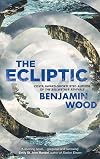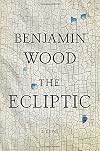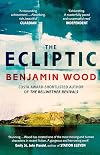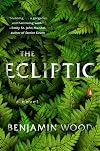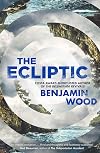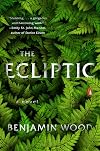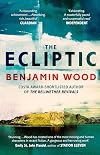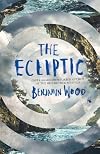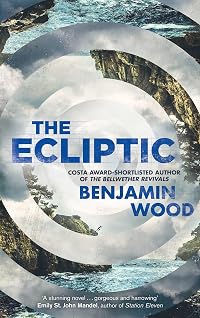
The Ecliptic
by Benjamin Wood
On This Page
Description
From the award-winning author of The Bellwether Revivals comes a "gorgeous and harrowing work" (Emily St. John Mandel) set on a mysterious island, where artists strive to recover their lost gifts—and where nothing is quite as it seems.Situated on a Turkish island, Portmantle might be the strangest, most exclusive artists' colony around. Its brilliant residents linger for years, all expenses paid and living under assumed names. Relieved of the burdens of time and ego, they are free to show more create their next masterpieces.
Elspeth Conroy (aka "Knell") is a Scottish painter who has been at Portmantle for a decade, a refugee from the hectic London art scene. Her fellow longtimers include Quickman, whose sole book became a classic and paralyzed his muse; MacKinney, a playwright who left behind her family; and Pettifer, an architect obsessing over an unfinished cathedral. In his astonishing second novel, Benjamin Wood gives us "an intensely intimate portrait of an artist as a young woman, with truths on every page" (Independent).
The hermetic world at Portmantle shatters when the 17-year-old Fullerton arrives at the gates, his provenance and talents unknown. As Knell searches for answers, she reveals the path that led her to this place: Her intimate bond with her gruff drunk of a mentor; her early successes and crushing failures; a journey across the Atlantic and into the psychiatrist's office; and a grand commission of astronomical significance.
What is "The Ecliptic," and how does it relate to the life Elspeth left behind? This gorgeous puzzle of a novel touches the head and the heart, and the effect is nothing short of electrifying.
From the Hardcover edition.. show less
Tags
Recommendations



















Member Reviews
The ecliptic is the path the sun *seems* to follow across the sky during the year. I say ‘seem’ because in reality, the sun does not revolve around the earth; it’s an illusion humans have that the sun revolves around them. Humans are good at thinking things like that, whether they are thinking about the universe or their personal situations.
Elspeth Conroy is an artist; she came from a working class Scottish home, rather forced her way into art school, and accidently became a star of the art world while still quite young. But now she is stuck… the art she makes is commercially successful, but, she feels, it is without soul. To make matters worse, the man she loves, her mentor, has disappeared. After a fair amount of time, she is show more reunited with her mentor, and, she is offered a chance to go to Portmantle, a very private retreat for artists who have lost their inspiration. Hidden away on an island in the Sea of Marmara, the artist goes in utter secrecy, telling no one and communicating with no one, to a place where there are few responsibilities or distractions, where they can strive to complete their next great work. She spends a decade there, before the arrival of a teenaged boy upsets the colony- and especially her.
Elspeth (“Knell” on Portmantle) has been (she feels) a failure in both love and art. What will it take for her to succeed in one or both of them? While I felt that the love issue was minor compared to the art issue, it’s still an important impetus for Elspeth’s actions. The novel examines the artistic process and questions where inspiration comes from. One thing I found interesting- and haven’t figured out the meaning of yet- is that in both of Elspeth’s artistic breakthroughs an almost mystical substance is a part of them. Her first breakthrough comes when her mentor/lover finds a cache of old Ripolin, the first oil enamel made for house painting. Apparently, artists used it for a while; Picasso used a lot of it. The second time, years later, her artistic block yields to bioluminescent fungi, dried, ground, and mixed with oil. I found it humorous that she also ground her anti-depressants up and used them as paint- that one was pretty obvious.
The prose is beautiful and rich; Elspeth, however, sounds like a much older woman than her actual age. I was a good way into the novel before I realized what her real age was. Did she learn to tell her story so elegantly in art school? Is she telling her story from a much later date than it took place? I’m not complaining; the book was a joy to read, with descriptions like jewels. It’s a long book- nearly 500 pages- but I didn’t want to put it down. show less
Elspeth Conroy is an artist; she came from a working class Scottish home, rather forced her way into art school, and accidently became a star of the art world while still quite young. But now she is stuck… the art she makes is commercially successful, but, she feels, it is without soul. To make matters worse, the man she loves, her mentor, has disappeared. After a fair amount of time, she is show more reunited with her mentor, and, she is offered a chance to go to Portmantle, a very private retreat for artists who have lost their inspiration. Hidden away on an island in the Sea of Marmara, the artist goes in utter secrecy, telling no one and communicating with no one, to a place where there are few responsibilities or distractions, where they can strive to complete their next great work. She spends a decade there, before the arrival of a teenaged boy upsets the colony- and especially her.
Elspeth (“Knell” on Portmantle) has been (she feels) a failure in both love and art. What will it take for her to succeed in one or both of them? While I felt that the love issue was minor compared to the art issue, it’s still an important impetus for Elspeth’s actions. The novel examines the artistic process and questions where inspiration comes from. One thing I found interesting- and haven’t figured out the meaning of yet- is that in both of Elspeth’s artistic breakthroughs an almost mystical substance is a part of them. Her first breakthrough comes when her mentor/lover finds a cache of old Ripolin, the first oil enamel made for house painting. Apparently, artists used it for a while; Picasso used a lot of it. The second time, years later, her artistic block yields to bioluminescent fungi, dried, ground, and mixed with oil. I found it humorous that she also ground her anti-depressants up and used them as paint- that one was pretty obvious.
The prose is beautiful and rich; Elspeth, however, sounds like a much older woman than her actual age. I was a good way into the novel before I realized what her real age was. Did she learn to tell her story so elegantly in art school? Is she telling her story from a much later date than it took place? I’m not complaining; the book was a joy to read, with descriptions like jewels. It’s a long book- nearly 500 pages- but I didn’t want to put it down. show less
The Ecliptic by Benjamin Wood is not your usual fast-paced thriller. Instead, it is a coil that continuously and artfully compresses until the very last chapters.
When we first meet the narrator, Knell, she has lived at an artists’ retreat for almost a decade. Like everyone at Portmantle, she has scrapped her real identity and adheres to strict guidelines regarding daily life that allow the retreat to function continuously and in complete secrecy. In return, the artists secure solitude and a hiatus from daily worries in the hope that inspiration will return. The arrival of a troubled and exasperating young man serves as the impetus for huge, and possibly dangerous, changes at Portmantle.
As events proceed, the narration twists together show more Knell’s personal history and the events unraveling at Portmantle. What follows is a quiet, intense read about a desperate search for redemption, independence, personal worth, truth and inspiration. Although you may not always understand why certain information is being presented, in the end, it all makes complete sense. The true test of any thriller!
I have just finished this novel, and now, I am going back to reread it. I must find the clues I missed the first time around. show less
When we first meet the narrator, Knell, she has lived at an artists’ retreat for almost a decade. Like everyone at Portmantle, she has scrapped her real identity and adheres to strict guidelines regarding daily life that allow the retreat to function continuously and in complete secrecy. In return, the artists secure solitude and a hiatus from daily worries in the hope that inspiration will return. The arrival of a troubled and exasperating young man serves as the impetus for huge, and possibly dangerous, changes at Portmantle.
As events proceed, the narration twists together show more Knell’s personal history and the events unraveling at Portmantle. What follows is a quiet, intense read about a desperate search for redemption, independence, personal worth, truth and inspiration. Although you may not always understand why certain information is being presented, in the end, it all makes complete sense. The true test of any thriller!
I have just finished this novel, and now, I am going back to reread it. I must find the clues I missed the first time around. show less
This is one of those books where I have to marvel at the skill of the author. I’m completely in awe of Mr. Wood’s talent. “The Ecliptic” is a literary masterpiece that I thoroughly enjoyed.
Most of this book takes place in an exclusive artist colony, Portmantle. Artists at this colony use assumed names. They mostly are artists who have reached a point in their work where they’re having difficulty going forward. They find rest and peace in this colony in an environment that hopefully will help them move on in their artist endeavors. Elspeth Conroy, who is also known as Knell, is the main character. She’s a Scottish painter and has been at Portmantle for 10 years. She’s made close friends with playwright MacKinney, author show more Quickman and architect Pettifer. Into their midst comes teenage Fullerton. His introduction into the colony begins a mysterious descent into madness.
The book moves from the story taking place at the artist colony to fill us in on Knell’s previous life, her artist and emotional struggles and the reason why she came to Portmantle. Her story is a completely absorbing and heart wrenching one. I grew to love Knell and will never forget her. The book accelerates towards the end into quite an exciting thriller. Not all readers will love the end of this book. I myself don’t usually like this type of ending but it’s done so well that I can’t find it in my heart to take off any points from my rating as I don’t see where it harms the book as a whole. In fact, it brings all of the mysterious parts of the book to a complete understanding.
Beautifully written and most highly recommended.
This book was given to me by the publisher through Edelweiss in return for an honest review. show less
Most of this book takes place in an exclusive artist colony, Portmantle. Artists at this colony use assumed names. They mostly are artists who have reached a point in their work where they’re having difficulty going forward. They find rest and peace in this colony in an environment that hopefully will help them move on in their artist endeavors. Elspeth Conroy, who is also known as Knell, is the main character. She’s a Scottish painter and has been at Portmantle for 10 years. She’s made close friends with playwright MacKinney, author show more Quickman and architect Pettifer. Into their midst comes teenage Fullerton. His introduction into the colony begins a mysterious descent into madness.
The book moves from the story taking place at the artist colony to fill us in on Knell’s previous life, her artist and emotional struggles and the reason why she came to Portmantle. Her story is a completely absorbing and heart wrenching one. I grew to love Knell and will never forget her. The book accelerates towards the end into quite an exciting thriller. Not all readers will love the end of this book. I myself don’t usually like this type of ending but it’s done so well that I can’t find it in my heart to take off any points from my rating as I don’t see where it harms the book as a whole. In fact, it brings all of the mysterious parts of the book to a complete understanding.
Beautifully written and most highly recommended.
This book was given to me by the publisher through Edelweiss in return for an honest review. show less
What do the scientific concept of the ecliptic, an artist's refuge off the coast of Turkey, and Scottish painter Elspeth "Knell" Conroy have to do with each other? Explaining this puzzle becomes the story of The Ecliptic by Benjamin Wood. The book is hard to discuss without a spoiler, but for me, the ending unfortunately makes the rest of the book seem contrived and makes this not the story for me.
Read my complete review at http://www.memoriesfrombooks.com/2016/04/the-ecliptic.html
Reviewed for the Penguin First to Read program
Read my complete review at http://www.memoriesfrombooks.com/2016/04/the-ecliptic.html
Reviewed for the Penguin First to Read program
I still enjoyed it despite figuring out what was going on very early in the book. I actually wish my brain didn't work like that because i hate spoilers!! Still trying to decide whether I liked the ending or not - 3.5
Visual book report available at: https://flic.kr/p/QaWx64
Ratings
Members
- Recently Added By
Lists

Fiction: Crime, Detective, Mystery
350 works; 3 members
Author Information

5 Works 964 Members
Awards and Honors
Common Knowledge
- Canonical title
- The Ecliptic
Classifications
Statistics
- Members
- 151
- Popularity
- 217,397
- Reviews
- 6
- Rating
- (3.65)
- Languages
- English, French
- Media
- Paper, Audiobook, Ebook
- ISBNs
- 11
- ASINs
- 4