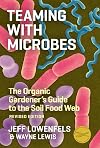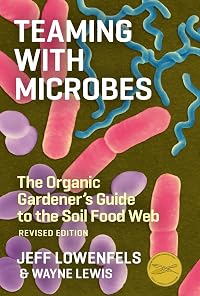
Teaming with Microbes: The Organic Gardener's Guide to the Soil Food Web, Revised Edition
by Jeff Lowenfels, Wayne Lewis
On This Page
Description
When we use chemical fertilizers, we injure the microbial life that sustains plants and then become increasingly dependent on an arsenal of toxic substances. Teaming with Microbes offers an alternative to this vicious circle and details how to garden in a way that strengthens, rather than destroys, the soil food web. You'll discover that healthy soil is teeming with life-not just earthworms and insects, but a staggering multitude of bacteria, fungi, and other microorganisms. This must-have show more guide is for everyone, from those devoted to organic gardening techniques to weekend gardeners who simply want to grow healthy plants without resorting to chemicals. show lessTags
Recommendations
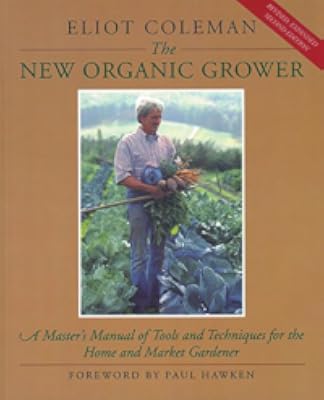
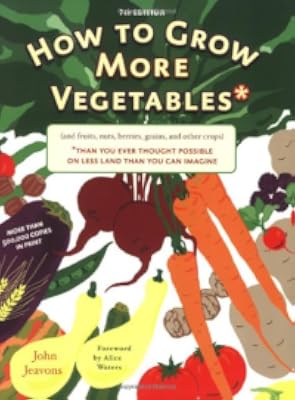
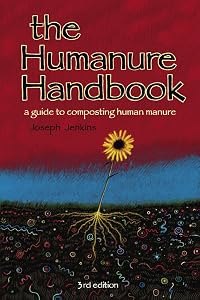
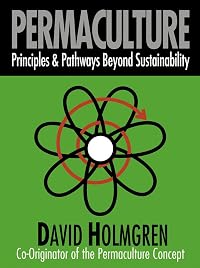
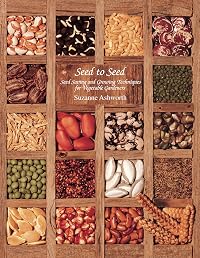
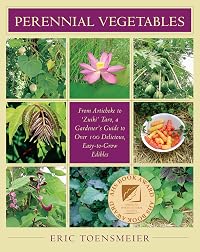
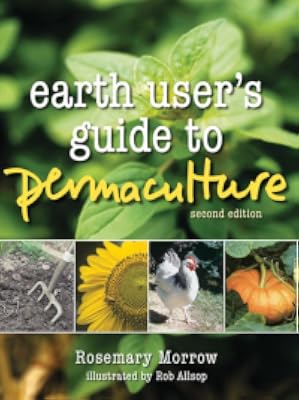
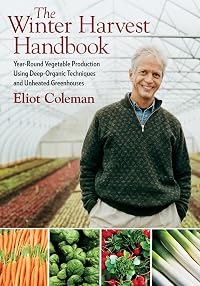



Member Reviews
(This review was originally written for The Garden Bloggers' Book club)
After slogging my way through the last book I read, I was disheartened to read in the Preface to Teaming with Microbes: A Gardener's Guide to the Soil Food Web that the first part of the book would be difficult to get through. I pressed on. Very science-y. An excellent sleep inducer. No joke. I did fall asleep while reading it one warm afternoon. But it was definitely worth it. Like the authors, I urge you to read the entire book and not just the second part which is the heart of the book.
Their argument boils down to one sentence: "No one ever fertilized an old-growth forest". Think about all the wild places you have ever seen, lush with growth. How did they get that show more way without the help of Scott's or Miracle-Gro? And if Scott's and Miracle-Gro are so superior, why don't our yards and gardens look better than those wild places?
The authors' thesis is that we should garden like Nature gardens, working with the flora and fauna in the soils rather than against it through the use of compost, organic mulches and actively aerated compost tea. Best of all, they provide precise instructions and call for materials that most of us have on hand anyways. No need for expensive ingredients or equipment!
I was thrilled to discover that I am not a "lazy composter" as I have always thought. Instead, I practice cold composting (not turning the compost), a method that produces the most "nutritious" compost! And what I jokingly refer to as "composting in situ", using the mower to shred up leaves and dumping them with the grass clippings onto my beds in the fall is actually a recommended mulch. As are the leaves I leave in my gardens over the winter. The only thing I am doing wrong is removing the leaves in the spring. And my deepest, darkest secret is nothing to be ashamed of. Instead of carefully working my compost into the soil, I just spread it on top. Again, a recommended method for amending the soil!
Of course, there are things that I have to do differently. Such as leaving the leaves on my beds. And even though I don't roto-till, I should still stop "loosening" the soil in the spring when I plant my seeds. The soil should be disturbed as little as possible. Planting in individual holes or narrow furrows is fine. I should learn to make and use actively aerated compost teas. Perhaps most importantly instead of throwing anything and everything into my composter, I should pay closer attention to the individual ingredients and their proportions, maybe go so far as to have different composters to make compost tailored to the needs of the various plants in my gardens.
This is a wonderful book that I will be referring to again and again. Thanks Carol for recommending it. My garden is forever in your debt. show less
After slogging my way through the last book I read, I was disheartened to read in the Preface to Teaming with Microbes: A Gardener's Guide to the Soil Food Web that the first part of the book would be difficult to get through. I pressed on. Very science-y. An excellent sleep inducer. No joke. I did fall asleep while reading it one warm afternoon. But it was definitely worth it. Like the authors, I urge you to read the entire book and not just the second part which is the heart of the book.
Their argument boils down to one sentence: "No one ever fertilized an old-growth forest". Think about all the wild places you have ever seen, lush with growth. How did they get that show more way without the help of Scott's or Miracle-Gro? And if Scott's and Miracle-Gro are so superior, why don't our yards and gardens look better than those wild places?
The authors' thesis is that we should garden like Nature gardens, working with the flora and fauna in the soils rather than against it through the use of compost, organic mulches and actively aerated compost tea. Best of all, they provide precise instructions and call for materials that most of us have on hand anyways. No need for expensive ingredients or equipment!
I was thrilled to discover that I am not a "lazy composter" as I have always thought. Instead, I practice cold composting (not turning the compost), a method that produces the most "nutritious" compost! And what I jokingly refer to as "composting in situ", using the mower to shred up leaves and dumping them with the grass clippings onto my beds in the fall is actually a recommended mulch. As are the leaves I leave in my gardens over the winter. The only thing I am doing wrong is removing the leaves in the spring. And my deepest, darkest secret is nothing to be ashamed of. Instead of carefully working my compost into the soil, I just spread it on top. Again, a recommended method for amending the soil!
Of course, there are things that I have to do differently. Such as leaving the leaves on my beds. And even though I don't roto-till, I should still stop "loosening" the soil in the spring when I plant my seeds. The soil should be disturbed as little as possible. Planting in individual holes or narrow furrows is fine. I should learn to make and use actively aerated compost teas. Perhaps most importantly instead of throwing anything and everything into my composter, I should pay closer attention to the individual ingredients and their proportions, maybe go so far as to have different composters to make compost tailored to the needs of the various plants in my gardens.
This is a wonderful book that I will be referring to again and again. Thanks Carol for recommending it. My garden is forever in your debt. show less
I can see why this book seems revolutionary – “Don’t roto-till?!” It replaces that work with stuff nearly as involved. Inventory your microbes. Send soil away for a microbe analysis. Make compost tea. Seriously, it does offer some new information. Perennials prefer fungal compost, veggies and annuals prefer bacterial (green) compost. There are also two or three main types of mycorrhizal fungi, and they are available to treat seed.
I saw the difference m-treatment of grass seed made last year. I’m sold on its efficacy.
I saw the difference m-treatment of grass seed made last year. I’m sold on its efficacy.
I enjoyed reading this book and finding out about life in the soil. And, also how to better partner with it to garden more effectively. Now, I just wish that I still had a garden to test out this different approach.
The best gardener's guide to how plants grow ever written. This is an easy, but fascinating read.
Very good information! It will change how you view your soil and learn all about the soil food web. Just a little hard to read. Some parts of the book were way over my head...too scientific.
Great ideas and a good read.
Media Type:Book. SUBJECT: soil ecology
soil food web
mycorrhizae
bacteria, fungi and microorganisms
soil food web
mycorrhizae
bacteria, fungi and microorganisms
Members
- Recently Added By
Lists

Permaculture
58 works; 7 members
Author Information

9 Works 681 Members
13 Works 512 Members
Some Editions
Classifications
Statistics
- Members
- 453
- Popularity
- 67,748
- Reviews
- 9
- Rating
- (4.06)
- Languages
- English, French
- Media
- Paper, Audiobook, Ebook
- ISBNs
- 7
- ASINs
- 6