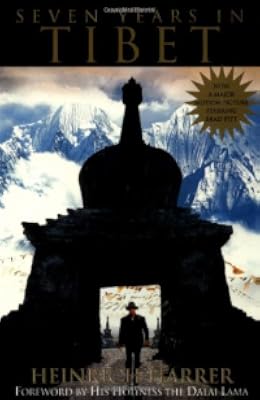
Seven Years in Tibet
by Heinrich Harrer
On This Page
Description
Religion & Spirituality. Travel. Nonfiction. In this vivid memoir that has sold millions of copies worldwide, Heinrich Harrer recounts his adventures as one of the first Europeans ever to enter Tibet. Harrer was traveling in India when the Second World War erupted. He was subsequently seized and imprisoned by British authorities. After several attempts, he escaped and crossed the rugged, frozen Himalayas, surviving by duping government officials and depending on the generosity of villagers show more for food and shelter.Harrer finally reached his ultimate destination-the Forbidden City of Lhasa-without money, or permission to be in Tibet. But Tibetan hospitality and his own curious appearance worked in Harrer?s favor, allowing him unprecedented acceptance among the upper classes. His intelligence and European ways also intrigued the young Dalai Lama, and Harrer soon became His Holiness?s tutor and trusted confidant. When the Chinese invaded Tibet in 1950, Harrer and the Dalai Lama fled the country together. This timeless story illuminates Eastern culture, as well as the childhood of His Holiness and the current plight of Tibetans. It is a must-read for lovers of travel, adventure, history, and culture. A motion picture, under the direction of Jean-Jacques Annaud, will feature Brad Pitt in the lead role of Heinrich Harrer. show lessTags
Recommendations
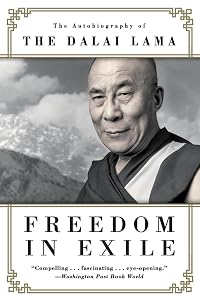

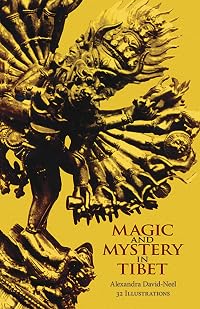



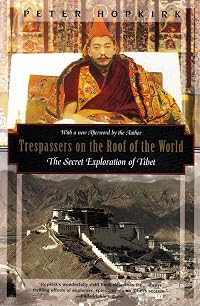


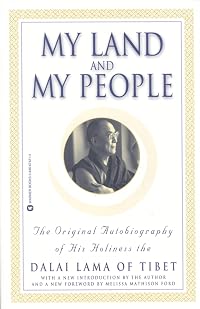

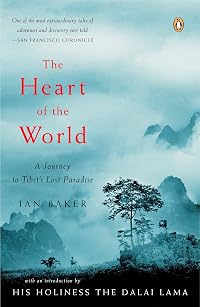
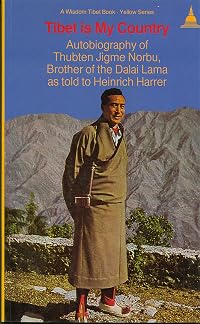
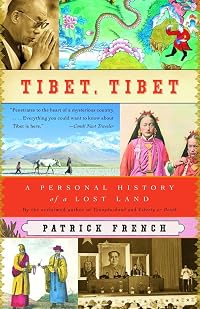

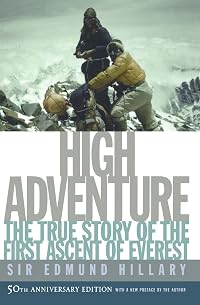
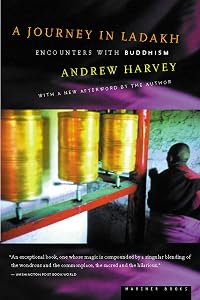
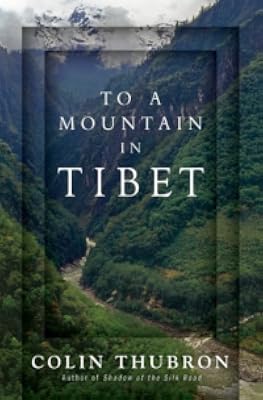


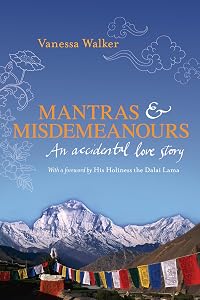

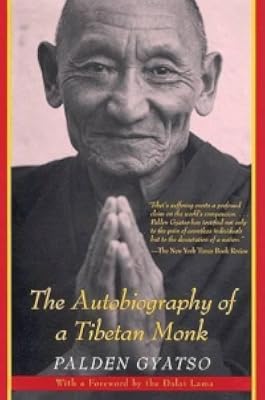








Member Recommendations


Member Reviews
I've always been fascinated by Tibet – especially pre-takeover by China in the 1950s. Seven Years is an exploration into that coupled with a book on war (escaping it), travel, mountaineering and making friends along the way. It's quickly become one of my favorite books. While Heinrich the man is obviously shown in the best light in this book, it's hard to forget his background. He was a Nazi and husband who ran away from both to climb mountains in the Himalayas. Seven Years is in many ways the "Eat, Prey, Love" of the 50s – both with characters dashing off to adventures. In Harrer's case, he ate whatever he could find (or be given), pray to not be caught and dragged back to internment in India and fall in love with Tibet. In many show more ways Tibet is the main character and the cause for all good and bad within his time there. show less
The story jumps right in with Harrer being arrested and detained as a POW and his efforts at escape. Once the escapees make it to Tibet, there are beautiful descriptions of the Tibetan people with their prayer flags, monasteries, and prayer wheels. In the midst of this interesting culture, the escapees encounter life threatening dangers and must be vigilant about their provisions. Harrer and his friends finally establish themselves in Tibet where they meet the Dali Lama’s parents and siblings, establish homes, and purposeful work. Gradually, Harrer developed a very close friendship with the Dali Lama. I loved reading how their relationship progressed from performing rather complicated tasks, such as taking videos of community events show more to building a movie theater. While teaching His Holiness English, their friendship blossomed. In 1951, the Chinese bestowed tragedy upon Tibet and its peaceful people and forced Harrer and the Dali Lama to flee the city. So heartbreaking! Harrer’s book definitely educates readers about Tibet and their Buddhist traditions. The book closes nicely with a biographical piece of Harrer. show less
Heinrich Herrer snuck into Tibet over the Himalayas after growing restless in an Indian POW camp. His book is the work of a typical 1950s macho man -- he barely dwells on the intriguing hardship of his nearly-barefoot journey over the mountains in the winter, but his later portraits of Tibet are fascinating. As pointed out in the preface, Herrer was one of few European explorers not to approach a developing country from a superior material position; when he arrived in Lhasa, he had nothing but the ragged clothes on the back, and his experience with the Tibetan people's generosity means his writing escapes the racial stereotypes prevalent in the travel literature of the time. His portrait of Tibetan society in its last days before the show more Chinese invasion is both awe-inspiring and heart-wrenching. show less
Mr. Harrer did a good deed by writing this memoir as it raised the awareness of Tibet and its oppression under the Chinese far and wide.
However, I must admit to being surprised that he accomplished his mission. The makings of a riveting tale were there, but the manner in which Harrer tells his story could not have been more dull. I'm not sure how he managed to make two years of mountainous travel and seven years in a completely foreign land so boring, but he did.
The first moments of suspense came in the last 40 or so pages where the Chinese invade Tibet and it is unclear what might happen to the Dalai Lama. These last pages also detailed the teacher/student relationship between the author and the Dalai Lama, and I did find it show more interesting to hear how someone so young was so intellectually curious.
Other than that last portion, the book is no more than a diary. This happened and then that happened. A recitation of facts, dates, places . . .no "characters" were brought to life. Even his travel companion was rendered flat. Somehow with all the hardships they endured together, there wasn't one instance of an argument or tension or an example of how they worked together to solve problems.
It's the difference between writing like this:
She typed her book review on the computer. It was negative.
and
She agonized about what to write in her review. She couldn't fathom that they actually made a movie of this book. Starring Brad Pitt! How? She was dying to write something scathing, but a big part of her felt alone. How could no one else think this book was so boring? How could she have been the only one? The author clearly was a great man even if he couldn't write well. Maybe she should give the book 3 stars just to reward him for his greatness. She tried to add that last star, but she just couldn't bring herself to do it.
You get what I mean. It's ten times worse because this man went on a HUGE ADVENTURE. It should have been absolutely scintillating. A missed opportunity by any measure. Curious what the movie makers did to bring this book to life . . .I'm sure in the hands of professional writers it probably came out great. show less
However, I must admit to being surprised that he accomplished his mission. The makings of a riveting tale were there, but the manner in which Harrer tells his story could not have been more dull. I'm not sure how he managed to make two years of mountainous travel and seven years in a completely foreign land so boring, but he did.
The first moments of suspense came in the last 40 or so pages where the Chinese invade Tibet and it is unclear what might happen to the Dalai Lama. These last pages also detailed the teacher/student relationship between the author and the Dalai Lama, and I did find it show more interesting to hear how someone so young was so intellectually curious.
Other than that last portion, the book is no more than a diary. This happened and then that happened. A recitation of facts, dates, places . . .no "characters" were brought to life. Even his travel companion was rendered flat. Somehow with all the hardships they endured together, there wasn't one instance of an argument or tension or an example of how they worked together to solve problems.
It's the difference between writing like this:
She typed her book review on the computer. It was negative.
and
She agonized about what to write in her review. She couldn't fathom that they actually made a movie of this book. Starring Brad Pitt! How? She was dying to write something scathing, but a big part of her felt alone. How could no one else think this book was so boring? How could she have been the only one? The author clearly was a great man even if he couldn't write well. Maybe she should give the book 3 stars just to reward him for his greatness. She tried to add that last star, but she just couldn't bring herself to do it.
You get what I mean. It's ten times worse because this man went on a HUGE ADVENTURE. It should have been absolutely scintillating. A missed opportunity by any measure. Curious what the movie makers did to bring this book to life . . .I'm sure in the hands of professional writers it probably came out great. show less
Fascinating book, not lest because there is so little information about Tibet before the Chinese invaded. This is a record of a life that doesn't exist any more. Be aware that the Dalai Lama is only a small part of the book. Most of it is about the writer's efforts to reach Lhassa in the days when foreigners were forbidden to enter Tibet at all. It's a strange land of kind individuals and heavy bureaucracy. It's also about surviving a very hostile environment with severe winters, and the lure of the mountains to an experienced climber.
It's about the skills that a Westerner can bring to a feudal culture, but also about the things that he can learn from that culture.
Also a heart-breaking awareness of the need for political allies in a show more world of military powers. Tibet's isolationism meant that it had no one to call on for help when the Chinese invaded, and the results of that invasion were of tragic proportions, both to Tibet's people and her culture.
Definitely worth reading. show less
It's about the skills that a Westerner can bring to a feudal culture, but also about the things that he can learn from that culture.
Also a heart-breaking awareness of the need for political allies in a show more world of military powers. Tibet's isolationism meant that it had no one to call on for help when the Chinese invaded, and the results of that invasion were of tragic proportions, both to Tibet's people and her culture.
Definitely worth reading. show less
An amazing journey to Tibet in the circumstances of war and then flight from under the fear of war -- and in between Tibet transforms from a backwards third-world country to a rich, intriguing adopted home. The anthropological insights into Tibetan culture and spirituality make this book incredibly fascinating. Although written many years ago, His Holiness' personality sounds much the same today as when he was younger. I envy the author for getting the chance to experience a beautiful, free Tibet!!!
While reading Seven Years in Tibet, Heinrich Harrer's sublime work of travel literature, I was struck by a disturbing question. Has the epitaph for travel literature already been written?
For centuries, armchair travelers have marveled at the tales of adventurers who have traveled to distant lands. From the works of Marco Polo and Ibn al-Battuta to the invaluable works of Charles Darwin to the amazing stories of Thor Hyerdahl, travel writers have taken readers to places they could only imagine, told stories of exotic people and extraordinary cultures.
But with the relatively recent advent of cheap flights, social media, the Internet and, most devastatingly, globalization, is the era of travel... real exploratory travel... finished? Well, show more until the advent of interplanetary travel, I think it just might be.
Let introduce the book and then let me explain.
In Seven Years in Tibet, Heinrich Harrer takes us inside one of the most insular cultures ever to exist on this planet. Not only was the Tibet that Harrer visited suspicious of outsiders, it had the luxury of being nestled on the other side of the almost impassable Himalayan mountain chain. When Harrer entered the country in the middle of the Second World War as an escaped POW he became one of only a handful of Europeans who had ever gained access to Tibet. Over his seven years in the country (just in case the title wasn't clear on that) he would meet less than a dozen other Europeans (conversely, I met over a dozen western expats on my first night in taiwan in 2002). There is literally no place on earth left that hasn't felt the impact of Western culture (aka globalization). In that sense, Harrer was given the rare opportunity to see one of the last nations on the planet completely untouched by the Western world prior to the Great Flattening.
To read the rest of this review please visit my blog: http://www.taiwaneastcoaster.blogspot.tw/2013/07/seven-years-in-tibet.html show less
For centuries, armchair travelers have marveled at the tales of adventurers who have traveled to distant lands. From the works of Marco Polo and Ibn al-Battuta to the invaluable works of Charles Darwin to the amazing stories of Thor Hyerdahl, travel writers have taken readers to places they could only imagine, told stories of exotic people and extraordinary cultures.
But with the relatively recent advent of cheap flights, social media, the Internet and, most devastatingly, globalization, is the era of travel... real exploratory travel... finished? Well, show more until the advent of interplanetary travel, I think it just might be.
Let introduce the book and then let me explain.
In Seven Years in Tibet, Heinrich Harrer takes us inside one of the most insular cultures ever to exist on this planet. Not only was the Tibet that Harrer visited suspicious of outsiders, it had the luxury of being nestled on the other side of the almost impassable Himalayan mountain chain. When Harrer entered the country in the middle of the Second World War as an escaped POW he became one of only a handful of Europeans who had ever gained access to Tibet. Over his seven years in the country (just in case the title wasn't clear on that) he would meet less than a dozen other Europeans (conversely, I met over a dozen western expats on my first night in taiwan in 2002). There is literally no place on earth left that hasn't felt the impact of Western culture (aka globalization). In that sense, Harrer was given the rare opportunity to see one of the last nations on the planet completely untouched by the Western world prior to the Great Flattening.
To read the rest of this review please visit my blog: http://www.taiwaneastcoaster.blogspot.tw/2013/07/seven-years-in-tibet.html show less
Members
- Recently Added By
Lists

Best Autobiographies and Memoirs
370 works; 67 members

r/AskHistorians' Recommended Books
1,068 works; 19 members

Best Travel Writing - Non-Fiction
110 works; 6 members

501 Must-Read Books
529 works; 72 members

Allie's Wishlist
217 works; 2 members

Sense of place
156 works; 13 members
Talk Discussions
Past Discussions
Seven Years in Tibet by Heinrich Harrer - LIMITED EDITIONS CLUB 1993 in George Macy devotees (November 2023)
Author Information

In 1939 Harrer was a member of the Nanga Parbat Expedition that was interned in India by the British at the outbreak of World War II. He escaped by way of Tibet, and during his seven years there, he was unofficial tutor to the Dalai Lama in Lhasa, whom he taught geography, arithmetic, and English. Harrer is an Austrian, and during his years at the show more College and University of Graz, he climbed hundreds of walls and ridges in the Alps, some for the first time. (Bowker Author Biography) show less
Some Editions
Awards and Honors
Distinctions
Notable Lists
Series
Belongs to Publisher Series
Work Relationships
Is contained in
Has the adaptation
Common Knowledge
- Canonical title
- Seven Years in Tibet
- Original title
- Sieben Jahre in Tibet
- Original publication date
- 1952
- People/Characters
- Heinrich Harrer
- Important places
- Tibet; Dehra Dun, India; Himalayas; Lhasa, Tibet
- Related movies
- Seven Years in Tibet (1997 | IMDb)
- Dedication*
- Kerst 1998 Van JBdG voor Gerrit: Laatste Boek
- First words
- By the end of August 1939 we had completed our reconnaissance.
- Quotations
- Visurile de viitor se înfiripă de obicei în tinerețe... (Prefață)
Dar nu am avut parte de sfatul și îndrumarea unor oameni experimentați. Din care cauză au trecut mulți ani până să înțeleg că nu este b... (show all)ine să urmărești concomitent mai multe obiective. (Prefață)
Singurul lucru cu adevărat important era să mă iau la întrecere cu munții. (Prefață)
(...) o perioadă de libertate petrecută în munți merita toate riscurile. (p.12)
În Asia, sahib-ul călătorește totdeauna însoțit de slujitorii săi și nu cară nici cel mai mic bagaj - era deci foarte bătător la ochi să vezi 2 europeni străbătând ținuturile pe jos, încărcați cu bagaje grele! (p.14) - Original language
- German
*Some information comes from Common Knowledge in other languages. Click "Edit" for more information.
Classifications
- Genres
- Travel, Nonfiction, Biography & Memoir, General Nonfiction, Religion & Spirituality
- DDC/MDS
- 951.504 — History & geography History of Asia East Asia: China, Taiwan, Hong Kong, Korea Tibet
- LCC
- DS785 .H273 — History of Europe, Asia, Africa and Oceania Asia History of Asia China Local history and description Tibet
- BISAC
Statistics
- Members
- 3,216
- Popularity
- 5,374
- Reviews
- 45
- Rating
- (3.89)
- Languages
- 21 — Czech, Danish, Dutch, English, Finnish, French, German, Greek, Hungarian, Italian, Japanese, Korean, Norwegian (Bokmål), Norwegian, Polish, Portuguese, Romanian, Russian, Spanish, Swedish, Tibetan
- Media
- Paper, Audiobook, Ebook
- ISBNs
- 98
- ASINs
- 80