On This Page
Description
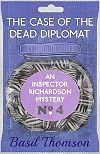
He flung open a drawer and took from it a heavy dagger in a sheath with blood-stains upon it. On the blade were engraved the words, "Blut und Ehre!"Frank Everett was a rising young press attaché at the British Embassy in Paris - until he was found dead in his Rue St. Georges apartment, a knife wound to the throat. Was it a political assassination, a crime passionnel, or possibly even suicide?
The foreign office call in the redoubtable Detective Inspector Richardson, who travels to Paris show more and must work with the French police in solving the case. He soon discovers that a mysterious coded number is one of the primary clues - if only he can decipher its meaning and unmask Everett's assassin.
The Case of the Dead Diplomat was originally published in 1935. This new edition, the first in many decades, features an introduction by crime novelist Martin Edwards, author of acclaimed genre history The Golden Age of Murder.
"Good entertainment as well as a perfectly sound detective story." Daily Telegraph
"The story is remarkably well written...highly entertaining reading." Birmingham Gazette
. show less
Tags
Recommendations




















Member Reviews
This is a short British police procedural crime novel written and set in the mid 1930's. A young diplomat at the British Embassy in Paris dies in suspicious circumstances. The Ambassador fears the French press will turn the incident into a political scandal. He asks Scotland Yard to send detectives to Paris to "assist" the French police. Inspector Richardson and his sergeant Cooper are on the next boat train to France.
It's a cleverly plotted story, although I found it a tedious read at times due to a wordy writing style, that often turned pompous. Ignoring this distraction, the underlying story is good with several interesting characters to occupy the detectives' time. There's some amusing red herrings, like the mysterious set of photos show more of zoo animals.
The French police and press are ridiculed throughout the book. It's difficult to say whether this was intentional or just a casual demonstration of the then current British attitude towards France. The English police constantly contrast French police methods with those of their own, which are of course the superior ones.
I found Detective Sergeant Cooper's role more interesting than Inspector Richardson. Cooper went undercover posing as a wealthy French Canadian (someone from the "French colony in Quebec") with the need to dress extravagantly and speak French like it was spoken in the 18th Century. (An unexplained casual knock against French Canadians?). The French inspector Bigot is portrayed as an ambitious buffoon, who is supported admirably by Charles Verneuil, a former naval officer turned detective. Verneuil and the Scotland Yard detectives make a great team. The characters that inhabit the British Embassy represent the dandies of the Foreign Office to good effect.
There's an Introduction to the book written by Martin Edwards which is a helpful piece of background to both the author and the story.
In the final analysis, this is an enjoyable police procedural from the Golden Age of crime fiction that is well worth wading through its wordiness. show less
It's a cleverly plotted story, although I found it a tedious read at times due to a wordy writing style, that often turned pompous. Ignoring this distraction, the underlying story is good with several interesting characters to occupy the detectives' time. There's some amusing red herrings, like the mysterious set of photos show more of zoo animals.
The French police and press are ridiculed throughout the book. It's difficult to say whether this was intentional or just a casual demonstration of the then current British attitude towards France. The English police constantly contrast French police methods with those of their own, which are of course the superior ones.
I found Detective Sergeant Cooper's role more interesting than Inspector Richardson. Cooper went undercover posing as a wealthy French Canadian (someone from the "French colony in Quebec") with the need to dress extravagantly and speak French like it was spoken in the 18th Century. (An unexplained casual knock against French Canadians?). The French inspector Bigot is portrayed as an ambitious buffoon, who is supported admirably by Charles Verneuil, a former naval officer turned detective. Verneuil and the Scotland Yard detectives make a great team. The characters that inhabit the British Embassy represent the dandies of the Foreign Office to good effect.
There's an Introduction to the book written by Martin Edwards which is a helpful piece of background to both the author and the story.
In the final analysis, this is an enjoyable police procedural from the Golden Age of crime fiction that is well worth wading through its wordiness. show less
Ratings
Members
- Recently Added By
Lists

Next in Series
85 works; 1 member
Author Information

27+ Works 341 Members
Series

Belongs to Publisher Series
Doubleday Crime Club (1935.42)
Common Knowledge
- Canonical title
- The Case of the Dead Diplomat
- Original title
- Richardson Goes Abroad
- People/Characters
- Malcolm Richardson
Classifications
Statistics
- Members
- 24
- Popularity
- 1,110,875
- Reviews
- 1
- Rating
- (3.63)
- Languages
- English
- Media
- Paper, Ebook
- ISBNs
- 2
- ASINs
- 1