On This Page
Description
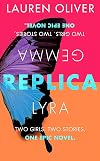
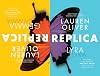
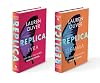
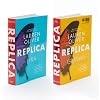
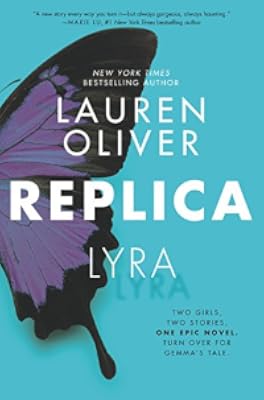
Two girls, two stories, one epic novel.From Lauren Oliver, New York Times bestselling author of Before I Fall and the Delirium trilogy, comes an epic, masterful novel that explores issues of individuality, identity, and humanity. Replica contains two narratives in one: Lyra's story and Gemma's story. The stories can be read separately, one after the other, or in alternating chapters. The two distinct parts of this astonishing novel combine to produce an unforgettable journey.
Lyra's story show more begins in the Haven Institute, a building tucked away on a private island off the coast of Florida that from a distance looks serene and even beautiful. But up close the locked doors, military guards, and biohazard suits tell a different story. In truth, Haven is a clandestine research facility where thousands of replicas, or human models, are born, raised, and observed. When a surprise attack is launched on Haven, two of its young experimental subjects—Lyra, or 24, and the boy known only as 72—manage to escape.
Gemma has been in and out of hospitals for as long as she can remember. A lonely teen, her life is circumscribed by home, school, and her best friend, April. But after she is nearly abducted by a stranger claiming to know her, Gemma starts to investigate her family's past and discovers her father's mysterious connection to the secretive Haven research facility. Hungry for answers, she travels to Florida, only to stumble upon two replicas and a completely new set of questions.
While the stories of Lyra and Gemma mirror each other, each contains breathtaking revelations critically important to the other story. Using a downloadable enhancement, readers can decide how they would like to read the audiobook, as with the print version. They can read the story of Gemma or Lyra straight through first, followed by the other girl's story, or they can move between chapters in Lyra's and Gemma's sections. No matter how it is read, Replica is an ambitious, thought-provoking masterwork.
. show less
Tags
Recommendations





Member Reviews
4.5 Stars
This book surprised me in the best way. I’ve been getting into scifi more recently and the sequel is coming out next month, so I figured it was the perfect time to read this. But I was not expecting to become so emotionally invested in the characters and their story. Replica is a beautiful story that tackles what it means to be human and the power of choice and agency.
Things I Liked
I LOVED the show more parallels between Lyra and Gemma’s journeys. Both girls feel trapped and isolated as the story starts, but they start challenging their situations, desiring freedom and escape and taking control of their lives for first time in their life. Both girls really struggle with what’s “real” and defining what it means to be human. We see their identities redefined in front of their eyes as they uncover more secrets. We really see how Lyra and Gemma’s stories reflect and challenge the nature vs nurture dichotomy about what the “human” experience is in a way that was poignant and gripping.
Replicas were really creepy! The language used was so desensitized and cold and made me really uncomfortable, but in a way that made me sympathize with the Replicas. It was so interesting seeing how the replicas spoke and interacted with others, because they have absolutely no socialization beyond other replicas and unsympathetic doctors and nurses. Seeing Lyra and 72, her fellow escapee, interact with a world they know nothing about, and their uncertainty was such a humanizing moment for two characters who are constantly referred to as “it.” I also really liked seeing the different experiences between Lyra and 72.
I really liked the format of the story. It’s basically an alternating POV format, where we see from Gemma and Lyra’s perspectives - but more interactive. You can read Lyra’s chapters first, Gemma’s first, or alternate between the two. I read in a sort of weird alternating style: I read Lyra ch1, Gemma ch 1-2, Lyra ch2-3, Gemma ch3-4, and so on. Like I said, kind of weird, but it worked for me. And I read on an ebook which made reading alternately super easy, because there were links to the respective girl’s chapter and the end of each chapter. Even though there were 2 stories with their own distinct feelings happening simultaneously, it felt cohesive.
I really liked most of the supporting characters we meet. Pete is so happy-go-lucky and optimistic; he really brought some levity to the heavier mystery scenes. 72 has such a resilience and strength that I really connected to. He’s so determined to be more than a pawn of the Haven Institute and you can feel his struggle.
Things I Didn’t Like
Chloe was your typical teen mean girl bully, and the worst part was she was barely even in the story! It was just unnecessary petty drama and didn’t add anything to the story, except an unnecessary eyeroll or two.
I did end up liking all the romances in the story, but there was some insta-infatuation between a few characters that I didn’t really love. It provided some good flirty banter, but was also a little heavy handed at times.
This book really made me think: about lived experiences, socialization, nature vs nurture, and what it means to be human. I loved seeing Lyra and Gemma fight for themselves and each other, even when they were unsure and scared. Replica is definitely a book that will stay with me, and I cannot wait for Ringer to be released next month!
Trigger warning for mentions of self harm show less
“They were born for the first time in their bodies. They were born together. They came together into the world as everyone should - frightened, uncertain, amazed, grateful.
And for them the world was born, too, in all its complexity and strange glory. They had a place in it, at last, and so at least it became theirs to share.”
This book surprised me in the best way. I’ve been getting into scifi more recently and the sequel is coming out next month, so I figured it was the perfect time to read this. But I was not expecting to become so emotionally invested in the characters and their story. Replica is a beautiful story that tackles what it means to be human and the power of choice and agency.
Things I Liked
I LOVED the show more parallels between Lyra and Gemma’s journeys. Both girls feel trapped and isolated as the story starts, but they start challenging their situations, desiring freedom and escape and taking control of their lives for first time in their life. Both girls really struggle with what’s “real” and defining what it means to be human. We see their identities redefined in front of their eyes as they uncover more secrets. We really see how Lyra and Gemma’s stories reflect and challenge the nature vs nurture dichotomy about what the “human” experience is in a way that was poignant and gripping.
Replicas were really creepy! The language used was so desensitized and cold and made me really uncomfortable, but in a way that made me sympathize with the Replicas. It was so interesting seeing how the replicas spoke and interacted with others, because they have absolutely no socialization beyond other replicas and unsympathetic doctors and nurses. Seeing Lyra and 72, her fellow escapee, interact with a world they know nothing about, and their uncertainty was such a humanizing moment for two characters who are constantly referred to as “it.” I also really liked seeing the different experiences between Lyra and 72.
I really liked the format of the story. It’s basically an alternating POV format, where we see from Gemma and Lyra’s perspectives - but more interactive. You can read Lyra’s chapters first, Gemma’s first, or alternate between the two. I read in a sort of weird alternating style: I read Lyra ch1, Gemma ch 1-2, Lyra ch2-3, Gemma ch3-4, and so on. Like I said, kind of weird, but it worked for me. And I read on an ebook which made reading alternately super easy, because there were links to the respective girl’s chapter and the end of each chapter. Even though there were 2 stories with their own distinct feelings happening simultaneously, it felt cohesive.
I really liked most of the supporting characters we meet. Pete is so happy-go-lucky and optimistic; he really brought some levity to the heavier mystery scenes. 72 has such a resilience and strength that I really connected to. He’s so determined to be more than a pawn of the Haven Institute and you can feel his struggle.
Things I Didn’t Like
Chloe was your typical teen mean girl bully, and the worst part was she was barely even in the story! It was just unnecessary petty drama and didn’t add anything to the story, except an unnecessary eyeroll or two.
I did end up liking all the romances in the story, but there was some insta-infatuation between a few characters that I didn’t really love. It provided some good flirty banter, but was also a little heavy handed at times.
This book really made me think: about lived experiences, socialization, nature vs nurture, and what it means to be human. I loved seeing Lyra and Gemma fight for themselves and each other, even when they were unsure and scared. Replica is definitely a book that will stay with me, and I cannot wait for Ringer to be released next month!
Trigger warning for mentions of self harm show less
There is no doubt that Lauren Oliver’s latest novel is ambitious. After all, Replica is really two novels under one cover. Lyra’s and Gemma’s stories may overlap to some extent, but each girl’s version of the events that bring them together starts and ends at different points, with differing understandings given their own personal histories. While Ms. Oliver could easily have incorporated both stories into one full narrative, splitting them out provides an element of “choose your own adventure” that adds to the entertainment and allows readers to dictate the reading pace and structure. Plus, by keeping them separate, it reiterates the message that Gemma and Lyra are two girls with vastly different life experiences.
It is not show more necessary to read both novels in order to understand what is happening in either narrative, but one gets a much more complete picture upon reading both of them. Haven Institute, its origins, and its research remain nebulous with only one of the girls’ stories. In that regard, Replica is really a play on the idea that it is impossible to know all sides of a story no matter how empathetic one is. Even after getting both sides of the story, there are other parts of Haven Institute that will remain unknown until another character reveals those secrets to either or both of the girls. However, that there is more than meets the eye about what we do know at the end of both stories is abundantly clear.
What is remarkable about Replica is the two very different tones between Gemma’s tale and Lyra’s. Both girls are in danger, hunted by the same people, far away from everything that is familiar, and forced to deal with one shocking truth after another. Yet, Gemma’s tale is much more suspenseful with the danger more real. It is as if, having had a more traditional upbringing, Gemma has more to lose should she be caught by the people chasing her. Lyra’s version does not have that suspense. One feels pity for her given everything she has had to endure and the truths to which she was subjected. Even though she is in more mortal peril should she be caught, one does not experience the rush of fear or adrenaline during her escape. Between the pity, the sense that she is living on borrowed time anyway, and a curiosity to see the world through her unique perspective, the suspense and danger disappear.
The one main weakness of Replica is how rushed it is. Both stories move along at breakneck speed, almost too much so. There were more than a few times where I had to review past sections to make sure I did not accidentally skim over a key point because I seemingly missed a connection and was confused how the story got to that point. The plot moves so fast sometimes that you have to suspend belief at times as well. To make matters worse, there are a lack of details that would help clarify some of the scenes. As it is a duology, one expects a lack of answers in certain areas. However, the general confusion created by a plot that moves too quickly to be entirely believable along with a lack of description adds complexity to an already complicated story.
Most of Replica is an action-adventure, as both Gemma and Lyra find themselves on the run from mysterious but apparently dangerous foes from Haven Institute. What Replica should be is a study on what makes someone human. There is a philosophical argument to Haven and Lyra’s entire life that is seemingly lost due to the various chase scenes and flights to safety. Given the fact that the doctors at Haven are studying human clones, one expects more in the way of ethical debate or at least more chance to reflect on the ethical challenges presented by the existence of Haven. Hopefully, there is more of this in the follow-up novel and fewer chase scenes.
Replica is at the very least creative and entertaining as only action-adventures can be. Lyra is particularly tragic and highly sympathetic, and her observations about life are gut-wrenching. Gemma remains a more mysterious character, but Lyra is much more sympathetic. The story ends with the knowledge that there are plenty of secrets that remain, and that both Gemma’s and Lyra’s stories are far from over. It will be interesting to see what the finale holds for the girls. show less
It is not show more necessary to read both novels in order to understand what is happening in either narrative, but one gets a much more complete picture upon reading both of them. Haven Institute, its origins, and its research remain nebulous with only one of the girls’ stories. In that regard, Replica is really a play on the idea that it is impossible to know all sides of a story no matter how empathetic one is. Even after getting both sides of the story, there are other parts of Haven Institute that will remain unknown until another character reveals those secrets to either or both of the girls. However, that there is more than meets the eye about what we do know at the end of both stories is abundantly clear.
What is remarkable about Replica is the two very different tones between Gemma’s tale and Lyra’s. Both girls are in danger, hunted by the same people, far away from everything that is familiar, and forced to deal with one shocking truth after another. Yet, Gemma’s tale is much more suspenseful with the danger more real. It is as if, having had a more traditional upbringing, Gemma has more to lose should she be caught by the people chasing her. Lyra’s version does not have that suspense. One feels pity for her given everything she has had to endure and the truths to which she was subjected. Even though she is in more mortal peril should she be caught, one does not experience the rush of fear or adrenaline during her escape. Between the pity, the sense that she is living on borrowed time anyway, and a curiosity to see the world through her unique perspective, the suspense and danger disappear.
The one main weakness of Replica is how rushed it is. Both stories move along at breakneck speed, almost too much so. There were more than a few times where I had to review past sections to make sure I did not accidentally skim over a key point because I seemingly missed a connection and was confused how the story got to that point. The plot moves so fast sometimes that you have to suspend belief at times as well. To make matters worse, there are a lack of details that would help clarify some of the scenes. As it is a duology, one expects a lack of answers in certain areas. However, the general confusion created by a plot that moves too quickly to be entirely believable along with a lack of description adds complexity to an already complicated story.
Most of Replica is an action-adventure, as both Gemma and Lyra find themselves on the run from mysterious but apparently dangerous foes from Haven Institute. What Replica should be is a study on what makes someone human. There is a philosophical argument to Haven and Lyra’s entire life that is seemingly lost due to the various chase scenes and flights to safety. Given the fact that the doctors at Haven are studying human clones, one expects more in the way of ethical debate or at least more chance to reflect on the ethical challenges presented by the existence of Haven. Hopefully, there is more of this in the follow-up novel and fewer chase scenes.
Replica is at the very least creative and entertaining as only action-adventures can be. Lyra is particularly tragic and highly sympathetic, and her observations about life are gut-wrenching. Gemma remains a more mysterious character, but Lyra is much more sympathetic. The story ends with the knowledge that there are plenty of secrets that remain, and that both Gemma’s and Lyra’s stories are far from over. It will be interesting to see what the finale holds for the girls. show less
I think what Lauren Oliver set out to do here insofar as format is really interesting and original – Replica is a flip book, meaning that instead of having an integrated POV, you can literally flip the book over and start the other POV afterward… or read chapter-by-chapter. Reader’s choice! As an audiobook listener, the choice was made for me (all one, then the other) but I do appreciate the concept and think it was a cool idea.
The audiobook read’s Lyra’s POV first, then flips the book over to Gemma’s POV, so I’m going to address it like that… almost like two different stories that intermingle.
Lyra’s POV is interesting. In Lyra’s perspective, we see a little of Haven. We see a world where people are cloned in order show more to grow viruses and test medication. An illegal operation of a science-fiction (maybe even dystopian) sort, I thought that the world building in this half (44%, realistically) was promising. Had the story continued with the revelation of Haven and further development of the sci-fi elements, I think I may have enjoyed Replica. I’ve always found cloning to be an interesting dystopian element, but unfortunately, Lauren Oliver did not follow that storyline. In fact, I felt like Lyra’s POV stopped rather abruptly.
Gemma’s POV was such a contrast to Lyra’s. Gemma almost always describes herself in terms of her weight. She talks constantly about her lack of experience and how her weight keeps people from looking at her… generally, there was a lot of focus on this, and there’s a difference between representing a minority and making the whole thing unnecessarily uncomfortable by saying, “hey! look at his! an overweight MC!” over and over again. So immediately, as we’re getting into Gemma’s POV, I found myself a bit repelled by it. The deeper into the book I got, the less believable her situation seemed. She runs away to Florida and ultimately, her parents let it happen, and so does her best friend. She becomes quick friends with two different boys who are both attracted to her and speak to her in an uncomfortably familiar way, and there are no red flags about this? In fact, her first kiss and main romance is with a guy she herself calls “Pervy Pete”.
So, you know, that’s the quality of romance we’re working with here.
If I had started with Gemma’s POV, I absolutely would have DNF’d this book. But Lyra’s POV was interesting, with a lot of potential in world building. I kept waiting for some proper closure for Lyra, and that’s what kept me going through Gemma’s POV. But honestly? I found the ending unsatisfying. There were so many things that could have happened, so much more excitement, but I never felt we got plot closure.
So while the physical concept was cool, and plot had promise, I don’t particularly recommend Replica. It did not deliver. show less
The audiobook read’s Lyra’s POV first, then flips the book over to Gemma’s POV, so I’m going to address it like that… almost like two different stories that intermingle.
Lyra’s POV is interesting. In Lyra’s perspective, we see a little of Haven. We see a world where people are cloned in order show more to grow viruses and test medication. An illegal operation of a science-fiction (maybe even dystopian) sort, I thought that the world building in this half (44%, realistically) was promising. Had the story continued with the revelation of Haven and further development of the sci-fi elements, I think I may have enjoyed Replica. I’ve always found cloning to be an interesting dystopian element, but unfortunately, Lauren Oliver did not follow that storyline. In fact, I felt like Lyra’s POV stopped rather abruptly.
Gemma’s POV was such a contrast to Lyra’s. Gemma almost always describes herself in terms of her weight. She talks constantly about her lack of experience and how her weight keeps people from looking at her… generally, there was a lot of focus on this, and there’s a difference between representing a minority and making the whole thing unnecessarily uncomfortable by saying, “hey! look at his! an overweight MC!” over and over again. So immediately, as we’re getting into Gemma’s POV, I found myself a bit repelled by it. The deeper into the book I got, the less believable her situation seemed. She runs away to Florida and ultimately, her parents let it happen, and so does her best friend. She becomes quick friends with two different boys who are both attracted to her and speak to her in an uncomfortably familiar way, and there are no red flags about this? In fact, her first kiss and main romance is with a guy she herself calls “Pervy Pete”.
So, you know, that’s the quality of romance we’re working with here.
If I had started with Gemma’s POV, I absolutely would have DNF’d this book. But Lyra’s POV was interesting, with a lot of potential in world building. I kept waiting for some proper closure for Lyra, and that’s what kept me going through Gemma’s POV. But honestly? I found the ending unsatisfying. There were so many things that could have happened, so much more excitement, but I never felt we got plot closure.
So while the physical concept was cool, and plot had promise, I don’t particularly recommend Replica. It did not deliver. show less
This review is also featured on Behind the pages: Replica
The only life Lyra knows is the one locked behind Haven’s walls. There are endless rounds of needles and medicine, tests and doctors. She lives with other replicas, humans created from the cells of their duplicates. To watch another replica die is just another day to Lyra. When the chance to escape arises, Lyra is thrown into a world she has no idea how to survive.
Gemma lives a sheltered life, with parents who are afraid she is made of glass. As a child, she endured countless surgeries to stay healthy, and grow into the young woman she is now. She’s always been annoyed but understanding with her parents. Until Gemma begins to noise around in her father’s business and show more discovers a place called Haven.
I loved the dual stories told in Replica and the writing style Lauren Oliver chose. Readers can read the two stories in whatever order they want. But, instead of alternating chapters between the two characters I read Lyra first and then Gemma. Lyra’s story carried more of a sci-fi feel as she was brought up in the lab. A large part of her story revolved around what happened in Haven, and how different she felt being a replica. She was raised to believe she was an object; she wasn’t an actual person.
Gemma’s storyline was more of a typical young adult novel. She’s an insecure girl, sheltered and lonely. She’s learning about boys, and how she’s beginning to see them differently and is embarrassed about it. She is a bit vain, which did at times annoy me, but she grew up being teased for her surgery scars and being overweight. Of course, she sees the world in from the eyes of someone who thinks being skinny and pretty is better.
While there was some overlap in dialogue, which is to be expected, Lauren Oliver did a great job of keeping the two characters separate. They ran parallel stories that came together in moments of tension and helped propel the story forward. Even the way the two characters were raised ran parallel and created a great contrast to one another. This was another great book from Lauren Oliver, and I can’t wait to read the sequel duology. show less
The only life Lyra knows is the one locked behind Haven’s walls. There are endless rounds of needles and medicine, tests and doctors. She lives with other replicas, humans created from the cells of their duplicates. To watch another replica die is just another day to Lyra. When the chance to escape arises, Lyra is thrown into a world she has no idea how to survive.
Gemma lives a sheltered life, with parents who are afraid she is made of glass. As a child, she endured countless surgeries to stay healthy, and grow into the young woman she is now. She’s always been annoyed but understanding with her parents. Until Gemma begins to noise around in her father’s business and show more discovers a place called Haven.
I loved the dual stories told in Replica and the writing style Lauren Oliver chose. Readers can read the two stories in whatever order they want. But, instead of alternating chapters between the two characters I read Lyra first and then Gemma. Lyra’s story carried more of a sci-fi feel as she was brought up in the lab. A large part of her story revolved around what happened in Haven, and how different she felt being a replica. She was raised to believe she was an object; she wasn’t an actual person.
Gemma’s storyline was more of a typical young adult novel. She’s an insecure girl, sheltered and lonely. She’s learning about boys, and how she’s beginning to see them differently and is embarrassed about it. She is a bit vain, which did at times annoy me, but she grew up being teased for her surgery scars and being overweight. Of course, she sees the world in from the eyes of someone who thinks being skinny and pretty is better.
While there was some overlap in dialogue, which is to be expected, Lauren Oliver did a great job of keeping the two characters separate. They ran parallel stories that came together in moments of tension and helped propel the story forward. Even the way the two characters were raised ran parallel and created a great contrast to one another. This was another great book from Lauren Oliver, and I can’t wait to read the sequel duology. show less
"That's what makes the difference. Getting to choose, and what you choose."
This was an incredibly fascinating story - both in presentation and in content.
First, I had to decide to read the book. I've heard people enjoy it more if they read each chapter from each perspective. I decided to fully read Gemma's side and then read Lyra's side. I can't help but think how you read the book could influence how you enjoy it.
I will admit, Gemma's side is tougher to get through. It has dull parts that drag and you begin to wonder what the point is. But, if your curiosity can get you to the Lyra side, a lot of answers are held there.
Take the note at the beginning to heart. Conversations in one section DO NOT happen the same in another. Why? because show more people check out - they have their own memories and kind of stop listening to someone - especially in group discussions. They also have their own ideas that derail how they take a comment or what part they hear and focus on. It was fascinating to see it from both perspectives and to get to know why 72 and Lyra had reactions to things - things you don't know as Gemma.
On to the story line - it was interesting and held me enough to make me want to read the next one. But this is definitely an experience book and one that mainly only sets up for the next one. There are still a lot of reveals but it feels very much like just the beginning of a bigger story. One that I plan to continue. show less
This was an incredibly fascinating story - both in presentation and in content.
First, I had to decide to read the book. I've heard people enjoy it more if they read each chapter from each perspective. I decided to fully read Gemma's side and then read Lyra's side. I can't help but think how you read the book could influence how you enjoy it.
I will admit, Gemma's side is tougher to get through. It has dull parts that drag and you begin to wonder what the point is. But, if your curiosity can get you to the Lyra side, a lot of answers are held there.
Take the note at the beginning to heart. Conversations in one section DO NOT happen the same in another. Why? because show more people check out - they have their own memories and kind of stop listening to someone - especially in group discussions. They also have their own ideas that derail how they take a comment or what part they hear and focus on. It was fascinating to see it from both perspectives and to get to know why 72 and Lyra had reactions to things - things you don't know as Gemma.
On to the story line - it was interesting and held me enough to make me want to read the next one. But this is definitely an experience book and one that mainly only sets up for the next one. There are still a lot of reveals but it feels very much like just the beginning of a bigger story. One that I plan to continue. show less
Replica is a parallel story of two teenage girls: Gemma is something of a misfit who decides over spring break to investigate her father's involvement in Haven, a business located on an island off the Florida coast. Lyra has grown up on Haven with all of the other replicas, but when the only world she has known is destroyed, she capitalizes on the ensuing confusion and makes a break for the unfamiliar mainland.
Overall, I liked the premise and was intrigued from the outset to see where the author was going to go with it. However, the endless references to Gemma being overweight were really quite disappointing -- it's one thing to mention it as a descriptor as one might mention hair or eye color, but the gratuitous comments continued show more relentlessly throughout, adding no value or significance to the plot. Recommended, with reservations. show less
Overall, I liked the premise and was intrigued from the outset to see where the author was going to go with it. However, the endless references to Gemma being overweight were really quite disappointing -- it's one thing to mention it as a descriptor as one might mention hair or eye color, but the gratuitous comments continued show more relentlessly throughout, adding no value or significance to the plot. Recommended, with reservations. show less
Interesting look at cloning and human experimentation from the perspective of two girls—one who has grown up in a lab as a human guinea pig, and another whose father is responsible for the experiments, and who is trying to figure out what exactly her connection is to the Haven Institute. Really good emotional exploration.
Please excuse typos/name misspellings. Entered on screen reader.
Please excuse typos/name misspellings. Entered on screen reader.
Members
- Recently Added By
Author Information

43+ Works 27,724 Members
Lauren Oliver (born Laura Schechter) was born in New York City in 1982. She received degrees in philosophy and literature from the University of Chicago in 2004. She graduated the MFA program at NYU in 2008. She worked briefly as an editorial assistant and an assistant editor at Razorbill, a division of Penguin Books. She left to become a show more full-time writer in 2009. Her first novel, Before I Fall, was published in 2010. Her other works include Delirium, Liesl and Po, and Pandemonium. Her title's Panic, Vanishing Girls and The Shrunken Head made The New York Times Best Seller List. She made the Hollywood Reporter's '25 Most Powerful Authors' 2016 list, entering at number 23. (Bowker Author Biography) show less
Awards and Honors
Awards
Distinctions
Series

Work Relationships
Is contained in
Common Knowledge
- Dedication
- To my sister, Lizzie
- First words
- Lyra: On very still nights sometimes we can hear them chanting, calling for us to die.
Gemma: Escape: That was what Gemma dreamed of, especially on nights like this one, when the moon was so big and bright it looked like it was a set piece in a movie, hooked outside her window on a curtain of dark night sky. - Last words
- (Click to show. Warning: May contain spoilers.)Lyra: No matter what happened, no matter what trouble came, Lyra knew they would face it together, as they were then: turned human by joy, by a belonging that felt just like freedom.
(Click to show. Warning: May contain spoilers.)Gemma: A little more human, even. - Blurbers
- Aveyard, Victoria; Lu, Marie
- Original language
- English
- Canonical DDC/MDS
- 813.6
- Canonical LCC
- PZ7.O475
Classifications
Statistics
- Members
- 951
- Popularity
- 28,031
- Reviews
- 30
- Rating
- (3.58)
- Languages
- English, French, Polish, Spanish
- Media
- Paper, Audiobook, Ebook
- ISBNs
- 26
- ASINs
- 6