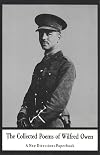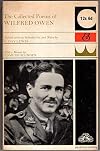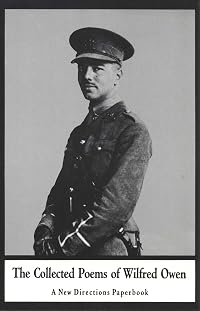
The Collected Poems of Wilfred Owen
by Wilfred Owen
On This Page
Description
"In award-winning legal scholar and novelist Yxta Maya Murray's new novel, federal agent Reyna Rodriguez reports on real-life nuclear reactor meltdowns and accidents that occurred in 1959, 1964, and 1968 at the Santa Susana Field Laboratory. An infamous research and development complex in California's Simi Valley, the lab was eventually dismantled by the US government--but not before it created a toxic legacy of contamination and numerous cancer clusters. Toxins and nuclear residue may have show more been further released by the 2018 Woolsey Fire and 2019 floods in the area."-- show lessTags
Recommendations
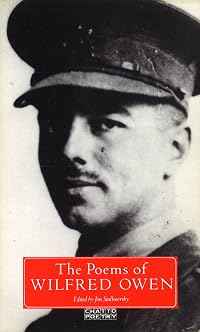

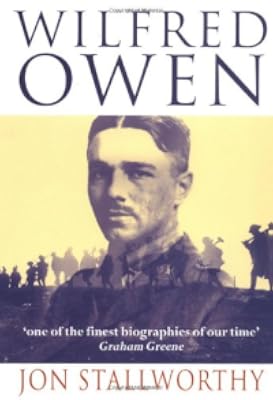








Member Recommendations
Member Reviews
The pathos of Owen’s death on the Western Front seven days before the Armistice can hardly be bracketed out when reading these poems, but to the degree that I can, I’m still thunderstruck by the best, such as “Dulce Et Decorum Est” and “Strange Meeting.” They are searing indictments of war from this self-described “conscientious objector with a seared conscience.”
From childhood, Owen’s ambition was to become a poet. But ambition, a love of words, and immersion in Keats and Shelley were not going to suffice. The poems written before he enlisted show flashes of ability, but are nowhere near the quality of those he wrote as a shell-shocked convalescent under the tutelage of Siegfried Sassoon at the hospital outside of show more Edinburgh, where both were recovering. What Owen experienced on the front went far beyond what Wordsworth had in mind about the spontaneous overflow of feeling recollected in tranquility. Owen’s achievement, then, seems the result of a confluence of persistent self-education, a fortuitous encounter with a poet more accomplished at the time of their meeting, and the intense experience that became his subject matter. The result: A handful of immortal poems, achieved at a terrible cost. And still we go to war, and the speechifiers prattle on about heroic sacrifice.
In addition to the war poems, there are other poems, juvenilia, and fragments. Editor C. Day Lewis contributed an introduction and notes, and the book concludes with a memoir by Edmund Blunden that quotes generously from Owen’s letters home.
At the time this collection was published (1963), it was the definitive edition. It has since been superseded by Complete Poems and Fragments, edited by Jon Stallworthy and published in 1984. show less
From childhood, Owen’s ambition was to become a poet. But ambition, a love of words, and immersion in Keats and Shelley were not going to suffice. The poems written before he enlisted show flashes of ability, but are nowhere near the quality of those he wrote as a shell-shocked convalescent under the tutelage of Siegfried Sassoon at the hospital outside of show more Edinburgh, where both were recovering. What Owen experienced on the front went far beyond what Wordsworth had in mind about the spontaneous overflow of feeling recollected in tranquility. Owen’s achievement, then, seems the result of a confluence of persistent self-education, a fortuitous encounter with a poet more accomplished at the time of their meeting, and the intense experience that became his subject matter. The result: A handful of immortal poems, achieved at a terrible cost. And still we go to war, and the speechifiers prattle on about heroic sacrifice.
In addition to the war poems, there are other poems, juvenilia, and fragments. Editor C. Day Lewis contributed an introduction and notes, and the book concludes with a memoir by Edmund Blunden that quotes generously from Owen’s letters home.
At the time this collection was published (1963), it was the definitive edition. It has since been superseded by Complete Poems and Fragments, edited by Jon Stallworthy and published in 1984. show less
I have a love-hate for war poetry.
It is the only art form that exists wherein people have to die, in droves; where death is legion. The greater the number of people that die, the better the poetry. The more that it is a cruel and senseless death, the better the poetry. The more pointless it is, the better the poetry. For every such point, a cruel counterpoint, so that the impact is felt in the heart. And in the solar plexus.
If you don't feel it in the solar plexus, if it doesn't make you short of breath, if it doesn't take your breath away, then it's not good war poetry. And so, does that mean, it wasn't a good war; that is, the war wasn't cruel, pointless, bloody enough to rate on the scale of the world's atrocities to make it worthy show more for the poet's pen?
For what it's worth, Wilfred Owen's poetry hits me in the solar plexus. It makes me wish he had never written these poems.
What I mean is, it makes me wish he had never had the need to write these poems.
Would we have known Wilfred Owen otherwise? Might he have been a mild-mannered school teacher, living his days out in boredom and peace in some sunny little corner of England? Might he have been the one who used the atom bomb on Nagasaki? Might he have been the one who found the cure for cancer?
Might he have been the best poet that ever lived?
Instead, he was the best poet that ever lived who hardly lived.
Now perhaps you can better understand my predicament when I read war poetry and hesitate to give my rating. Can I really give this 10 stars, because he died so young, so pointlessly, so bravely? And all for naught?
If in some smothering dreams, you too could pace
Behind the wagon that we flung him in,
And watch the white eyes writhing in his face,
His hanging face, like a devil’s sick of sin;
If you could hear, at every jolt, the blood
Come gargling from the froth-corrupted lungs,
Obscene as cancer, bitter as the cud
Of vile, incurable sores on innocent tongues,—
My friend, you would not tell with such high zest
To children ardent for some desperate glory,
The old Lie: Dulce et decorum est
Pro patria mori.
(from Dulce et decorum est) show less
It is the only art form that exists wherein people have to die, in droves; where death is legion. The greater the number of people that die, the better the poetry. The more that it is a cruel and senseless death, the better the poetry. The more pointless it is, the better the poetry. For every such point, a cruel counterpoint, so that the impact is felt in the heart. And in the solar plexus.
If you don't feel it in the solar plexus, if it doesn't make you short of breath, if it doesn't take your breath away, then it's not good war poetry. And so, does that mean, it wasn't a good war; that is, the war wasn't cruel, pointless, bloody enough to rate on the scale of the world's atrocities to make it worthy show more for the poet's pen?
For what it's worth, Wilfred Owen's poetry hits me in the solar plexus. It makes me wish he had never written these poems.
What I mean is, it makes me wish he had never had the need to write these poems.
Would we have known Wilfred Owen otherwise? Might he have been a mild-mannered school teacher, living his days out in boredom and peace in some sunny little corner of England? Might he have been the one who used the atom bomb on Nagasaki? Might he have been the one who found the cure for cancer?
Might he have been the best poet that ever lived?
Instead, he was the best poet that ever lived who hardly lived.
Now perhaps you can better understand my predicament when I read war poetry and hesitate to give my rating. Can I really give this 10 stars, because he died so young, so pointlessly, so bravely? And all for naught?
If in some smothering dreams, you too could pace
Behind the wagon that we flung him in,
And watch the white eyes writhing in his face,
His hanging face, like a devil’s sick of sin;
If you could hear, at every jolt, the blood
Come gargling from the froth-corrupted lungs,
Obscene as cancer, bitter as the cud
Of vile, incurable sores on innocent tongues,—
My friend, you would not tell with such high zest
To children ardent for some desperate glory,
The old Lie: Dulce et decorum est
Pro patria mori.
(from Dulce et decorum est) show less
67. The Collected Poems of Wilfred Owen
editor: C. Day Lewis; includes: “Memoir, 1931” by Edmund Blunden
OPD: 1963
format: 188-page 1965 Paperback
acquired: 2016 read: Sep 4 – Oct 5 time reading: 7:18, 2.3 mpp
rating: 5
genre/style: poetry theme: poetry
locations: WWI trenches
about the authors: Wilfred Owen (1893-1918), from Plas Wilmot, Shropshire, was an English poet and soldier and one of the leading poets of the First World War. His war poetry on the horrors of trenches and gas warfare was much influenced by his mentor Siegfried Sassoon and stood in contrast to the public perception of war at the time. He was killed in action. Edmund Blunden (1896- 1974), from London, was an English poet, author, and critic, and a friend of Siegfried show more Sassoon, He wrote of his experiences in World War I in both verse and prose. Cecil Day-Lewis (1904-1972), from Ballintubbert, Queen's County (now County Laois), Ireland, was an Anglo-Irish poet and Poet Laureate of the United Kingdom from 1968 until his death in 1972.
---
Owen was young, probably secretly gay, and wrapped up in deep fighting in WWI, having already had some truly harrowing experiences when he met Sigfried Sasson while in a recovery in an Edinburgh hospital. Through Sasson (also gay, but that doesn't mean they had a physical relationship) Owen discovered he really was a poet. Writing between leading his troops through trenches with 2 feet of water, in holes in no-man's land in water up to his shoulders, under continuous fire, watching nearby similar holes get blown to bits, along with everyone inside, his troops, and between exposing himself in trench-to-trench charges under machinegun fire, only to find the enemy behind him shooting at him. It's a wonder he stayed sane, had any nerves left at all. And yet his injury came from a fluke non-combat concussion that field doctors eventually forced him to stop trying to fight through. He would later return to the front and was killed in action one week before the armistice.
He mainly had a year of wartime writing, under worshipful guidance of Sassoon, but also influenced by other (largely gay) literary figures that Sasson introduced him to. His poetry is about the mentality and experiences of fighting. It's oddly formal, carefully worked, and oddly not about the terror. But he confronts the dead, the nihilism, the necessary feelings of nonfeeling, the gas, injuries, and noises and visuals, constant barrage. Along with Sassoon, he was the first to really try to capture this, going hard against the patriotic work generally written then. But he was shining light, who died young, haunting forever everyone who knew him.
This is a thorough collection of his poetry - everything significant he ever wrote that we still have, almost all unpublished during his lifetime, although he had begun preparing a book. The book includes many of his experiments, things he wouldn't have published himself, but that provide insight into how he evolved. In place of rhymes, he uses matching consonant endings, to masterful effect, a style distinct then, and that he developed himself.
All those lists of books everyone should probably read before we die should include a collection of Owen's war poems. But of exceptional power here is a section titled "Memoir 1931" by Edmund Blunden. It's Blunden's memorial mini biography of Owen. And in it he quotes liberally from Owen's letters home about his fighting experiences. These letters, told with a probably necessary gung-ho optimism, are blood-chilling. They are experiences so uncomfortable, and stressful, and harrowing, even when no one gets killed, that I don't know either how to capture it without reading them yourself, or how anyone who experience them came out of any single one of them in any way normal.
2024
https://www.librarything.com/topic/362165#8640321 show less
editor: C. Day Lewis; includes: “Memoir, 1931” by Edmund Blunden
OPD: 1963
format: 188-page 1965 Paperback
acquired: 2016 read: Sep 4 – Oct 5 time reading: 7:18, 2.3 mpp
rating: 5
genre/style: poetry theme: poetry
locations: WWI trenches
about the authors: Wilfred Owen (1893-1918), from Plas Wilmot, Shropshire, was an English poet and soldier and one of the leading poets of the First World War. His war poetry on the horrors of trenches and gas warfare was much influenced by his mentor Siegfried Sassoon and stood in contrast to the public perception of war at the time. He was killed in action. Edmund Blunden (1896- 1974), from London, was an English poet, author, and critic, and a friend of Siegfried show more Sassoon, He wrote of his experiences in World War I in both verse and prose. Cecil Day-Lewis (1904-1972), from Ballintubbert, Queen's County (now County Laois), Ireland, was an Anglo-Irish poet and Poet Laureate of the United Kingdom from 1968 until his death in 1972.
---
Owen was young, probably secretly gay, and wrapped up in deep fighting in WWI, having already had some truly harrowing experiences when he met Sigfried Sasson while in a recovery in an Edinburgh hospital. Through Sasson (also gay, but that doesn't mean they had a physical relationship) Owen discovered he really was a poet. Writing between leading his troops through trenches with 2 feet of water, in holes in no-man's land in water up to his shoulders, under continuous fire, watching nearby similar holes get blown to bits, along with everyone inside, his troops, and between exposing himself in trench-to-trench charges under machinegun fire, only to find the enemy behind him shooting at him. It's a wonder he stayed sane, had any nerves left at all. And yet his injury came from a fluke non-combat concussion that field doctors eventually forced him to stop trying to fight through. He would later return to the front and was killed in action one week before the armistice.
He mainly had a year of wartime writing, under worshipful guidance of Sassoon, but also influenced by other (largely gay) literary figures that Sasson introduced him to. His poetry is about the mentality and experiences of fighting. It's oddly formal, carefully worked, and oddly not about the terror. But he confronts the dead, the nihilism, the necessary feelings of nonfeeling, the gas, injuries, and noises and visuals, constant barrage. Along with Sassoon, he was the first to really try to capture this, going hard against the patriotic work generally written then. But he was shining light, who died young, haunting forever everyone who knew him.
This is a thorough collection of his poetry - everything significant he ever wrote that we still have, almost all unpublished during his lifetime, although he had begun preparing a book. The book includes many of his experiments, things he wouldn't have published himself, but that provide insight into how he evolved. In place of rhymes, he uses matching consonant endings, to masterful effect, a style distinct then, and that he developed himself.
All those lists of books everyone should probably read before we die should include a collection of Owen's war poems. But of exceptional power here is a section titled "Memoir 1931" by Edmund Blunden. It's Blunden's memorial mini biography of Owen. And in it he quotes liberally from Owen's letters home about his fighting experiences. These letters, told with a probably necessary gung-ho optimism, are blood-chilling. They are experiences so uncomfortable, and stressful, and harrowing, even when no one gets killed, that I don't know either how to capture it without reading them yourself, or how anyone who experience them came out of any single one of them in any way normal.
2024
https://www.librarything.com/topic/362165#8640321 show less
I was surprised to see that there were no reviews for this collection, but then I sat down to write one and I figured out why. How do you review a collection of some of the most profoundly anti-war war poetry ever written?
I could go on about Owen's use of half-rhyme, his allusions, and his unnerving juxtaposition of violence and sexuality. I could digress into his ambiguous relationship with Siegfried Sassoon and the utter tragedy of his death in the final week of the war. (And in fact I did go on and on about it, in my undergraduate thesis.) But Owen's own introduction to his poems, unpublished in his lifetime, is still the best description of his work.
"My subject is War, and the pity of War. The Poetry is in the pity."
I could go on about Owen's use of half-rhyme, his allusions, and his unnerving juxtaposition of violence and sexuality. I could digress into his ambiguous relationship with Siegfried Sassoon and the utter tragedy of his death in the final week of the war. (And in fact I did go on and on about it, in my undergraduate thesis.) But Owen's own introduction to his poems, unpublished in his lifetime, is still the best description of his work.
"My subject is War, and the pity of War. The Poetry is in the pity."
Pretty much everyone who completed high school has read "Dulce et Decorum set," Owens' most well-knopwn contribution to 20th-century poetry, but why don't we ever cover anything else that he wrote? Sure, his early work (collected here as "Juvenalia") is a touch predictable in its mimicry of previous poets, but when read in context with the entirety of his work we can see a real progression of literary talent. I kind of wish that the editor had attempted to reconstruct a chronological presentation, since the grouping in "war poems," "juvenilia," and others is rendered useless by the inclusion of poems whose subject is clearly war in every section! I'm sure the point was to make a delineation between poems written on the Front and those show more written pre-war or during his convalescence, but I would have been much more satisfied to see things organized neatly by publication/writing time so we could see more of the poet's development. Clearly Owens didn't live long enough to develop much scope, but seeing his mentality towards war evolve would be extremely useful in the context of the early 20th-century mindset. show less
Well may we pray
that listening he
had decided to stay.
Lingering around Sassoon
despite these words:
"You said it would be a good thing for my poetry if I went back."
To Hell.
that listening he
had decided to stay.
Lingering around Sassoon
despite these words:
"You said it would be a good thing for my poetry if I went back."
To Hell.
Owen's poetry poses a particular challenge to a review. His war poetry mark him out as an important poet, but his brief life and relatively small output prevent him from being ranked with the great poets of English Literature. He seems to have discovered his true subject in the war at the same time as he discovered his true form in consonantal rhyme. At his best, he produces unforgettable poems that condemn the violence of war, and particularly the horrors of World War I.
To make a book-length collection, though, means going beyond these poems. Cecil Day Lewis writes a preface and includes a biographical preface from an earlier collection. He quotes amply from Owen's letters (in both the preface and the notes), and he includes poems in show more various states of completion. He even includes an ample selection of Owen's juvenalia. It has to be said that these last poems aren't all that good. Certainly, it would have been hard to see in his derivative Romanticism a hint of the poet he ultimately became.
So we are left with a handful of wonderful poems that can be captured in a decent anthology. It's hard to argue that Owen's Collected Poems belong on the shelf of all poetry lovers, assuming they own an anthology that includes his best work. show less
To make a book-length collection, though, means going beyond these poems. Cecil Day Lewis writes a preface and includes a biographical preface from an earlier collection. He quotes amply from Owen's letters (in both the preface and the notes), and he includes poems in show more various states of completion. He even includes an ample selection of Owen's juvenalia. It has to be said that these last poems aren't all that good. Certainly, it would have been hard to see in his derivative Romanticism a hint of the poet he ultimately became.
So we are left with a handful of wonderful poems that can be captured in a decent anthology. It's hard to argue that Owen's Collected Poems belong on the shelf of all poetry lovers, assuming they own an anthology that includes his best work. show less
Members
- Recently Added By
Lists

Harold Bloom - The Western Canon: D. The Chaotic Age
833 works; 24 members

Poetry volumes by single author
121 works; 8 members
Author Information

All Editions
Some Editions
Awards and Honors
Notable Lists
Common Knowledge
- Canonical title
- The Collected Poems of Wilfred Owen
Classifications
Statistics
- Members
- 748
- Popularity
- 37,584
- Reviews
- 14
- Rating
- (4.31)
- Languages
- English
- Media
- Paper, Ebook
- ISBNs
- 5
- ASINs
- 15