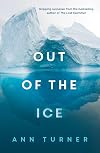
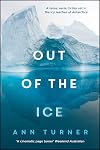
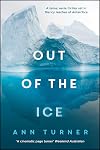
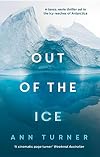
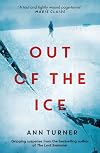
Out of the Ice
by Ann Turner
On This Page
Description
'A cinematic page-turner' Weekend Australian By the bestselling author of The Lost Swimmer, a tense, eerie thriller set in the icy reaches of Antarctica When environmental scientist Laura Alvarado is sent to a remote Antarctic island to report on an abandoned whaling station, she begins to uncover more than she could ever imagine. Reminders of the bloody, violent past are everywhere, and Laura is disturbed by evidence of recent human interference. Rules have been broken, and the protected show more wildlife is behaving strangely. On a diving expedition, Laura emerges into an ice cave where she is shocked to see an anguished figure, crying for help. But in this freezing, lonely landscape there are ghosts everywhere, and Laura wonders if her own eyes can be trusted. Has she been in the ice too long? Back at base, Laura's questions about the whaling station go unanswered, blocked by scientists unused to outsiders. And Laura just can't shake what happened in the cave. Piecing together a past and present of cruelty and vulnerability that can be traced around the world, from Norway, to Nantucket, Europe and Antarctica, Laura will stop at nothing to unearth the truth. As she comes face to face with the dark side of human progress, she also discovers a legacy of love, hope and the meaning of family. If only Laura can find her way . . . Out of the ice. Praise for Out of the Ice 'Turner is a steely and confident writer, concerned in the main part with reeling her reader in and out of suspense with a sense of concentrated exhilaration ... A cinematic page-turner that's well worth the price of admission to the movie house of fiction.' Weekend Australian 'a taut and tightly wound page-turner' Marie Claire 'Turner is in fine form, exploring silence and secrets, male and female ways of relating and exploitation and grief.' West Australian 'This gripping thriller exposes a dark side of human nature but reveals a newfound hope in love and family.' Mindfood 'Turner delivers another brilliant suspense novel ... solidifying her position as one of Australia's best thriller writers... A compelling and enormously satisfying thrill ride.' Better Reading 'Ann Turner dazzled us with her first novel, The Lost Swimmer. Her new book is another clever, cinematic thriller involving a body of water and an impending sense of dread ... Out of the Ice is a fantastically eerie and suspenseful read.' iBooks show lessTags
Recommendations


























Member Reviews
I imagine it’s thanks to her screen writing background that Ann Turner is a dab hand at depicting a strong sense of physical place in her novels. In this, her second standalone thriller, Turner takes us to Antarctica which she brings alive in a way that few novels set there manage to do. There is, of course, the usual focus on ice and wildlife but by setting a good portion of the book in an abandoned Norwegian whaling village Tuner provides a human scale to the place which, perhaps paradoxically, makes it all the more wondrous. Showing the village as a place where whole families once lived and played in between working hard in an industry most would now find abhorrent is well done and offers a genuinely fascinating view of this show more little-understood part of the world.
Alas, for me at least, the remaining elements of the book were not nearly as successful.
Turner’s heroine, scientist Laura Alvarado, is asked to make a report about the possibility of removing the aforementioned whaling village, Fredelighavn, from the Antarctic Exclusion Zone and opening it as a tourist destination. Although Laura is against the idea at the outset it is assumed by those who matter that she will be objective and so she is cajoled into agreement. Her problems begin when she arrives at the scientific research base nearest to the village and is treated like some kind of pariah by most of the people there. Who just happen to be men. Is it a sexism thing? Then in the village itself (a relatively short ride away from the research base) odd things start to happen. It seems like people have been there recently even though no one is meant to be there without permission. And Laura thinks she sees actual people. Is that a real woman or the ghost of the last whaling captain’s wife? And is there really a teenage boy trapped in an ice cave or is Laura going ‘toasty’ (the phrase used to describe the particular kind of madness that strikes people who have stayed too long in Antarctica)?
My problem was that I didn’t care. I was bored early with Laura who is meant to be around 30 and behaves, mostly, like a particularly petulant and juvenile 14 year old. She rushes to judgement, swoons like a schoolgirl on multiple occasions and behaves erratically or stupidly almost all of the time. I know that might be realistic as far as human beings go but it’s just not very interesting to read about. And the fact that she does a decade’s worth of maturing over the course of the last 25 or so pages of the book make it worse somehow. There are a lot of other characters but none really are developed beyond a single dimension so they didn’t offer much in the way of engagement for me.
As for the the storyline…I found it to be absurd and not in a good, Douglas Adams-y way. More like someone threw a magnetic poetry kit at the nearest fridge door and used the resulting randomness as the basis for a plot. I know we are readers are meant to suspend disbelief when reading fiction but I’d have need to put my critical faculties in a blender to swallow the credibility gaps here. I’m not even concerned with the main “strange things going on in a really hard to get to place” element of the plot which I could have lived with. But all the little things surrounding that just didn’t ring true. Mostly because they were based on Laura’s random conjectures and/or official organisations or their representatives behaving in ways that wouldn’t happen. And you don’t want to get me started on the sappy, daft ending.
I did enjoy the parts of OUT OF THE ICE that depicted the historical use of Antarctica. which included a nice little side-trip to Nantucket to meet with the last whaling captain’s granddaughter. But as a work of narrative thrills I was sadly disappointed. show less
Alas, for me at least, the remaining elements of the book were not nearly as successful.
Turner’s heroine, scientist Laura Alvarado, is asked to make a report about the possibility of removing the aforementioned whaling village, Fredelighavn, from the Antarctic Exclusion Zone and opening it as a tourist destination. Although Laura is against the idea at the outset it is assumed by those who matter that she will be objective and so she is cajoled into agreement. Her problems begin when she arrives at the scientific research base nearest to the village and is treated like some kind of pariah by most of the people there. Who just happen to be men. Is it a sexism thing? Then in the village itself (a relatively short ride away from the research base) odd things start to happen. It seems like people have been there recently even though no one is meant to be there without permission. And Laura thinks she sees actual people. Is that a real woman or the ghost of the last whaling captain’s wife? And is there really a teenage boy trapped in an ice cave or is Laura going ‘toasty’ (the phrase used to describe the particular kind of madness that strikes people who have stayed too long in Antarctica)?
My problem was that I didn’t care. I was bored early with Laura who is meant to be around 30 and behaves, mostly, like a particularly petulant and juvenile 14 year old. She rushes to judgement, swoons like a schoolgirl on multiple occasions and behaves erratically or stupidly almost all of the time. I know that might be realistic as far as human beings go but it’s just not very interesting to read about. And the fact that she does a decade’s worth of maturing over the course of the last 25 or so pages of the book make it worse somehow. There are a lot of other characters but none really are developed beyond a single dimension so they didn’t offer much in the way of engagement for me.
As for the the storyline…I found it to be absurd and not in a good, Douglas Adams-y way. More like someone threw a magnetic poetry kit at the nearest fridge door and used the resulting randomness as the basis for a plot. I know we are readers are meant to suspend disbelief when reading fiction but I’d have need to put my critical faculties in a blender to swallow the credibility gaps here. I’m not even concerned with the main “strange things going on in a really hard to get to place” element of the plot which I could have lived with. But all the little things surrounding that just didn’t ring true. Mostly because they were based on Laura’s random conjectures and/or official organisations or their representatives behaving in ways that wouldn’t happen. And you don’t want to get me started on the sappy, daft ending.
I did enjoy the parts of OUT OF THE ICE that depicted the historical use of Antarctica. which included a nice little side-trip to Nantucket to meet with the last whaling captain’s granddaughter. But as a work of narrative thrills I was sadly disappointed. show less
Out of the Ice by Australian author Ann Turner is set on a remote Antarctic Island and is a great book to read in winter huddled under the covers.
Laura Alvarado is an environmental scientist sent to make a detailed report on an abandoned whaling station where not all is as it seems.
The wildlife in this region of antarctica (whales, penguins and seals), the isolation and the freezing cold elements form a great backdrop to the novel and are well-written. The scenes that take place in the creepy and abandoned town of Fredelighavn were the highlight of the book for me, and successfully conveyed the horrors of the whaling industry and echoes of the past.
The male dominated environment of the nearby British station was captured well although I show more never really warmed to Laura and some of her decisions were frustrating.
Out of the Ice is being promoted as a tense and eerie thriller but I have to disagree with this categorisation. I found it to be an eerie slow burn until the last quarter of the book, when it takes a sudden turn and becomes a fast-paced crime novel. The ending was too neat and tidy for my liking and the romance unbelievable.
One thing I will take away after reading Out of the Ice is a desire to visit Nantucket.
* Copy courtesy of Simon & Schuster * show less
Laura Alvarado is an environmental scientist sent to make a detailed report on an abandoned whaling station where not all is as it seems.
The wildlife in this region of antarctica (whales, penguins and seals), the isolation and the freezing cold elements form a great backdrop to the novel and are well-written. The scenes that take place in the creepy and abandoned town of Fredelighavn were the highlight of the book for me, and successfully conveyed the horrors of the whaling industry and echoes of the past.
The male dominated environment of the nearby British station was captured well although I show more never really warmed to Laura and some of her decisions were frustrating.
Out of the Ice is being promoted as a tense and eerie thriller but I have to disagree with this categorisation. I found it to be an eerie slow burn until the last quarter of the book, when it takes a sudden turn and becomes a fast-paced crime novel. The ending was too neat and tidy for my liking and the romance unbelievable.
One thing I will take away after reading Out of the Ice is a desire to visit Nantucket.
* Copy courtesy of Simon & Schuster * show less
Laura Alvarado, an environmental scientist doing a stint in Antarctica, is asked to write a report on an old, abandoned Norwegian whaling station. The report would recommend, or not, opening the station and it’s community buildings to public tourism. While diving in an ice cave, Laura thinks she sees the ghostly image of a young boy. Could he be real? Other things seem somewhat out of place in the well-preserved station and back at base camp, other odd things seem to be happening. Laura, filled with dread and an urgent need to discover the truth, begins an investigation that will take her from the icy realm of Antarctica to Nantucket and Venice.
This thriller begins slowly, introducing to the reader not only our human characters, but show more also that of Antarctica, very much another character in the story. Turner’s descriptions are, as the book cover touts, “cinematic” and one gets a thorough introduction before the real action begins. The story will turn away from the icy continent as Laura’s investigation moves to other shores, before returning for the action-packed climax. Admittedly, I was far more enamored of the first two thirds of the book than with the last third. The scenes in Venice seemed somehow out of place, the uncovered mystery a bit over-the-top. and the attempt to also make the tale about “the meaning of family” seemed a bit forced. Yet, despite those disappointments, I did enjoy the book and would recommend it for those intrigued by our southernmost continent its history, landscape and wildlife. show less
This thriller begins slowly, introducing to the reader not only our human characters, but show more also that of Antarctica, very much another character in the story. Turner’s descriptions are, as the book cover touts, “cinematic” and one gets a thorough introduction before the real action begins. The story will turn away from the icy continent as Laura’s investigation moves to other shores, before returning for the action-packed climax. Admittedly, I was far more enamored of the first two thirds of the book than with the last third. The scenes in Venice seemed somehow out of place, the uncovered mystery a bit over-the-top. and the attempt to also make the tale about “the meaning of family” seemed a bit forced. Yet, despite those disappointments, I did enjoy the book and would recommend it for those intrigued by our southernmost continent its history, landscape and wildlife. show less
An interesting mystery that takes place almost entirely in the Antarctic treaty zone. A researcher is sent to evaluate a long-deserted whaling town which for many decades has been off limits to all humans because of the extraordinary breeding colonies thriving there. There is interest in opening the town to tourists, and Laura is meant to report back on her assessment of what that would do to local animal populations. She is to be based about 12 miles away at separate research facility, but on her arrival the community reacts to her suspiciously and threateningly, and her drink is spiked her first night there. With no idea what's going on, Laura proceeds to make daily trips to the whaling station, photographing and taking notes. What show more she finds both disturbs her (the animals' reactions to her presence are unusually aggressive) and intrigues her (many of the houses look like the inhabitants just left). And then even more strange things start happening, such as a young boy appearing behind a wall of ice when she explores an underwater cavern.
The descriptions of the ice are wonderful. The content about how whaling was done is not wonderful, but probably accurate. The secret of what's going on is nasty, and some of it highly unlikely (for Antarctica). But, definitely worth a look, especially if you like mysteries set in extreme environments. show less
The descriptions of the ice are wonderful. The content about how whaling was done is not wonderful, but probably accurate. The secret of what's going on is nasty, and some of it highly unlikely (for Antarctica). But, definitely worth a look, especially if you like mysteries set in extreme environments. show less
Australians have a long connection with Antarctica and a mystery novel set there is very attractive.
Highly reputed marine biologist Laura Alvarado is an expert on the Environmental Impact of humans on Antarctic wildlife particularly on penguins, whales and dolphins. She is in Antarctica currently on an unusually long 18 month contract.
She is requested is to go to the old Norwegian whaling station at Fredelighavn, currently the subject of an Exclusion Order, to assess whether it should be opened for tourism. The station has been closed since 1957 and reports are that many of the formerly endangered species, whales and penguins etc., are flourishing. Laura is to carry out an Environmental Impact Assessment. There is a British base nearby show more called Alliance on South Georgia Island. She will be given assistance at Alliance and will travel to Fredelighavn on a daily basis.
Laura is surprised at the level of non-cooperation she meets among the scientists at Alliance but puts it down to the top secret nature of their research.
I thought the parts of the plot set at Alliance and Fredlighavn were very well done with good character development and a rising level of suspense. The story of the Norwegian whalers who set up the village at Fredelighavn was interesting. I was less than comfortable when the plot took an extravagant direction and tracked paedophilia across the globe.
Having said that, I think the plot would make a stunning film, thought-provoking on many levels. show less
Highly reputed marine biologist Laura Alvarado is an expert on the Environmental Impact of humans on Antarctic wildlife particularly on penguins, whales and dolphins. She is in Antarctica currently on an unusually long 18 month contract.
She is requested is to go to the old Norwegian whaling station at Fredelighavn, currently the subject of an Exclusion Order, to assess whether it should be opened for tourism. The station has been closed since 1957 and reports are that many of the formerly endangered species, whales and penguins etc., are flourishing. Laura is to carry out an Environmental Impact Assessment. There is a British base nearby show more called Alliance on South Georgia Island. She will be given assistance at Alliance and will travel to Fredelighavn on a daily basis.
Laura is surprised at the level of non-cooperation she meets among the scientists at Alliance but puts it down to the top secret nature of their research.
I thought the parts of the plot set at Alliance and Fredlighavn were very well done with good character development and a rising level of suspense. The story of the Norwegian whalers who set up the village at Fredelighavn was interesting. I was less than comfortable when the plot took an extravagant direction and tracked paedophilia across the globe.
Having said that, I think the plot would make a stunning film, thought-provoking on many levels. show less
Ann Turner’s Out of the Ice uses the point of view of environmentalist Laura Alvarado to reveal both the wonder and the threats within this amazing landscape: Newtown Review of Books
Ratings
Members
- Recently Added By
Lists

Books Read in 2016
4,666 works; 199 members

Read in 2016
107 works; 7 members
Author Information
7 Works 116 Members
Awards and Honors
Awards
Common Knowledge
- Important places
- Antarctica
Classifications
- Genres
- Fiction and Literature, Suspense & Thriller, Mystery
- DDC/MDS
- 813.54 — Literature & rhetoric American literature in English American fiction in English 1900-1999 1945-1999
- LCC
- G2017 — Geography, Anthropology and Recreation Atlases By region or country Eastern Hemisphere. Eurasia, Africa, etc. Europe
- BISAC
Statistics
- Members
- 51
- Popularity
- 593,960
- Reviews
- 6
- Rating
- (3.13)
- Languages
- English
- Media
- Paper, Ebook
- ISBNs
- 6
- ASINs
- 2