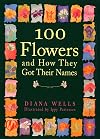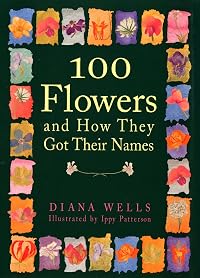
100 Flowers and How They Got Their Names
by Diana Wells
On This Page
Description
Illustrations by Ippy Patterson. From Baby Blue Eyes to Silver Bells, from Abelia to Zinnia, every flower tells a story. Gardening writer Diana Wells knows them all. Here she presents one hundred well-known garden favorites and the not-so-well-known stories behind their names. Not for gardeners only, this is a book for anyone interested not just in the blossoms, but in the roots, too. Diana Wells is the author of 100 Birds and How They Got Their Names and 100 Flowers and How They Got Their show more Names, has written for Friends Journal, and is contributing editor of the journal Greenprints. Born in Jerusalem, she has lived in England and Italy and holds an honors degree in history from Oxford University. She now lives with her husband on a farm in Pennsylvania. show lessTags
Recommendations





















Member Reviews
Looking back on it now, I had thought there would be funny little stories behind how these flowers got their common names (forget-me-not: imagine the possibilities!). Turns out most of them are just named after a botanist, a friend/family member of a botanist, or someone with whom the botanist was trying to curry favor.
This delightful little book tells the historical and scientific stories of 100 flowers from abelia to zinnia. You learn that african violets were sent to Europe in 1892 whereas begonias did not become an important garden flower until the nineteenth century. Chrysanthemums symbolized a scholar in retirement and were considered a "noble plant." The short stories tell of the struggles of the botanists, herbalists and rulers that saved, propagated and found new homes for many of the flowers we know today. There is only a simple drawing of each flower but the information is full of words that paint the stories in full color. A small gem of a book.
100 Flowers and How They Got Their Names
by Diana Wells
This is laid out well with the name and drawing (which is so good yet simple I used to practice drawing the flowers from here), and lots of information about the flower besides where it got it's name. 100 flowers! I enjoyed the book! Got this from the library.
by Diana Wells
This is laid out well with the name and drawing (which is so good yet simple I used to practice drawing the flowers from here), and lots of information about the flower besides where it got it's name. 100 flowers! I enjoyed the book! Got this from the library.
Ratings
Members
- Recently Added By
Author Information
7 Works 756 Members
Diana Wells is the author of 100 Flowers and How They Got Their Names and contributing editor to the journal Greenprints. Born in Jerusalem, she has lived in England and Italy and holds an honors degree in history from Oxford University. She now lives with her husband, an artist, on a farm in Pennsylvania
All Editions
Common Knowledge
- Alternate titles
- 100 Flowers
- Original publication date
- 1997
- Dedication
- For my sister Sheila (1936-1995) and her nephew, my darling son , Quin (1971-1995)
- First words
- Introduction: We do not read of flowers in the Garden of Eden, but of trees - trees that (except for one) were given to us as food.
Abelia: Someone should do a scholarly survey and find out if plants whose names come at the beginning of the alphabet are more often found in gardens than those that are listed farther along in the catalogs. - Last words
- (Click to show. Warning: May contain spoilers.)In the language of flowers, zinnia stands for "thoughts of absent friends"!
Classifications
- Genres
- Nonfiction, Home & Garden, Science & Nature, General Nonfiction
- DDC/MDS
- 582.13 — Natural sciences & mathematics Plants (Botany) Plants noted for specific vegetative characteristics and flowers Herbaceous and woody plants, plants noted for their flowers Flowering plants
- LCC
- QK13 .W46 — Science Botany Botany General
- BISAC
Statistics
- Members
- 350
- Popularity
- 90,597
- Reviews
- 3
- Rating
- (4.00)
- Languages
- English
- Media
- Paper, Ebook
- ISBNs
- 4
- UPCs
- 1
- ASINs
- 2