On This Page
Description
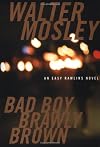
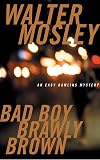
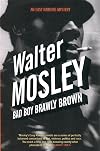
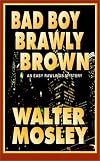
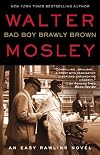
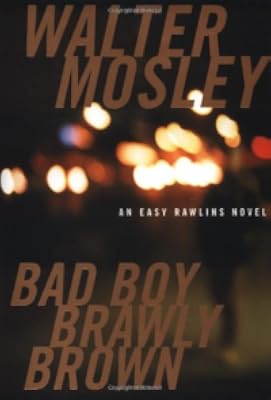
Fiction. African American Fiction. Mystery. Historical Fiction. Young Brawly Brown has traded in his family for The Clan of the First Men, a group rejecting white leadership and laws. Brown's mom asks Easy to make sure her baby's okay, and Easy promises to find him. His first day on the case, Easy comes face-to-face with a corpse, and before he knows it he is a murder suspect and in the middle of a police raid. Brawly Brown is clearly the kind of trouble most folks try to avoid. It takes show more everything Easy has just to stay alive as he explores a world filled with betrayals and predators like he never imagined. show lessTags
Recommendations



Member Reviews
Walter Mosley's greatest skill continues to be his observations of human beings: how they speak, what they look like, how they interact. The Easy Rawlins books are full of interactions where characters circle each other, size each other up, and what they don't say is just as important as what they do. (In general, Mosley's use of language is very powerful without ever seeming anything but conversational - he has a gift in that arena.) There's a sort of easy (forgive me) flow to the books that makes them very, very readable, and Bad Boy Brawly Brown is no exception. However, they do tend to blend into each other a bit, and the "mysteries" are never the most interesting part. The solutions are sometimes completely anti-climactic, in show more fact.
That doesn't quite happen with Brawly Brown. It's one of the more memorable ones, I think because the plot foregrounds the socio-political aspect - again, something Mosley depicts really well, but usually without quite so big a scope. Here, the generational divide between Easy and the young, more politically motivated Black people he has to investigate drives a lot of the tension, and anyone with a mild sense of mid-century history can kind of see where this is heading. That sense of history-in-the-making benefits the book, because once again Mosley introduces slightly too many characters to keep in your head (albeit one or two, like Sam Houston, being standouts). It's almost better to let it wash over you and notice the almost relentless march toward a famous tipping point instead.
On a sidenote, it's also pleasant to see Easy Rawlins, in middle age, having curbed his slightly less savory personal aspects without sacrificing his hard-boiled weariness. It would be easier for me to put this book in the hands of a new reader than the first two or three in the series, where Easy is, himself, a somewhat more seedy individual. I don't know about the continued reliance on memories of Mouse, though. I hope Mosley is going somewhere with that - there are hints that he is - because he can't keep the trick he employs in this book up for very long before it will become stale. show less
That doesn't quite happen with Brawly Brown. It's one of the more memorable ones, I think because the plot foregrounds the socio-political aspect - again, something Mosley depicts really well, but usually without quite so big a scope. Here, the generational divide between Easy and the young, more politically motivated Black people he has to investigate drives a lot of the tension, and anyone with a mild sense of mid-century history can kind of see where this is heading. That sense of history-in-the-making benefits the book, because once again Mosley introduces slightly too many characters to keep in your head (albeit one or two, like Sam Houston, being standouts). It's almost better to let it wash over you and notice the almost relentless march toward a famous tipping point instead.
On a sidenote, it's also pleasant to see Easy Rawlins, in middle age, having curbed his slightly less savory personal aspects without sacrificing his hard-boiled weariness. It would be easier for me to put this book in the hands of a new reader than the first two or three in the series, where Easy is, himself, a somewhat more seedy individual. I don't know about the continued reliance on memories of Mouse, though. I hope Mosley is going somewhere with that - there are hints that he is - because he can't keep the trick he employs in this book up for very long before it will become stale. show less
This is the first book by Mosley that I've read, but it won't be the last. It's an Easy Rawlings novel, exactly in the middle of the series (according to the WhackiWiki), with six books before it and six after. In this one, it's 1964, and Rawlings is working as the maintenance supervisor of the Sojourner Truth Middle School, raising two adopted children, sharing his life with an airline stewardess, and still mourning the death of his life-long friend Raymond "Mouse" Alexander in the previous year.
The story is this: Rawlings is asked by a friend to locate Brawly Brown, the son of that friend's girlfriend. Brawly allegedly hates his mother. He lived with his father, then abruptly left his father and moved in with his mother's cousin, show more Isolda. Busted for shoplifting a radio, he's sent to a juvenile home. Released, Brawly goes back to his father. But then, Brawly's mother says, he and his father had a violent fight, and he's on his own, and possibly running with a bad crowd.
Rawlings's searching takes him first to the home of Brawly's aunt, which is the scene of a recent, bloody murder. No Isolda there. As police arrive at the front door, he escapes out the back. Shortly thereafter, he attends a meeting of an urban activist group—Brawly may be a member—that's raided by police. Again he escapes, but in doing so, meets the group's leadership (though not Brawly). Not long afterwards, he's approached at his home by a seedy-looking detective who has photos of him taken at the meeting, in the moments before the raid. The detective knows a great deal about Rawlings, and recruits him to spy on the group for the police. While he declines the offer, he does keep the detective's phone number. It comes in handy before long.
The search progresses, with Rawlings meeting more and more people, few of whom take him at his word that he's just looking for the son of a friend, with the goal of keeping the kid out of trouble.
And so it goes, with another murder, additional mayhem, and, of course, obligatory surprises. A fun read.
I picked this book for the challenge simply because I had it. At a very recent library book sale (Buy a bag of books for $5!), I put this book in my bag because I'd heard of Mosley, but had never read anything by him. Now I have. And I'll keep an eye for Mosley books in the future. show less
The story is this: Rawlings is asked by a friend to locate Brawly Brown, the son of that friend's girlfriend. Brawly allegedly hates his mother. He lived with his father, then abruptly left his father and moved in with his mother's cousin, show more Isolda. Busted for shoplifting a radio, he's sent to a juvenile home. Released, Brawly goes back to his father. But then, Brawly's mother says, he and his father had a violent fight, and he's on his own, and possibly running with a bad crowd.
Rawlings's searching takes him first to the home of Brawly's aunt, which is the scene of a recent, bloody murder. No Isolda there. As police arrive at the front door, he escapes out the back. Shortly thereafter, he attends a meeting of an urban activist group—Brawly may be a member—that's raided by police. Again he escapes, but in doing so, meets the group's leadership (though not Brawly). Not long afterwards, he's approached at his home by a seedy-looking detective who has photos of him taken at the meeting, in the moments before the raid. The detective knows a great deal about Rawlings, and recruits him to spy on the group for the police. While he declines the offer, he does keep the detective's phone number. It comes in handy before long.
The search progresses, with Rawlings meeting more and more people, few of whom take him at his word that he's just looking for the son of a friend, with the goal of keeping the kid out of trouble.
And so it goes, with another murder, additional mayhem, and, of course, obligatory surprises. A fun read.
I picked this book for the challenge simply because I had it. At a very recent library book sale (Buy a bag of books for $5!), I put this book in my bag because I'd heard of Mosley, but had never read anything by him. Now I have. And I'll keep an eye for Mosley books in the future. show less
Standard Easy fare...our Mr. Rawlins is called upon by old friends to do what parents and police cannot or will not do---pull young Brawly Brown's nuts out of the fire before he's completely toast. How he goes about it is unconventional, but it works. Along the way, Easy also gains some insight into dealing with his own young son's singular way of maturing, and it's all to the good. I listened to this one on audio, and I have to say the various characterizations were quite good...but the little kids and women didn't always work just right. I think the reader tried just a little too hard. I did appreciate that this audio recording cued the end of the last track on each disc (I'm listening in the car) with gentle, appropriate music. I show more really hate having the last track end and getting 2 minutes into the FIRST track again before I realize I should have swapped out the disc.
August 2015 show less
August 2015 show less
This novel had much of the smooth-street charm that I remember from others in this series. Given the many changes in Easy’s life, it was a pleasure to see him grow and transition into responsible fatherhood. Still, to my delight Easy hasn’t lost his ability to blend into the streets and return to his “doing favors/street-sleuth” persona. These two aspects of his character are needed to add realism to the story and to fit within the social context of the novel.
Speaking of context, although I wasn’t completely blown away by this mystery’s storyline, I understood that the plot development was used as a device to demonstrate the socio-economic changes occurring in 1960’s Los Angeles. Easy’s search for Brawly allows him (and show more by extension the reader) to traverse various aspects of the Civil Rights Movement including: the growth of local entrepreneurial pursuits, changes among social hierarchies within Easy’s community and increasing turmoil between law enforcement agencies and activist groups.
As with other novels in this series Mosley continues to develop the overall Easy Rawlins story as well. Readers are left with unresolved feelings about the death of Easy’s friend Mouse and are somewhat haunted by him throughout the story. Due to this haunting I am left educated, entertained and anticipating answers to questions that will hopefully be revealed in the next book in the series, Six Easy Pieces.
If you are new to this series I suggest that you start with Devil in a Blue Dress, the first book in this series. Be forewarned, you will not be able to stop with just one book. These mysteries are addictive!
For more, visit my blog, Honey Lemon Tea. http://honeylemontea.com/2014/01/06/book-review-bad-boy-brawly-brown-by-walter-m... show less
Speaking of context, although I wasn’t completely blown away by this mystery’s storyline, I understood that the plot development was used as a device to demonstrate the socio-economic changes occurring in 1960’s Los Angeles. Easy’s search for Brawly allows him (and show more by extension the reader) to traverse various aspects of the Civil Rights Movement including: the growth of local entrepreneurial pursuits, changes among social hierarchies within Easy’s community and increasing turmoil between law enforcement agencies and activist groups.
As with other novels in this series Mosley continues to develop the overall Easy Rawlins story as well. Readers are left with unresolved feelings about the death of Easy’s friend Mouse and are somewhat haunted by him throughout the story. Due to this haunting I am left educated, entertained and anticipating answers to questions that will hopefully be revealed in the next book in the series, Six Easy Pieces.
If you are new to this series I suggest that you start with Devil in a Blue Dress, the first book in this series. Be forewarned, you will not be able to stop with just one book. These mysteries are addictive!
For more, visit my blog, Honey Lemon Tea. http://honeylemontea.com/2014/01/06/book-review-bad-boy-brawly-brown-by-walter-m... show less
It was great to read a wonderful part of an awesome series. This may be the best of the Easy Rawlings series. Every word in perfect. His characters are so real and vivid.
The ending raise it to a 4star. Easy delves into a freinds sons troubled life, bringing him back to the light. A look at pre-riot LA and a serious black man's lot in the early 1960's. A little preachy in places but Mosely has a point to get a cross. Black men can be stand up just as they can be low down, like everyone else.
I always enjoy Walter Mosley's books and this is no exception, but it didn't grab me like some of the others. Easy Rawlins is a good character, but I found that there were too many relatively undifferentiated minor characters, which led to slightly muddled storytelling. It did draw a unsettling picture of black life in LA in the sixties and the wide divide between blacks and whites. There are a lot more Mosley's on my reasons piles!
Members
- Recently Added By
Author Information

105+ Works 26,706 Members
Walter Mosley was born in Los Angeles, California on January 12, 1952. He graduated from Johnson State College in Vermont. His first book, Devil in a Blue Dress, was published in 1990, won a John Creasy Award for best first novel, and was made into a motion picture starring Denzel Washington in 1995. He is the author of the Easy Rawlins Mystery show more series, the Leonid McGill Mystery series, and the Fearless Jones series. His other works include Always Outnumbered, Always Outgunned, 47, Last Days of Ptolemy Grey, and Twelve Steps toward Political Revelation. He has received numerous awards, including an O. Henry Award, the Carl Brandon Society Parallax Award, and PEN America's Lifetime Achievement Award. (Bowker Author Biography) Walter Mosley is the author of the acclaimed Easy Rawlins series of mysteries, the novels "Blue Light" and "RL's Dream", and two collections of stories featuring Socrates Fortlow, "Always Outnumbered", "Always Outgunned", for which he received the Anisfield-Wolf Award, and "Walkin' the Dog". He is a member of the board of directors of the National Book Awards and the founder of the PEN American Center's Open Book Committee. At various times in his life he has been a potter, a computer programmer, & a poet. He was born in Los Angeles & now lives in New York. (Publisher Provided) show less
Awards and Honors
Awards
Series

Work Relationships
Is contained in
Common Knowledge
- Canonical title
- Bad Boy Brawly Brown
- Original title
- Bad Boy Brawly Brown
- Original publication date
- 2002
- People/Characters
- Ezekiel "Easy" Rawlins; Brawley Brown
- Important places
- Los Angeles, California, USA
- Dedication
- For Leroy Mosley
- First words
- Mouse is dead.
- Last words
- (Click to show. Warning: May contain spoilers.)He went into the house and I stayed outside, smoking in the desert twilight.
- Blurbers
- Crumley, James
- Original language*
- Anglais (USA) (USA)
*Some information comes from Common Knowledge in other languages. Click "Edit" for more information.
Classifications
Statistics
- Members
- 779
- Popularity
- 36,017
- Reviews
- 18
- Rating
- (3.63)
- Languages
- 5 — English, Finnish, French, German, Spanish
- Media
- Paper, Audiobook, Ebook
- ISBNs
- 31
- ASINs
- 12