On This Page
Description
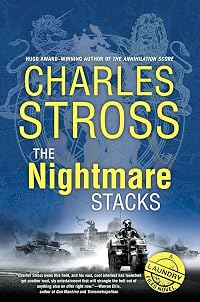
"The year is 2020. It's seventeen years since the Revolution overthrew the last king of the New British Empire, and the newly reconstituted North American Commonwealth is developing rapidly, on course to defeat the French and bring democracy to a troubled world. But Miriam Burgeson, commissioner in charge of the shadowy Ministry of Intertemporal Research and Intelligence--the paratime espionage agency tasked with catalyzing the Commonwealth's great leap forward--has a problem. For years, show more she's warned everyone: "The Americans are coming." Now their drones arrive in the middle of a succession crisis--the leader of the American Commonwealth is dying and the vultures are circling. In another timeline, the U.S. has recruited Rita, Miriam's estranged daughter, to spy across timelines and bring down any remaining world-walkers who might threaten national security. But her handlers are keeping information from her. Two nuclear superpowers are set on a collision course. Two increasingly desperate paratime espionage agencies are fumbling around in the dark, trying to find a solution to the firs- contact problem that doesn't result in a nuclear holocaust. And two women--a mother and her long-lost, adopted daughter--are about to find themselves on opposite sides of the confrontation"-- show lessTags
Recommendations







Member Reviews
I put off reading this Stross novel for the weirdest of reasons. I assumed, based on the blurb, (if not the series caption,) that it was part of the Merchant Princes books.
I was right. And I was wrong.
Much time has passed since the events of those Merchant Princes novels. We get to return to Miriam and her beau and her missing child, but best of all, the Merchant Princes are DONE. Revolution and a new government have taken over this alternate timeline, but as with all these Princes, there's a bit of traveling still going on. In fact, there's a lot.
Our America is its comfortable near-police state and it has technological means to travel across alternate worlds thanks to the necessity of protecting itself after that little bit of the show more destruction of the White House. The other world is trying desperately to learn from the mistakes of all previous revolutions and do it right and smart, avoiding all the pitfalls.
Unfortunately, our America is PARANOID as hell. It's all cold-war with them and this novel is a pretty pure piece of spy action, misunderstandings, lies, and pretty impressive political thought.
It just happens to revolve around neighboring time-lines, impressive world-building, and mysteries that go quite a bit deeper. Such as the old, old America that was technologically advanced but is now dead. Never mind that all our cold-war action is BETWEEN different Americas. :)
I was very impressed. I read all the other Merchant Princes novels and enjoyed them well enough even if I don't really put them on the same level as the rest of Stross's works, but they were fine. This one, however, got me excited about it all once again.
This is the beginning of a new series even if it's an offshoot of the old. I was right and wrong. :)
Fortunately, I don't really think it's all that necessary to read the previous ones to get this. It just helps if you want to know WHERE it all came from. From feudal world-walkers controlling an epic smuggling empire to the revolution that freed a whole people from THAT to a game of empires where both sides can sneak nukes across world-lines. :) show less
I was right. And I was wrong.
Much time has passed since the events of those Merchant Princes novels. We get to return to Miriam and her beau and her missing child, but best of all, the Merchant Princes are DONE. Revolution and a new government have taken over this alternate timeline, but as with all these Princes, there's a bit of traveling still going on. In fact, there's a lot.
Our America is its comfortable near-police state and it has technological means to travel across alternate worlds thanks to the necessity of protecting itself after that little bit of the show more destruction of the White House. The other world is trying desperately to learn from the mistakes of all previous revolutions and do it right and smart, avoiding all the pitfalls.
Unfortunately, our America is PARANOID as hell. It's all cold-war with them and this novel is a pretty pure piece of spy action, misunderstandings, lies, and pretty impressive political thought.
It just happens to revolve around neighboring time-lines, impressive world-building, and mysteries that go quite a bit deeper. Such as the old, old America that was technologically advanced but is now dead. Never mind that all our cold-war action is BETWEEN different Americas. :)
I was very impressed. I read all the other Merchant Princes novels and enjoyed them well enough even if I don't really put them on the same level as the rest of Stross's works, but they were fine. This one, however, got me excited about it all once again.
This is the beginning of a new series even if it's an offshoot of the old. I was right and wrong. :)
Fortunately, I don't really think it's all that necessary to read the previous ones to get this. It just helps if you want to know WHERE it all came from. From feudal world-walkers controlling an epic smuggling empire to the revolution that freed a whole people from THAT to a game of empires where both sides can sneak nukes across world-lines. :) show less
****.5
I had read this book last year thinking that it was book 1 of a new series, but it's really book 7 of the Merchant Princes. While not terrible as a stand-alone, it makes a hell of a lot more sense having just finished the first 6 books [which should be considered mandatory before attempting this one]. More than that, it attempts to correct some of the issues with the earlier books. Although no longer the primary focus, Miriam has an important role, and the questions regarding her status, ambitions, relationships, and projects are all answered, even if it's somewhat after the fact. We also find out what happened to her biological daughter, who was mentioned early in the series and then unceremonially dropped completely.
Stross has show more also backed off a bit from his direct attacks on the US government, making it clear that we are now dealing with an alternate (albeit recently divergent) timeline from ours. This is more of a cautionary tale about the potential dangers of the surveillance state, but tempered by having a reasonable and rational president (modelled after Hillary Clinton but not explicitly named) at the helm.
Meanwhile, the revolution in the New Britain timeline has run its course and yielded a stable democracy, prosperous and thriving.
Overall, the various internal and external politics are used to drive the plot, rather than be the focus as happened in the previous couple of books in the series. This makes for a much more lively and enjoyable read. Rita and her grandfather are great characters, arguably even better than Miriam and Iris were in Book 1. A lot more believable too, as Rita was raised the way that Miriam should have been, and avoids the problematic inconsistencies in Iris/Patricia.
The biggest problem with the book is that most of it is setup. It takes a long time for Rita to get up to speed and capable of doing anything, and for Stross to fill us in on what's been going on in all of the timelines and their dueling factions during the 17 years since the end of the previous book. It's only in the last couple of chapters that things finally come together and start actually happening. And then after getting us all hot and bothered, the book abruptly ends. At least I have the next one queued up. show less
I had read this book last year thinking that it was book 1 of a new series, but it's really book 7 of the Merchant Princes. While not terrible as a stand-alone, it makes a hell of a lot more sense having just finished the first 6 books [which should be considered mandatory before attempting this one]. More than that, it attempts to correct some of the issues with the earlier books. Although no longer the primary focus, Miriam has an important role, and the questions regarding her status, ambitions, relationships, and projects are all answered, even if it's somewhat after the fact. We also find out what happened to her biological daughter, who was mentioned early in the series and then unceremonially dropped completely.
Stross has show more also backed off a bit from his direct attacks on the US government, making it clear that we are now dealing with an alternate (albeit recently divergent) timeline from ours. This is more of a cautionary tale about the potential dangers of the surveillance state, but tempered by having a reasonable and rational president (modelled after Hillary Clinton but not explicitly named) at the helm.
Meanwhile, the revolution in the New Britain timeline has run its course and yielded a stable democracy, prosperous and thriving.
Overall, the various internal and external politics are used to drive the plot, rather than be the focus as happened in the previous couple of books in the series. This makes for a much more lively and enjoyable read. Rita and her grandfather are great characters, arguably even better than Miriam and Iris were in Book 1. A lot more believable too, as Rita was raised the way that Miriam should have been, and avoids the problematic inconsistencies in Iris/Patricia.
The biggest problem with the book is that most of it is setup. It takes a long time for Rita to get up to speed and capable of doing anything, and for Stross to fill us in on what's been going on in all of the timelines and their dueling factions during the 17 years since the end of the previous book. It's only in the last couple of chapters that things finally come together and start actually happening. And then after getting us all hot and bothered, the book abruptly ends. At least I have the next one queued up. show less
Charles Stross's great subject is nuclear holocaust. He doesn't always - or even usually - bring out the explosions explicitly. More often, it's Chthuloid creatures hungering to eat our minds, or robots cheerily carrying on after we're extinct. But the specter of holocaust brings a sense of awful, potential finality to his stories.
Here, we have the seventh novel in his "Merchant Princes" series. There exist numerous alternate timelines, some with histories close to ours, some much more distant. A crime family of people who call themselves the Clan have the hereditary ability to transport themselves, with often-illicit cargo, between timelines. Worldwalking smugglers can cross borders easily, by shifting to worlds where those borders do show more not exist. I had not been reading these books, but this episode is written to be an entry point for new readers, so I thought I'd try it. A brief summary at the beginning brings the reader up to date, as do introductions to characters from the earlier books.
Events in the first six books evidently focused on the Clan's medieval, home timeline (Timeline One), and a high-tech Timeline Two with a history very like our own - up through 2003, when a Clan worldwalker nuked the White House. The now-divergent high-tech timeline carried out a return strike, leaving the eastern part of North America in Timeline One dangerously radioactive.
In 2020, the remnant of the Clan have moved to Timeline Three, wherein politics center on a Cold War-style thermonuclear standoff between a nascent, English democracy in the Americas and a despotic, French empire ruling Eurasia. The Clan serve as spies against Timeline Two, frantically trying to bring Three's computer and biological technology up to the level of an extremely paranoid, panopticon-surveillance society in which the Department of Homeland Security gets whatever it wants.
The political leaders of Timeline Two, meanwhile, see such surveillance as only right, to guard against threats that can literally materialize nearly anywhere - and did destroy the White House, killing the president. Two has artificial means of crosstime transit, and a few residents descended from Clan members - but these people have only one copy of the recessive gene needed for worldwalking, and thus no native power to do so.
But biotech advances rapidly. Meet Rita Douglas, underemployed 25 year old, raised in an adoptive family. Rita has some very interesting genes that can now be activated. She is..."convinced" might be the word...to become DHS's first worldwalking, covert asset. Some of the airborne drones crossing into Three have failed to return, and atmospheric sampling probles detect recent use of nuclear weapons. Stross's extrapolation of spy tradecraft into a reality of multiple timelines is quite fascinating, as Rita carefully explores a railway switchyard that is the only location in Three known to the intelligence community of Two. Can the two nuclear-armed timelines manage peaceful contact? Will Mutual Assured Destruction be their best solution? Stakes are further heightened because the new American democracy in Three is approaching its first political succession, closely watched by the tyranny across the seas.
Stross raises a number of questions that future books will explore. What is the proper role of an intellgence community in a free society? Can a society be both free and safe against sudden, covert nuclear attack? What does immersion in spy tradecraft do to its practitioners? Why was Rita's adoptive family so perfect for fitting her to a future job as a spy? What is the meaning of the mysterious ruins in Timeline Four?
The book starts a number of threads that won't resolve until future books. But it's a good place to start if Stross's other big series, the Laundry stories, haven't been giving you enough tastes of his talent for morphing the nuclear threat we live with into science-fiction and fantasy modes. show less
Here, we have the seventh novel in his "Merchant Princes" series. There exist numerous alternate timelines, some with histories close to ours, some much more distant. A crime family of people who call themselves the Clan have the hereditary ability to transport themselves, with often-illicit cargo, between timelines. Worldwalking smugglers can cross borders easily, by shifting to worlds where those borders do show more not exist. I had not been reading these books, but this episode is written to be an entry point for new readers, so I thought I'd try it. A brief summary at the beginning brings the reader up to date, as do introductions to characters from the earlier books.
Events in the first six books evidently focused on the Clan's medieval, home timeline (Timeline One), and a high-tech Timeline Two with a history very like our own - up through 2003, when a Clan worldwalker nuked the White House. The now-divergent high-tech timeline carried out a return strike, leaving the eastern part of North America in Timeline One dangerously radioactive.
In 2020, the remnant of the Clan have moved to Timeline Three, wherein politics center on a Cold War-style thermonuclear standoff between a nascent, English democracy in the Americas and a despotic, French empire ruling Eurasia. The Clan serve as spies against Timeline Two, frantically trying to bring Three's computer and biological technology up to the level of an extremely paranoid, panopticon-surveillance society in which the Department of Homeland Security gets whatever it wants.
The political leaders of Timeline Two, meanwhile, see such surveillance as only right, to guard against threats that can literally materialize nearly anywhere - and did destroy the White House, killing the president. Two has artificial means of crosstime transit, and a few residents descended from Clan members - but these people have only one copy of the recessive gene needed for worldwalking, and thus no native power to do so.
But biotech advances rapidly. Meet Rita Douglas, underemployed 25 year old, raised in an adoptive family. Rita has some very interesting genes that can now be activated. She is..."convinced" might be the word...to become DHS's first worldwalking, covert asset. Some of the airborne drones crossing into Three have failed to return, and atmospheric sampling probles detect recent use of nuclear weapons. Stross's extrapolation of spy tradecraft into a reality of multiple timelines is quite fascinating, as Rita carefully explores a railway switchyard that is the only location in Three known to the intelligence community of Two. Can the two nuclear-armed timelines manage peaceful contact? Will Mutual Assured Destruction be their best solution? Stakes are further heightened because the new American democracy in Three is approaching its first political succession, closely watched by the tyranny across the seas.
Stross raises a number of questions that future books will explore. What is the proper role of an intellgence community in a free society? Can a society be both free and safe against sudden, covert nuclear attack? What does immersion in spy tradecraft do to its practitioners? Why was Rita's adoptive family so perfect for fitting her to a future job as a spy? What is the meaning of the mysterious ruins in Timeline Four?
The book starts a number of threads that won't resolve until future books. But it's a good place to start if Stross's other big series, the Laundry stories, haven't been giving you enough tastes of his talent for morphing the nuclear threat we live with into science-fiction and fantasy modes. show less
This is what I wanted Merchant Princess to be. We see Rita do cool stuff without being too Mary Sue-ish, we get background, we get development, we get politics, and all that without being one giant economics textbook. Moar!
To quote from the back cover blurb: "The year is 2020. Two nuclear superpowers across time lines, one in the midst of a technological revolution and the other a hyperpolice state, are set on a collision course"
That's a good way to summarize the situation, guess which one of those two is 'our' timeline! If you guessed 'hyperpolice state', you win and the NSA will be stopping by very soon to pick you up. Just kidding, but it is clear that Mr. Stross is warning us about the increasing level of surveillance and police powers in the country today. This book was written in 2016, so he wasn't predicting very far in the future.
He is using multiple timelines of very similar Earths with time hopping people to get his point across about the show more current state of the country. Mr. Stross is from the UK, so take his opinions with a bit of a grain of salt, but the warning is a good one to think about.
I found this interesting and the characters engaging, even jumping in here at book 7 without reading the previous books. It was pretty clear I'd jumped into the middle of a series, a few parts felt like summaries, but not overtly. Very good stuff, I'll be going back and reading the previous and following books. show less
That's a good way to summarize the situation, guess which one of those two is 'our' timeline! If you guessed 'hyperpolice state', you win and the NSA will be stopping by very soon to pick you up. Just kidding, but it is clear that Mr. Stross is warning us about the increasing level of surveillance and police powers in the country today. This book was written in 2016, so he wasn't predicting very far in the future.
He is using multiple timelines of very similar Earths with time hopping people to get his point across about the show more current state of the country. Mr. Stross is from the UK, so take his opinions with a bit of a grain of salt, but the warning is a good one to think about.
I found this interesting and the characters engaging, even jumping in here at book 7 without reading the previous books. It was pretty clear I'd jumped into the middle of a series, a few parts felt like summaries, but not overtly. Very good stuff, I'll be going back and reading the previous and following books. show less
I’ve never read any Charles Stross before, but he’s been on my wishlist for a very long time, so I was excited to read this book. It’s set in the world of his Merchant Princes (also known as Family Trade) books, but it’s the start of a new series. I had high hopes, but I ended up being a little underwhelmed.
After terrorist “world walkers” from an alternate timeline nuked the White House, the U.S. has become a paranoid surveillance state. Rita Douglas is the adopted daughter of a family that knows how to keep their head down and out of trouble – her grandparents escaped from the GDR and outwitted the Stasi. Unknown to her, the U.S. government has been keeping tabs on her since she was eight – her birth mother was a known show more world walker and she has the gene as well. She’s recruited to become the first American world walker spy. Meanwhile, her birth mother is trying to rebuild modern technology in an alternate timeline while waiting for the inevitable U.S. first contact.
There are a couple of reasons why I didn’t love this book, the biggest one being that I just didn’t believe the picture that Stross painted of the timeline closest to our world. It was the same until 2003 when the nuclear attack on the White House happened, but since then, the Bill of Rights has become a farce, conservative values have taken root (Roe vs. Wade was overturned), society is more overtly racist and homophobic, and India and Pakistan have had a nuclear war. Surveillance is everywhere – every street corner has a camera, and there are advanced algorithms to identify suspicious people.
The danger of setting up an alternate reality that diverged only a few years ago is that it will inevitably ring false to many people. Everyone has opinions about the times they live in. I just couldn’t believe that Americans would give up privacy or civil liberties to such an extent, or that our increasingly liberal world would suddenly descend into a moral panic about race or homosexuality. And India and Pakistan having a nuclear war struck me as exceedingly unlikely – there’s no political gain to either country going to war (much less nuclear war), and I don’t think there would be popular support for war at all (from having grown up in India.) References to “President Rumsfield” implementing draconian surveillance measures, and far too many references to the “Defense of Marriage Act” made me suspicious that the author was using the story as kind of a dumping ground for his politics.
The story and characters were fine, but they were inseparable from the world, so it made me hard to get invested in them. The tone of the book is an old school spy/tradecraft story, with much lamenting about skills lost after the Cold War ended. Without the world being what it is, I have no idea who Rita would be. Miriam and her timeline are much more interesting – the problem of introducing modern technology rapidly to a society with old fashioned values is fascinating, and I liked seeing the glimpses of how that was being implemented.
The book uses omniscient narration, including things like behind-the-scenes transcripts from Rita’s handlers, and that meant there was very little tension in the story. There was no real anxiety about Rita’s mission to the other timeline because we’ve been following the other timeline through Miriam and we know they’re fairly nice people. Rita’s contentious relationship with her handlers could have been a lot more ominous, but we’re reading their transcripts and we know they’re well-intentioned even if they occasionally misjudge her. There are hints of a larger threat established, but since they haven’t been encountered at all so far, that doesn’t add much excitement either.
I’m not saying this was a bad book – it was well written and well executed for what it wanted to be. What it wanted to be just wasn’t for me. show less
After terrorist “world walkers” from an alternate timeline nuked the White House, the U.S. has become a paranoid surveillance state. Rita Douglas is the adopted daughter of a family that knows how to keep their head down and out of trouble – her grandparents escaped from the GDR and outwitted the Stasi. Unknown to her, the U.S. government has been keeping tabs on her since she was eight – her birth mother was a known show more world walker and she has the gene as well. She’s recruited to become the first American world walker spy. Meanwhile, her birth mother is trying to rebuild modern technology in an alternate timeline while waiting for the inevitable U.S. first contact.
There are a couple of reasons why I didn’t love this book, the biggest one being that I just didn’t believe the picture that Stross painted of the timeline closest to our world. It was the same until 2003 when the nuclear attack on the White House happened, but since then, the Bill of Rights has become a farce, conservative values have taken root (Roe vs. Wade was overturned), society is more overtly racist and homophobic, and India and Pakistan have had a nuclear war. Surveillance is everywhere – every street corner has a camera, and there are advanced algorithms to identify suspicious people.
The danger of setting up an alternate reality that diverged only a few years ago is that it will inevitably ring false to many people. Everyone has opinions about the times they live in. I just couldn’t believe that Americans would give up privacy or civil liberties to such an extent, or that our increasingly liberal world would suddenly descend into a moral panic about race or homosexuality. And India and Pakistan having a nuclear war struck me as exceedingly unlikely – there’s no political gain to either country going to war (much less nuclear war), and I don’t think there would be popular support for war at all (from having grown up in India.) References to “President Rumsfield” implementing draconian surveillance measures, and far too many references to the “Defense of Marriage Act” made me suspicious that the author was using the story as kind of a dumping ground for his politics.
The story and characters were fine, but they were inseparable from the world, so it made me hard to get invested in them. The tone of the book is an old school spy/tradecraft story, with much lamenting about skills lost after the Cold War ended. Without the world being what it is, I have no idea who Rita would be. Miriam and her timeline are much more interesting – the problem of introducing modern technology rapidly to a society with old fashioned values is fascinating, and I liked seeing the glimpses of how that was being implemented.
The book uses omniscient narration, including things like behind-the-scenes transcripts from Rita’s handlers, and that meant there was very little tension in the story. There was no real anxiety about Rita’s mission to the other timeline because we’ve been following the other timeline through Miriam and we know they’re fairly nice people. Rita’s contentious relationship with her handlers could have been a lot more ominous, but we’re reading their transcripts and we know they’re well-intentioned even if they occasionally misjudge her. There are hints of a larger threat established, but since they haven’t been encountered at all so far, that doesn’t add much excitement either.
I’m not saying this was a bad book – it was well written and well executed for what it wanted to be. What it wanted to be just wasn’t for me. show less
Seventeen years ago the Monarch of the New British Empire was overthrown. Since then power has steadily transferred to the North American Commonwealth. They are on course to defeat the French and return democracy once again. However, the commissioner of the shadowy Ministry of Intertemporal Research and Intelligence tasked with monitoring the movement of people through the paratime links between the parallel worlds has been warning that the Americans are coming. No one believed Miriam Burgeson but as the leader’s health fails, the first American drones appear in the skies.
In another timeline and a different America, Rita has been identified as world-walker, an individual who can switch between the parallel worlds with ease. She is a show more feisty individual, not completely sure why a shadowy agency wants her but presented with precisely no choice in the matter. First, she must be trained, undergo surgery and be indoctrinated, but the time is cut shorter as the pressure grows on the US to find out what is happening in the world alongside theirs. The perils of first contact between the worlds is heightened as they both have nuclear capability and no one knows if this battle will go white hot once again.
This is a fast-paced mash-up of the spy and military genres set in a near future sci-fi world; or should that be worlds. There is plenty of drama in the plot, with the odd twist that enhances the storyline no end. Like all good sci-fi books, it manages to mess with your head whilst sounding eminently plausible, the various societies that Stross has created do take a while to get your head around too. It leaves many questions unanswered making the ending a little bit scrappy, but as it is the beginning of a series, I don’t mind that so much. Very much looking forward to the next one. show less
In another timeline and a different America, Rita has been identified as world-walker, an individual who can switch between the parallel worlds with ease. She is a show more feisty individual, not completely sure why a shadowy agency wants her but presented with precisely no choice in the matter. First, she must be trained, undergo surgery and be indoctrinated, but the time is cut shorter as the pressure grows on the US to find out what is happening in the world alongside theirs. The perils of first contact between the worlds is heightened as they both have nuclear capability and no one knows if this battle will go white hot once again.
This is a fast-paced mash-up of the spy and military genres set in a near future sci-fi world; or should that be worlds. There is plenty of drama in the plot, with the odd twist that enhances the storyline no end. Like all good sci-fi books, it manages to mess with your head whilst sounding eminently plausible, the various societies that Stross has created do take a while to get your head around too. It leaves many questions unanswered making the ending a little bit scrappy, but as it is the beginning of a series, I don’t mind that so much. Very much looking forward to the next one. show less
Members
- Recently Added By
Lists

2018 Hugo Eligible Novels
170 works; 16 members

2017 Locus recommended reading list SciFi
28 works; 2 members

Books Read in 2018
4,360 works; 110 members

Books Read in 2019
4,052 works; 110 members

Books Read in 2021
5,361 works; 114 members

Books Read in 2026
2,061 works; 69 members
Author Information

119+ Works 45,510 Members
Born in Leeds, England, Charles Stross knew he wanted to be a science fiction writer from the age of six. Despite this, he went to university in London and qualified as a Pharmacist. He made his first writing sale to Interzone in 1986, and sold about a dozen stories elsewhere throughout the late 1980s and early 1990s. He now writes fiction show more full-time, has sold about 16 novels, has won one Hugo award and been nominated nearly a dozen times, and has been translated into about a dozen languages. He is the author of the Merchant Princes series. His latest book, The Revolution Business, is the fifth in this series. He lives in Edinburgh, Scotland, with his wife Feorag. (Bowker Author Biography) show less
Some Editions
Series


Common Knowledge
- Canonical title
- Empire Games
- Original title
- Empire Games
- Original publication date
- 2017-01-17
- People/Characters
- Rita Douglas; Miriam Beckstein (Bergeson)
- Dedication
- For Iain M. Banks, who painted a picture of a better way
- First words
- A grandfather and his granddaughter walked under the leaf-bare trees of late autumn:
- Last words
- (Click to show. Warning: May contain spoilers.)And so Kurt Douglas allowed himself to be goaded into action by Rita's guardian Angel—unreasonably angered at the bumbling conscription of his granddaughter by the amateurs and clowns who passed for spies in today's America—and raised his baton to summon the Wolf Orchestra back to life, to play the cold war blues one last time.
- Blurbers
- Brin, David; Flynn, Michael
- Original language
- English
Classifications
Statistics
- Members
- 497
- Popularity
- 60,727
- Reviews
- 18
- Rating
- (3.74)
- Languages
- English
- Media
- Paper, Audiobook, Ebook
- ISBNs
- 15
- ASINs
- 4