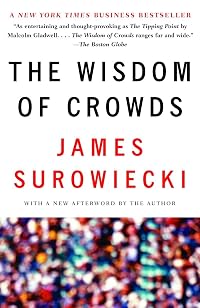
The Wisdom of Crowds: Why the Many Are Smarter Than the Few and How Collective Wisdom Shapes Business, Economies, Societies, and Nations
by James Surowiecki
On This Page
Description
In this fascinating book, New Yorker business columnist James Surowiecki explores a deceptively simple idea: Large groups of people are smarter than an elite few, no matter how brilliant—better at solving problems, fostering innovation, coming to wise decisions, even predicting the future.With boundless erudition and in delightfully clear prose, Surowiecki ranges across fields as diverse as popular culture, psychology, ant biology, behavioral economics, artificial intelligence, military show more history, and politics to show how this simple idea offers important lessons for how we live our lives, select our leaders, run our companies, and think about our world.
. show less
Tags
Recommendations













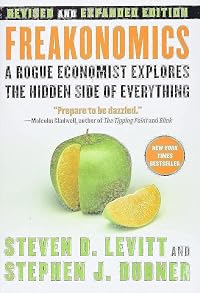

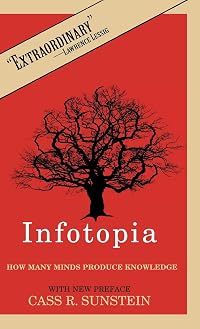

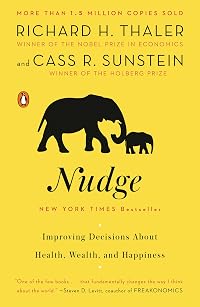

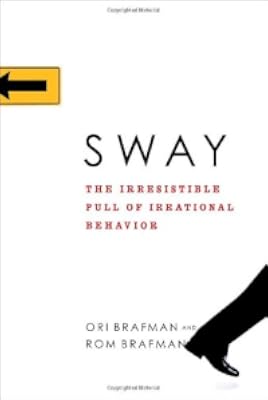






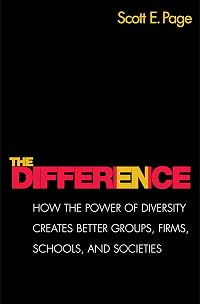

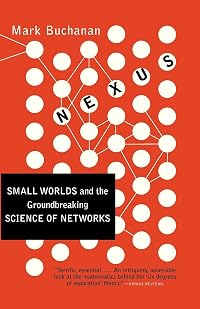
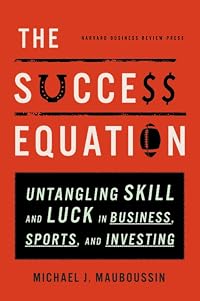

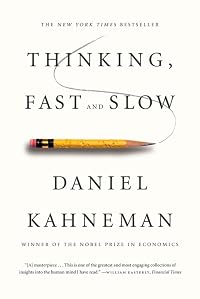

Member Recommendations

Member Reviews
In a way, it's difficult for me to render any sort of judgment on "The Wisdom of Crowds." I don't know a lot about economics; I made the mistake of majoring in the humanities. Heck, I think I'm the only person on the planet who hasn't read "Freakonomics." Still, I don't think "The Wisdom of Crowds" is about economics per se. Rather, it wants to encourage its readership to take a good, hard look at its assumptions about group dynamics and intelligence. Surowiecki posits that groups, if they are balanced, independent, and have a reliable method of aggregating their opinions, can often make better decisions than any of their members. What he's really fighting, though, two cultural cults: that of the individual and that of the technocratic show more expert. He's taking issue with the old saw that a committee is an organism with twelve legs and no brains. I could go on, but you get the picture. In this I think he succeeds.
In a roundabout way, Surowiecki is also making an argument for the efficiency of markets and the advantages of personal choice. He does this without going the full Friedman, which should make his arguments more palatable to those who know him from his columns for the New Yorker, who – let's be honest – may be more willing to examine markets' failures than their successes. Surowiecki's takes time to discuss dangers like panics and bubbles, but remains steadfast in his belief that a group of people bringing their own perspectives to a problem may be better equipped to find a solution than any one individual. From another perspective, what Surowiecki is doing in "The Wisdom of Crowds" is urging humility: if none of us can know everything all the time, the next best thing is for all of us to contribute a little to a group-oriented solution. This book is, pun intended, recommended to everyone. show less
In a roundabout way, Surowiecki is also making an argument for the efficiency of markets and the advantages of personal choice. He does this without going the full Friedman, which should make his arguments more palatable to those who know him from his columns for the New Yorker, who – let's be honest – may be more willing to examine markets' failures than their successes. Surowiecki's takes time to discuss dangers like panics and bubbles, but remains steadfast in his belief that a group of people bringing their own perspectives to a problem may be better equipped to find a solution than any one individual. From another perspective, what Surowiecki is doing in "The Wisdom of Crowds" is urging humility: if none of us can know everything all the time, the next best thing is for all of us to contribute a little to a group-oriented solution. This book is, pun intended, recommended to everyone. show less
This book was so bad that reviewing it feels like a waste of time, but I will briefly explain what's wrong with it. The author begins with an old idea: crowds can be wise when they exhibit diversity of opinion, independence and decentralization, and when their views can be aggregated. Hayek presented it in the context of markets in his 1945 paper "The use of knowledge in society". Like a true journalist the author has collected a heap of stories which he thinks illustrate the idea, but he's badly mistaken. Probably 60-70% of his topics are not valid examples of collective intelligence at work. Many of them are pointless and yield no conclusions whatsoever.
It seems to me that the author hasn't understood collective intelligence very show more well. He could have easily tested his examples by assessing whether or not they meet the four criteria he cites in the beginning - diversity, independence, decentralization and aggregation. If he had done that, weeded out the invalid cases and explained for each valid case how the criteria are met, I would have liked this book. But he seems to have forgotten the criteria as soon as he wrote them down and goes on to recount all kinds of irrelevant tales which have little or nothing to do with collective intelligence. Even in the limited number of examples where he manages to correctly identify collective intelligence at work, he usually fails to explain how the four criteria are met.
I strongly advice against reading this book. No useful lesson can be learned from an author who has a shallow understanding of the idea he's trying to convey. show less
It seems to me that the author hasn't understood collective intelligence very show more well. He could have easily tested his examples by assessing whether or not they meet the four criteria he cites in the beginning - diversity, independence, decentralization and aggregation. If he had done that, weeded out the invalid cases and explained for each valid case how the criteria are met, I would have liked this book. But he seems to have forgotten the criteria as soon as he wrote them down and goes on to recount all kinds of irrelevant tales which have little or nothing to do with collective intelligence. Even in the limited number of examples where he manages to correctly identify collective intelligence at work, he usually fails to explain how the four criteria are met.
I strongly advice against reading this book. No useful lesson can be learned from an author who has a shallow understanding of the idea he's trying to convey. show less
I started reading this book with an inherent bias. Of course, I agree with Agent Kay in Men In Black when he said, "A person is smart, people are dumb!" and that's kind of intuitive for anyone with two eyes and a brain to observe the world. And so, I was convinced I wouldn't like what 'this guy' (the author) had to say... But I changed my mind. Only because mentally I changed the title of the book.
If you change the title of the book to "How to make crowds wiser", then everything that Surowiecki says in the book falls into place, like a jigsaw puzzle. In fact, he concludes it that way as well. And so, I am guessing that the current title might be either a case of "bandwagon effect" or cowering into the publisher's demands to have a show more catchier title.
Suroweicki does a good job of balancing both sides of the argument, demonstrating when crowds are smart and when they are dumb. And it all boils down to two important factors. I won't mention those factors here, because of spoilers and because I'd be taking away James' thunder. But, the factors that he tacitly or implicitly identifies are the two factors that determine any good brainstorming session or any group that is created to solve a problem.
So, I liked the book. It brought a lot of information on its pages. Most of it good. Surowiecki also took the effort to show both sides of the coin in different scenarios and walks of life and society, which was nice. It was well written, but I must admit, at places, it felt repetitive and unncessarily longer than it should have.
It lost out on 4 stars only because of the misleading title. show less
If you change the title of the book to "How to make crowds wiser", then everything that Surowiecki says in the book falls into place, like a jigsaw puzzle. In fact, he concludes it that way as well. And so, I am guessing that the current title might be either a case of "bandwagon effect" or cowering into the publisher's demands to have a show more catchier title.
Suroweicki does a good job of balancing both sides of the argument, demonstrating when crowds are smart and when they are dumb. And it all boils down to two important factors. I won't mention those factors here, because of spoilers and because I'd be taking away James' thunder. But, the factors that he tacitly or implicitly identifies are the two factors that determine any good brainstorming session or any group that is created to solve a problem.
So, I liked the book. It brought a lot of information on its pages. Most of it good. Surowiecki also took the effort to show both sides of the coin in different scenarios and walks of life and society, which was nice. It was well written, but I must admit, at places, it felt repetitive and unncessarily longer than it should have.
It lost out on 4 stars only because of the misleading title. show less
Smart people often believe that the opinion of the crowd is always inferior to the opinion of the individual specialist. Philosophical giants such as Nietzsche thought that "Madness is the exception in individuals but the rule in groups". Henry David Thoreau lamented: "The mass never comes up to the standard of its best member but on the contrary degrades itself to a level with the lowest member." The motto of the great and the ordinary seems to be: Bet on the expert because crowds are generally stupid and often dangerous. Business columnist James Surowiecki's new book The Wisdom of Crowds explains exactly why the conventional wisdom is wrong. The fact is that, under the right circumstances, groups are remarkably intelligent, and are show more often smarter than the smartest people in them. Groups don't even need to be dominated by exceptionally intelligent people in order to be smart. Even if most of the people within a group are not especially well-informed or rational, it can still reach a collectively wise decision. Why? Because, as it turns out, if you ask a large enough group of diverse, independent people to make a prediction or estimate a probability, and then average those estimates, the errors each of them makes in coming up with an answer will cancel themselves out. Not any old crowd will do of course. For the crowd to be wise it has to satisfy four specific conditions, but once those conditions are met, its judgment is likely to be accurate.
Surowieki concentrates on three kinds of problems. The first are cognition problems (problems that are likely to have definitive answers, such as: "How many books will Amazon sell this month?"). The second are problems of coordination (problems requiring members of a group to figure out how to coordinate their behaviour with one another) and the third are problems of cooperation (getting self-interested, distrustful people to work together-- despite their selfishness). The brilliant first half of the book illustrates this theory with practical examples. The second half of the book essentially consists of case studies with each chapter talking about the way collective intelligence either flourishes or flounders. Much of this part deals with business topics such as corporations, markets and the dynamics of a stock-market bubble.
Surowieki has an engaging, direct style defending his surprising central thesis in entertaining ways by, for example, talking about laying bets on football games and political elections; traffic jams; Google; the Challenger explosion and the search for a missing submarine. The Wisdom of Crowds is an entertaining book making a serious point and by the end of the superb first half the reader has been made to accept that, while with most things, the average is mediocrity, when it comes to decision-making the average results in excellence. --Larry Brown show less
Surowieki concentrates on three kinds of problems. The first are cognition problems (problems that are likely to have definitive answers, such as: "How many books will Amazon sell this month?"). The second are problems of coordination (problems requiring members of a group to figure out how to coordinate their behaviour with one another) and the third are problems of cooperation (getting self-interested, distrustful people to work together-- despite their selfishness). The brilliant first half of the book illustrates this theory with practical examples. The second half of the book essentially consists of case studies with each chapter talking about the way collective intelligence either flourishes or flounders. Much of this part deals with business topics such as corporations, markets and the dynamics of a stock-market bubble.
Surowieki has an engaging, direct style defending his surprising central thesis in entertaining ways by, for example, talking about laying bets on football games and political elections; traffic jams; Google; the Challenger explosion and the search for a missing submarine. The Wisdom of Crowds is an entertaining book making a serious point and by the end of the superb first half the reader has been made to accept that, while with most things, the average is mediocrity, when it comes to decision-making the average results in excellence. --Larry Brown show less
A detailed look at the ways in which large groups of diverse people acting or thinking independently can, in aggregate, sometimes be much better at decision-making and problem solving than individuals or small like-minded groups. (Think, for instance, of the way that polling the audience on Who Wants to Be a Millionaire pretty much always results in the right answer.)
There wasn't a whole lot in here that was particularly new to me, and I don't find all of it equally compelling, but it is a decent overview of the subject, with lots of examples. Interestingly, Surowiecki seems to spend almost as much time talking about the ways in which this sort of thing can go wrong and the conditions under which it doesn't work as he does on the ways show more in which it can be effective. Which I think is extremely important, actually, because otherwise it might be far too easy to take a shallow and naive reading of Surowiecki's arguments and end up subscribing to some familiar but misguided conclusions, like the idea that experts are completely useless (a notion he explicitly disclaims in the afterword to the edition of the book I have).
It's also worth mentioning that this was originally published in 2004, so it now feels rather dated, certainly in its examples, if not in its conclusions. I often found myself wondering how differently it would have been written today and whether events like the subprime mortgage crisis or the 2016 election would have changed the author's thinking any, or provided him new material to work with. I especially find myself wondering if the ways in which we've come to use the internet over the past fifteen years might have actually undermined our ability to make our individual decisions independently, something Surowiecki identifies as a key component of effective collective decision-making. show less
There wasn't a whole lot in here that was particularly new to me, and I don't find all of it equally compelling, but it is a decent overview of the subject, with lots of examples. Interestingly, Surowiecki seems to spend almost as much time talking about the ways in which this sort of thing can go wrong and the conditions under which it doesn't work as he does on the ways show more in which it can be effective. Which I think is extremely important, actually, because otherwise it might be far too easy to take a shallow and naive reading of Surowiecki's arguments and end up subscribing to some familiar but misguided conclusions, like the idea that experts are completely useless (a notion he explicitly disclaims in the afterword to the edition of the book I have).
It's also worth mentioning that this was originally published in 2004, so it now feels rather dated, certainly in its examples, if not in its conclusions. I often found myself wondering how differently it would have been written today and whether events like the subprime mortgage crisis or the 2016 election would have changed the author's thinking any, or provided him new material to work with. I especially find myself wondering if the ways in which we've come to use the internet over the past fifteen years might have actually undermined our ability to make our individual decisions independently, something Surowiecki identifies as a key component of effective collective decision-making. show less
Never have I enjoyed a book so much that I completely disagreed with. There is much I learned here about processes and fundamental workings of everyday behavioral phenomena, but his thesis doesn't hold water. I can show you oodles of examples where the crowd is downright foolish, from voting the wrong people into office, to polls revealing mind-blowing weird public opinion, to my very own board meetings where we all seem to have lost our minds. The author cherry picks examples that suit his idea while ignoring very obvious antithetical ideas, and he seems smart enough even to perhaps have penned a Devil's Advocate book called "The Stupidity of Crowds."
What a curious phrase is “wisdom of crowds.” Like you, I had heard of the “madness of crowds” and “unruly mobs” … but wisdom? The concept is the subject of the book of the same name by James Surowiecki.
Surowiecki’s premise in The Wisdom of Crowds is that the Many are usually smarter than the Few. Ask a crowd to guess the number of jellybeans in a jar and their average will probably be closer to truth than most — if not all — the individuals involved.
Poll the studio audience of the “Who Wants to Be a Millionaire” game show and they have the right answer more than 90% of the time — a far better average than the individual “expert” that the game’s player typically relies upon more.
Using example after show more example, Surowiecki builds up a compelling case that almost any problem, whether simple or complex, should be posed to a large group of people whose members are left to think as individuals (no persuading debates, endorsements, peer pressures, factions, etc.). That group’s aggregated opinions will almost always find a better solution than even the smartest individual. The most amazing case he presented involved a submarine missing in the Atlantic. A group of naval specialists — each expert in something different (ocean current, hydrodynamics, submarine engines, etc.) — predicted widely different locations for the vessel. All were wrong. But when the investigation leader combined their separate predictions, he found the sub on the ocean floor only about 200 yards off target.
Every person has one puzzle piece — a unique perspective on a problem, a different bit of information. Combine the pieces and the group solves the whole puzzle. In Surowiecki’s words, “the crowd is holding a nearly complete picture of the world in its collective brain.” One person’s bias, error, or underestimation is canceled by someone else’s bias, error, or overestimation. Under the right circumstances, the Crowd gets it right more often than the experts.
I disagreed with some of the book’s specifics, but found it hard to discount Surowiecki’s basic premise as he applied it to problem-solving, investigations, the Internet, science, corporations, capitalism, and democracy. The social networking revolution on the Internet right now (with personal websites, blogs, wikis, and tagging) is a perfect example of the Wisdom of Crowds. There’s no formal structure; no central committee calling the shots. And yet, as a crowd, the Social Web is assembling, interacting, and meeting needs in ways no one could have conjured or designed by himself.
[More of my book reviews are available at http://mostlynf.wordpress.com] show less
Surowiecki’s premise in The Wisdom of Crowds is that the Many are usually smarter than the Few. Ask a crowd to guess the number of jellybeans in a jar and their average will probably be closer to truth than most — if not all — the individuals involved.
Poll the studio audience of the “Who Wants to Be a Millionaire” game show and they have the right answer more than 90% of the time — a far better average than the individual “expert” that the game’s player typically relies upon more.
Using example after show more example, Surowiecki builds up a compelling case that almost any problem, whether simple or complex, should be posed to a large group of people whose members are left to think as individuals (no persuading debates, endorsements, peer pressures, factions, etc.). That group’s aggregated opinions will almost always find a better solution than even the smartest individual. The most amazing case he presented involved a submarine missing in the Atlantic. A group of naval specialists — each expert in something different (ocean current, hydrodynamics, submarine engines, etc.) — predicted widely different locations for the vessel. All were wrong. But when the investigation leader combined their separate predictions, he found the sub on the ocean floor only about 200 yards off target.
Every person has one puzzle piece — a unique perspective on a problem, a different bit of information. Combine the pieces and the group solves the whole puzzle. In Surowiecki’s words, “the crowd is holding a nearly complete picture of the world in its collective brain.” One person’s bias, error, or underestimation is canceled by someone else’s bias, error, or overestimation. Under the right circumstances, the Crowd gets it right more often than the experts.
I disagreed with some of the book’s specifics, but found it hard to discount Surowiecki’s basic premise as he applied it to problem-solving, investigations, the Internet, science, corporations, capitalism, and democracy. The social networking revolution on the Internet right now (with personal websites, blogs, wikis, and tagging) is a perfect example of the Wisdom of Crowds. There’s no formal structure; no central committee calling the shots. And yet, as a crowd, the Social Web is assembling, interacting, and meeting needs in ways no one could have conjured or designed by himself.
[More of my book reviews are available at http://mostlynf.wordpress.com] show less
Members
- Recently Added By
Published Reviews
ThingScore 89
In ''The Wisdom of Crowds,'' James Surowiecki, who writes a column called The Financial Page for The New Yorker, challenges that received wisdom. He marshals evidence from the social sciences indicating that people in large groups are, in effect, better informed and more rational than any single member might be. The author has a knack for translating the most algebraic of research papers into show more bright expository prose -- though the swarm of anecdotes at times makes it difficult to follow the progress of his argument. show less
added by mikeg2
New Yorker business columnist Surowiecki enlivens his argument with dozens of illuminating anecdotes and case studies from business, social psychology, sports, and everyday life.
added by Katya0133
What emerges in "The Wisdom of Crowds" is a book that is both clever and slightly tiresome.
added by Katya0133
Lists

Non-Fiction Worth Reading
1,025 works; 256 members

Books read in 2015
13 works; 2 members

Books referenced in David Weinberger's Too Big to Know
65 works; 2 members
Author Information

Some Editions
Awards and Honors
Work Relationships
Common Knowledge
- Canonical title
- The Wisdom of Crowds: Why the Many Are Smarter Than the Few and How Collective Wisdom Shapes Business, Economies, Societies, and Nations
- Original title
- The Wisdom of Crowds: Why the Many Are Smarter Than the Few and How Collective Wisdom Shapes Business, Economies, Societies, and Nations
- Original publication date
- 2004
- Dedication
- To Mom and Dad
- Blurbers
- Gladwell, Malcolm; Bronson, Po; Nocera, Joe; Lewis, Michael; Arrow, Kenneth
Classifications
- Genres
- Sociology, Economics, General Nonfiction, Nonfiction, Business
- DDC/MDS
- 303.38 — Society, government, & culture Social sciences, sociology & anthropology Social processes Coordination and control Public opinion
- LCC
- JC328.2 .S87 — Political Science Political theory Political theory. The state. Theories of the state Consensus. Consent of the governed
- BISAC
Statistics
- Members
- 4,221
- Popularity
- 3,627
- Reviews
- 74
- Rating
- (3.76)
- Languages
- 11 — Dutch, English, Finnish, French, German, Italian, Japanese, Portuguese, Russian, Spanish, Swedish
- Media
- Paper, Audiobook, Ebook
- ISBNs
- 27
- UPCs
- 1
- ASINs
- 13