
Jeff Howe (1)
Author of Crowdsourcing: Why the Power of the Crowd Is Driving the Future of Business
For other authors named Jeff Howe, see the disambiguation page.
About the Author
Jeff Howe is a contributing editor at Wired magazine, where he covers the entertainment industry among other subjects.
Works by Jeff Howe
Crowdsourcing: Why the Power of the Crowd Is Driving the Future of Business (2008) 325 copies, 2 reviews
Tagged
Common Knowledge
- Gender
- male
Members
Reviews

In Whiplash Joichi Ito and Jeff Howe combine forces to bring us this book. Two basic ideas have developed far enough to dethrone the old idea of centralized management. With the Internet allowing for instant communication across the globe and devices getting smaller and faster, eventually, we will reach limits to what we can do. The main idea is that old centralized methods of command are far too slow to respond to threats. The book uses the Fukushima Nuclear Disaster as an example; old show more centralized planning was not effective in responding to the disaster and was far too slow.
From numerous examples in nature, we must learn to be more efficient and effective on a Global Scale. Take the simple ant for instance. It is merely a unit of a larger cohesive whole, the ant colony. Using Pheromone Signals for communication, the ant colony becomes something greater than its individual parts. The same ideas can be applied to the brain. A neuron alone is a simple unit only capable of being excited or inhibited. However, the sum of their influence magnifies into the Human Brain, a thing of incomprehensible complexity.
This book was quite fascinating. It sets out nine basic principles that can be followed by pretty much any organization and it uses examples from recent times. show less
From numerous examples in nature, we must learn to be more efficient and effective on a Global Scale. Take the simple ant for instance. It is merely a unit of a larger cohesive whole, the ant colony. Using Pheromone Signals for communication, the ant colony becomes something greater than its individual parts. The same ideas can be applied to the brain. A neuron alone is a simple unit only capable of being excited or inhibited. However, the sum of their influence magnifies into the Human Brain, a thing of incomprehensible complexity.
This book was quite fascinating. It sets out nine basic principles that can be followed by pretty much any organization and it uses examples from recent times. show less
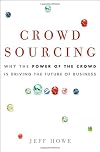
This book a very good primer to all things "social" online. It helped flesh out some of the history and scope of many of the group efforts out there. But it seemed a tad too long in the depth department. True, the details and longer narratives do add context, proof and support, but a book on this rapidly changing subject really needs to be more focused and intense. At times it felt more like a history book of efforts and systems, than current strategies and "looking forward".
I also would show more have liked more of the "here's is a plan about how you might think about applying these same principals to your business." I know this isn't a "workbook" but those kinds of tidbits would have made it stronger in that a reader could easily start implementing and using the ideas put forward immediately.
I realize that I read this book a full year after its publication and much had already changed or been added to the crowdsourced landscape. If ever there were a book that could benefit by a new ebook model or digital errata, this one is it.
I have recommended the book twice and if you're in the tech field or wondering how to leverage the crowdsourceing tools out there, you should read this, but if you need anything more hands-on, you might want to surf some blogs. show less
I also would show more have liked more of the "here's is a plan about how you might think about applying these same principals to your business." I know this isn't a "workbook" but those kinds of tidbits would have made it stronger in that a reader could easily start implementing and using the ideas put forward immediately.
I realize that I read this book a full year after its publication and much had already changed or been added to the crowdsourced landscape. If ever there were a book that could benefit by a new ebook model or digital errata, this one is it.
I have recommended the book twice and if you're in the tech field or wondering how to leverage the crowdsourceing tools out there, you should read this, but if you need anything more hands-on, you might want to surf some blogs. show less
This is a fine book if it is your first book on the concept of 'crowdsourcing'. It details a few case studies where crowdsourced companies and projects took the established and strong companies by surprise. I liked the descriptions of the experiments and successful companies such as InnoCentive and iStockPhoto, however the sections about computing, open source, GNU, etc. simply brought me to sleep (GNU and Linux is nothing new and you're probaby from another planet if you haven't heard about show more GNU/Linux until now, that is an operating system for computers that's been actively developed by the 'crowd' for the last 18 years). But I was very awake when I read about people solving rocket-science problems in the fields in which they did not have a formal education (most of them had PhD.s in other fields, though).
Maybe the most valuable part of the book is about failed experiments and also the rules about when crowdsourcing works and when it does not. It is very important to know when and for which scenarios a strategy is useful, otherwise it is easy to mistake crowdsourcing for a hammer and use it to nail down every problem. show less
Maybe the most valuable part of the book is about failed experiments and also the rules about when crowdsourcing works and when it does not. It is very important to know when and for which scenarios a strategy is useful, otherwise it is easy to mistake crowdsourcing for a hammer and use it to nail down every problem. show less
I didn't particularly like this book. For one thing, the book has a poor focus for the reader; that is, I'm not sure who the ideal reader is: an entrepreneur, a student, a faculty chair? It's structured like a self-help guide with history lessons. Sort of "You'd better do X because the world is heading in Y direction." It has no original research to speak of, just a lot of stories.
Lists
You May Also Like


Statistics
- Works
- 3
- Members
- 542
- Popularity
- #45,992
- Rating
- 3.5
- Reviews
- 7
- ISBNs
- 37
- Languages
- 4