
About the Author
Guy Kawasaki was born in Honolulu, Hawaii on August 30, 1954. He received a BA in psychology from Stanford University and an MBA from UCLA. He was the chief evangelist of Apple. He is the co-founder of Alltop.com and a founding partner at Garage Technology Ventures. His has written ten books show more including Enchantment, Reality Check, The Art of the Start, Rules for Revolutionaries, How to Drive Your Competition Crazy, Selling the Dream, and The Macintosh Way. (Bowker Author Biography) show less
Image credit: Image via Wikipedia, (c) Dave Sifry
Works by Guy Kawasaki
The Art of the Start: The Time-Tested, Battle-Hardened Guide for Anyone Starting Anything (2004) 1,370 copies, 10 reviews
Rules For Revolutionaries: The Capitalist Manifesto for Creating and Marketing New Products and Services (1999) 437 copies, 3 reviews
Reality Check: The Irreverent Guide to Outsmarting, Outmanaging, and Outmarketing Your Competition (2008) 340 copies, 3 reviews
The Art of the Start 2.0: The Time-Tested, Battle-Hardened Guide for Anyone Starting Anything (2015) 214 copies, 2 reviews
How to Drive Your Competition Crazy: Creating Disruption for Fun and Profit (1995) 198 copies, 1 review
5 Necessary Skills 1 copy
Associated Works
The Big Moo: Stop Trying to Be Perfect and Start Being Remarkable (2005) — Contributor — 431 copies, 7 reviews
Word of Mouth Marketing: How Smart Companies Get People Talking (2006) — Afterword — 234 copies, 2 reviews
Apple: The Inside Story of Intrigue, Egomania, and Business Blunders (1997) — Foreword — 215 copies, 1 review
Beyond Software Architecture: Creating and Sustaining Winning Solutions (2003) — Foreword — 166 copies
Creating Customer Evangelists: How Loyal Customers Become a Volunteer Sales Force (2002) — Foreword — 130 copies
Personality Not Included: Why Companies Lose Their Authenticity And How Great Brands Get it Back, Foreword by Guy Kawasaki (2008) — Foreword — 77 copies, 1 review
Going Visual: Using Images to Enhance Productivity, Decision-Making and Profits (2005) — Foreword — 29 copies
Ready to Be a Thought Leader?: How to Increase Your Influence, Impact, and Success (2013) — Foreword, some editions — 26 copies, 1 review
Tagged
Common Knowledge
- Canonical name
- Kawasaki, Guy
- Birthdate
- 1954-08-30
- Gender
- male
- Education
- Stanford University (BA ∙ Psychology)
University of California, Los Angeles (MBA)
Iolani School, Hawaii - Occupations
- author
speaker
investor
business adviser - Organizations
- Apple
- Awards and honors
- Honorary Doctorate (Babson College)
- Nationality
- USA
- Birthplace
- Honolulu, Hawaii, USA
- Places of residence
- Honolulu, Hawaii, USA
- Associated Place (for map)
- Honolulu, Hawaii, USA
Members
Reviews
The Art of the Start: The Time-Tested, Battle-Hardened Guide for Anyone Starting Anything by Guy Kawasaki
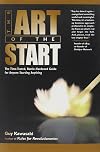
Compact, absolutely-no-bullshit blast of ... the art of the start. Despite the title ("... Anyone Starting Anything"), this book is laser-focused on an unfunded entrepreneur bootstrapping a business or, maybe, a non-profit.
Watching scared cows being slaughtered is always a great pleasure, and with one gormless platitude or another garrotted every sentence or two, this book is a joy to read. And it's short too.
Read it twice.
Watching scared cows being slaughtered is always a great pleasure, and with one gormless platitude or another garrotted every sentence or two, this book is a joy to read. And it's short too.
Read it twice.
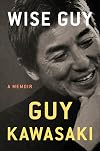
This book is clearly different in format, substance, and style from his earlier work. He clearly articulates in the preface and throughout the book that his intent is neither memoir nor autobiography but rather personal lessons shared with readers with a goal of enlightening others.
The book consists of vignettes, rambling from topic to topic, sometimes repetitive or disjointed, often sarcastic, full of insights, at times quite intimate, at other times quite brash and smart-alecky. It show more “reads” like I was sitting beside the author with him reminiscing. The book is full of white space and replete with personal scrapbook-like insertions of photos, past speeches which were given, and rambling, personal, at times intimate stories. He even includes contributions from his children whom he clearly loves deeply.
The author is at times witty, brash, brutally candid, wacky, playful, and self-deprecating. Incorporated throughout the book are wide-ranging boxed summaries of “Wisdom” distilled from Life Lessons Learned. Though often platitudinous, these lessons are nonetheless well worth thinking about given Guy’s amazing life experiences. Also woven throughout the book are well-chosen, thought-provoking timeless quotations that add value and fit well the topics addressed.
The book is replete with (un)conventional wisdom. At times it made me smile. Other times it irritated me or made me wince. It definitely gave me greater insight into not only the author but into myself. Though I encountered much with which I disagreed, that is part of the enlightenment process and the Path of continuous (re) learning. I found chapters 09 and 10 LOL (Laugh-Out Lessons) and Skills, particularly personally enlightening. Alas, Guy, I shall probably NOT follow up on your suggestion to take up surfing. Thanks, though for sharing your life lessons. show less
The book consists of vignettes, rambling from topic to topic, sometimes repetitive or disjointed, often sarcastic, full of insights, at times quite intimate, at other times quite brash and smart-alecky. It show more “reads” like I was sitting beside the author with him reminiscing. The book is full of white space and replete with personal scrapbook-like insertions of photos, past speeches which were given, and rambling, personal, at times intimate stories. He even includes contributions from his children whom he clearly loves deeply.
The author is at times witty, brash, brutally candid, wacky, playful, and self-deprecating. Incorporated throughout the book are wide-ranging boxed summaries of “Wisdom” distilled from Life Lessons Learned. Though often platitudinous, these lessons are nonetheless well worth thinking about given Guy’s amazing life experiences. Also woven throughout the book are well-chosen, thought-provoking timeless quotations that add value and fit well the topics addressed.
The book is replete with (un)conventional wisdom. At times it made me smile. Other times it irritated me or made me wince. It definitely gave me greater insight into not only the author but into myself. Though I encountered much with which I disagreed, that is part of the enlightenment process and the Path of continuous (re) learning. I found chapters 09 and 10 LOL (Laugh-Out Lessons) and Skills, particularly personally enlightening. Alas, Guy, I shall probably NOT follow up on your suggestion to take up surfing. Thanks, though for sharing your life lessons. show less
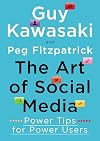
It’s not so much social as business
Guy Kawasaki is a very busy person. He is constantly searching for shareable content, beefing up blog posts, timing tweets and experimenting with online services (especially new ones) that will help him do more with all the above. He recommends using every tool and function social media sites provide, otherwise you will look like an amateur. He says you can (and should) repeat posts, and if people unfollow you, they weren’t right for you anyway. He says show more if you’re not annoying, you’re not using social media to its fullest.
His book is a super fast, jam packed tour of his social media life. It has more than a hundred links to pages that expand what he writes about (so it’s best to buy the e-book because they’re not spelled out in print). It is a very userfriendly manual.
It is also very singleminded. It recommends you give your life to reposting other people’s findings, written and photographic, and keep up the pace indefinitely. That will give you credibility and followers. It’s basically a business. You brand yourself and constantly hype your presence, without also hyping your talents and accomplishments, goals and desires (That would be crass). Ultimately, it seems enormously shallow, robotic and numbing, as all social media has been criticized as both being and promoting. But not to him.
Kawasaki is as usual, forthright and effervescent. He fears no critics and lives the bold life he recommends. He tells it straight and hard, and you have to take it, because he’s living proof it works. He is that exception we give license to.
Possibly the wisest among the many wise things in The Art of Social Media, is that “social media guru” is any oxymoron, because nobody really knows how social media works, including the authors. What they do is latch onto every platform and work it, and leverage it. What does well they do more of. The most successful tactic (and most oft repeated direction) is to use graphics. Attach them to every post and tweet you can. Make different sizes of them and use them to draw visitors to your blog post, from as many different social sites as you can. Like movie posters. It’s the old: repetition is the soul of advertising, combined with: a picture is worth a thousand words. How could that possibly be wrong? Ever?
If you’re willing to take the full plunge, this is the book for it. If not, you can be amazed at how intricate and involved simple social interaction has become.
David Wineberg show less
Guy Kawasaki is a very busy person. He is constantly searching for shareable content, beefing up blog posts, timing tweets and experimenting with online services (especially new ones) that will help him do more with all the above. He recommends using every tool and function social media sites provide, otherwise you will look like an amateur. He says you can (and should) repeat posts, and if people unfollow you, they weren’t right for you anyway. He says show more if you’re not annoying, you’re not using social media to its fullest.
His book is a super fast, jam packed tour of his social media life. It has more than a hundred links to pages that expand what he writes about (so it’s best to buy the e-book because they’re not spelled out in print). It is a very userfriendly manual.
It is also very singleminded. It recommends you give your life to reposting other people’s findings, written and photographic, and keep up the pace indefinitely. That will give you credibility and followers. It’s basically a business. You brand yourself and constantly hype your presence, without also hyping your talents and accomplishments, goals and desires (That would be crass). Ultimately, it seems enormously shallow, robotic and numbing, as all social media has been criticized as both being and promoting. But not to him.
Kawasaki is as usual, forthright and effervescent. He fears no critics and lives the bold life he recommends. He tells it straight and hard, and you have to take it, because he’s living proof it works. He is that exception we give license to.
Possibly the wisest among the many wise things in The Art of Social Media, is that “social media guru” is any oxymoron, because nobody really knows how social media works, including the authors. What they do is latch onto every platform and work it, and leverage it. What does well they do more of. The most successful tactic (and most oft repeated direction) is to use graphics. Attach them to every post and tweet you can. Make different sizes of them and use them to draw visitors to your blog post, from as many different social sites as you can. Like movie posters. It’s the old: repetition is the soul of advertising, combined with: a picture is worth a thousand words. How could that possibly be wrong? Ever?
If you’re willing to take the full plunge, this is the book for it. If not, you can be amazed at how intricate and involved simple social interaction has become.
David Wineberg show less

OK, so I'm sort of like an Orc reading the Ranger's manual for this one, so not the target audience, but I've seen these ideas put into action and felt the effects, so I'm going to say there is really a good deal of very serious advice here, presented in a light seeming soufflé. But could a sever weighty telling demonstrate enchantment?
Lists
Awards


You May Also Like


Associated Authors
Statistics
- Works
- 23
- Also by
- 8
- Members
- 4,255
- Popularity
- #5,910
- Rating
- 3.7
- Reviews
- 65
- ISBNs
- 132
- Languages
- 9
- Favorited
- 5