
Jessica Livingston
Author of Founders at Work: Stories of Startups' Early Days
About the Author
Works by Jessica Livingston
Tagged
Common Knowledge
- Canonical name
- Livingston, Jessica
- Birthdate
- 1971
- Gender
- female
- Nationality
- USA
- Associated Place (for map)
- USA
Members
Reviews

Surely shrouded in survivorship bias (especially towards younger founders and projects in the Boston area leading up to the dot com boom), but Livingston’s questions provide sobering insights for anyone remotely interested in technology, capitalism, or both.
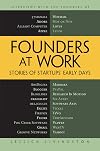
A wonderful inside look at how a number of different startups were created. The book reinforced a few interesting trends for me:
1. Very few founders knew what they were doing when they first started; many of the ideas emerged accidentally, after many failures or experiments.
2. You *can* get more done with crazy hours and virtually all successful startups require them.
3. VC funding seemed to be an ingredient in the success if most startups, but was often a double edged sword, causing show more problems later on.
Some of my favorite quotes from the book:
"What surprised me most was how unsure the founders seemed to be that they were actually onto something big. Some of these companies got started almost by accident. The world thinks of startup founders as having some kind of superhuman confidence, but a lot of them were uncertain at first about starting a company. What they weren't uncertain about was making something good--or trying to fix something broken".
van Hoff: “Over the years, I’ve learned that the first idea you have is irrelevant. It’s just a catalyst for you to get started. Then you figure out what’s wrong with it and you go through phases of denial, panic, regret. And then you finally have a better idea and the second idea is always the important one.”
Buchheit: “A lot of people seem to be against uncertainty, actually. In all areas of life.
I’m suddenly reminded that, for a while, I asked people, if they were playing Russian roulette with a gun with a billion barrels (or some huge number, so in other words, some low probability that they would actually be killed), how much would they have to be paid to play one round? A lot of people were almost offended by the question and they’d say, “I wouldn’t do it at any price.”
But, of course, we do that every day. They drive to work in cars to earn money and they are taking risks all the time, but they don’t like to acknowledge that they are taking risks. They want to pretend that everything is risk-free.”
Paul Graham: “Practically all the software in the world is either broken or very difficult to use. So users dread software.
They’ve been trained that whenever they try to install something, or even fill out a form online, it’s “not going to work. I dread installing stuff, and I have a PhD in computer science.
So if you’re writing applications for end users, you have to remember that you’re writing for an audience that has been traumatized by bad experiences.”
Paul Graham: I found I could actually sell moderately well. I could convince people of stuff. I learned a trick for doing this: to tell the truth. A lot of people think that the way to convince people of things is to be eloquent—to have some bag of tricks for sliding conclusions into their brains. But there’s also a sort of hack that you can use if you are not a very good salesman, which is simply tell the truth. Our strategy for selling our software to people was: make the best software and then tell them, truthfully, “this is the best software.” And they could tell we were telling the truth.
Another advantage of telling the truth is that you don’t have to remember what you’ve said. You don’t have to keep any state in your head. It’s a purely functional business strategy. (Hackers will get what I mean.)”
Winblad: “You’d think that everybody would want to have our jobs. We’ve all been handsomely rewarded. The stories are not like, “Hey, we had patrician backgrounds and silver spoons, and we bought our way into this.” We just “thought” our way into these industries. The power of thought “and math and science and computing, you’re given that for free—it’s a choice you can make. You take that choice, and it gives you sort of a magic wand to be a captain of an industry that’s still fairly young, that’s driving the whole world economy”
Spolsky: “These were all marginally good marketing ideas. Unfortunately we spent a lot of time chasing them. The one thing we learned over 5 years is that nothing works better than just improving your product. Every minute, every developer hour we spent on any one of these crazy things—although they had some marginal return on the work that we put into them—was nothing compared to just making a better version of the product and releasing it” show less
1. Very few founders knew what they were doing when they first started; many of the ideas emerged accidentally, after many failures or experiments.
2. You *can* get more done with crazy hours and virtually all successful startups require them.
3. VC funding seemed to be an ingredient in the success if most startups, but was often a double edged sword, causing show more problems later on.
Some of my favorite quotes from the book:
"What surprised me most was how unsure the founders seemed to be that they were actually onto something big. Some of these companies got started almost by accident. The world thinks of startup founders as having some kind of superhuman confidence, but a lot of them were uncertain at first about starting a company. What they weren't uncertain about was making something good--or trying to fix something broken".
van Hoff: “Over the years, I’ve learned that the first idea you have is irrelevant. It’s just a catalyst for you to get started. Then you figure out what’s wrong with it and you go through phases of denial, panic, regret. And then you finally have a better idea and the second idea is always the important one.”
Buchheit: “A lot of people seem to be against uncertainty, actually. In all areas of life.
I’m suddenly reminded that, for a while, I asked people, if they were playing Russian roulette with a gun with a billion barrels (or some huge number, so in other words, some low probability that they would actually be killed), how much would they have to be paid to play one round? A lot of people were almost offended by the question and they’d say, “I wouldn’t do it at any price.”
But, of course, we do that every day. They drive to work in cars to earn money and they are taking risks all the time, but they don’t like to acknowledge that they are taking risks. They want to pretend that everything is risk-free.”
Paul Graham: “Practically all the software in the world is either broken or very difficult to use. So users dread software.
They’ve been trained that whenever they try to install something, or even fill out a form online, it’s “not going to work. I dread installing stuff, and I have a PhD in computer science.
So if you’re writing applications for end users, you have to remember that you’re writing for an audience that has been traumatized by bad experiences.”
Paul Graham: I found I could actually sell moderately well. I could convince people of stuff. I learned a trick for doing this: to tell the truth. A lot of people think that the way to convince people of things is to be eloquent—to have some bag of tricks for sliding conclusions into their brains. But there’s also a sort of hack that you can use if you are not a very good salesman, which is simply tell the truth. Our strategy for selling our software to people was: make the best software and then tell them, truthfully, “this is the best software.” And they could tell we were telling the truth.
Another advantage of telling the truth is that you don’t have to remember what you’ve said. You don’t have to keep any state in your head. It’s a purely functional business strategy. (Hackers will get what I mean.)”
Winblad: “You’d think that everybody would want to have our jobs. We’ve all been handsomely rewarded. The stories are not like, “Hey, we had patrician backgrounds and silver spoons, and we bought our way into this.” We just “thought” our way into these industries. The power of thought “and math and science and computing, you’re given that for free—it’s a choice you can make. You take that choice, and it gives you sort of a magic wand to be a captain of an industry that’s still fairly young, that’s driving the whole world economy”
Spolsky: “These were all marginally good marketing ideas. Unfortunately we spent a lot of time chasing them. The one thing we learned over 5 years is that nothing works better than just improving your product. Every minute, every developer hour we spent on any one of these crazy things—although they had some marginal return on the work that we put into them—was nothing compared to just making a better version of the product and releasing it” show less
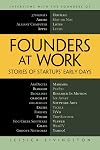
As a long time fan of entrepreneur podcasts (e.g. Mixergy, Entrepreneur On Fire), I was excited to read this book.
The format of the book is a transcript of interviews between founders and the author.
It was interesting to see the patterns in technology companies over time. For example, there was a line in the sand between the 1990s Dot Com Era and the post-Dot Com era.
This book could have been better with some high level observations and analysis.
The format of the book is a transcript of interviews between founders and the author.
It was interesting to see the patterns in technology companies over time. For example, there was a line in the sand between the 1990s Dot Com Era and the post-Dot Com era.
This book could have been better with some high level observations and analysis.
Great selection of stories about early days at startups. Jessica Livingston herself knows more about startups than most other authors (she's a founding partner at Y Combinator, has been involved in helping startups for over a decade, and has an investment banking background.)
Lists
You May Also Like


Associated Authors
Statistics
- Works
- 1
- Members
- 1,050
- Popularity
- #24,543
- Rating
- 4.1
- Reviews
- 12
- ISBNs
- 23
- Languages
- 8
