
Ori Brafman
Author of Sway: The Irresistible Pull of Irrational Behavior
About the Author
Ori Brafman is a New York Times and Wall Street Journal bestselling author. Born in Israel, and raised in El Paso, Texas, he has been an entrepreneur most of his life in business, government, and the nonprofit sector. While in college, he co-founded Vegan Action, which helped bring vegan foods into show more college dining halls and now has a network of over thirty-six national and international chapters. He was also co-founder of Courtroom Connect, a courtroom technology company, and in 2001, he co-founded Global Peace Networks, a network of over 1000 CEOs working on peace and economic development projects. Brafman has a B.A. in peace and conflict studies from UC Berkeley and an M.B.A. from Stanford University. He is considered an organizational expert and specializes in new ways of looking at business. His first book, The Starfish and the Spider (2006), was translated into 5 languages. Brafman has appeared on ABC, National Public Radio, Wall Street Journal/MarketWatch video, and CSPAN, and has had speaking engagements at Microsoft, Amazon, Stanford Business School, Harvard Business School, and other organizations. show less
Image credit: Josyn Herce
Works by Ori Brafman
The Starfish and the Spider: The Unstoppable Power of Leaderless Organizations (2006) 1,114 copies, 18 reviews
The Chaos Imperative: How Chance and Disruption Increase Innovation, Effectiveness, and Success (2013) 58 copies, 3 reviews
Radical Inclusion 1 copy
Tagged
Common Knowledge
- Birthdate
- 02-05
- Gender
- male
- Education
- University of California, Berkeley (Peace and Conflict Studies)
Stanford University (MBA) - Occupations
- businessman
- Agent
- Esther Newberg
- Nationality
- Israel (birth)
USA - Places of residence
- El Paso, Texas, USA
San Francisco, California, USA - Associated Place (for map)
- USA
Members
Reviews
I’ve been considering people’s motivations, trying to figure out why we make the choices we do, in an attempt to understand what may have precipitated the actions of characters I’m writing about. Sway caught my eye on the list of books I wanted to read and turned out to be a pretty interesting. Unexpectedly, this book gave me a lot to think about as far as trying to come up with rationales (however irrational) for why my characters might make the choices they do.
The Brafman brothers show more illustrate their point of view by using some high profile instances of irrational decision making, such as the crash of KLM Flight 4805 in which 584 people died, the space shuttle crash, people and business references that the general public would be familiar with.
I think it was a good strategy to use these, the material is actually quite profound. It is easy to follow the logic of irrational behavior when you can place yourself in the situation. Which was a funny place to be, considering it forces you to realize how many time you personally have made irrational decisions.
Ori, who has an MBA, relates his first day of business school. During the first class Professor Roberto Fernandez stated to the students, “People aren’t rational.” Then he went on to illustrate just how irrational they are by way of a film showing doctors performing open heart surgery and pouring asbestos onto the heart. And in another example they examined an engineer report about “...the likelihood of a mechanical failure as temperatures drop.” evidence that NASA had concerning the O-rings predicted failure before the launch of the space shuttle Challenger. “Fernandez’s point was that although we all like to think of ourselves as rational, we’re much more prone to irrational behavior than we realize.”
Each of the books chapters center around one particular habit or trait of irrational behavior. One such is “Diagnosis Bias” such as when a health care professional mistakenly assigns you a label like, “overly protective mother” and dismisses vital signs of a serious health problem as described in the preface. Another chapter centered on “Loss Aversion” I think one of the more prevalent irrational behaviors, and one I can see most people identifying with. It is when you perceive a loss to be greater than the real loss. There were several examples using phone or cable service. We’ll pay more for an “unlimited time use” because we are afraid of what we’d lose if we had to stay within a limit and pay more if we exceed it, even though we have the evidence that we don’t exceed it, it’s the implied “what if I do” that gets us to act irrationally.
I won’t go into all the stories, there are so many in what is a small book it’s hard to pick out just a few. I am already rereading it, taking notes for ideas on character behavior. This was interesting to think about from a writing standpoint. To think about my characters not behaving because of a clearly defined childhood event or circumstance but acting irrationally as anyone of us is prone to do.
The one irrational behavior the book talked about is one that gives me more reason to hate the current school system and what I’d already considered to be irrational behavior. Money as incentive for academic excellence, it just doesn’t work. Teachers can not put the students needs ahead of their own if outcomes are tied to monetary rewards.
MRI’s show “...the pleasure center and the altruistic center cannot both function at the same time: either one or the other is in control.” Meaning, that teachers teach for the high of inspiring students -the altruistic or they do it for the bonus -the pleasure.
“Neuropsychologist have shown that activities associated with addictive substances and those associated with monetary rewards are both processed by the pleasure center. Because monetary incentives present such a strong allure to us they distort our thinking.” What happens is teachers instead of acting in the interests of the students, that is inspiring them to learn, they instead, become focused on test scores “chasing the reward.” show less
The Brafman brothers show more illustrate their point of view by using some high profile instances of irrational decision making, such as the crash of KLM Flight 4805 in which 584 people died, the space shuttle crash, people and business references that the general public would be familiar with.
I think it was a good strategy to use these, the material is actually quite profound. It is easy to follow the logic of irrational behavior when you can place yourself in the situation. Which was a funny place to be, considering it forces you to realize how many time you personally have made irrational decisions.
Ori, who has an MBA, relates his first day of business school. During the first class Professor Roberto Fernandez stated to the students, “People aren’t rational.” Then he went on to illustrate just how irrational they are by way of a film showing doctors performing open heart surgery and pouring asbestos onto the heart. And in another example they examined an engineer report about “...the likelihood of a mechanical failure as temperatures drop.” evidence that NASA had concerning the O-rings predicted failure before the launch of the space shuttle Challenger. “Fernandez’s point was that although we all like to think of ourselves as rational, we’re much more prone to irrational behavior than we realize.”
Each of the books chapters center around one particular habit or trait of irrational behavior. One such is “Diagnosis Bias” such as when a health care professional mistakenly assigns you a label like, “overly protective mother” and dismisses vital signs of a serious health problem as described in the preface. Another chapter centered on “Loss Aversion” I think one of the more prevalent irrational behaviors, and one I can see most people identifying with. It is when you perceive a loss to be greater than the real loss. There were several examples using phone or cable service. We’ll pay more for an “unlimited time use” because we are afraid of what we’d lose if we had to stay within a limit and pay more if we exceed it, even though we have the evidence that we don’t exceed it, it’s the implied “what if I do” that gets us to act irrationally.
I won’t go into all the stories, there are so many in what is a small book it’s hard to pick out just a few. I am already rereading it, taking notes for ideas on character behavior. This was interesting to think about from a writing standpoint. To think about my characters not behaving because of a clearly defined childhood event or circumstance but acting irrationally as anyone of us is prone to do.
The one irrational behavior the book talked about is one that gives me more reason to hate the current school system and what I’d already considered to be irrational behavior. Money as incentive for academic excellence, it just doesn’t work. Teachers can not put the students needs ahead of their own if outcomes are tied to monetary rewards.
MRI’s show “...the pleasure center and the altruistic center cannot both function at the same time: either one or the other is in control.” Meaning, that teachers teach for the high of inspiring students -the altruistic or they do it for the bonus -the pleasure.
“Neuropsychologist have shown that activities associated with addictive substances and those associated with monetary rewards are both processed by the pleasure center. Because monetary incentives present such a strong allure to us they distort our thinking.” What happens is teachers instead of acting in the interests of the students, that is inspiring them to learn, they instead, become focused on test scores “chasing the reward.” show less
"Sway" has a catchy premise, title, and table of contents - in short, it is an excellent piece of marketing. If only the authors had spent more time tying together the jumble of anecdotes with some serious analysis, perhaps they would have produced a book worth reading.
The conversational tone and quirky anecdotes may appeal to some readers. Nevertheless, I found the book tedious and inchoate. What is the point of a churning out a whole slew of superficially related anecdotes?
Even more show more annoying, the authors' main "organizing principle" (such as it is) seeks to explain why an experienced pilot MAY HAVE made a chain of poor decisions that resulted in a catastrophic crash. Yet the pilot (with everyone else) died, so the authors are able to assert anything they wish. Wouldn't it have been more useful to pick someone who actually lived after his/her catastrophic mistake, so as to offer the reasoning of the individual in question? The authors main attempt at internal coherence is to briefly return to the fatal plane crash at the end of each chapter (after recounting completely unrelated anecdotes).
Finally, the anecdotes in question are usually mere assertions. For example, during the lengthy account of Steve Spurrier (coach of the UF Gators), the authors assert that his playing style was totally novel and that his fellow coaches of the SEC were unable to succesfully react. Is that what really happened? It certainly would have been nice to have included a brief quote from a contemporary SEC coach to substantiate this assertion.
The book might be entertaining to some, but offers little to the understanding of the stated premise(namely explaining "the irresistible pull of irrational behavior"). The anecdotes are seldom analyzed and do not cohere. The central conceit is to explain the behavior of a dead pilot, who necessarily cannot contribute his own explanation. Despite being short (224 pages of huge font and spacing), I found the book so boring that I read 3 other books during the time that it took me to get through this one. If it had not been a selection of the Early Reviewers program, I would not have wasted the time to complete it, but would have instead put it aside at about page 10. My bottom line: save your time and skip this book. show less
The conversational tone and quirky anecdotes may appeal to some readers. Nevertheless, I found the book tedious and inchoate. What is the point of a churning out a whole slew of superficially related anecdotes?
Even more show more annoying, the authors' main "organizing principle" (such as it is) seeks to explain why an experienced pilot MAY HAVE made a chain of poor decisions that resulted in a catastrophic crash. Yet the pilot (with everyone else) died, so the authors are able to assert anything they wish. Wouldn't it have been more useful to pick someone who actually lived after his/her catastrophic mistake, so as to offer the reasoning of the individual in question? The authors main attempt at internal coherence is to briefly return to the fatal plane crash at the end of each chapter (after recounting completely unrelated anecdotes).
Finally, the anecdotes in question are usually mere assertions. For example, during the lengthy account of Steve Spurrier (coach of the UF Gators), the authors assert that his playing style was totally novel and that his fellow coaches of the SEC were unable to succesfully react. Is that what really happened? It certainly would have been nice to have included a brief quote from a contemporary SEC coach to substantiate this assertion.
The book might be entertaining to some, but offers little to the understanding of the stated premise(namely explaining "the irresistible pull of irrational behavior"). The anecdotes are seldom analyzed and do not cohere. The central conceit is to explain the behavior of a dead pilot, who necessarily cannot contribute his own explanation. Despite being short (224 pages of huge font and spacing), I found the book so boring that I read 3 other books during the time that it took me to get through this one. If it had not been a selection of the Early Reviewers program, I would not have wasted the time to complete it, but would have instead put it aside at about page 10. My bottom line: save your time and skip this book. show less
 This review was written for LibraryThing Early Reviewers.
In my working life, I have observed first-hand smart, capable executives making poor business decisions. Although the common thinking is that business decisions are based on logic, such as cost-benefit analysis and business cases, in my experience, the optimal solution is not always selected. This cogent, enlightening book provides explanations of the variety of influences that may have contributed to these questionable decisions. At the beginning of each chapter, the author provides an show more example of an irrational decision, such as a pilot taking off in fog without clearance, and proceeds to explore the factors that may have contributed to the resulting catastrophe. The author “peels the onion,” delving into the complexities, citing numerous studies and examples in an easily understood manner. This method spurred my curiosity, and resulted in devouring the book in one sitting. I found it both entertaining and educational. Recommended to those who enjoy learning about human behavior and psychology, and highly recommended to management consultants to help their clients avoid biases in decision-making. show less
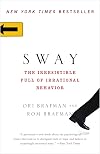
In my working life, I have observed first-hand smart, capable executives making poor business decisions. Although the common thinking is that business decisions are based on logic, such as cost-benefit analysis and business cases, in my experience, the optimal solution is not always selected. This cogent, enlightening book provides explanations of the variety of influences that may have contributed to these questionable decisions. At the beginning of each chapter, the author provides an show more example of an irrational decision, such as a pilot taking off in fog without clearance, and proceeds to explore the factors that may have contributed to the resulting catastrophe. The author “peels the onion,” delving into the complexities, citing numerous studies and examples in an easily understood manner. This method spurred my curiosity, and resulted in devouring the book in one sitting. I found it both entertaining and educational. Recommended to those who enjoy learning about human behavior and psychology, and highly recommended to management consultants to help their clients avoid biases in decision-making. show less
Lists
Awards

You May Also Like


Associated Authors
Statistics
- Works
- 9
- Members
- 2,891
- Popularity
- #8,867
- Rating
- 3.6
- Reviews
- 79
- ISBNs
- 49
- Languages
- 8
- Favorited
- 1
