

Malcolm Gladwell
Author of The Tipping Point: How Little Things Can Make a Big Difference
About the Author
In 2005, Time named Malcolm Gladwell one of its 100 most influential people. He is the author of three books, each of which reached number one on the New York Times Best Seller list. They are: The Tipping Point, Blink, and Outliers. His fourth book, What the Dog Saw and Other Adventures was show more published in 2009. He is a is a British-born Canadian journalist and author. Gladwell was a reporter for the Washington Post from 1987 to 1996, working first as a science writer and then as New York City bureau chief. Since 1996, he has been a staff writer for The New Yorker. He graduated with a degree in history from the University of Toronto's Trinity College in 1984. (Publisher Provided) show less
Works by Malcolm Gladwell
Blink: The Power of Thinking Without Thinking (2005) — Author; Narrator, some editions — 22,900 copies, 394 reviews
Outliers: The Story of Success (2008) — Author; Narrator, some editions — 18,239 copies, 448 reviews
What the Dog Saw and Other Adventures (2009) — Author; Narrator, some editions — 6,022 copies, 139 reviews
David and Goliath: Underdogs, Misfits, and the Art of Battling Giants (2013) — Author; Narrator, some editions — 5,194 copies, 128 reviews
Talking to Strangers: What We Should Know About the People We Don't Know (2019) — Author; Narrator, some editions — 4,454 copies, 139 reviews
The Bomber Mafia: A Dream, a Temptation, and the Longest Night of the Second World War (2021) — Author; Narrator, some editions — 1,587 copies, 66 reviews
Revenge of the Tipping Point: Overstories, Superspreaders, and the Rise of Social Engineering (2024) 910 copies, 22 reviews
What the Dog Saw, Part 1: Obsessives, Pioneers, and Other Varieties of Minor Genius (2009) 19 copies
The Art of Failure 3 copies
The Tipping Point: How Little Things Can Make a Big Difference {abridged audiobook} (2005) — Author; Narrator — 2 copies
Malcolm Gladwell 4 Books Collection Set (Talking to Strangers [Hardback] , Blink, The Tipping Point, What the Dog Saw) (2020) 2 copies
Malcolm Galdwell's 5 Book Set: The Tipping Point, Blink, Outliers, What the Dog Saw, David and Goliath (2005) 2 copies
David și Goliat 1 copy
The American Way of Killing 1 copy
PIKA E KTHESËS 1 copy
How David Beats Goliath 1 copy
Malcolm Gladwell Collection 4 Books Set (David and Goliath, Blink, The Tipping Point, What the Dog Saw) (2020) 1 copy
Malcolm Gladwell 3 Books Collection Set (Blink, The Tipping Point, [Hardcover] Talking to Strangers) (2020) 1 copy
The Risk Pool: What's Behind Ireland's Economic Miracle – and GM's Financial Crisis? [article] 1 copy, 1 review
Philosophy 1 copy
Сила мгновенных решений 1 copy
Associated Works
Endure: Mind, Body, and the Curiously Elastic Limits of Human Performance (2018) — Foreword, some editions — 466 copies, 9 reviews
The Big Moo: Stop Trying to Be Perfect and Start Being Remarkable (2005) — Contributor — 431 copies, 7 reviews
Half and Half: Writers on Growing Up Biracial and Bicultural (1998) — Contributor — 154 copies, 1 review
Upon Further Review: The Greatest What-Ifs in Sports History (2018) — Foreword — 51 copies, 2 reviews
Autonomy [2019 documentary] — Contributor — 1 copy
Tagged
Common Knowledge
- Canonical name
- Մալքոլմ Գլադուել
- Legal name
- Gladwell, Malcolm Timothy
- Other names
- Gladwell, Malcolm T.
- Birthdate
- 1963-09-03
- Gender
- male
- Education
- University of Toronto (Trinity College|BA|History, 1984)
- Occupations
- journalist
non-fiction writer - Organizations
- The Washington Post
The New Yorker
Panoply Media - Awards and honors
- Time Magazine's 100 Most Influential People in The World (2005)
American Sociological Association's Award for Excellence (Reporting of Social Issues ∙ 2007)
University of Waterloo (honorary degree ∙ 2007)
Order of Canada (2011) - Agent
- Tina Bennett
- Relationships
- Powell, Colin (Cousin)
Gladwell, Joyce (mother) - Short biography
- Malcolm Gladwell is a former business and science writer at the Washington Post. He is currently a staff writer for The New Yorker.
- Nationality
- UK (birth)
Canada (naturalised) - Birthplace
- Fareham, Hampshire, England
- Places of residence
- Elmira, Ontario, Canada
- Map Location
- Canada
Members
Discussions
Anyone reading or who has recently read [Outliers]? in What Are You Reading Now? (March 2016)
Reviews
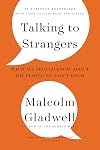
If being too trusting around strangers can get us into trouble, being too suspicious can be worse. So suggests Malcolm Gladwell in his intriguing 2019 book “Talking to Strangers.”
Gladwell uses the example of an episode of “Friends” in which, even if you turned the sound off or didn't understand English, you could understand exactly what is going on. That is because actors know how to portray guilt, suspicion, compassion, deceitfulness and so forth. The trouble is, in real life people show more don't always act the way we think they should act. Looks can be, and often are, deceiving. Even experienced judges, police officers and spy masters can't tell when someone is lying, for example, and Gladwell gives examples of each.
Most of us "default to truth," in the author's phrase, and this, he says, is actually a good thing. Society couldn't function very well without it. We need to trust each other, even if some people will take advantage of us.
Gladwell begins and ends his book with the case of Sandra Bland, a young black woman stopped in Texas for a minor traffic violation. She ended up in jail, where she committed suicide. The officer chose to view her suspiciously because, in his eyes, she was acting suspiciously. In truth, she was just a woman already under stress put under more stress by an officer making a lot out of very little. What should have concluded with a warning and a "have a nice day" led instead to an arrest and the death of an innocent woman.
The book might have been strengthened by more Sandra Bland-like examples and fewer examples of "default to truth" leading to trouble. If you fail to read the entire book, you could easily get the wrong idea about what the author is trying to say. As with strangers, you don't want to make snap judgments with Gladwell. show less
Gladwell uses the example of an episode of “Friends” in which, even if you turned the sound off or didn't understand English, you could understand exactly what is going on. That is because actors know how to portray guilt, suspicion, compassion, deceitfulness and so forth. The trouble is, in real life people show more don't always act the way we think they should act. Looks can be, and often are, deceiving. Even experienced judges, police officers and spy masters can't tell when someone is lying, for example, and Gladwell gives examples of each.
Most of us "default to truth," in the author's phrase, and this, he says, is actually a good thing. Society couldn't function very well without it. We need to trust each other, even if some people will take advantage of us.
Gladwell begins and ends his book with the case of Sandra Bland, a young black woman stopped in Texas for a minor traffic violation. She ended up in jail, where she committed suicide. The officer chose to view her suspiciously because, in his eyes, she was acting suspiciously. In truth, she was just a woman already under stress put under more stress by an officer making a lot out of very little. What should have concluded with a warning and a "have a nice day" led instead to an arrest and the death of an innocent woman.
The book might have been strengthened by more Sandra Bland-like examples and fewer examples of "default to truth" leading to trouble. If you fail to read the entire book, you could easily get the wrong idea about what the author is trying to say. As with strangers, you don't want to make snap judgments with Gladwell. show less
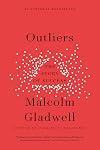
Why do seemingly average people succeed in life while others who appear to be geniuses fail? Why do certain countries tend to produce the worst airline pilots? Why were lawyers born in the 1930s likely to be far more successful than those born just a single generation earlier or later? Subtitled The Story of Success, this book provides a fascinating look at the answers to such questions. Relying on a considerable amount of primary research from fields as diverse as economics, sociology, show more linguistics, history, and psychology, Gladwell does an excellent job of synthesizing these disparate themes in a way that is both thoughtful and engaging.
Above all else, successful people work really hard; that is what ultimately separates the fates of two people gifted with equal skills at birth. In what is probably the most frequently quoted passage from the book, Gladwell stresses neurologist Daniel Levitin’s observation that it requires 10,000 hours of concerted effort for someone to become a world-class expert in his or her field. Intelligence matters as well, naturally, but only up to a point. To be successful, you just need to be smart enough, but not necessarily smarter than everyone else.
Of course, needing intelligence and drive to succeed is hardly controversial. Far more provocative are the other requisites—opportunity and cultural legacy—because they challenge our view of the self-made individual. Gladwell illustrates the first determinant with several interesting examples. For instance, Canadian hockey players born in January are far more likely to excel than those born at the end of the year, but not because they are more talented. Rather, January 1 is the cutoff date for age-specific youth all-star teams and so a person born on that day is almost twelve months older than a player with a December birthday. Mistaking physical maturity for superior skill, these early-in-the-year players are chosen more frequently for select teams, which in turn provides them with opportunities (e.g., superior coaching, better competition, more practice time) that make the ultimate difference.
The role played by one’s heritage is a more difficult argument to make, but the author does just that in the second half of the book. His thesis is that we are all deeply bred with the traditions and ethos that define our cultures and this legacy offers advantages to succeed in certain areas and disadvantages in others. A notable example is that people from more rigid, hierarchal societies tend to perform worse in situations where free communication and cooperation across seniority lines are crucial (e.g., trying to land a jetliner in an emergency situation). Gladwell’s arguments for legacy are not as compelling as those for opportunity, but he nevertheless makes a strong case that our ability to succeed in life depends on factors that are simply out of our control. It seems that being in the right place at the right time and from the right background—along with hard work, of course—matters more than we care to admit. show less
Above all else, successful people work really hard; that is what ultimately separates the fates of two people gifted with equal skills at birth. In what is probably the most frequently quoted passage from the book, Gladwell stresses neurologist Daniel Levitin’s observation that it requires 10,000 hours of concerted effort for someone to become a world-class expert in his or her field. Intelligence matters as well, naturally, but only up to a point. To be successful, you just need to be smart enough, but not necessarily smarter than everyone else.
Of course, needing intelligence and drive to succeed is hardly controversial. Far more provocative are the other requisites—opportunity and cultural legacy—because they challenge our view of the self-made individual. Gladwell illustrates the first determinant with several interesting examples. For instance, Canadian hockey players born in January are far more likely to excel than those born at the end of the year, but not because they are more talented. Rather, January 1 is the cutoff date for age-specific youth all-star teams and so a person born on that day is almost twelve months older than a player with a December birthday. Mistaking physical maturity for superior skill, these early-in-the-year players are chosen more frequently for select teams, which in turn provides them with opportunities (e.g., superior coaching, better competition, more practice time) that make the ultimate difference.
The role played by one’s heritage is a more difficult argument to make, but the author does just that in the second half of the book. His thesis is that we are all deeply bred with the traditions and ethos that define our cultures and this legacy offers advantages to succeed in certain areas and disadvantages in others. A notable example is that people from more rigid, hierarchal societies tend to perform worse in situations where free communication and cooperation across seniority lines are crucial (e.g., trying to land a jetliner in an emergency situation). Gladwell’s arguments for legacy are not as compelling as those for opportunity, but he nevertheless makes a strong case that our ability to succeed in life depends on factors that are simply out of our control. It seems that being in the right place at the right time and from the right background—along with hard work, of course—matters more than we care to admit. show less
Unexpected and wonderful listen as Gladwell organizes diverse examples to build his case.
How long will the challenge stick with me—to pause when I slide into thinking that I understand a situation or another person's experience based on ideas that Gladwell has clearly exposed as deeply faulty? Who knows?
However, I feel compelled to hold close the practices of patience and respect with greater intention as I interact with strangers.
Brilliant structure, fascinating interviews and case show more studies. Totally engrossing.
Default to Truth
The Fallacy of Transparency
Coupling (the powerful influence of time and place)
So engrossing that I had to listen/read it again two months later! show less
How long will the challenge stick with me—to pause when I slide into thinking that I understand a situation or another person's experience based on ideas that Gladwell has clearly exposed as deeply faulty? Who knows?
However, I feel compelled to hold close the practices of patience and respect with greater intention as I interact with strangers.
Brilliant structure, fascinating interviews and case show more studies. Totally engrossing.
Default to Truth
The Fallacy of Transparency
Coupling (the powerful influence of time and place)
So engrossing that I had to listen/read it again two months later! show less
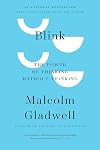
De nuevo, un libro de Malcom Gladwell [MG]. MG ha escrito un ensayo sobre cómo nuestro pensamiento subconsciente (lo que se suele llamar “la primera impresión”) es muchas veces más certero que nuetro pensamiento lógico cuando nos enfrentamos a un problema nuevo. A lo largo de libro nos habla de muchas historias en las que los protagonistas supieron desde el principio cuál era la solución a un problema (descubrir si una estatua era falsa, ver si una pareja aguantará junta cinco show more años…), aunque costara mucho tiempo llegar a fundamentar racionalmente tal decisión.
El libro, estimados lectores, tiene sus pros y sus contras. Su principal atractivo para mí es que todas las historias que cuenta son extremadamente interesantes. Me encantan. Son realmente entretenidas y el estilo del autor es fluido y didáctico. El punto en contra es que todas las historias juntas no consiguen convencerte de la tesis del autor. La segunda mitad del libro, de hecho, habla de cómo nuestro subconsciente puede verse engañado por esa “primera impresión”, echando por tierra todo lo que nos había contado en la primera parte. Curioso. En The tipping point sucedía algo parecido. Las historias son todas interesantísimas, pero uno no acaba convencido de lo que quiere demostrar el autor. La impresión que da es que ha juntado muchas historias para intentar imbricarlas en un todo, sin conseguirlo. Cada historia tiene su moraleja, pero no siempre es la moraleja que el autor quiere darle.
Hay además un fallo de bulto: en una de las secciones, el autor intenta demostrar que si uno es más alto tiene mayores probabilidades de ser director de una empresa (CEO). Como prueba, mira las estaturas de los directores de las principales empresas norteamericanas y comprueba que son superiores a la media. Cae de lleno en la falacia post hoc, ergo propter hoc (después de, por tanto a causa de). El hecho de que una cosa suceda a continuación de otra NO implica que está causada por ella. Pueden estar ambas causadas por una tercera cosa o pueden ser independientes. Clamoroso fallo en un libro por lo demás medianamente bien argumentado.
En cualquier caso, les recomiendo el libro. No lo miren como un ensayo razonado sino como una colección de historias interesantes. En eso sí que es un libro superior.
Mi nota: Muy entretenido show less
El libro, estimados lectores, tiene sus pros y sus contras. Su principal atractivo para mí es que todas las historias que cuenta son extremadamente interesantes. Me encantan. Son realmente entretenidas y el estilo del autor es fluido y didáctico. El punto en contra es que todas las historias juntas no consiguen convencerte de la tesis del autor. La segunda mitad del libro, de hecho, habla de cómo nuestro subconsciente puede verse engañado por esa “primera impresión”, echando por tierra todo lo que nos había contado en la primera parte. Curioso. En The tipping point sucedía algo parecido. Las historias son todas interesantísimas, pero uno no acaba convencido de lo que quiere demostrar el autor. La impresión que da es que ha juntado muchas historias para intentar imbricarlas en un todo, sin conseguirlo. Cada historia tiene su moraleja, pero no siempre es la moraleja que el autor quiere darle.
Hay además un fallo de bulto: en una de las secciones, el autor intenta demostrar que si uno es más alto tiene mayores probabilidades de ser director de una empresa (CEO). Como prueba, mira las estaturas de los directores de las principales empresas norteamericanas y comprueba que son superiores a la media. Cae de lleno en la falacia post hoc, ergo propter hoc (después de, por tanto a causa de). El hecho de que una cosa suceda a continuación de otra NO implica que está causada por ella. Pueden estar ambas causadas por una tercera cosa o pueden ser independientes. Clamoroso fallo en un libro por lo demás medianamente bien argumentado.
En cualquier caso, les recomiendo el libro. No lo miren como un ensayo razonado sino como una colección de historias interesantes. En eso sí que es un libro superior.
Mi nota: Muy entretenido show less
Lists
Non-Fiction (1)
Shelf 101 (1)
psychology (1)
Non-fiction (1)
Psychology (1)
100 New Classics (1)
Carole's List (3)
Big tags (2)
My List (2)
Unread books (2)
Sonlight Books (1)
BitLife (1)
Best Audiobooks (1)
Awards


You May Also Like


Associated Authors
Statistics
- Works
- 56
- Also by
- 24
- Members
- 83,458
- Popularity
- #139
- Rating
- 3.8
- Reviews
- 1,707
- ISBNs
- 487
- Languages
- 32
- Favorited
- 183

