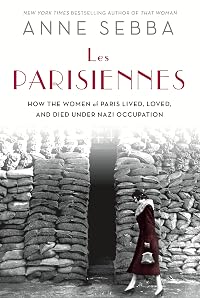
Les Parisiennes: How the Women of Paris Lived, Loved and Died in the 1940s
by Anne Sebba
On This Page
Description
"What did it feel like to be a woman living in Paris from 1939 to 1949? These were years of fear, power, aggression, courage, deprivation and secrets until--finally--renewal and retribution. Even at the darkest moments of Occupation, with the Swastika flying from the Eiffel Tower and pet dogs abandoned howling on the streets, glamour was ever present. French women wore lipstick. Why? It was women more than men who came face to face with the German conquerors on a daily basis--perhaps selling show more them their clothes or travelling alongside them on the Metro, where a German soldier had priority over seats. By looking at a wide range of individuals from collaborators to resisters, actresses and prostitutes to teachers and writers, Anne Sebba shows that women made life-and-death decisions every day, and often did whatever they needed to survive. Her fascinating cast of characters includes both native Parisian women and those living in Paris temporarily--American women and Nazi wives, spies, mothers, mistresses, and fashion and jewellery designers. Some women, like the heiress Béatrice de Camondo or novelist Irène Némirovsky, converted to Catholicism; others like lesbian racing driver Violette Morris embraced the Nazi philosophy; only a handful, like Coco Chanel, retreated to the Ritz with a German lover. A young medical student, Anne Spoerry, gave lethal injections to camp inmates one minute but was also known to have saved the lives of Jews. But this is not just a book about wartime. In enthralling detail Sebba explores the aftershock of the Second World War and the choices demanded. How did the women who survived to see the Liberation of Paris come to terms with their actions and those of others? Although politics lies at its heart, Les Parisiennes is a fascinating account of the lives of people of the city and, specifically, in this most feminine of cities, its women and young girls"--From publisher's website. show lessTags
Recommendations
















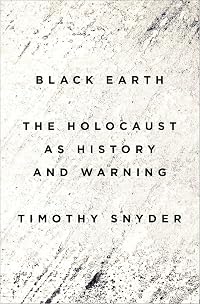

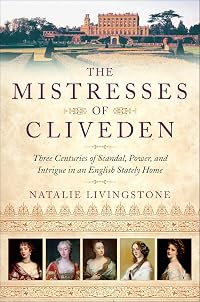
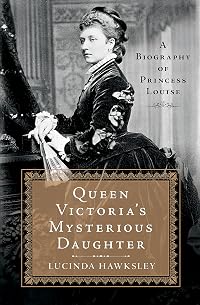


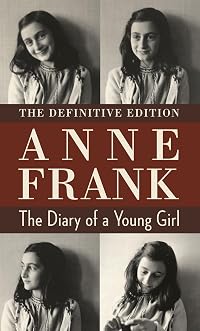

Member Recommendations
Imprinted There's an enthralling section in the middle of this memorable novel about the heroine's exploits in Paris during the "phoney war" (Sept. 1939 to May 1940) that will enhance your understanding of elite "Les Parisiennes" of that period.
Member Reviews
I received this book from a friend, another history buff, who said, "I hope you like it. I didn't." I loved it.
So, before writing this review, I also read the several reviews written by others. To be entirely frank, I sometimes wonder if people truly understand how history can be written in many ways. I ~loved~ this book for precisely the reasons others rated it with fewer stars. I blanched at the three star ratings, but my mouth dropped open with the rating of two stars (was the book even read?).
This book may well be--no, it IS--one of the best written histories of WW2 civilians in my reading experience, if only because it is written in the oft-choppy, always frustrating, chaotic genre of war itself. Although broadly chronological, it show more sometimes does not read that way. You plunge into the story of a beautiful lady, but are suddenly thrust into the story of a less than beautiful one. I got the feeling Anne Sebba realized how arcane would appear the stories of women who were, well, just women; and so, she seems to have used examples of many, whose names might just be recognized. Yet, the stories of the rich and famous were also the stories of the simple and unsophisticated. It was chaos for all and just like war, you hide behind a wall to avoid the sniper's eye, only to be thrust into the mortar blast which blows out the wall 30 yards behind you; you cannot help but glance back, then back again to insure the wall of your refuge still stands, and then to look to the safety of your children or the one special object you have preserved against the destruction. It is chaos here; destruction there; carnage everywhere.
You see, the stories are told in the same abrupt ways in which life was encountered in wartime Paris, or as the title page sub-title states, "How the Women of Paris Lived, Loved, and Died Under Nazi Occupation." They lived; sometimes just barely. They loved; sometimes messily but more often, bitterly and at a distance. And, they died...always messily; rarely quickly and with antiseptic cleanliness. Sometimes I found myself putting down the book to let the helter-skelterness (if that's not a word, it should be) of the wartime experience sink in; betimes also, with a tear welling in the eyes
Some reviewers seem frustrated in their reading of the tome, but the contradictions which are inherent in wartime survival were well-written by Anne Sebba to show the confusion, inequity, injustice, and raging chaos. Concerning the women of Paris, almost universally perceived in the world as scions of fashion and modernity, it cannot be told in a different way. Indeed, there's just no other way to accurately tell the broad story of wartime survival--or death--in Paris, especially with such a clear focal point of les parisiennes. Furthermore, I opine, to attempt to tell the broader story simply misses the point of telling the story at all.
One thing really screams in this book: The profound resiliency of the women who bore the brunt of wartime hostility. I really appreciate Sebba's obsessive attention to that story; it is a story which is too often neglected in favor of the experiences of armies and soldiers, campaigns and consequences, allies and enemies, farmers and merchants, businesses and economies, heroes and (even) heroines. Yet, I would challenge the reader to find even one similar account (and I do not write that lightly; in assessing my own experience of a dozen or more books written from or concerning the female experience of war--and several dozen more general accounts--I cannot think of a single one which targets what Sebba so skillfully documents.
One final point: Three sections of plates (images) profoundly enhance the text. How Sebba accomplished the gargantuan task of sorting through tens of thousands of wartime photos to create the carefully curated sections may never be fully appreciated; and I have to tell you, the final sheet of twelve of "Today's Witnesses" is particularly sobering.
But, before I go, I must also mention the copious endnotes on the text (by chapter, thankfully), extensive bibliography, annotations on the illustrations, carefully constructed index (also including the illustrations), and even a cast of characters (just in case you get lost along the way, as you most certainly will).
A superb job. Highly recommended, but mark my words: It ain't an easy read. You will weep, but you will learn. show less
So, before writing this review, I also read the several reviews written by others. To be entirely frank, I sometimes wonder if people truly understand how history can be written in many ways. I ~loved~ this book for precisely the reasons others rated it with fewer stars. I blanched at the three star ratings, but my mouth dropped open with the rating of two stars (was the book even read?).
This book may well be--no, it IS--one of the best written histories of WW2 civilians in my reading experience, if only because it is written in the oft-choppy, always frustrating, chaotic genre of war itself. Although broadly chronological, it show more sometimes does not read that way. You plunge into the story of a beautiful lady, but are suddenly thrust into the story of a less than beautiful one. I got the feeling Anne Sebba realized how arcane would appear the stories of women who were, well, just women; and so, she seems to have used examples of many, whose names might just be recognized. Yet, the stories of the rich and famous were also the stories of the simple and unsophisticated. It was chaos for all and just like war, you hide behind a wall to avoid the sniper's eye, only to be thrust into the mortar blast which blows out the wall 30 yards behind you; you cannot help but glance back, then back again to insure the wall of your refuge still stands, and then to look to the safety of your children or the one special object you have preserved against the destruction. It is chaos here; destruction there; carnage everywhere.
You see, the stories are told in the same abrupt ways in which life was encountered in wartime Paris, or as the title page sub-title states, "How the Women of Paris Lived, Loved, and Died Under Nazi Occupation." They lived; sometimes just barely. They loved; sometimes messily but more often, bitterly and at a distance. And, they died...always messily; rarely quickly and with antiseptic cleanliness. Sometimes I found myself putting down the book to let the helter-skelterness (if that's not a word, it should be) of the wartime experience sink in; betimes also, with a tear welling in the eyes
Some reviewers seem frustrated in their reading of the tome, but the contradictions which are inherent in wartime survival were well-written by Anne Sebba to show the confusion, inequity, injustice, and raging chaos. Concerning the women of Paris, almost universally perceived in the world as scions of fashion and modernity, it cannot be told in a different way. Indeed, there's just no other way to accurately tell the broad story of wartime survival--or death--in Paris, especially with such a clear focal point of les parisiennes. Furthermore, I opine, to attempt to tell the broader story simply misses the point of telling the story at all.
One thing really screams in this book: The profound resiliency of the women who bore the brunt of wartime hostility. I really appreciate Sebba's obsessive attention to that story; it is a story which is too often neglected in favor of the experiences of armies and soldiers, campaigns and consequences, allies and enemies, farmers and merchants, businesses and economies, heroes and (even) heroines. Yet, I would challenge the reader to find even one similar account (and I do not write that lightly; in assessing my own experience of a dozen or more books written from or concerning the female experience of war--and several dozen more general accounts--I cannot think of a single one which targets what Sebba so skillfully documents.
One final point: Three sections of plates (images) profoundly enhance the text. How Sebba accomplished the gargantuan task of sorting through tens of thousands of wartime photos to create the carefully curated sections may never be fully appreciated; and I have to tell you, the final sheet of twelve of "Today's Witnesses" is particularly sobering.
But, before I go, I must also mention the copious endnotes on the text (by chapter, thankfully), extensive bibliography, annotations on the illustrations, carefully constructed index (also including the illustrations), and even a cast of characters (just in case you get lost along the way, as you most certainly will).
A superb job. Highly recommended, but mark my words: It ain't an easy read. You will weep, but you will learn. show less
Tragic in spots, inspiring in others, but perhaps a little bit too encyclopedic. France’s defeat came as an immense shock to her civilians; one day her soldiers were fighting bravely at the front; the next a German band was marching through the Arc de Triomphe. A few Parisiennes walked out when someone in Feldgrau entered a shop or café, but most regarded the occupiers with speculative curiosity. They were healthy, blonde, “Wagnerian” according to one lady. After all, French men were all away – perhaps POWs – and the Parisiennes had a reputation to maintain. The occupiers, in turn, were initially polite, and perhaps a little naïve and intimidated. Of course, that changed.
Food got scarcer, clothing got drabber. A few show more Parisiennes always had enough to eat and enough to wear; the usual explanation was “relatives in the country”, and sometimes that was true – but in other cases the method of goods acquisition was “horizontal collaboration”. The real changes began in 1942; on 16-17 July, Vichy French police rounded up 13000+ Jews, and held them without food, water, or sanitation until they could be loaded into boxcars for shipment to Auschwitz. Many of the Jews of Paris had wishfully assumed that only “foreign” Jews – people who had escaped from Germany or Czechoslovakia or Poland – would be deported; they were disabused.
French women fought back, by whatever means they could; one of author Anne Sebba’s subjects was ashamed that all she had managed to do was tear down a swastika flag; others were not around to be interviewed because they had ended up in Ravensbrück, Mauthausen or Dachau. The year 1943 was especially catastrophic; the British Special Operations Executive had recruited a number of female agents to be parachuted into France and radio back information on troop movements, train traffic, and anything else of interest. Unfortunately, the network was compromised almost as soon as it was set up, and each new agent was met in the drop zone by GESTAPO rather than resistance fighters. Sebba has some criticism for the SOE here, essentially (although not explicitly) accusing them of “affirmative action”. An especially sad case was Noor Inayat Khan, who was a half Indian, half American children’s author. Her trainers were uncomfortable, finding her dreamy, uncertain about parachutes, afraid of weapons, and tending to write down things she should have memorized; Sebba discretely suggests Inayat Khan’s exotic beauty may have allowed her to influence her male handlers into sending her on a mission when she was clearly still unqualified. She was arrested fairly quickly after landing in France, but gave no information to her captors; however, her written notes were recovered. She fought so hard that she was ordered to permanently chained and manacled; in 1944 she and three other female prisoners were “given the full treatment” in their cells in Dachau and shot the next morning. She was awarded the George Cross in 1949.
At the other extreme was Violette Morris; Morris was a former race-car driver, flagrantly lesbian – to the extent of have her breasts surgically removed – and an enthusiastic Nazi collaborator, acting as a chauffeur for German officers and implicated in the arrest of several SOE agents and Resistance fighters. Morris was eventually ambushed in her car by Resistance, along with two other collaborators; unfortunately, four collaborator’s children were killed as well.
Paris eventually got liberated. Sebba notes that “collaborationist” women were rounded up, had their heads shaved, and were marched naked through the streets. Collaborationist men – including the Vichy police who rounded up Jews – went back to their jobs. She doesn’t have much use for Charles DeGaulle, noting that he spun the story to make it seem that France liberated herself; she also doesn’t have too much use for Americans, suggesting that American soldiers viewed Paris as “one tremendous brothel”; some American officers concurred, commenting that expecting soldiers to remain chaste was like “expecting a man to eat carrots in a steakhouse”. The STD situation was actually much worse after American liberation than after German occupation; the Germans had methodically put the brothels under military control and saw to it that the girls were medically examined; under the Americans things were much more chaotic. Sebba’s account ends more with a whimper than a bang; the last of the collaborators are tracked down, the Americans go home, and Paris goes back to being Paris.
The main flaw I see is too much data. Sebba tries to tell every story, collaborator or Jew or Resistance or just survivor. I was overwhelmed trying to keep track of all the names. Still, there are a lot of stories to be told and I’m not sure what could or should be cut; I suspect it might have be best to make this into several books. Recommended nevertheless. show less
Food got scarcer, clothing got drabber. A few show more Parisiennes always had enough to eat and enough to wear; the usual explanation was “relatives in the country”, and sometimes that was true – but in other cases the method of goods acquisition was “horizontal collaboration”. The real changes began in 1942; on 16-17 July, Vichy French police rounded up 13000+ Jews, and held them without food, water, or sanitation until they could be loaded into boxcars for shipment to Auschwitz. Many of the Jews of Paris had wishfully assumed that only “foreign” Jews – people who had escaped from Germany or Czechoslovakia or Poland – would be deported; they were disabused.
French women fought back, by whatever means they could; one of author Anne Sebba’s subjects was ashamed that all she had managed to do was tear down a swastika flag; others were not around to be interviewed because they had ended up in Ravensbrück, Mauthausen or Dachau. The year 1943 was especially catastrophic; the British Special Operations Executive had recruited a number of female agents to be parachuted into France and radio back information on troop movements, train traffic, and anything else of interest. Unfortunately, the network was compromised almost as soon as it was set up, and each new agent was met in the drop zone by GESTAPO rather than resistance fighters. Sebba has some criticism for the SOE here, essentially (although not explicitly) accusing them of “affirmative action”. An especially sad case was Noor Inayat Khan, who was a half Indian, half American children’s author. Her trainers were uncomfortable, finding her dreamy, uncertain about parachutes, afraid of weapons, and tending to write down things she should have memorized; Sebba discretely suggests Inayat Khan’s exotic beauty may have allowed her to influence her male handlers into sending her on a mission when she was clearly still unqualified. She was arrested fairly quickly after landing in France, but gave no information to her captors; however, her written notes were recovered. She fought so hard that she was ordered to permanently chained and manacled; in 1944 she and three other female prisoners were “given the full treatment” in their cells in Dachau and shot the next morning. She was awarded the George Cross in 1949.
At the other extreme was Violette Morris; Morris was a former race-car driver, flagrantly lesbian – to the extent of have her breasts surgically removed – and an enthusiastic Nazi collaborator, acting as a chauffeur for German officers and implicated in the arrest of several SOE agents and Resistance fighters. Morris was eventually ambushed in her car by Resistance, along with two other collaborators; unfortunately, four collaborator’s children were killed as well.
Paris eventually got liberated. Sebba notes that “collaborationist” women were rounded up, had their heads shaved, and were marched naked through the streets. Collaborationist men – including the Vichy police who rounded up Jews – went back to their jobs. She doesn’t have much use for Charles DeGaulle, noting that he spun the story to make it seem that France liberated herself; she also doesn’t have too much use for Americans, suggesting that American soldiers viewed Paris as “one tremendous brothel”; some American officers concurred, commenting that expecting soldiers to remain chaste was like “expecting a man to eat carrots in a steakhouse”. The STD situation was actually much worse after American liberation than after German occupation; the Germans had methodically put the brothels under military control and saw to it that the girls were medically examined; under the Americans things were much more chaotic. Sebba’s account ends more with a whimper than a bang; the last of the collaborators are tracked down, the Americans go home, and Paris goes back to being Paris.
The main flaw I see is too much data. Sebba tries to tell every story, collaborator or Jew or Resistance or just survivor. I was overwhelmed trying to keep track of all the names. Still, there are a lot of stories to be told and I’m not sure what could or should be cut; I suspect it might have be best to make this into several books. Recommended nevertheless. show less
Les Parisiennes is a missed opportunity - I really wanted to cherish these stories based on the travails suffered by Parisian women during WW II and the occupation. Rather than creating a compelling narrative, this heavily researched book reads a bit like the author's unedited notes. Major sections end abruptly without context (just like that). It's difficult to truly appreciate these stories when they are presented in a cursory and somewhat disjointed manner. I could have easily given four or even five stars for the content, but it is so sad to see such excellent research and obvious passion for the subject squandered by lack of compelling narrative and poor editing choices. The text does not so much suggest a movie screenplay starring show more Bergman and Bogart; it reads like a series of many short wartime Movietone newsreels. show less
Apart from a wedding dress, I haven't owned or worn a skirt since the late 1980s, and believe it or not, the [French] law against women wearing trousers, never enforceable since its introduction in 1800, was not finally rescinded until February 2013, after 213 years. So until that date, every day of every time I visited France, four times from 2001 to 2013, I was breaking the law. Who knew? Certainly not me.
I learned about this absurd law from reading Anne Sebba's comprehensive survey of Parisian life during the Occupation, Les Parisiennes, How the Women of Paris, Lived, Loved and Died in the 1940s. In the chapter called 'Paris Divided' I learned that the Vichy regime had adopted German notions about the role of women, because they show more believed that moral collapse was at the heart of the French defeat.
The chapter begins with the 1941 counsel of Léontine Zanta, an intellectual who in 1914 was the first French woman to receive a doctorate in philosophy. Here she is, reminding her students that it was their patriotic duty to marry, make babies and feel fulfilled in the home.
To read the rest of my review please visit https://anzlitlovers.com/2022/04/08/les-parisiennes-by-anne-sebba-and-how-lisa-b... show less
I learned about this absurd law from reading Anne Sebba's comprehensive survey of Parisian life during the Occupation, Les Parisiennes, How the Women of Paris, Lived, Loved and Died in the 1940s. In the chapter called 'Paris Divided' I learned that the Vichy regime had adopted German notions about the role of women, because they show more believed that moral collapse was at the heart of the French defeat.
The chapter begins with the 1941 counsel of Léontine Zanta, an intellectual who in 1914 was the first French woman to receive a doctorate in philosophy. Here she is, reminding her students that it was their patriotic duty to marry, make babies and feel fulfilled in the home.
Let our young female intellectuals understand this and loyally examine their conscience. I believe that many of them, if they are sincere and loyal... will admit that... if they didn't marry since they had not found a husband to their taste or because they were horrified by household work, which means that the poor things, in their blindness or their obliviousness, did not see that this was merely selfishness, culpable individualism, and that it was this sickness that was killing France. Today we need to accept this challenge and look life squarely in the face with the pure eyes and direct gaze of our Maid of Lorraine: it is up to you, as it was up to her more than five centuries ago, to save France. (p.73)
To read the rest of my review please visit https://anzlitlovers.com/2022/04/08/les-parisiennes-by-anne-sebba-and-how-lisa-b... show less
This covers two topics I am acutely interested in- WW II and France. Yet, for all of that, at times it was a bit of a slog. Why? Too many stories, too many characters and no real through line at the outset. The focus is on a number of Parisian women, mostly famous or well-known or well connected, but others not so much, who attempt to survive the occupation of Paris and German reprisals for any and everything. Some were real collaborators, some were social compatriots of the Germans, some were members of the resistance. Mostly, the comfortable and rich were not members of the resistance, but some were. Before the war, many rich French families were intermarriages of the aristocracy and the Jewish artistic and intellectual community. show more Their differing responses to the German threat was both compelling and heartbreaking. I liked that the focus was on the women, many of whom consorted with the enemy to feed their children; gave their children away to protect them; learned to lie and kill to resist and aid the allies. On the other hand, others (the rich) just wanted to keep on with their previous lifestyles. The problem is the book seems all threads, jumping between characters, place, events and this was frustrating. Too late, I discovered the name reference in the back of the book! Duh. It helps. show less
By their nature and purpose, history textbooks must necessarily be abridged. There is neither space nor time in a school year to teach or to learn everything there is to know of even the most important historical events, even while those events continue to shape the present and can tell us much about the world and our place in it. This is where books like Sebba's Les Parisiennes become invaluable because they can focus on aspects of events that are not addressed in broader histories. The following passage from her book's final chapter sums up, I believe, the lesson that Sebba's book teaches:
“France in 1940 was unbelievable. There were no men left. It was women who started the Resistance. Women didn't have the vote, they didn't have show more bank accounts, they didn't have jobs. Yet … women were capable of resisting. Jeannie Rousseau took the path of resistance, Elizabeth de Rothschild took another, Renée Puissant a third. Yet few people at the time saw themselves as having choices or making decisions, neither résistantes nor vegetable-sellers who needed to be paid in order to live; nor black-marketeers who saw opportunities waiting to be seized; nor Jewish mothers who gave their children away; nor women of le tout Paris who had lunches and bought fine clothes; nor singers, dancers and prostitutes who continued with the work they were … accustomed to do. ... Life had to go on. ... Most just tried to get by however they could.”
Does one learn anything truly new from Les Parisiennes? The answer, obviously, depends on the extent of one's knowledge of France during World War II and its immediate aftermath. I was struck by the fact that many “high society” ladies were little affected by the Nazi occupation, carrying on their preoccupations with expensive designer clothes, fine dining, custom-made jewellery, balls, and most of the other marks of what defined social sophistication in 1940s Paris. I learned that the modern peace symbol of a dove derives from posters designed by Picasso (yes, that Picasso!) on behalf of the French communist party. I was struck by the treatment of many survivors of the camps by their fellow citizens following their liberation; women who were thought to have co-existed too amicably with German occupiers suffered the indignity of shaven heads and public ostracism, while some were returned by French authorities to the same prisons to which they had been consigned by the Germans. Some who returned from the concentration camps were honored while others who returned from the same camps were ignored, slighted or even maligned, the honorees being those who had been imprisoned because of their work in the Resistance while the others had been sent there because of their “crime” of Jewishness.
Sebba goes out of her way in the early pages of her book to stress that she sees no guilt in the actions of the women of Paris regardless of their varying responses to the Nazi occupation. All were trying to survive as best they knew how. The bulk of her work of 387 pages (not including notes, acknowledgements, bibliography or index pages) is devoted to picturing the lives of the women constituting the “upper crust” of Parisian society, and the reader sees how the occupation did—or did not—affect them. Admittedly, I did find the descriptions frequently tedious, probably because I have absolutely no interest in the history of clothing designers, jewellery creators, or in who was whose mistress (regardless of spouses) in high society.
In short, I found Les Parisiennes seemingly very well researched and replete with historical facts that I had not known before. I did encounter names that I recognized and enjoyed learning a bit more of their less-well-known attributes: Picasso, Sartre, Camus, Chanel, Dior, Lanvin, and others still well known in the worlds of art, fashion, perfumery, and literature. However, dozens of other names crowd much of the writing, and while these are most likely known to aficionados of pretentious societal strata, I thought they slowed and even distracted from the narrative. What I found in Les Parisiennes was a history worth the reading but with snatches of stultifying commentary and utterly boring descriptions of dresses and pieces of exorbitantly costly jewellery. show less
“France in 1940 was unbelievable. There were no men left. It was women who started the Resistance. Women didn't have the vote, they didn't have show more bank accounts, they didn't have jobs. Yet … women were capable of resisting. Jeannie Rousseau took the path of resistance, Elizabeth de Rothschild took another, Renée Puissant a third. Yet few people at the time saw themselves as having choices or making decisions, neither résistantes nor vegetable-sellers who needed to be paid in order to live; nor black-marketeers who saw opportunities waiting to be seized; nor Jewish mothers who gave their children away; nor women of le tout Paris who had lunches and bought fine clothes; nor singers, dancers and prostitutes who continued with the work they were … accustomed to do. ... Life had to go on. ... Most just tried to get by however they could.”
Does one learn anything truly new from Les Parisiennes? The answer, obviously, depends on the extent of one's knowledge of France during World War II and its immediate aftermath. I was struck by the fact that many “high society” ladies were little affected by the Nazi occupation, carrying on their preoccupations with expensive designer clothes, fine dining, custom-made jewellery, balls, and most of the other marks of what defined social sophistication in 1940s Paris. I learned that the modern peace symbol of a dove derives from posters designed by Picasso (yes, that Picasso!) on behalf of the French communist party. I was struck by the treatment of many survivors of the camps by their fellow citizens following their liberation; women who were thought to have co-existed too amicably with German occupiers suffered the indignity of shaven heads and public ostracism, while some were returned by French authorities to the same prisons to which they had been consigned by the Germans. Some who returned from the concentration camps were honored while others who returned from the same camps were ignored, slighted or even maligned, the honorees being those who had been imprisoned because of their work in the Resistance while the others had been sent there because of their “crime” of Jewishness.
Sebba goes out of her way in the early pages of her book to stress that she sees no guilt in the actions of the women of Paris regardless of their varying responses to the Nazi occupation. All were trying to survive as best they knew how. The bulk of her work of 387 pages (not including notes, acknowledgements, bibliography or index pages) is devoted to picturing the lives of the women constituting the “upper crust” of Parisian society, and the reader sees how the occupation did—or did not—affect them. Admittedly, I did find the descriptions frequently tedious, probably because I have absolutely no interest in the history of clothing designers, jewellery creators, or in who was whose mistress (regardless of spouses) in high society.
In short, I found Les Parisiennes seemingly very well researched and replete with historical facts that I had not known before. I did encounter names that I recognized and enjoyed learning a bit more of their less-well-known attributes: Picasso, Sartre, Camus, Chanel, Dior, Lanvin, and others still well known in the worlds of art, fashion, perfumery, and literature. However, dozens of other names crowd much of the writing, and while these are most likely known to aficionados of pretentious societal strata, I thought they slowed and even distracted from the narrative. What I found in Les Parisiennes was a history worth the reading but with snatches of stultifying commentary and utterly boring descriptions of dresses and pieces of exorbitantly costly jewellery. show less
4.5 stars. I learned about this book on a podcast - the May 26 2016 episode of Don Snow's History Hit (check it out!). The book is such an interesting history of the German occupation of Paris during WWII. I had expected something more biographical - a collection of individual stories. But this is presented chronologically, and offers a great deal more of the social and cultural history of this place and time. I was surprised to find that I was just as interested, if not more, in the chapters that covered the war aftermath. Because of it's chronological organization, it can be hard to keep track of the people and their stories throughout the book, thus my marking it down a half a star. But I was quite pleased that the history covered show more here was so comprehensive, much more than I expected. show less
Members
- Recently Added By
Lists


Author Information

15+ Works 1,545 Members
Anne Sebba is a biographer, lecturer, journalist, and former Reuters foreign correspondent. She has written eight books, including acclaimed biographies of Jennie Churchill and Mother Teresa, as well as the New York Times bestseller That Woman about the life of Wallis Simpson. She is a member of the Society of Authors Management Committee. Visit show more her website at annesebba.com. show less
Awards and Honors
Distinctions
The Guardian Book of the Day (2016-07-31)
Common Knowledge
- Canonical title
- Les Parisiennes: How the Women of Paris Lived, Loved and Died in the 1940s
- Alternate titles
- Les Parisiennes
- Original publication date
- 2016
- People/Characters
- Lise London; Denise Dufournier; Janet Flanner; Agnès Humbert; Micheline Maurel; Jacqueline Mesnil-Amar (show all 12); Irène Némirovsky; Marceline Loridan-Ivens; Cécile Rol-Tanguy; Virginia d’Albert-Lake; Jacqueline Pery d'Alincourt; Germaine Tillion
- Important places
- Paris, France; Ravensbrück concentration camp, Ravensbrück, Brandenburg, Germany
- Important events
- World War II; Occupation of Paris 1940-1945; Phoney War (1939-1940)
- Dedication
- For Thomas, Isabella, Sophia and Charlotte
- First words
- Prologue: Paris, mid-July 2015, and the city is swelteringly hot.
Chapter One: When the future looks uncertain some women get married, others get divorced, yet more buy jewels and hundreds go into hiding. - Original language
- English UK
Classifications
- Genres
- History, Nonfiction, General Nonfiction, Biography & Memoir
- DDC/MDS
- 305.40944 — Society, government, & culture Social sciences, sociology & anthropology Social group - Age, Gender, Ethnicity Women Standard subdivisions History, geographic treatment, biography Europe France & Monaco
- LCC
- HQ1620 .P2 .S43 — Social sciences The family. Marriage, Women and Sexuality The Family. Marriage. Women Women. Feminism
- BISAC
Statistics
- Members
- 409
- Popularity
- 75,941
- Reviews
- 16
- Rating
- (3.83)
- Languages
- English, French
- Media
- Paper, Audiobook, Ebook
- ISBNs
- 17
- ASINs
- 4