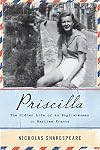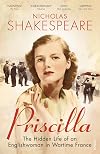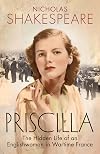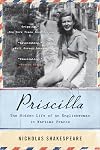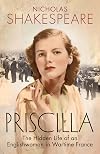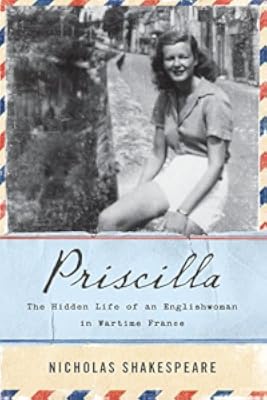
Priscilla: The Hidden Life of an Englishwoman in Wartime France
by Nicholas Shakespeare
On This Page
Description
When Nicholas Shakespeare stumbled across a box of documents belonging to his late aunt, Priscilla, he was completely unaware of where this discovery would take him and what he would learn about her hidden past. The glamorous, mysterious figure he remembered from his childhood was very different from the morally ambiguous young woman who emerged from the trove of love letters, photographs, and journals, surrounded by suitors and living the dangerous existence of a British woman in a country show more controlled by the enemy. He had heard rumors that Priscilla had fought in the Resistance, but the truth turned out to be far more complicated. As he investigated his aunt's life, dark secrets emerged, and Nicholas discovered the answers to the questions over which he'd been puzzling: What caused the breakdown of Priscilla's marriage to a French aristocrat? Why had she been interned in a prisoner-of-war camp, and how had she escaped? And who was the "Otto" with whom she was having a relationship as Paris was liberated? Piecing together fragments of one woman's remarkable and tragic life, Priscilla is at once a stunning story of detection, a loving portrait of a flawed woman trying to survive in terrible times, and a spellbinding slice of history. show lessTags
Recommendations

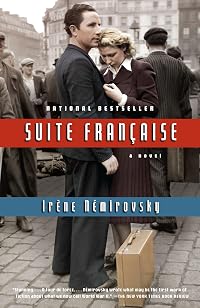
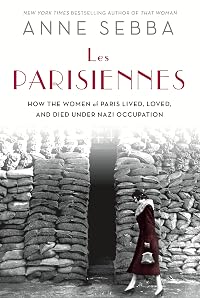
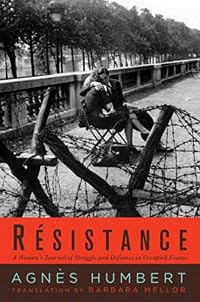

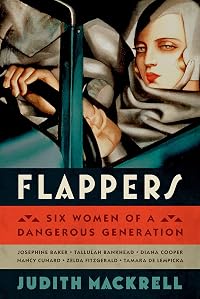







Member Recommendations
Member Reviews
A remarkable biography, in the way the author has found, researched and interpreted the life and times of a family member, his aunt Priscilla. In many ways Priscilla is unexceptional and not endearing, yet her life story is full of twists and turns. The danger and stress of life in occupied France, during World War II are well described and who am I to judge the choices Priscilla made to survive and get by. A long lost letter to her step daughter, revealed in the final pages, is full of simple good sense and humanity. Priscilla was a damaged soul even before the war started, yet I am at the end glad to have read this particular book.
A detailed biography of the author's aunt, with facts gathered from her writings, her correspondence, and interviews with friends and family).
I did try to like Priscilla (the girl and the woman, that is), and too feel sympathetic towards her, but she appears to be a rather shallow person without much "oomph", with a lot of physical charm but not much else, apart from a strange taste in men. A failed model, a failed writer... it's hard to know what she was really like: witty? caring? intelligent? But obviously unhappy. Perhaps there is some reticence on the author's part, as he is writing about a member of his family? Or perhaps it was Priscilla herself, who kept her feelings to herself?
On the positive side, the background is show more interesting; I had never given thought to what it would be like to be British in France during the Occupation and did not realise they were sent to camps such as the one in Besançon. I also liked the inclusion of photographs in the text - in the right place, too, though for quality they would have been better on glossy paper.
On a different note, and taking up something I read in another review, I wish that authors who litter their texts with foreign words would get them checked before publishing, or that the editors would do their job properly. Here there are many French words and expressions, sometimes translated, sometimes not, sometimes mistranslated, sometimes mis-spelled, sometimes put between quotation marks. The kind of thing that brings on an acute fit of Fremdwortrechtschreibfehlerleiden - the pain caused by mis-spellings of foreign word. (Actually I'm not sure that the word really exists but if it doesn't, it should.) The problem being that once I see a mistake, I find myself looking out for more, which distracts me from the narrative. I'm not sure that the author has realised that "mon petit bouchon" is a fairly common endearment in French, like pet or petal in English, and I doubt if Robert thought of Priscilla as a little cork bobbing up and down on her emotions (that one gets translated every time). Why does he say Besançon means House of Light when the word is derived from the Latin Vesontius which has something to do with mountains? There are mistakes in the English, too - little typos, and somewhere there is a horrifying her's. And the neat French handwriting on the label of the dossier on p. 238 is certainly not Gothic script.
But I'm dwelling too much on little faults, no matter how much they annoy me.
On the whole, an interesting documentary work but which failed to arouse any passions. show less
I did try to like Priscilla (the girl and the woman, that is), and too feel sympathetic towards her, but she appears to be a rather shallow person without much "oomph", with a lot of physical charm but not much else, apart from a strange taste in men. A failed model, a failed writer... it's hard to know what she was really like: witty? caring? intelligent? But obviously unhappy. Perhaps there is some reticence on the author's part, as he is writing about a member of his family? Or perhaps it was Priscilla herself, who kept her feelings to herself?
On the positive side, the background is show more interesting; I had never given thought to what it would be like to be British in France during the Occupation and did not realise they were sent to camps such as the one in Besançon. I also liked the inclusion of photographs in the text - in the right place, too, though for quality they would have been better on glossy paper.
On a different note, and taking up something I read in another review, I wish that authors who litter their texts with foreign words would get them checked before publishing, or that the editors would do their job properly. Here there are many French words and expressions, sometimes translated, sometimes not, sometimes mistranslated, sometimes mis-spelled, sometimes put between quotation marks. The kind of thing that brings on an acute fit of Fremdwortrechtschreibfehlerleiden - the pain caused by mis-spellings of foreign word. (Actually I'm not sure that the word really exists but if it doesn't, it should.) The problem being that once I see a mistake, I find myself looking out for more, which distracts me from the narrative. I'm not sure that the author has realised that "mon petit bouchon" is a fairly common endearment in French, like pet or petal in English, and I doubt if Robert thought of Priscilla as a little cork bobbing up and down on her emotions (that one gets translated every time). Why does he say Besançon means House of Light when the word is derived from the Latin Vesontius which has something to do with mountains? There are mistakes in the English, too - little typos, and somewhere there is a horrifying her's. And the neat French handwriting on the label of the dossier on p. 238 is certainly not Gothic script.
But I'm dwelling too much on little faults, no matter how much they annoy me.
On the whole, an interesting documentary work but which failed to arouse any passions. show less
First impression is that Priscilla is a story of the banal. Everyday life for Priscilla, her parents and friends in pre WW2 England and France potters along in great but unexciting detail.
Somewhere in the latter half of the account, perceptions changed for me. Now I was reading and learning about France under German Occupation. Strangely, plodding and detailed though the writing remains, a clear picture emerges. Terrible things are happening to people, crimes, civil and War , occur as part of daily life. It seems aspects of this history have yet to be openly explored in France and her neighbours. Priscilla is a unique look at one person's life, and the lives of those around her.
It is expressed in a very unusual style - keenly show more involved, but with the detachment necessary for this to be a work exploring our human frailties in a powerful way. show less
Somewhere in the latter half of the account, perceptions changed for me. Now I was reading and learning about France under German Occupation. Strangely, plodding and detailed though the writing remains, a clear picture emerges. Terrible things are happening to people, crimes, civil and War , occur as part of daily life. It seems aspects of this history have yet to be openly explored in France and her neighbours. Priscilla is a unique look at one person's life, and the lives of those around her.
It is expressed in a very unusual style - keenly show more involved, but with the detachment necessary for this to be a work exploring our human frailties in a powerful way. show less
Interesting read as the author tries to recreate his aunt's life beginning before WWII through the end of her life. While there were people to talk with and diaries left that explain the time before the war and the time after the war, there were few sources available to reconstruct accurately her life in Paris during the war. As Mr. Shakespeare would be researching one thing he often stumbled into pieces of his aunt's life during his research. Most of the people who had been with his aunt were either dead, or like her, unwilling to talk about their experiences. I learned a lot. It is worth reading as it is the experience of an ordinary person, not a celebrity.
Nicholas Shakepeare was right, his aunt Priscilla should have written her memoirs. His search to discover who she really was is interesting, but ultimately frustrating.
bookshelves: published-2013, radio-4, winter-20132014, nonfiction, biography, wwii, women, under-20, france, fradio, next
Read from January 12 to 17, 2014
BOTW R4
BBC description: Nicholas Shakespeare writes about his aunt, a glamorous English woman whose life in Paris during the German Occupation grew more and more mysterious. Abridged in 5 episodes by Katrin Williams. Reader Nicholas Shakespeare. Producer Duncan Minshull.
1. The author resolves to unearth the facts about Priscilla, whose background and activities during World War 2 fascinate the rest of the family. She died in the 1980's, even a Vicomtess at one stage. How, then, will he embark on his task of discovery?
2. Fleeing to Paris, in desperate straits, the young woman finds show more kindness when it is least expected. Enter the gallant Robert Doynel. Now her life will change forever.
3. Priscilla has been living off her wits and off the favours of men she knows. But incriminating information seems to gather fast, and one morning the police come calling.
4. Priscilla is relying on the kindness and often dubious motives of men to survive. Then information supplied by her friend Gillian Sutro casts even more light on tumultuous events.
5. D-Day, and the whole of Paris is jumping, dancing, clasped in embrace. But Priscilla, the eternal party girl, is in a very quiet place, with a dubious past hot on her heels.
2* show less
Read from January 12 to 17, 2014
BOTW R4
BBC description: Nicholas Shakespeare writes about his aunt, a glamorous English woman whose life in Paris during the German Occupation grew more and more mysterious. Abridged in 5 episodes by Katrin Williams. Reader Nicholas Shakespeare. Producer Duncan Minshull.
1. The author resolves to unearth the facts about Priscilla, whose background and activities during World War 2 fascinate the rest of the family. She died in the 1980's, even a Vicomtess at one stage. How, then, will he embark on his task of discovery?
2. Fleeing to Paris, in desperate straits, the young woman finds show more kindness when it is least expected. Enter the gallant Robert Doynel. Now her life will change forever.
3. Priscilla has been living off her wits and off the favours of men she knows. But incriminating information seems to gather fast, and one morning the police come calling.
4. Priscilla is relying on the kindness and often dubious motives of men to survive. Then information supplied by her friend Gillian Sutro casts even more light on tumultuous events.
5. D-Day, and the whole of Paris is jumping, dancing, clasped in embrace. But Priscilla, the eternal party girl, is in a very quiet place, with a dubious past hot on her heels.
2* show less
Ratings
Members
- Recently Added By
Lists

Books Read in 2014
2,343 works; 89 members
Author Information

32+ Works 2,298 Members
Nicholas William Shakespeare is a British novelist and biographer who was born on March 3, 1957, in Worcester. He attended Winchester College and Magdalene College, Cambridge. He worked as a journalist for BBC Television and later as an arts and literary editor for "The Times". He soon after began his writing career. His first books include The show more Men Who Would Be king: A Look at Royalty in Exile, Londoners, and The Vision of Elena Silves. His later works include Inheritance, Under the Sun: The Letters of Bruce Chatwin, and Six Minutes in May: How Churchill Unexpectedly Became Prime Minister. (Bowker Author Biography) show less
Awards and Honors
Awards
Common Knowledge
- Canonical title
- Priscilla: The Hidden Life of an Englishwoman in Wartime France
- Original publication date
- 2013
- People/Characters
- Priscilla Mais
- Important places
- France; Paris, France
- Important events
- World War II; German occupation of France; Occupation of Paris
Classifications
- Genres
- History, Nonfiction, Biography & Memoir, General Nonfiction
- DDC/MDS
- 944.0816092 — History & geography History of Europe France and Monaco France Third republic 1870- Third Republic 1870-1945 ; XXth Century 1939-1945
- LCC
- DC373 .M2188 .S53 — History of Europe, Asia, Africa and Oceania France – Andorra – Monaco History of France Modern, 1515- 20th century
- BISAC
Statistics
- Members
- 158
- Popularity
- 205,184
- Reviews
- 6
- Rating
- (3.30)
- Languages
- English, German
- Media
- Paper, Audiobook, Ebook
- ISBNs
- 12
- ASINs
- 6