On This Page
Description
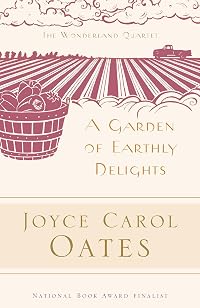
A masterly work from a writer with "the uncanny ability to give us a cinemascopic vision of her America" (National Review), A Garden of Earthly Delights is the opening stanza in what would become one of the most powerful and engrossing story arcs in literature. Joyce Carol Oates's Wonderland Quartet comprises four remarkable novels that explore social class in America and the inner lives of young Americans. In A Garden of Earthly Delights, Oates presents one of her most memorable heroines, show more Clara Walpole, the beautiful daughter of Kentucky-born migrant farmworkers. Desperate to rise above her haphazard existence of violence and poverty, determined not to repeat her mother's life, Clara struggles for independence by way of her relationships with four very different men: her father, a family man turned itinerant laborer, smoldering with resentment; the mysterious Lowry, who rescues Clara as a teenager and offers her the possibility of love; Revere, a wealthy landowner who provides Clara with stability; and Swan, Clara's son, who bears the psychological and spiritual burden of his mother's ambition. A Garden of Earthly Delights is the first novel in the Wonderland Quartet. The books that complete this acclaimed series, Expensive People, them, and Wonderland, are also available from the Modern Library. show lessTags
Recommendations





















Member Reviews
Quintessentially Joyce Carol Oates - violent, dark, exquisitely wrought. In the afterword to this Modern Library edition she describes how and why she re-wrote this 1967 novel for this 2002 republication. This essay substantially enhanced my appreciation and understanding of this novel and its themes of poverty, the difficulty of transitioning from one socioeconomic class to another, violence in many forms, the complexity of parent-child relationships, the experiences of migrant farm workers in the 1930’s, and the nature of growing up rural in western New York during the mid-20th century. Her depictions and characterizations still resonate with today’s socioeconomic issues in the USA.
I've read a few of Ms Oates' novels; this, one of her earliest, is utterly brilliant and just leaves the reader astounded that anyone can so bring to life her characters, getting inside the minds of the strangest and most unaccountable, so we feel we know them.
Opening in the Depression, we meet the poor, migratory Walpole family. dragging from state to state, seasonal farm labourers living in squalor; poor, hard-drinking, resentful, violent....Daughter Clara gers away, with a strange, distant, mentally uncertain man- Lowry, the love of her life. And finds herself abanoned, pregnant, but with a potential get-out in the form of wealthy, married, older Curt Revere...
The final section hones in on her son...a guy with Issues...
Unputdownable, show more fabulous writing. show less
Opening in the Depression, we meet the poor, migratory Walpole family. dragging from state to state, seasonal farm labourers living in squalor; poor, hard-drinking, resentful, violent....Daughter Clara gers away, with a strange, distant, mentally uncertain man- Lowry, the love of her life. And finds herself abanoned, pregnant, but with a potential get-out in the form of wealthy, married, older Curt Revere...
The final section hones in on her son...a guy with Issues...
Unputdownable, show more fabulous writing. show less
While I’ve certainly not read all of Joyce Carol Oates’s work, I’d be willing to say that her work isn’t joyous. And this book takes the lack of joy- the lack to *any* form of happiness- to nose bleeding heights.
Clara is born into misery. Her parents are migrant fruit pickers in the Great Depression. They own nothing and live in shacks on the farms for a few weeks before moving on. They can never make enough to escape this life. Her father copes by drinking, fighting, beating his wife and kids (except for Clara), and committing adultery. Constant pregnancy eventually kills her mother. This doesn’t change much; Clara has been taking care of the younger siblings for years. One evening in ‘town’ she meets an unusual man- one show more who doesn’t want to have sex with her. She stays out late, and when she returns to her shack, her father brutally beats her. She runs away, and with this man’s help, starts a new life with a room of her own, a bed of her own, and a job at a dime store. This is luxury beyond anything she’s ever known.
Her life becomes one of securing her place in the world. In her quest she loses friends and is scorned by all, but gains financial security and doesn’t care a bit. All her life, she is defined by both men- her father, her boyfriend, her husband, her son- and by her lust for *things*; clothing, furniture, jewelry. In a humanizing touch, she is also an avid gardener, reveling in planting and weeding and pruning, even after she has enough money that she could afford to hire someone. It seems to be her single creative outlet or interest. She’s not a bad person, despite what the townspeople think; she’s just very driven to never be like her parents. She learns to read on her own, and watches other people to learn how to behave.
The prose, despite the grim subject especially in the first part of the book, is brilliant to read. The brutal lives the migrants are living comes vividly, frighteningly, alive. Clara is mostly a sympathetic character. Of course she makes mistakes, some of which have horrible consequences, but she does the best she can in a bad situation. This could have been a depressing read, but for the most part it’s not; it’s oddly uplifting to see Clara make a life for herself and her son.
Note: I read the original 1966 version, not the updated one. show less
Clara is born into misery. Her parents are migrant fruit pickers in the Great Depression. They own nothing and live in shacks on the farms for a few weeks before moving on. They can never make enough to escape this life. Her father copes by drinking, fighting, beating his wife and kids (except for Clara), and committing adultery. Constant pregnancy eventually kills her mother. This doesn’t change much; Clara has been taking care of the younger siblings for years. One evening in ‘town’ she meets an unusual man- one show more who doesn’t want to have sex with her. She stays out late, and when she returns to her shack, her father brutally beats her. She runs away, and with this man’s help, starts a new life with a room of her own, a bed of her own, and a job at a dime store. This is luxury beyond anything she’s ever known.
Her life becomes one of securing her place in the world. In her quest she loses friends and is scorned by all, but gains financial security and doesn’t care a bit. All her life, she is defined by both men- her father, her boyfriend, her husband, her son- and by her lust for *things*; clothing, furniture, jewelry. In a humanizing touch, she is also an avid gardener, reveling in planting and weeding and pruning, even after she has enough money that she could afford to hire someone. It seems to be her single creative outlet or interest. She’s not a bad person, despite what the townspeople think; she’s just very driven to never be like her parents. She learns to read on her own, and watches other people to learn how to behave.
The prose, despite the grim subject especially in the first part of the book, is brilliant to read. The brutal lives the migrants are living comes vividly, frighteningly, alive. Clara is mostly a sympathetic character. Of course she makes mistakes, some of which have horrible consequences, but she does the best she can in a bad situation. This could have been a depressing read, but for the most part it’s not; it’s oddly uplifting to see Clara make a life for herself and her son.
Note: I read the original 1966 version, not the updated one. show less
'Clara felt heavy and hot and sad, imagining already school over in the afternoon and the way she would have to run to get away from the stones and mud balls. She and Ned would both have to run, cutting across muddy fields, with the boys laughing behind them…”White trash!” They were white trash, everybody knew that, and what it meant was that people were going to throw stones: you had to get hit sooner or later. -From A Garden of Earthly Delights, page 47-48-'
There are plenty of stones getting thrown in Joyce Carol Oates’ early novel: A Garden of Earthly Delights. The novel centers around the character of Clara, an economically disadvantaged child growing up as part of the dysfunctional Walpole family. Clara is literally born in show more a ditch at the side of the road - symbolic of her later struggles to rise from the muck of poverty and dysfunction to make something of her life. Clara’s early years are marked by her alcoholic, abusive father who is a Kentucky-born migrant farm worker. Carleton Walpole is a harsh, angry man who moves his family from one encampment to the next, never providing a stable home for any of them.
Oates’ descriptions are raw, real and depressing - she captures the hopelessness of Clara’s surroundings perfectly. So it is no wonder when Clara meets the much older and charming Lowry, she wastes no time in fleeing from her father and her downtrodden family. Still a child, Clara envisions a life much different from that which her mother lived. She is not discouraged by the seemingly insurmountable challenges she faces, and is not afraid to work hard. She sees Lowry as her knight in shining armor, a man she can rely on. But as with all the men in Clara’s life, Lowry is less than dependable.
As the novel progresses, the reader watches Clara evolve from a girl with dreams of a home she can call her own, to a woman who is hardened by the world around her. With the impending birth of her son Swan, Clara takes control of her future by falling back on her ability to manipulate others into giving her what she needs.
Clara’s relationship with Revere - a man who offers stability and predictability to her - is developed over the last half of the book. This relationship represents all that Clara’s father was unable to provide, and so it is rimmed with sadness and disappointment. The adult Clara, a woman who sees happiness in the accumulation of wealth, is a hard character to like. She hides behind the lie that everything she does is done for Swan - her only son. And yet her behavior is solely narcissistic and tinged with childishness. Swan is a tragic figure, a boy cut loose from his “roots” and unsure about where he fits in society. His moral decline is almost predictable, and yet still stuns the reader.
Originally written in 1966 (the first novel in the Wonderland Quartet), A Garden of Earthly Delights was a finalist for the National Book Award in 1968. Oates rewrote it in 2002 for publication by the Modern Library. She writes:
'As a composer can hear music he can’t himself play on any instrument, so a young writer may have a vision he or she can’t quite execute; to feel something, however deeply, is not the same as possessing the power - the craft, the skill, the stubborn patience - to translate it into formal terms.'
In rewriting her novel, Oates discovered some autobiographical elements to which she had previously been unaware - her own upbringing on a struggling family farm, her youthful exposure to stories about her paternal grandfather (a violent alcoholic named Carlton), the crude language of her childhood which was accepted as commonplace, and the similarity of the name Clara to that of Oates’ mother Carolina. In the rewritten version, Oates attempts to examine her characters more thoroughly so that the reader can ‘experience them intimately, from the inside.‘
A Garden of Earthly Delights is not so much about what happens to a young girl raised in poverty and abuse, but is more about the awful gap between social classes. It is about a young girl who must confront her past in order to move into her future. And it is about survival, as well as about those who do not survive. Oates writes:
'The trajectory of social ambition and social tragedy dramatized by the Walpoles seems to me as relevant to the twenty-first century as it had seemed in the late 1960s, not dated but bitterly enhanced by our current widening disparity between social classes in America. Haves and have-nots is too crude a formula to describe this great subject, for as Swan Walpole discovers, to have and not to be, is to have lost one’s soul.'
This is not an enjoyable book. It is harsh, shocking, and tragic. Dreary and depressing at times, this is a novel not always easy to read. And yet Oates writes with a beauty that is hard to deny. Her ability to uncover the soul of her characters is amazing. Readers who enjoy strong literary novels with tragic characters, will want to read this book. Those who are offended by foul language (Oates does not temper her dialogue) or dislike stories centered around dysfunctional families, will probably not like A Garden of Earthly Delights. show less
There are plenty of stones getting thrown in Joyce Carol Oates’ early novel: A Garden of Earthly Delights. The novel centers around the character of Clara, an economically disadvantaged child growing up as part of the dysfunctional Walpole family. Clara is literally born in show more a ditch at the side of the road - symbolic of her later struggles to rise from the muck of poverty and dysfunction to make something of her life. Clara’s early years are marked by her alcoholic, abusive father who is a Kentucky-born migrant farm worker. Carleton Walpole is a harsh, angry man who moves his family from one encampment to the next, never providing a stable home for any of them.
Oates’ descriptions are raw, real and depressing - she captures the hopelessness of Clara’s surroundings perfectly. So it is no wonder when Clara meets the much older and charming Lowry, she wastes no time in fleeing from her father and her downtrodden family. Still a child, Clara envisions a life much different from that which her mother lived. She is not discouraged by the seemingly insurmountable challenges she faces, and is not afraid to work hard. She sees Lowry as her knight in shining armor, a man she can rely on. But as with all the men in Clara’s life, Lowry is less than dependable.
As the novel progresses, the reader watches Clara evolve from a girl with dreams of a home she can call her own, to a woman who is hardened by the world around her. With the impending birth of her son Swan, Clara takes control of her future by falling back on her ability to manipulate others into giving her what she needs.
Clara’s relationship with Revere - a man who offers stability and predictability to her - is developed over the last half of the book. This relationship represents all that Clara’s father was unable to provide, and so it is rimmed with sadness and disappointment. The adult Clara, a woman who sees happiness in the accumulation of wealth, is a hard character to like. She hides behind the lie that everything she does is done for Swan - her only son. And yet her behavior is solely narcissistic and tinged with childishness. Swan is a tragic figure, a boy cut loose from his “roots” and unsure about where he fits in society. His moral decline is almost predictable, and yet still stuns the reader.
Originally written in 1966 (the first novel in the Wonderland Quartet), A Garden of Earthly Delights was a finalist for the National Book Award in 1968. Oates rewrote it in 2002 for publication by the Modern Library. She writes:
'As a composer can hear music he can’t himself play on any instrument, so a young writer may have a vision he or she can’t quite execute; to feel something, however deeply, is not the same as possessing the power - the craft, the skill, the stubborn patience - to translate it into formal terms.'
In rewriting her novel, Oates discovered some autobiographical elements to which she had previously been unaware - her own upbringing on a struggling family farm, her youthful exposure to stories about her paternal grandfather (a violent alcoholic named Carlton), the crude language of her childhood which was accepted as commonplace, and the similarity of the name Clara to that of Oates’ mother Carolina. In the rewritten version, Oates attempts to examine her characters more thoroughly so that the reader can ‘experience them intimately, from the inside.‘
A Garden of Earthly Delights is not so much about what happens to a young girl raised in poverty and abuse, but is more about the awful gap between social classes. It is about a young girl who must confront her past in order to move into her future. And it is about survival, as well as about those who do not survive. Oates writes:
'The trajectory of social ambition and social tragedy dramatized by the Walpoles seems to me as relevant to the twenty-first century as it had seemed in the late 1960s, not dated but bitterly enhanced by our current widening disparity between social classes in America. Haves and have-nots is too crude a formula to describe this great subject, for as Swan Walpole discovers, to have and not to be, is to have lost one’s soul.'
This is not an enjoyable book. It is harsh, shocking, and tragic. Dreary and depressing at times, this is a novel not always easy to read. And yet Oates writes with a beauty that is hard to deny. Her ability to uncover the soul of her characters is amazing. Readers who enjoy strong literary novels with tragic characters, will want to read this book. Those who are offended by foul language (Oates does not temper her dialogue) or dislike stories centered around dysfunctional families, will probably not like A Garden of Earthly Delights. show less
I have a copy of the original version of this work, but I had not gotten around to reading it when I found this one. Lucky me! I don't know if I would have read the newer version if I had already read the old.
I can only guess at the origin of the title. Clara is the daughter of migrant farmworkers in the eastern part of the U.S. She is familiar with the earth from these beginnings, but it is only when she takes off that she really starts to search for the "delights". A beautiful young woman, she attracts the attention of more than one male, and it is through their assistance that she climbs the ladder to a more prosperous life. She would never have put it that way, though. She believes that her success is hers alone.
Clara's male show more influences start with her father a bitter, resentful, crude, selfish man, who nevertheless loves Clara in a way he cannot love anyone else. As she grows, though, Clara is determined that her life will not continue in this rut. She hitches a ride with the gentle Lowry, a mysterious, kind man for whom Clara seems to retain a lifelong affection. Later she finds her way into the life of Revere, a wealthy man quite smitten by Clara in spite of his tendency toward hard practicality.
When Clara gives birth to a son she calls Swan, her self-involvement expands to include the boy. In fact, she is so taken by him that she can hardly bear to have him out of her sight. To say that she actually loves him, though, may not be accurate. It appears that Clara cannot love others, not really. Is this because of her beginnings? The lessons she learned from her father and mother?
I had difficulty really liking any of the characters. In a way, this situation reminded me of Madame Bovary. I wanted to care, at least to sympathize, but I couldn't quite manage.
This novel reveals much about migrant farm workers, reminding us that they are not only in California and are not only from Mexico. It also presents us with hard stories of the rich and poor, the gaps we see increasingly in the present-day United States. I took away a different vision of these different lives, and I think I'm better for it.
-------------------
I read this again, forgetting how recently I had read it. Not realizing I had already reviewed it. Here is my latest review:
Joyce Carol Oates may have been the first writer to engage me emotionally. I felt an attachment to her characters that felt true. So even though I am sure that I read this book before, I wanted to read it again to refresh my memory.
The main character is Clara. She was born to parents who are migrant farm workers in the 1930s, parents who fell down on their luck and ended up in caravans and buses, going from farm to farm. Clara was a beautiful baby and even more beautiful child. She was very attached to her father and he to her, but when she was a teen she felt she could no longer live that life. She took off with a man she had met only the day before, a man she called Lowry, his last name.
She was so young that she formed an attachment quickly to this man, who was ten or more years older. He traveled all the time so took her with him to a little town and left her there. He came back to visit, to spend a little time with her, and on these visits she repeatedly told him she loved him. He did not want any complicated attachments so brushed her off, saying she was like a little sister to him.
In time Clara met an older man in town and learned that he came from a well-to-do family, the Reveres. At first she was not interested in him but she began to realize what he could do for her and she let him. She lived in an old farm house on property he owned outside of town while he lived with his wife elsewhere and visited Clara. She was sixteen, as I recall, when she gave birth to a son. Because Lowry had visited Clara after a long absence she believed her son was his. It was never clear to me if this was true or not but it seems like Steven was certainly more like Lowry than Revere. Clara was determined that Steven, whom she called Swan, would have all of the benefits she had not had, and she devoted much of her life to fulfilling that wish.
Revere believed Steven was his son but mother and son continued to live in the farmhouse for several years, until Revere's sickly wife died. Clara and Revere were then married and moved to his house. Steven was about seven and did not make friends easily, being bookish and quiet. His half-brothers were very different from him and he found school quite challenging from a social standpoint as well. During this time he developed beliefs about himself. He tried to make sense of his life. He remembered Lowry and somehow figured out that he was his father. It was perhaps this understanding that kept him apart from others, trying to find his place.
The book takes us several years beyond, focusing more and more on Steven over time, yet Clara is fundamentally still at the core of the novel. Clara's uneducated, sometimes manipulative nature made her a character I couldn't like very much but for whom I felt some compassion. Steven's distance from the world and other people made him, too, hard to love. I felt that the message, if there is one, is that moving a person from one place in society to another is rarely a smooth transition and may not be fully possible. Rags to riches? Not in many ways. show less
I can only guess at the origin of the title. Clara is the daughter of migrant farmworkers in the eastern part of the U.S. She is familiar with the earth from these beginnings, but it is only when she takes off that she really starts to search for the "delights". A beautiful young woman, she attracts the attention of more than one male, and it is through their assistance that she climbs the ladder to a more prosperous life. She would never have put it that way, though. She believes that her success is hers alone.
Clara's male show more influences start with her father a bitter, resentful, crude, selfish man, who nevertheless loves Clara in a way he cannot love anyone else. As she grows, though, Clara is determined that her life will not continue in this rut. She hitches a ride with the gentle Lowry, a mysterious, kind man for whom Clara seems to retain a lifelong affection. Later she finds her way into the life of Revere, a wealthy man quite smitten by Clara in spite of his tendency toward hard practicality.
When Clara gives birth to a son she calls Swan, her self-involvement expands to include the boy. In fact, she is so taken by him that she can hardly bear to have him out of her sight. To say that she actually loves him, though, may not be accurate. It appears that Clara cannot love others, not really. Is this because of her beginnings? The lessons she learned from her father and mother?
I had difficulty really liking any of the characters. In a way, this situation reminded me of Madame Bovary. I wanted to care, at least to sympathize, but I couldn't quite manage.
This novel reveals much about migrant farm workers, reminding us that they are not only in California and are not only from Mexico. It also presents us with hard stories of the rich and poor, the gaps we see increasingly in the present-day United States. I took away a different vision of these different lives, and I think I'm better for it.
-------------------
I read this again, forgetting how recently I had read it. Not realizing I had already reviewed it. Here is my latest review:
Joyce Carol Oates may have been the first writer to engage me emotionally. I felt an attachment to her characters that felt true. So even though I am sure that I read this book before, I wanted to read it again to refresh my memory.
The main character is Clara. She was born to parents who are migrant farm workers in the 1930s, parents who fell down on their luck and ended up in caravans and buses, going from farm to farm. Clara was a beautiful baby and even more beautiful child. She was very attached to her father and he to her, but when she was a teen she felt she could no longer live that life. She took off with a man she had met only the day before, a man she called Lowry, his last name.
She was so young that she formed an attachment quickly to this man, who was ten or more years older. He traveled all the time so took her with him to a little town and left her there. He came back to visit, to spend a little time with her, and on these visits she repeatedly told him she loved him. He did not want any complicated attachments so brushed her off, saying she was like a little sister to him.
In time Clara met an older man in town and learned that he came from a well-to-do family, the Reveres. At first she was not interested in him but she began to realize what he could do for her and she let him. She lived in an old farm house on property he owned outside of town while he lived with his wife elsewhere and visited Clara. She was sixteen, as I recall, when she gave birth to a son. Because Lowry had visited Clara after a long absence she believed her son was his. It was never clear to me if this was true or not but it seems like Steven was certainly more like Lowry than Revere. Clara was determined that Steven, whom she called Swan, would have all of the benefits she had not had, and she devoted much of her life to fulfilling that wish.
Revere believed Steven was his son but mother and son continued to live in the farmhouse for several years, until Revere's sickly wife died. Clara and Revere were then married and moved to his house. Steven was about seven and did not make friends easily, being bookish and quiet. His half-brothers were very different from him and he found school quite challenging from a social standpoint as well. During this time he developed beliefs about himself. He tried to make sense of his life. He remembered Lowry and somehow figured out that he was his father. It was perhaps this understanding that kept him apart from others, trying to find his place.
The book takes us several years beyond, focusing more and more on Steven over time, yet Clara is fundamentally still at the core of the novel. Clara's uneducated, sometimes manipulative nature made her a character I couldn't like very much but for whom I felt some compassion. Steven's distance from the world and other people made him, too, hard to love. I felt that the message, if there is one, is that moving a person from one place in society to another is rarely a smooth transition and may not be fully possible. Rags to riches? Not in many ways. show less
Dickens-noir. Reminescient of Great Expectations, it's a tale of how the main character, Clara, goes from dirt poor to elite rich and a glimpse into the personality that is capable of making that leap. I try not to read other reviews until I have completed my own. My purpose is to provide enough content to have some recall of what I read, and to give a hint of what the book was like should someone chance onto to this. That being said, the individual who described this as a "chick book" then, graciously forgiving it as such is simply, shallowly, and literally judging this book by its cover. The book concerns relationships, and some between men and women, but what great novel does not? Clara is unsentimental and ambitious, not the show more standard subject of a romance novel. To the contrary, I think if one read the book without looking at the cover or noting the author's name, you would assume it is written by a man. As for what some have regarded or reported as an abrupt or unsatisfying ending, aren't most of life's endings such? It worked for me. A life time of ambition for ambition's sake, leaving the main character to question what it was in particular she was striving for in the first place. If you like Jane Smiley, Donna Taart, Tom Wolfe this is a multi- layered work in the same vein. show less
While reading this, I was unsure of where Oates was going with it, normally the books I have read so far have been shocking. This was so far different from what I was expecting and surprisingly I really enjoyed it. The story follows Clara through her desolate poor life while she works herself up to wealthy rich. The changes she goes through during this time are astonishing and I believe to be quite accurate for someone moving up the class system. Oates tells us through this book how unimportant money can be and how happiness is found elsewhere. Where? That is something she does not divulge but it certainly has nothing to do with money. Again, her characters are rich and involved, Oates has a way of getting within the soul of a show more person/character and breathing life into them. I can't wait to continue on the road of this Wonderland Quartet and see what else she can teach me. show less
Members
- Recently Added By
Lists

National Book Award Finalists - Fiction
377 works; 12 members

Llibres que he llegit el 2023
38 works; 1 member
Author Information

478+ Works 62,409 Members
Joyce Carol Oates was born on June 16, 1938 in Lockport, New York. She received a bachelor's degree in English from Syracuse University and a master's degree in English from the University of Wisconsin. She is the author of numerous novels and collections of short stories. Her works include We Were the Mulvaneys, Blonde, Bellefleur, You Must show more Remember This, Because It Is Bitter, Because It Is My Heart, Solstice, Marya : A Life, and Give Me Your Heart. She has received numerous awards including the National Book Award for Them, the PEN/Malamud Award for Excellence in Short Fiction, and the F. Scott Fitzgerald Award for Lifetime Achievement in American Literature. She was a finalist for the 2015 Pulitzer Prize for Fiction with her title Lovely, Dark, Deep. She also wrote a series of suspense novels under the pseudonym Rosamond Smith. In 2015, her novel The Accursed became listed as a bestseller on the iBooks chart. She worked as a professor of English at the University of Windsor, before becoming the Roger S. Berlind Distinguished Professor of Humanities at Princeton University. She and her late husband Raymond J. Smith operated a small press and published a literary magazine, The Ontario Review. (Bowker Author Biography) Joyce Carol Oates is one of the most eminent and prolific literary figures and social critics of our times. She has won the National Book Award and several O. Henry and Pushcart prizes. Among her other awards are an NEA grant, a Guggenheim fellowship, the PEN/Malamud Lifetime Achievement Award, and the F. Scott Fitzgerald Award for Lifetime Achievement in American Literature. (Publisher Provided) show less
Awards and Honors
Series

Belongs to Publisher Series
Common Knowledge
- Canonical title
- A Garden of Earthly Delights
- Original publication date
- 1967
- People/Characters
- Clara Walpole Revere; Curtis Revere; Stephen Revere (Swan); Lowry; Carleton Walpole
- Important places
- Hamilton, Kentucky, USA; Tintern, Kentucky, USA
- First words
- Arkansas. On that day, many years ago, a truck carrying a number of migratory workers collided with a car on a country highway.
- Last words
- (Click to show. Warning: May contain spoilers.)She seemed to like best programs that showed men fighting, swinging from ropes, shooting guns and driving fast cars, killing the enemy again and again until the dying gasps of evil men were only a certain familiar rhythm away from the opening blasts of the commercials, which changed only gradually over the years.
Classifications
Statistics
- Members
- 607
- Popularity
- 48,089
- Reviews
- 16
- Rating
- (4.05)
- Languages
- 9 — Catalan, Czech, English, French, German, Hungarian, Italian, Russian, Spanish
- Media
- Paper, Ebook
- ISBNs
- 21
- ASINs
- 10