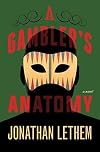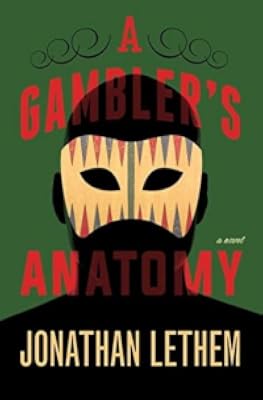
A Gambler's Anatomy
by Jonathan Lethem
On This Page
Description
An international backgammon hustler, who has amassed a fortune through psychic tomfoolery, develops a large tumor on his face that compromises his vision and eventually threatens his life, forcing him to pursue an experimental surgery and contemplate existential questions. Handsome, impeccably tuxedoed Bruno Alexander travels the world winning large sums of money from amateur "whales" who think they can challenge his peerless acumen at backgammon. Fronted by his pasty, vampiric manager, show more Edgar Falk, Bruno arrives in Berlin after a troubling run of bad luck in Singapore. Perhaps it was the chance encounter with his crass childhood acquaintance Keith Stolarsky and his smoldering girlfriend Tira Harpaz. Or perhaps it was the emergence of a blot that distorts his vision so he has to look at the board sideways. Things don't go much better in Berlin. Bruno's flirtation with Madchen, the striking blonde he meets on the ferry, is inconclusive; the game at the unsettling Herr Kohler's mansion goes awry as his blot grows worse; he passes out and is sent to the local hospital, where he is given an extremely depressing diagnosis. Having run through Falk's money, Bruno turns to Stolarsky, who, for reasons of his own, agrees to fly Bruno to Berkeley, and to pay for the experimental surgery that might save his life. Berkeley, where Bruno discovered his psychic abilities, and to which he vowed never to return. Amidst the patchouli flashbacks and Anarchist gambits of the local scene, between Tira's come-ons and Keith's machinations, Bruno confronts two existential questions: Is the gambler being played by life? And what if you're telepathic but it doesn't do you any good? -- Provided by publisher. show lessTags
Recommendations























Member Reviews
I was very impressed at first. But it was really the mask that was impressive, using that intimidation to cover a vulnerability with the protection of both emptiness and threat. We need to win, to defeat the other and to avoid becoming the other against whom someone else will win. But it's all just a game; the boundaries between us being porous to anyone willing to notice. But without boundaries, you can't tell a winner from a loser.
The boundary once known as the Berlin Wall was the source of wealth to the "whale" whom the protagonist initially targets as a source of income until the tumorous growth he'd developed to keep the outside at bay becomes nearly fatal. He is saved by his enemies and returned to his childhood, until the same show more boredom that is the reward of those who can control everything seeps out of the book and engulfs the reader. To his surprise, he ceases to care what happens to the protagonist or to anyone else. It turns out life was never a game of chance to begin with--that the mask of clever writing can't hide the emptiness within. When the gambler once again returns to inhabit his roll, its glamour is absent and we are surprised it was ever there; but others are still finding it a source of wonder and I, the reader am left to wish I had never fallen for it in the first place.
I could give this book 2 stars or just 1, but that would just be spiteful--an attempt to hide my initial fascination of which I am now embarrassed.
It's too late now for me, though you may still have a chance. Imagine I am offering you the doubling cube. Turn it down. Go read Motherless Brooklyn again instead. show less
The boundary once known as the Berlin Wall was the source of wealth to the "whale" whom the protagonist initially targets as a source of income until the tumorous growth he'd developed to keep the outside at bay becomes nearly fatal. He is saved by his enemies and returned to his childhood, until the same show more boredom that is the reward of those who can control everything seeps out of the book and engulfs the reader. To his surprise, he ceases to care what happens to the protagonist or to anyone else. It turns out life was never a game of chance to begin with--that the mask of clever writing can't hide the emptiness within. When the gambler once again returns to inhabit his roll, its glamour is absent and we are surprised it was ever there; but others are still finding it a source of wonder and I, the reader am left to wish I had never fallen for it in the first place.
I could give this book 2 stars or just 1, but that would just be spiteful--an attempt to hide my initial fascination of which I am now embarrassed.
It's too late now for me, though you may still have a chance. Imagine I am offering you the doubling cube. Turn it down. Go read Motherless Brooklyn again instead. show less
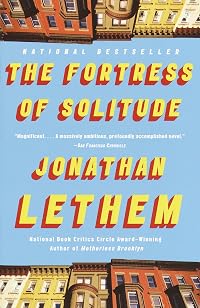
Alexander Bruno is a handsome backgammon hustler who lives a playboy life, jetting from city to city, relieving the rich and powerful from their money, seducing women, and moving on. When we meet him, however, he’s on a losing streak and, what’s worse, he is suffering from a strange visual impairment that causes a “blot” right in the middle of his visual field. After Bruno collapses somewhere in Germany in a client’s house and is rushed to the hospital, we learn that he has a rare brain tumor, and that this tumor has not only impaired Bruno’s eyesight but also a mind-reading gift that he has had since childhood. Why does a mind reader with a penchant for gambling choose a game like backgammon, where such a skill confers no show more advantage? Good question. He learns that there is a doctor in California (where he comes from) who has developed a radical surgery for this previously inoperable type of tumor. But Alexander has no money and no friends, so he figures he’s about to die. A chance meeting with a childhood acquaintance changes his fortunes – his friend, a loser in high school, has become a real estate baron in Oakland, his home town, and offers to pay for his treatment. So Bruno returns to California, where he grew up with a hippy mother on the edge of destitution, a neglected child. The surgery involves the removal of his face (!) – a metaphor for the stripping away of the thin veneer of the glamorous life he had created. The surgery not only leaves him badly scarred, but also back in possession of his psychic gifts – and Alexander is terrified by this. The surgery has also left him beholden to his friend Stolarsky, a manipulative villain whose motive for funding Bruno’s surgery seems to be nothing more than wanting to abase his old acquaintance. Stolarsky’s wife Tina flirts with Alexander, and they end up having an affair – but Tina also seems to want to manipulate him for reasons unknown. And then there’s the German hooker, whom Alexander meets just before his collapse and ends up reentering the story. All told, an interesting but so-so novel. I was expecting more after loving Fortress of Solitude show less
A strange, unique, intellectual novel. This, my first Jonathan Lethem novel, was decidedly interesting yet eclectic. It was full of twists & turns as well as obscure references to historical, literary and film characters. I felt that this book was in a genre the opposite of “chick-lit.” It seemed geared toward men, focused on men, devoid of emotion. The women in this novel were there ministering to the needs of the men. It is about games, identity, masks, power, sex. Relationships lacked any depth within this strange book which is full of smoke and mirrors, self identity crises, puppetry, and a feeling of unreality.
This is a novel about a handsome backgammon hustler, Bruno, who helps empty the pockets of the wealthy with the show more assistance of his handler, Falk, who arranges these meetings. One night in Singapore, he encounters a high school acquaintance who takes it upon himself to learn backgammon and challenge Bruno to a match. This is about the same time that Bruno notices the “blot” in his vision. Of course, “blot” is also a backgammon term meaning, “a man exposed by being placed alone on a point and therefore able to be taken by the other player” making this a double entendre. This is the beginning of Bruno’s losing streak and ultimate diagnosis of a facial tumor which is causing the blot in his vision. There is a surgeon in San Francisco, Noah Behringer, who will operate and Stolarsky agrees to pay all costs. Thus, Bruno, penniless and at the mercy of others, is brought to Berkley, his hometown, a place he vowed he would never return.
Once the surgery is completed, Bruno feels naked without the blot and requests a mask. This is reminiscent of his last backgammon game during which a young woman serving food came in wearing a mask and was naked from the waist down. The gambler felt that he could communicate telepathically earlier in his life and the blot had helped to protect him from this unwanted gift. Now that the blot is gone, he feels he is exposed again (that his telepathy has returned) and wants the blot back. He feels that he was present during the surgery and remembers all that happened. In fact, that is the only chapter which is told not from the gambler’s perspective but from that of the surgeon, almost as if he was inside the surgeon’s head at the time of surgery watching it happen, a very clever twist of story-telling.
The gambler becomes a pawn of Stolarsky’s. Having no money of his own, he is living in an apartment within a building Sturgeon owns. He must wear clothing that he purchases at the store Stolarsky owns, so ends up dressed in “Abide” clothing. He is told to work at Kropotke’s burgers where he is made to wear a burlap mask with a noose around his neck. Bruno, as a character, seems like a pawn in a game other people are controlling, either Falk (his handler) or Stolarsky, at this particular interval in his life.
Madchen is a beautiful blond he met on a ferry when he was headed to Berlin. She was also the masked woman naked from the waist down who served sandwiches during his backgammon match in Berlin. She is the only person who tries to contact him during his time in Berkley, as he seems to have no close friends or family. When she is flown out by Stolarsky, she also becomes another piece in a game that Stolarsky seems to be playing, against Bruno and the anarchists with whom Bruno has taken up.
This novel is full of double entendres, irony, wit, intellectualism. It is enticing, thought-provoking and strange. For those who enjoy this type of novel, it will be dearly loved. It is definitely not main-stream. It is off the beaten path, odd, but brilliantly written.
For discussion questions: http://www.book-chatter.com/?p=733 show less
This is a novel about a handsome backgammon hustler, Bruno, who helps empty the pockets of the wealthy with the show more assistance of his handler, Falk, who arranges these meetings. One night in Singapore, he encounters a high school acquaintance who takes it upon himself to learn backgammon and challenge Bruno to a match. This is about the same time that Bruno notices the “blot” in his vision. Of course, “blot” is also a backgammon term meaning, “a man exposed by being placed alone on a point and therefore able to be taken by the other player” making this a double entendre. This is the beginning of Bruno’s losing streak and ultimate diagnosis of a facial tumor which is causing the blot in his vision. There is a surgeon in San Francisco, Noah Behringer, who will operate and Stolarsky agrees to pay all costs. Thus, Bruno, penniless and at the mercy of others, is brought to Berkley, his hometown, a place he vowed he would never return.
Once the surgery is completed, Bruno feels naked without the blot and requests a mask. This is reminiscent of his last backgammon game during which a young woman serving food came in wearing a mask and was naked from the waist down. The gambler felt that he could communicate telepathically earlier in his life and the blot had helped to protect him from this unwanted gift. Now that the blot is gone, he feels he is exposed again (that his telepathy has returned) and wants the blot back. He feels that he was present during the surgery and remembers all that happened. In fact, that is the only chapter which is told not from the gambler’s perspective but from that of the surgeon, almost as if he was inside the surgeon’s head at the time of surgery watching it happen, a very clever twist of story-telling.
The gambler becomes a pawn of Stolarsky’s. Having no money of his own, he is living in an apartment within a building Sturgeon owns. He must wear clothing that he purchases at the store Stolarsky owns, so ends up dressed in “Abide” clothing. He is told to work at Kropotke’s burgers where he is made to wear a burlap mask with a noose around his neck. Bruno, as a character, seems like a pawn in a game other people are controlling, either Falk (his handler) or Stolarsky, at this particular interval in his life.
Madchen is a beautiful blond he met on a ferry when he was headed to Berlin. She was also the masked woman naked from the waist down who served sandwiches during his backgammon match in Berlin. She is the only person who tries to contact him during his time in Berkley, as he seems to have no close friends or family. When she is flown out by Stolarsky, she also becomes another piece in a game that Stolarsky seems to be playing, against Bruno and the anarchists with whom Bruno has taken up.
This novel is full of double entendres, irony, wit, intellectualism. It is enticing, thought-provoking and strange. For those who enjoy this type of novel, it will be dearly loved. It is definitely not main-stream. It is off the beaten path, odd, but brilliantly written.
For discussion questions: http://www.book-chatter.com/?p=733 show less
Back in the day, I read Motherless Brooklyn, Jonathan Lethem's brilliant and emotionally resonant noir about a private eye with Tourette's Syndrome. I always meant to read more by this talented writer, but never got around to it. So when A Gambler's Anatomy began to be reviewed and I found myself with a copy of it in my hands, I was excited to see what Lethem would do with the story of a high-stakes backgammon player, down on his luck.
The book begins brilliantly, with Bruno going to Wannsee, just outside of Berlin, to play backgammon against a man he has been assured will be easy prey. Bruno needs the money; after the disaster in Singapore he's utterly without resources. And those opening chapters are excellent, with the small exception show more of the stereo-typical younger and attractive woman who is drawn to the desperate and thread-bare Bruno. Bruno's descent coincides with a blot in the center of his vision, one which requires him to look at things through the corners of his eyes and may be related to the headaches and other health issues. The evening in Wannsee does not go well.
From this promising beginning, A Gambler's Anatomy turns out to be just another WMFuN*, where the world and especially the women in it, exist to spotlight what's happening to the self-absorbed main character. Add a long stretch of men being more interested in their own thought-processes than anything around them and the utter relegation of women to helpers and sex and the book ended up being quite a bit less than I had hoped. It's stylistically interesting, in the way a novel by a prominent white guy who has read everything David Foster Wallace ever wrote usually is, but at the expense of any heart whatsoever. Also, Mr. Lethem, it's 2016. Women are no longer merely props. If you can't write them as people, leave them out.
*The all-too-common White Male Fuck-up Novel. There are already too many of these. show less
The book begins brilliantly, with Bruno going to Wannsee, just outside of Berlin, to play backgammon against a man he has been assured will be easy prey. Bruno needs the money; after the disaster in Singapore he's utterly without resources. And those opening chapters are excellent, with the small exception show more of the stereo-typical younger and attractive woman who is drawn to the desperate and thread-bare Bruno. Bruno's descent coincides with a blot in the center of his vision, one which requires him to look at things through the corners of his eyes and may be related to the headaches and other health issues. The evening in Wannsee does not go well.
From this promising beginning, A Gambler's Anatomy turns out to be just another WMFuN*, where the world and especially the women in it, exist to spotlight what's happening to the self-absorbed main character. Add a long stretch of men being more interested in their own thought-processes than anything around them and the utter relegation of women to helpers and sex and the book ended up being quite a bit less than I had hoped. It's stylistically interesting, in the way a novel by a prominent white guy who has read everything David Foster Wallace ever wrote usually is, but at the expense of any heart whatsoever. Also, Mr. Lethem, it's 2016. Women are no longer merely props. If you can't write them as people, leave them out.
*
Listened to this on audio. This is my fourth Lethem novel, and I generally love his stuff. This one was OK, but it firmly cemented my opinion that he writes some really weird stuff.
Alex Bruno is an international backgammon hustler. He finds that over time he's developed a "blot" that blocks his vision and begins to affect his game. It turns out that the blot is a growing tumor. It's going to take some radical surgery to correct it and he finds that a super rich/shady friend from high school is willing to fund it. After surgery, along with the tumor being gone, he finds that his game is gone as well. He has to work at his friend's dive-y burger joint to pay him back. There's a lot more here, not the least of which is Alex's self belief show more that he is a psychic and that those powers help him with this backgammon skills. Its a very odd tale
7/10
S: 2/1/19 - 2/16/19 (16 Days) show less
Alex Bruno is an international backgammon hustler. He finds that over time he's developed a "blot" that blocks his vision and begins to affect his game. It turns out that the blot is a growing tumor. It's going to take some radical surgery to correct it and he finds that a super rich/shady friend from high school is willing to fund it. After surgery, along with the tumor being gone, he finds that his game is gone as well. He has to work at his friend's dive-y burger joint to pay him back. There's a lot more here, not the least of which is Alex's self belief show more that he is a psychic and that those powers help him with this backgammon skills. Its a very odd tale
7/10
S: 2/1/19 - 2/16/19 (16 Days) show less
I'm starting to think that there should be a new genre: First Fifty Pages of Novels. So many novelists begin with a bang but end with a whimper. This one ends with a mess. It starts well enough, but becomes much like the soup eaten by the Berkeley revolutionaries described in the later pages. The characters act without motivation, the dialogue is really, really forced and unnatural, and the story gets bogged down under dozens of symbols and motifs that I wasn't interested enough to pursue as I read. I suspect there is a great short story in here somewhere. Lethem is a critics' darling, but this was really unimpressive.
Lethem delivers some great sentences in this book: every other pages offers something like "He sought consolation in the idea that he would die within the ancient preserve of Charite, the plague asylum, but in this antiseptic modern wing it was no good. Perhaps they would release him to the streets, and he would expire on the lawn before some nineteenth-century brickwork renamed for a Nazi doctor, or atop a cairn of paving stones." But the story is not great; in fact it's a bit dull, and hard to get a handle on. And Bruno, as a character, left me cold. Lethem remains a beautiful writer, but this novel fails to live up to the promise of his masterpiece, [b:Motherless Brooklyn|328854|Motherless Brooklyn|Jonathan show more Lethem|https://images.gr-assets.com/books/1348254729s/328854.jpg|1971553]. show less
Members
- Recently Added By
Lists

Kirkus Starred Fiction Reviews of Books Published in 2016
63 works; 3 members

To Read
617 works; 7 members
Author Information

100+ Works 24,672 Members
Jonathan Lethem was born in Brooklyn, New York on February 19, 1964. His first novel, Gun, with Occasional Music was published in 1994. His other works include As She Climbed across the Table (1997), Amnesia Moon (1995), The Fortress of Solitude (2003), You Don't Love Me Yet (2007), Chronic City (2009), and Dissident Gardens (2013). He won the show more National Book Critics Circle Award for Motherless Brooklyn (1999). He also writes short stories, comics and essays. His work has appeared in The New Yorker, Harper's, Rolling Stone, Esquire, The New York Times, The Paris Review, McSweeney's and other periodicals and anthologies. (Bowker Author Biography) show less
Some Editions
Awards and Honors
Common Knowledge
- Canonical title
- A Gambler's Anatomy
- Original title
- A Gambler's Anatomy
- Alternate titles
- The Blot
- Original publication date
- 2016
Classifications
Statistics
- Members
- 343
- Popularity
- 92,009
- Reviews
- 19
- Rating
- (3.22)
- Languages
- English, German, Italian, Spanish
- Media
- Paper, Audiobook, Ebook
- ISBNs
- 13
- ASINs
- 3