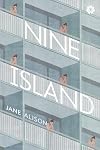
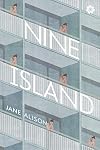
Nine Island
by Jane Alison
On This Page
Description
“Nine Island is a crackling incantation, brittle and brilliant and hot and sad and full of sideways humor that devastates and illuminates all at once." —Lauren Groff, author of Fates and FuriesNine Island is an intimate autobiographical novel, told by J, a woman who lives in a glass tower on one of Miami Beach's lush Venetian Islands. After decades of disaster with men, she is trying to decide whether to withdraw forever from romantic love. Having just returned to Miami from a monthlong show more reunion with an old flame, “Sir Gold," and a visit to her fragile mother, J begins translating Ovid's magical stories about the transformations caused by Eros. “A woman who wants, a man who wants nothing. These two have stalked the world for thousands of years," she thinks.
When not ruminating over her sexual past and current fantasies, in the company of only her aging cat, J observes the comic, sometimes steamy goings-on among her faded-glamour condo neighbors. One of them, a caring nurse, befriends her, eventually offering the opinion that “if you retire from love . . . then you retire from life."
. show less
Tags
Recommendations







Member Reviews
Outstanding. Ovid's tales of transmogrification set the tone for this very smart, funny, offbeat novel that muses on the male gaze, the female gaze, love, lust, loneliness, self-sufficiency, and how hard it is to care for even—or maybe especially—what you love. Including—maybe especially—yourself. It's also gorgeously descriptive, making me almost wish I'd waited a couple of months to read it in Miami, where it's set. But no matter... it's also a good antidote to a New York cold spell in December, not just tropical but generally thawing. Definitely one of my favorites of the year.
Nine Island by Jane Alison is a beautifully written reflection on life, love and lust, and on when and how to close a chapter of life.
This look at the life and loves of J, the narrator/protagonist, looks critically at the past in determining what to do in the present to arrive at a future she might desire and envision. At what point should one, or should one even, consider ending the search for love? Or even lust for that matter. The intersection of love/lust and closing chapters is wonderfully paralleled by her translating of Ovid's stories.
The book is comprised largely of many short chapters, which brought to mind another comparison in my mind. In this case it is not thematic as in contrasting J's ruminations with Ovid. Alison's show more writing is so poetic that Baudelaire was brought to mind. His prose poems were beautiful but not linked in a narrative manner. Nine Island is a bit like reading prose poems that also combine to form a narrative. I don't remember if she mentions Baudelaire the flaneur or if I imagined it, but the image would be very appropriate.
I would highly recommend this to anyone who enjoys an introspective book and/or beautiful writing. It raises, and offers possible answers, to many questions we face in life.
Reviewed from a copy made available by the publisher via LibraryThing Early Reviewers. show less
This look at the life and loves of J, the narrator/protagonist, looks critically at the past in determining what to do in the present to arrive at a future she might desire and envision. At what point should one, or should one even, consider ending the search for love? Or even lust for that matter. The intersection of love/lust and closing chapters is wonderfully paralleled by her translating of Ovid's stories.
The book is comprised largely of many short chapters, which brought to mind another comparison in my mind. In this case it is not thematic as in contrasting J's ruminations with Ovid. Alison's show more writing is so poetic that Baudelaire was brought to mind. His prose poems were beautiful but not linked in a narrative manner. Nine Island is a bit like reading prose poems that also combine to form a narrative. I don't remember if she mentions Baudelaire the flaneur or if I imagined it, but the image would be very appropriate.
I would highly recommend this to anyone who enjoys an introspective book and/or beautiful writing. It raises, and offers possible answers, to many questions we face in life.
Reviewed from a copy made available by the publisher via LibraryThing Early Reviewers. show less
 This review was written for LibraryThing Early Reviewers.
When do you give up on romantic love? Jane Alison's novel Nine Island has a main character contemplating just this question as she watches life go by from her glass fronted high rise condo on the Venetian Islands on Miami Beach.
J. is translating, and sometimes changing, Ovid's tales into English. She's also a recently divorced, middle aged woman who lives with her aging, incontinent cat and has just returned to her condo after a wasted month trying to make a go of it with an old boyfriend, Sir Gold. As she works through Ovid's take on mythological stories of love and lust, she contemplates whether it's time for her to give up on romantic love. While pondering this and what it would mean for her life, she swims in the building's pool, show more watches her neighbors, takes care of her elderly mother, and tries to help a wounded duck. These things might feel disparate but they form the structure of her life and they come to clearly define her despite their initially perceived smallness. J. feels stranded and alone in her life but still harbors a wildness in her just like the duck she wants to rescue, a wildness that shows itself in her imaginings and her translations.
This literary novel is very much character driven and introspective. Told entirely in first person with J. narrating her own story, the story flows over the reader, with a dreamlike lushness to the writing but also a fevered restlessness underpinning the languid pace of the story. Alison manages to pull off this seeming contradiction beautifully. The novel is incredibly descriptive and the landscape, the shabby building, and the injured duck become metaphors for the loneliness of aging without connection or relationship. The novel is composed of brief chapters that tell of past and present and fluctuate in tone dependent on what part of the story they are recounting. Alison does an amazing job showing the yearning and vulnerability of an intelligent, solitary woman of a certain age. There is a taut sexuality to J.'s life, and emotional connection where it is least expected. This is a smart and accomplished novel, one that very much requires an agile and educated reader to appreciate it. show less
J. is translating, and sometimes changing, Ovid's tales into English. She's also a recently divorced, middle aged woman who lives with her aging, incontinent cat and has just returned to her condo after a wasted month trying to make a go of it with an old boyfriend, Sir Gold. As she works through Ovid's take on mythological stories of love and lust, she contemplates whether it's time for her to give up on romantic love. While pondering this and what it would mean for her life, she swims in the building's pool, show more watches her neighbors, takes care of her elderly mother, and tries to help a wounded duck. These things might feel disparate but they form the structure of her life and they come to clearly define her despite their initially perceived smallness. J. feels stranded and alone in her life but still harbors a wildness in her just like the duck she wants to rescue, a wildness that shows itself in her imaginings and her translations.
This literary novel is very much character driven and introspective. Told entirely in first person with J. narrating her own story, the story flows over the reader, with a dreamlike lushness to the writing but also a fevered restlessness underpinning the languid pace of the story. Alison manages to pull off this seeming contradiction beautifully. The novel is incredibly descriptive and the landscape, the shabby building, and the injured duck become metaphors for the loneliness of aging without connection or relationship. The novel is composed of brief chapters that tell of past and present and fluctuate in tone dependent on what part of the story they are recounting. Alison does an amazing job showing the yearning and vulnerability of an intelligent, solitary woman of a certain age. There is a taut sexuality to J.'s life, and emotional connection where it is least expected. This is a smart and accomplished novel, one that very much requires an agile and educated reader to appreciate it. show less
Jane Alison’s Nine Island is a captivating look at love and loneliness. J, our narrator, is a middle-aged woman who retreats to a glass high-rise condo somewhere on Miami Beach, hiding under the glare of the harsh sun and pastel colors, where she can nurse some emotional wounds and take stock of her life. Should she give up on love? “I’m not old yet, but my heart is sick with old desire, and I’m back in this place of sensual music to see if it’s time to retire from love.”
J is recovering from a divorce and a string of ill-advised hook-ups with ex-boyfriends. To top it off she’s working feverishly as a translator of Ovid’s stories of metamorphoses. There’s not much that goes on in this slim novel except the show more character’s musings about her triumphs and mistakes in life, but it is so concentrated with searing emotional truth about the vulnerability of being alone and the pathos of love found/love lost that I can say it is one of the most riveting things I’ve read this year.
What makes Nine Island so compelling is that J is sharp in her observations of her inner and outer worlds. She turns the gaze not only on herself but also on her quirky neighbors. She’s reeling from broken relationships with men but surprisingly it’s the women she turns her gaze to. Ovid’s stories were about women—women chased, women violated, women transformed. She sees these women everywhere in her neighbors, her mother, and, yes, herself. The novel is a heady mix of fantasies and reflections of the past—failures, near-triumphs, happiness. In a twist of the spinster stereotype, we see her dealing with her elderly cat who is deaf, blind, and incontinent. It could veer into cringeworthy territory but the way J talks about that daily relationship cuts and burns without the hint of sap.
Water plays a recurrent motif throughout; it’s J’s work on Ovid seeping into the world around her: she swims almost daily at the pool. Puddles of rain, humidity, and tears abound. Often her interactions with others happen at the pool. It’s where she talks to others but also swims alone. This watery setting is a powerful backdrop that Alison wields with poetic precision without being precious or baroque. The tone of the book is one of a confession and jotted notes. Many of the chapters are just a few paragraphs long; some are achingly lyrical; others are razor sharp and funny; and a few are giddy, droll, and sexually playful. Interconnected vignettes—I was blown away by the range. Alison makes it all come together brilliantly.
The best thing about Nine Island is that it feels brutally honest and real. There is a tendency to overlook women who get to a certain age and live alone as not worthy protagonists. They become invisible, irrelevant, without a story worthy to be told. No children? No husband or partner? You might as well retire from life and give up. But J says ‘screw that.’ Her life is full of spark and wit and self-awareness, and she’s far from giving up. show less
J is recovering from a divorce and a string of ill-advised hook-ups with ex-boyfriends. To top it off she’s working feverishly as a translator of Ovid’s stories of metamorphoses. There’s not much that goes on in this slim novel except the show more character’s musings about her triumphs and mistakes in life, but it is so concentrated with searing emotional truth about the vulnerability of being alone and the pathos of love found/love lost that I can say it is one of the most riveting things I’ve read this year.
What makes Nine Island so compelling is that J is sharp in her observations of her inner and outer worlds. She turns the gaze not only on herself but also on her quirky neighbors. She’s reeling from broken relationships with men but surprisingly it’s the women she turns her gaze to. Ovid’s stories were about women—women chased, women violated, women transformed. She sees these women everywhere in her neighbors, her mother, and, yes, herself. The novel is a heady mix of fantasies and reflections of the past—failures, near-triumphs, happiness. In a twist of the spinster stereotype, we see her dealing with her elderly cat who is deaf, blind, and incontinent. It could veer into cringeworthy territory but the way J talks about that daily relationship cuts and burns without the hint of sap.
Water plays a recurrent motif throughout; it’s J’s work on Ovid seeping into the world around her: she swims almost daily at the pool. Puddles of rain, humidity, and tears abound. Often her interactions with others happen at the pool. It’s where she talks to others but also swims alone. This watery setting is a powerful backdrop that Alison wields with poetic precision without being precious or baroque. The tone of the book is one of a confession and jotted notes. Many of the chapters are just a few paragraphs long; some are achingly lyrical; others are razor sharp and funny; and a few are giddy, droll, and sexually playful. Interconnected vignettes—I was blown away by the range. Alison makes it all come together brilliantly.
The best thing about Nine Island is that it feels brutally honest and real. There is a tendency to overlook women who get to a certain age and live alone as not worthy protagonists. They become invisible, irrelevant, without a story worthy to be told. No children? No husband or partner? You might as well retire from life and give up. But J says ‘screw that.’ Her life is full of spark and wit and self-awareness, and she’s far from giving up. show less
This review was written for LibraryThing Early Reviewers.The setting of this autobiographical novel, is the Venetian Islands, of south Miami. A place I had never heard of. (Why, we read books, right?)
The narrator, known simply as “J”, (presumably the author) is a middle-aged woman, living alone, with her elderly cat, in a crumbling high-rise. She shares with the reader, her sharp observations, about her tumultuous love life, her colorful neighbors, her ailing mother and her sexual fantasies.
I was not sure, this would be my sort of thing, but I was swept along with her bright, insightful prose and her vivid descriptions of steamy Miami. I am glad I stuck with it.
The narrator, known simply as “J”, (presumably the author) is a middle-aged woman, living alone, with her elderly cat, in a crumbling high-rise. She shares with the reader, her sharp observations, about her tumultuous love life, her colorful neighbors, her ailing mother and her sexual fantasies.
I was not sure, this would be my sort of thing, but I was swept along with her bright, insightful prose and her vivid descriptions of steamy Miami. I am glad I stuck with it.
This review was written for LibraryThing Early Reviewers.I loved this book. The writing style drew me in...it is so poetic and lovely. And, the style allowed me to feel as if I really new the protagonist, J, a middle-aged woman who is thinking of giving up on love. Yet she has her work, longings, fantasies, an aging mother, a dying cat and a stranded duck to contend with. Is that enough to make a life? A deeply personal, sometimes funny, always moving portrait of a characters that is oh so real.
This review was written for LibraryThing Early Reviewers.In Meander, Spiral, Explode, (2019) Jane Alison discussed different forms of fiction and narrative structure, different from the "standard" narrative arc format. Here in Nine Island, written in 2016, she has already shown an excellent example.
Many very short chapters/sections, one to eight or maybe nine pages. Musings, dreams, journal entries, poetry, Ovid, descriptions, dialogue, animals, sex, its absence, and more. Described on the author's website as a nonfiction novel, this is quite a ride It gets more interesting with every page.
Many of the characters have only a letter for a name, J, P, N, but still Alison tells me much about each one, though not all at once. This is the second of her works I've read. Probably won't be the last.
Many very short chapters/sections, one to eight or maybe nine pages. Musings, dreams, journal entries, poetry, Ovid, descriptions, dialogue, animals, sex, its absence, and more. Described on the author's website as a nonfiction novel, this is quite a ride It gets more interesting with every page.
Many of the characters have only a letter for a name, J, P, N, but still Alison tells me much about each one, though not all at once. This is the second of her works I've read. Probably won't be the last.
Members
- Recently Added By
Lists

Novels featuring language professionals
98 works; 12 members
Author Information

20+ Works 1,154 Members
Jane Alison has a bachelor's degree in classics from Princeton University & a M.F.A. from Columbia University. She lives in Germany. (Bowker Author Biography)
Awards and Honors
Awards
Distinctions
Common Knowledge
- Original publication date
- 2016
- People/Characters
- J; Sir Gold; K; N; P; Lino (show all 9); Tina; Fran; The Devil
- Important places
- Miami, Florida, USA
- Dedication
- For ARK and in memory of G
- First words
- So I've sailed the seas and come to -- No. I've sailed no seas.
- Last words
- (Click to show. Warning: May contain spoilers.)Try telling that to the sand, the sea.
- Blurbers
- Barrett, Andrea; Shields, David; Groff, Lauren
Classifications
Statistics
- Members
- 86
- Popularity
- 370,331
- Reviews
- 15
- Rating
- (3.77)
- Languages
- English
- Media
- Paper, Ebook
- ISBNs
- 2
- ASINs
- 1