On This Page
Description
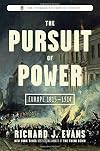
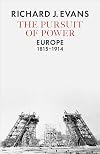
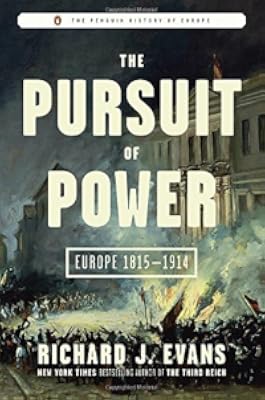
Richard J. Evans's gripping narrative ranges across a century of social and national conflicts, from the revolutions of 1830 and 1848 to the unification of both Germany and Italy, from the Russo-Turkish wars to the Balkan upheavals that brought this era of relative peace and growing prosperity to an end. Among the great themes it discusses are the decline of religious belief and the rise of secular science and medicine, the journey of art, music, and literature from Romanticism to Modernism, show more the replacement of old-regime punishments by the modern prison, and the dramatic struggle of feminists for women's equality and emancipation. Uniting the era's broad-ranging transformations was the pursuit of power in all segments of life, from the banker striving for economic power to the serf seeking to escape the power of his landlord, from the engineer asserting society's power over the environment to the psychiatrist attempting to exert science's power over human nature itself. The first single-volume history of the century, this comprehensive and sweeping account gives the reader a magnificently human picture of Europe in the age when it dominated the rest of the globe. show lessTags
Recommendations

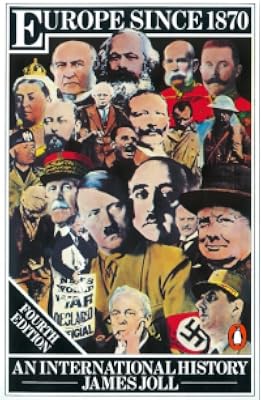
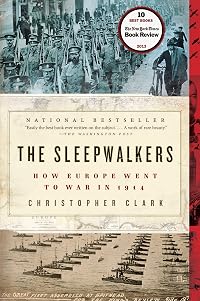

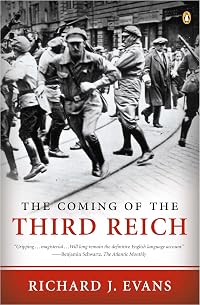




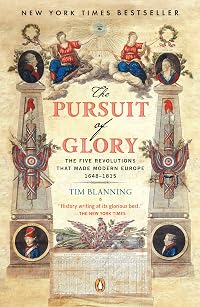





















Member Recommendations
charlie68 Good history of the latter half of the 1800s and the beginning of the 1900s focusing on Germany.

Member Reviews
Evans chooses the encyclopaedic approach here: an endless number of mini-essays on various topics, with huge information dumps included. That sounds awful, but the genius of this book lies in i) its organization; ii) Evans's prose; iii) Evans's eye for detail.
i) No matter what you're interested in, you can find it in this book, and it will all be in one place, and it will be coherent. He covers the entire continent, the entire history of the continent, and all aspects of that history. Do you want to read all of the parts with equal attention? No. I could care less about the details of battles fought in the German hinterlands, but if I ever need to know about it, by golly do I know where to look.
ii) Pristine, clear and balanced.
iii) show more He has an astonishing eye for anecdotes and details that help most subjects come to life.
My main criteria for judging history written about periods I'm not knowledgeable in is very simple: does this book make me want to learn more? The answer in this case is, very much yes. Why do I know so little about the Balkans? Why do I know so little about anything?
My only real complaint is that Evans is awful on 'culture'. He has a historian's taste, which means a more or less philistine-level understanding of literature: does this novel provide an anecdote I can use in a lecture? That's no way to judge books.
He does seem slightly better when it comes to music, though. show less
i) No matter what you're interested in, you can find it in this book, and it will all be in one place, and it will be coherent. He covers the entire continent, the entire history of the continent, and all aspects of that history. Do you want to read all of the parts with equal attention? No. I could care less about the details of battles fought in the German hinterlands, but if I ever need to know about it, by golly do I know where to look.
ii) Pristine, clear and balanced.
iii) show more He has an astonishing eye for anecdotes and details that help most subjects come to life.
My main criteria for judging history written about periods I'm not knowledgeable in is very simple: does this book make me want to learn more? The answer in this case is, very much yes. Why do I know so little about the Balkans? Why do I know so little about anything?
My only real complaint is that Evans is awful on 'culture'. He has a historian's taste, which means a more or less philistine-level understanding of literature: does this novel provide an anecdote I can use in a lecture? That's no way to judge books.
He does seem slightly better when it comes to music, though. show less
This hefty tome attempts to chronicle the history of Europe in the 19th century, from the defeat of Napoleon at Waterloo to the outbreak of World War I. To some degree, this is an impossible task, but the author manages to trace a number of themes across the political, social, and cultural aspect of this period, making this book a valuable touchpoint to understanding this era in European history. When I read historical works like this, I am always reminded of the gaps that can occur by narrowing focusing on one era, country, or person. For example, I was chilled by reading how the policies put into place in Germany's African colonies in the 1890s foreshadowed the atrocities of the Holocaust decades later. Overall, a valuable read for show more understanding Europe in the 19th century. show less
A great history of Europe from 1815 to 1914 by Sir Richard Evans, the author of the excellent trilogy about the Third Reich. It’s taken me a month to read this and summarizing it in any meaningful way for you is difficult, but...
The book is organized into sections based on concepts or historical themes including the end of the Napoleonic wars; the end of Serfdom; the Industrial and textile revolutions; the revolutions of 1830, 1848, etc.; the gradual advance of liberal democracy with the coming of modification of work hours, the reduction of work hazards and the expansion of the electorate; the development of trade unions, Socialism, and Communism; the independence of Belgium, the unification of Italy and Germany; the Crimean, show more Franco-Prussian, Russo-Japanese, Boer and Balkan wars; the coming of Imperialism; the development of the working and middle classes; plus the exploration of the Earth and the advancement of science. Whew.
In addition to considerable numerical and historical detail, with the discussion of what seemed to be every key person, the book is peppered with anecdotes, quotations and mention of important works of art and literature. For example:
At the time of the appointment of Talleyrand as the French foreign minister and Joseph Fouché as the minister of police, Chateaubriand commented that this was “vice leaning on the arm of crime”, and
when the Greek politician Ioannis Kapodistrias (1776 - 1831) was initially unsuccessful in the introduction of the potato to Greece, he had the potatoes surrounded by armed guards at the waterfront in Nafplio. The local inhabitants were then convinced of their value and stole them all.
There is a lot of fascinating stuff here, but I was especially enlightened by the author’s discussion of serfs; how they functioned, their importance in different countries, and the consequence of the abolition of serfdom. He commented that there were slaves in Europe, notably Gypsies in Romania. I also especially liked his final summary of the details of the coming of the first World War in the final chapter. The book is clearly an extraordinary accomplishment. show less
The book is organized into sections based on concepts or historical themes including the end of the Napoleonic wars; the end of Serfdom; the Industrial and textile revolutions; the revolutions of 1830, 1848, etc.; the gradual advance of liberal democracy with the coming of modification of work hours, the reduction of work hazards and the expansion of the electorate; the development of trade unions, Socialism, and Communism; the independence of Belgium, the unification of Italy and Germany; the Crimean, show more Franco-Prussian, Russo-Japanese, Boer and Balkan wars; the coming of Imperialism; the development of the working and middle classes; plus the exploration of the Earth and the advancement of science. Whew.
In addition to considerable numerical and historical detail, with the discussion of what seemed to be every key person, the book is peppered with anecdotes, quotations and mention of important works of art and literature. For example:
At the time of the appointment of Talleyrand as the French foreign minister and Joseph Fouché as the minister of police, Chateaubriand commented that this was “vice leaning on the arm of crime”, and
when the Greek politician Ioannis Kapodistrias (1776 - 1831) was initially unsuccessful in the introduction of the potato to Greece, he had the potatoes surrounded by armed guards at the waterfront in Nafplio. The local inhabitants were then convinced of their value and stole them all.
There is a lot of fascinating stuff here, but I was especially enlightened by the author’s discussion of serfs; how they functioned, their importance in different countries, and the consequence of the abolition of serfdom. He commented that there were slaves in Europe, notably Gypsies in Romania. I also especially liked his final summary of the details of the coming of the first World War in the final chapter. The book is clearly an extraordinary accomplishment. show less
The century between 1815 and 1914 was a period of fundamental change in Europe. It went from acceptance of slavery to a growing acknowledgment of human rights, from subservience of women to calls for female suffrage, from absolute monarchies to constitutional democracies. These changes were relatively sudden and often dramatic if not violent. For me, the appeal of this book isn't in the exhaustive details. I would never be able to remember them all anyway. What underlies all of the names and dates is some insight into human behavior, how people react to conditions that, at least in general ways, tend to recur. This book shows those better than most books of history I've read. I recommend it.
Covers an enormous subject with relative brevity and wit. The nineteenth century of Europe was a time of tremendous change and yet it is not that different from modern times.
A masterpiece of historical writing which brings to
life an extraordinarly turbulent and dramatic era
of revolutionary change.
The Pursuit of Power draws on a lifetime of thinking about
nineteenth-century Europe to create an extraordinarily rich,
surprising and entertaining panorama of a continent
undergoing drastic change. The aim of the book is to reignite
the sense of wonder that permeated this remarkable era, as
rulers and ruled navigated overwhelming cultural, political and
technological changes. It was a time where what was seen
as modern with amazing speed appeared old-fashioned,
where huge cities sprang up in a generation, new European
countries were created and where, for the first time, humans
could communicate almost instantly over show more thousands of miles.
Richard Evans gives full coverage to the revolutions, empirebuilding and wars that marked the nineteenth century, but
the book is about so much more, whether it is illness,
serfdom, religion or philosophy. The Pursuit of Power is a book
by a historian at the height of his powers and an essential
book for anyone trying to understand Europe, then or now.
Sir Richard J. Evans is President of Wolfson College,
Cambridge and Provost of Gresham College. Until 2014 he
was the Regius Professor of History at Cambridge University.
His previous books include In Defence of History, Telling Lies
about Hitler, The Coming of the Third Reich, The Third Reich in
Power and The Third Reich at War. He was knighted in 2012 show less
life an extraordinarly turbulent and dramatic era
of revolutionary change.
The Pursuit of Power draws on a lifetime of thinking about
nineteenth-century Europe to create an extraordinarily rich,
surprising and entertaining panorama of a continent
undergoing drastic change. The aim of the book is to reignite
the sense of wonder that permeated this remarkable era, as
rulers and ruled navigated overwhelming cultural, political and
technological changes. It was a time where what was seen
as modern with amazing speed appeared old-fashioned,
where huge cities sprang up in a generation, new European
countries were created and where, for the first time, humans
could communicate almost instantly over show more thousands of miles.
Richard Evans gives full coverage to the revolutions, empirebuilding and wars that marked the nineteenth century, but
the book is about so much more, whether it is illness,
serfdom, religion or philosophy. The Pursuit of Power is a book
by a historian at the height of his powers and an essential
book for anyone trying to understand Europe, then or now.
Sir Richard J. Evans is President of Wolfson College,
Cambridge and Provost of Gresham College. Until 2014 he
was the Regius Professor of History at Cambridge University.
His previous books include In Defence of History, Telling Lies
about Hitler, The Coming of the Third Reich, The Third Reich in
Power and The Third Reich at War. He was knighted in 2012 show less
The period roughly covering the nineteenth century in Europe (up to WWI) was the time when Europe pulled away from the rest of the world in wealth, largely by extracting that wealth from the rest of the world through conquest and some trade. Evans covers the history of Britain, France, Germany, and occasional forays into the rest of Europe—including the Russian Empire—with a fashionable transatlantic gloss, noting the ways in which peace on the Continent enabled the European powers to turn outwards and bring war to everyone else.
Members
- Recently Added By
Published Reviews
added by private library
Lists

Will Durant's 100 Books: An Update
46 works; 4 members

Non-Fiction Worth Reading
1,016 works; 262 members

Fake Top 100 Nonfiction
79 works; 3 members

Books Read in 2025
4,091 works; 97 members
Author Information

38+ Works 9,327 Members
Richard J. Evans is Regius Professor of History at Cambridge University. He is the author of a trilogy on the Third Reich and, most recently, The Pursuit of Power: Europe 1815-1914. He is currently writing a biography of the historian Eric Hobsbawm.
Series

Common Knowledge
- Canonical title
- The Pursuit of Power : Europe 1815-1914
- Original title
- The Pursuit of Power : Europe 1815-1914
- Original publication date
- 2016-09-01
- First words
- This book is a history of Europe from 1815 to 1914, following on sequentially in the Penguin History of Europe from the previous volume in the series, The Pursuit of Glory (2007), which covers the period 1648 to 1815.
- Last words
- (Click to show. Warning: May contain spoilers.)'The lamps are going out all over Europe,' he said, 'we shall not see them lit again in our lifetime.'
Classifications
- Genres
- History, Nonfiction, General Nonfiction
- DDC/MDS
- 940.28 — History & geography History of Europe History of Europe Europe: Renaissance, Reformation, Enlightenment, Napolean 19th century 1815-1914
- LCC
- D363 .E97 — History of Europe, Asia, Africa and Oceania History (General) Modern history, 1453- 1789- 19th century. 1801-1914/1920
- BISAC
Statistics
- Members
- 766
- Popularity
- 36,618
- Reviews
- 15
- Rating
- (4.08)
- Languages
- 6 — Dutch, English, German, Italian, Portuguese, Spanish
- Media
- Paper, Audiobook, Ebook
- ISBNs
- 18
- ASINs
- 8